“It was not a plane. It was an idea.”
— Liam's thoughts on the 9/11 attacks.

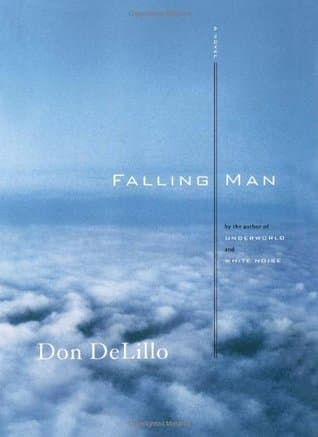
Don DeLillo (2007)
Genre
Literary Fiction / Historical Fiction
Reading Time
240 min
Key Themes
See below
Sign in to track this book
After 9/11, a man emerges from the rubble, forever linked to his estranged wife and their son who watches the sky, all dealing with the personal effects of a national trauma.
On September 11, 2001, Keith Neudecker, a lawyer in the North Tower, barely escapes death during the attacks. He emerges from the dust, disoriented and covered in debris. Instead of going home to his girlfriend, Florence, he goes to his estranged wife Lianne's apartment. Lianne, a writing instructor, is shocked but relieved to see him alive. Their young son, Justin, observes the event with a child's innocent curiosity, always looking for planes in the sky. Keith's survival is a physical and emotional shock, forcing him into a new, undefined life, while Lianne deals with the sudden return of a man she thought she knew, now changed by trauma.
Keith moves back into Lianne's apartment; their reunion has an awkward intimacy, a mix of shared trauma and lingering separation. Their son, Justin, and his friends become fascinated with the 9/11 attacks, collecting news clippings and videos, and creating their own theories about the perpetrators. Justin constantly watches the sky for planes, a coping mechanism that unsettles Lianne. Meanwhile, Keith struggles to talk about his experience, finding comfort in poker games with other survivors, a shared space where the unspoken horrors of that day connect them. Lianne, seeing Keith's changes, tries to understand the new man he has become, a man both familiar and foreign.
Keith starts attending weekly poker games with men who also survived the World Trade Center attacks. These gatherings become a ritual, a place where the deeply affected men find a unique form of therapy. They rarely speak directly about their experiences, but the shared understanding of their trauma is present. Keith observes the other survivors, noting their coping mechanisms and the quiet desperation beneath their surface interactions. For Keith, these games are a temporary escape from his reconfigured life with Lianne and Justin, offering a sense of belonging he had not realized he wanted since the attacks, a silent brotherhood forged in ash.
Across the city, a performance artist known as 'Falling Man' begins appearing in public spaces, hanging upside down from bridges and buildings, mimicking the iconic image of a man falling from the World Trade Center. His performances are both captivating and disturbing, drawing crowds and strong reactions. Lianne is particularly affected by these sightings, finding them a painful reminder of the trauma. She discusses the artist with her writing students, exploring the ethical and emotional implications of his work. The 'Falling Man' becomes a recurring symbol in the novel, representing the collective memory and ongoing struggle to process 9/11.
Lianne, a writing instructor, becomes increasingly focused on the events of September 11. She leads a writing workshop for patients with early-onset Alzheimer's, a setting that highlights memory's fragility and importance. She tries to understand the collective grief and individual trauma, including her own. She reflects on her past with Keith, trying to reconcile the man she married with the man who returned from the towers, and the man who slowly drifts away again. Her work, her observations of Justin's obsession, and her encounters with the 'Falling Man' all contribute to her deep thoughts on memory, loss, and survival after 9/11.
As the initial shock of 9/11 lessens, Keith finds himself drawn back to Florence, his girlfriend from before the attacks. Their affair continues, marked by a quiet desperation and a shared understanding of a life that existed before the catastrophe. Keith struggles to reconcile his two lives — the one with Florence, representing a normalcy he wants, and the one with Lianne and Justin, steeped in the immediate aftermath of trauma. This new affair shows his growing distance from Lianne, who senses his emotional withdrawal and the unspoken pain that still defines him. The affair symbolizes Keith's inability to fully commit to his post-9/11 self.
Lianne's mother, Nina, has Alzheimer's disease, a condition that deeply affects Lianne and highlights her own focus on memory and loss. Nina's declining mental state reflects the fragmented reality of the post-9/11 world. Lianne also starts attending a church group, seeking spiritual comfort and community amidst the pervasive anxiety and grief. This group, made up of diverse individuals, offers a space for shared introspection and discussion about faith, fear, and finding meaning in a changed world. Through these interactions, Lianne tries to find stability in her shifting life.
Justin's obsession with the 9/11 attacks grows stronger. He and his young friends continue to collect images and news stories, developing a detailed, if childlike, understanding of the events. They play games about the attacks, and Justin frequently asks questions about the perpetrators, trying to make sense of the senseless. His constant scanning of the sky for planes worries Lianne, who struggles to help her son process the trauma without dwelling on its horrors. Justin's behavior reflects society's broader struggle to comprehend and move past the defining event.
Keith continues to struggle with 9/11's psychological aftermath. He experiences survivor's guilt, feeling he should not have been spared when so many others died. He often feels like an impostor, disconnected from his former life and unable to fully connect with his new one. His work as a lawyer feels meaningless, and he has trouble concentrating. The sensory memories of the collapse — the dust, the noise, the human suffering — haunt him. This internal turmoil shows in his relationships, his detachment from Lianne, and his inability to fully engage with the world, leaving him in a constant state of emotional limbo.
The novel briefly introduces a parallel story, exploring the lives and motivations of some individuals involved in the 9/11 plot, specifically a character named Hammad. These sections offer a look into the ideological fervor and personal histories that led to the attacks. This shift in perspective provides a broader context to the tragedy, moving beyond the immediate aftermath in New York to touch on global forces at play. It highlights the vast cultural and political distances between victims and perpetrators, underscoring the incomprehensible nature of the violence and its far-reaching implications.
Lianne continues her efforts to find meaning and connection after 9/11. Her writing workshops, her church group, and her observations of Justin and Keith all contribute to her ongoing internal dialogue. She tries to understand how such monumental events shape individual lives, and how to navigate the complex emotions of grief, fear, and resilience. She reflects on language itself, questioning its ability to adequately capture or convey the depths of human experience and suffering. Lianne's journey reflects society's broader struggle to comprehend and process the trauma.
The 'Falling Man' performance artist makes a final, poignant appearance, further cementing his role as a symbolic figure in the novel. His last act is particularly vivid and disturbing, leaving a lasting impression on those who witness it. This final performance forces both the characters and the reader to confront the enduring imagery of the attacks and how art can both memorialize and provoke. His repeated acts serve as a constant, unsettling reminder of the unresolved trauma, an attempt to force public acknowledgment and perhaps, through repetition, to drain the image of its power, or to give it new meaning.
Despite his return to Lianne's apartment, Keith cannot fully reintegrate into his pre-9/11 life or embrace a new one with his family. The trauma of the attacks has changed him, creating an insurmountable distance between himself and those he loves. He eventually leaves Lianne and Justin, choosing a path of continued detachment and seeking a different kind of existence that remains largely undefined. His departure shows the profound and lasting impact of the event, demonstrating how trauma can irrevocably sever connections and reshape individual destinies, leaving Lianne and Justin to navigate their future without him.
Lianne and Justin are left to continue their lives, forever marked by 9/11 and Keith's departure. Lianne finds a quiet resilience, continuing her work and her search for understanding, while Justin's early childhood is defined by the attacks. The novel ends with a sense of ongoing uncertainty and the enduring presence of trauma in their lives. They represent the countless individuals who must find a way to live after such a monumental event, carrying its weight while striving for normalcy and meaning. Their journey symbolizes the long, slow process of healing and adaptation in a changed world.
The novel ends with a stark and powerful image, returning to the moment of the World Trade Center's collapse. It describes the final seconds of a man falling from the tower, a haunting depiction of many victims' ultimate fate. This final scene brings the narrative full circle, emphasizing the raw horror of the event that started everything. It serves as a stark reminder of the human cost and the indelible mark left on history, leaving the reader with a deep sense of the tragedy's magnitude and its lasting echoes.
The Protagonist
Keith begins as a physically saved but emotionally shattered survivor, attempting to reconnect with his estranged family, but ultimately succumbs to his trauma, becoming more detached and leaving them.
The Protagonist
Lianne moves from being a woman trying to understand her estranged husband's trauma to actively seeking meaning and connection in a post-9/11 world, ultimately finding a quiet resilience despite further loss.
The Supporting
Justin begins as an innocent child observing the world, but his constant exposure to the aftermath of 9/11 leads him to an obsessive preoccupation with the event, shaping his early understanding of the world.
The Supporting
Florence remains a consistent presence in Keith's life, representing an unchanging aspect of his past he clings to, despite his altered reality.
The Supporting/Symbolic
The Falling Man's performances punctuate the narrative, serving as a recurring, unchanging symbol of the trauma, his acts becoming more impactful as the story progresses.
The Mentioned
Nina's character arc is one of decline due to Alzheimer's, serving as a poignant backdrop to Lianne's struggles with memory and loss.
The Mentioned/Antagonist
Hammad's narrative arc is brief and focused on his pre-9/11 motivations, serving to contextualize the origins of the attack.
The Supporting
Ernie's arc remains consistent as a fellow survivor in the poker games, providing a sense of shared experience for Keith.
The novel explores the psychological and emotional trauma from the 9/11 attacks, both on individuals and society. Keith's survivor's guilt, his inability to connect, and his eventual departure show the deep, lasting scars. Lianne's constant thoughts about the event, Justin's obsession, and the pervasive anxiety in the city all reflect the profound impact. The 'Falling Man' performance artist embodies the collective struggle to process and remember the trauma, constantly bringing the memory into public awareness. The novel shows that trauma is not a single event, but an ongoing process of adaptation and struggle.
“He understood what it was to be a falling man. He was the falling man. This was the thing that was in him, that was in the world, that was in the structures, the buildings, the air.”
Memory, both individual and collective, is a central theme. Lianne's work with Alzheimer's patients highlights memory's fragility, contrasting with 9/11's indelible mark. She struggles with remembering Keith as he was and understanding who he has become. Justin's obsessive collection of 9/11 artifacts is his way of trying to remember and comprehend. The 'Falling Man' artist forces a collective remembrance, preventing society from forgetting the horror. The novel questions how we remember traumatic events, how those memories shape our identity, and the ethical implications of how we represent such events.
“What does a body know? The body remembers. The body knows what it knows.”
After an event that shatters all sense of normalcy, characters struggle to find meaning and purpose. Keith's life as a lawyer feels empty, and he drifts aimlessly. Lianne actively seeks meaning through her writing, her church group, and her attempts to understand the human condition. Justin's obsession is his childlike quest for understanding. The novel suggests that traditional frameworks of meaning are insufficient after such a profound disruption, forcing individuals to forge new paths, or to succumb to the senselessness. The characters are adrift, trying to re-establish their moral and spiritual compasses.
“There was a before and there was an after, and life was being lived in the after.”
The novel explores human connection and alienation in the face of shared trauma. Keith's experience leads to deep alienation, even from his own family, as he struggles to talk about his internal world. While the poker games offer a fleeting sense of connection among survivors, it is a connection born of shared silence rather than deep intimacy. Lianne wants connection with Keith but finds him increasingly distant. The attacks themselves create a global sense of both shared vulnerability and deep cultural divides, highlighted by the brief insights into the hijackers' lives. Ultimately, the novel suggests that while trauma can create bonds, it can also irrevocably sever them.
“He was a stranger now, a man from another life, another world, and he had come back to her.”
A recurring symbolic figure who recreates the iconic image of a man falling from the WTC.
This unnamed performance artist serves as a powerful and unsettling symbol throughout the novel. His public recreations of the falling man image force both the characters and the reader to confront the raw, unadorned horror of 9/11. He acts as a constant, embodied reminder of the trauma, preventing the event from fading into abstract history. The 'Falling Man' also raises questions about art, memory, and the ethics of representing tragedy, serving as a catalyst for Lianne's intellectual and emotional processing of the event.
Weekly gatherings of 9/11 survivors, a space for unspoken camaraderie and shared trauma.
The poker games Keith attends with other survivors function as a unique form of therapy and a symbol of shared experience. These gatherings are marked by a profound lack of direct discussion about 9/11, yet the unspoken understanding of their collective trauma hangs heavy in the air. The games provide a temporary escape and a sense of belonging for Keith, highlighting how individuals find solace and connection in the aftermath of immense tragedy, even if that connection is largely silent and ritualistic. They represent a space where words are inadequate, but shared presence is vital.
The young son's fascination with the attacks, symbolizing the generational impact of trauma.
Justin's constant scanning of the sky for planes, his collection of 9/11 memorabilia, and his discussions with his friends serve as a poignant plot device. It highlights how children process incomprehensible events and how trauma can define a generation. His innocent yet morbid curiosity underscores the pervasive anxiety and the indelible mark left on the young, who grow up in a world irrevocably altered. Justin's behavior externalizes the societal struggle to understand and cope with the attacks, reflecting the difficulty in shielding children from historical trauma.
Brief, interspersed sections detailing the lives and motivations of the 9/11 perpetrators.
These brief, jarring shifts in perspective, particularly focusing on characters like Hammad, serve to broaden the scope of the novel beyond the immediate victim experience. This device provides a crucial, albeit unsettling, context to the attacks, delving into the ideological and personal factors that drove the perpetrators. It underscores the profound cultural and political divides at play, making the violence even more incomprehensible from the victims' perspective, and highlighting the global dimensions of the tragedy. It forces the reader to confront the origins of the destruction.
“It was not a plane. It was an idea.”
— Liam's thoughts on the 9/11 attacks.
“The world was in the building, and the building was in the world.”
— Reflecting on the interconnectedness of the World Trade Center to global life.
“He thought the world was ending. It was only a building.”
— Keith Neudecker's initial disorientation during the attack.
“There were other planes, other towers, other people. The world was full of them.”
— Liam's struggle to process the scale of the tragedy.
“Everything was a system, and the system had just crashed.”
— Keith's understanding of the collapse of order.
“They were all living a new kind of history, a history that had no past, only a continuous present.”
— The characters grappling with the aftermath of 9/11.
“Is this what it feels like to be alive, to be this close to death?”
— Keith's internal monologue during his escape from the tower.
“The dust was everywhere, a fine, pale memory.”
— The omnipresent dust in New York City after the attack.
“The future was a thing you carried inside you, like a disease.”
— Lianne's sense of dread and uncertainty.
“We're living in a time when the world is becoming more and more a stage.”
— A conversation about the public nature of tragedy and media.
“He was a man falling. That was all he was.”
— The central image of the 'Falling Man' performance artist.
“The meaning of things was changing, and it was changing fast.”
— The characters' struggle to find meaning in a altered world.
“What do you do when the sky falls? You look up.”
— A simple yet profound question and answer in the face of disaster.
“The silence was the loudest thing now.”
— The eerie quiet that followed the initial chaos.
Ready to see how well you understood this book? Take our interactive quiz with 10 questions.
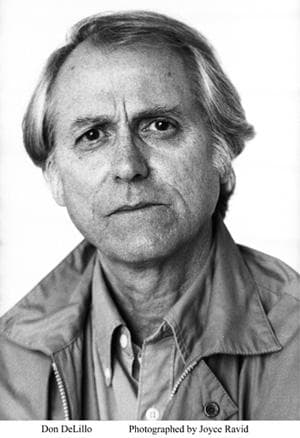
Donald Richard DeLillo is an American novelist, short story writer, playwright, screenwriter and essayist. His works have covered subjects as diverse as television, nuclear war, the complexities of language, art, mathematics, politics, economics, and baseball.







