“War is like a game of checkers, if you don't know the rules, you're just moving pieces around.”
— Richie reflects on the chaos and lack of understanding among the soldiers.

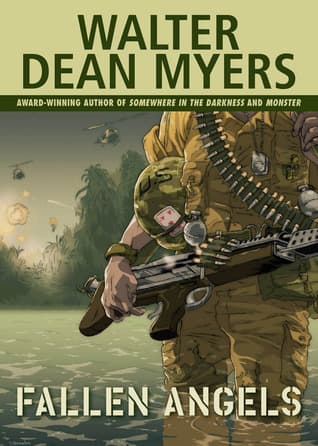
Walter Dean Myers (1984)
Genre
Historical Fiction / Young Adult
Reading Time
6-7 hours
Key Themes
See below
Sign in to track this book
During the Vietnam War, a Harlem teenager confronts combat, racial injustice, and his lost innocence, grappling with the cost of duty and survival.
Richard Perry, an aspiring writer from Harlem, joins the army after college plans fail due to money problems and his mother's illness. He arrives in Vietnam in 1967, expecting a desk job because of a knee injury, but instead, he goes to Alpha Company, a combat unit. Perry immediately faces the harsh realities of war, seeing a fellow soldier, Jenkins, die during a patrol. This shocking event shatters Perry's romantic ideas of military service and forces him to confront the danger and fragility of life on the front lines, a sharp contrast to his sheltered life in New York.
After the initial shock of Jenkins' death, Perry starts to bond with his squad mates. He becomes close with Peewee Gates, a funny and street-smart soldier from Chicago, and Monaco, a brave and quiet Italian-American. Other key members include Johnson, the squad's strong machine gunner, and Brunner, an ambitious soldier. Their interactions offer moments of friendship and dark humor, helping them cope with daily stress and fear. Perry sees the different backgrounds and personalities in his unit, realizing they are all connected by the shared experience of war, no matter where they came from.
Perry's unit has its first major firefight, an intense battle with the Vietcong that causes casualties on both sides. During the chaos, Perry has to shoot an enemy soldier, an act that deeply troubles him. He struggles with the morality of taking a life, even in self-defense, and the impersonal nature of combat where the enemy is often unseen. This experience changes Perry significantly, removing any remaining innocence and forcing him to face the brutal reality of his role in the war. He begins to question the war's reasons and its dehumanizing effects on soldiers.
Lieutenant Carroll, a kind and respected leader, dies in action, a devastating loss for the squad. His replacement, Lieutenant Gearhart, lacks experience and makes mistakes, increasing the squad's worry and exposure to danger. During this time, Perry notices and thinks about the racial dynamics in the military, seeing that Black soldiers often get the most dangerous missions and face higher risks. He talks about these observations with Johnson and Peewee, who confirm his suspicions, adding to Perry's growing disappointment. The constant threat of death and the perceived unfairness fuel his increasing cynicism about the war.
As the war continues, the squad endures constant patrols, ambushes, and firefights. The psychological toll becomes clear as soldiers show signs of stress, paranoia, and emotional numbness. Perry sees his comrades' spirits slowly wear down, including Peewee's increasingly cynical humor and Monaco's quiet acceptance. The lines between right and wrong blur, and soldiers often struggle with the random nature of life and death in combat. Perry himself experiences intense fear and despair, questioning his own survival and the sanity of their situation. Constant exposure to violence and loss leaves a lasting mark on their minds.
Perry is wounded during an ambush, an experience that brings him close to death. While recovering, he thinks about the random nature of survival and the deep impact of his injuries, both physical and mental. He also gets a letter from his brother, Kenny, back home, which connects him briefly to his old life but also shows the vast gap between his experiences and those of people not at war. This recovery period offers a break but also strengthens his growing disappointment with the war's purpose and the sacrifices being made. He starts to openly question the mission's validity.
The Tet Offensive begins, putting Perry's unit into some of the most brutal and continuous fighting they have seen. They are in intense urban combat, defending positions against overwhelming enemy forces. The offensive's scale and the fighting's ferocity are unprecedented, shattering any ideas of American dominance. Perry, Peewee, Monaco, and Johnson fight desperately to survive, seeing widespread destruction and terrible horrors. The offensive further highlights the conflict's complexity and seemingly unwinnable nature, as the enemy shows unexpected strength and determination, challenging the idea of American victory.
The Tet Offensive takes more lives from Alpha Company, deepening the emotional scars of the survivors. The constant threat of death strengthens the bonds among the remaining soldiers, especially Perry, Peewee, and Monaco. They rely on each other for emotional support, protection, and a shared understanding of their terrifying experiences. Each loss reminds them of their own mortality and the random nature of who lives and who dies. Despite the overwhelming despair, their solidarity helps them cope with unimaginable circumstances and maintain some humanity amidst the war's savagery.
Lieutenant Gearhart's inexperience and poor judgment continue to trouble Alpha Company. His tactical errors and emotional instability lead to avoidable casualties and increased danger for the squad. Perry and his comrades often question his decisions and feel a lack of trust in his leadership, unlike their respect for the fallen Lieutenant Carroll. Gearhart's struggles show the immense pressure of command in a war zone and the devastating results of poor leadership, adding to the soldiers' feeling of vulnerability and their growing resentment toward higher command.
As their tour of duty nears its end, Perry and Peewee get orders to go home. However, before they can leave, they are caught in a final, terrifying ambush. During the chaos, they get separated from their unit and have to hide in a spider hole, fearing for their lives. This intense, isolated experience pushes them to their limits, relying only on each other for survival. They emerge shaken but alive, their bond made stronger by this ultimate shared trauma. This final combat act is a brutal farewell to the war, emphasizing its unpredictable and relentless nature until the very last moment.
Perry and Peewee, both physically and emotionally scarred, begin their trip back to the United States. On the plane, they reflect on their experiences, the friends they lost, and the deep changes they have undergone. They share a quiet understanding of the horrors they saw and the burden they now carry. Perry, in particular, thinks about how hard it will be to return to normal life and explain the war to those who haven't experienced it. The journey home is not just a physical one; it is a transition back to a world that can never truly understand the lasting marks left by Vietnam, leaving them with a shared, unspoken trauma.
The Protagonist
Perry transforms from an naive, somewhat detached observer into a battle-hardened survivor who has grappled with profound moral questions and the deep psychological scars of war.
The Supporting
Peewee's humor and resilience are tested and hardened by the war, but his loyalty to Perry remains unwavering, evolving into a deep, unspoken understanding.
The Supporting
Monaco remains a steadfast and brave soldier throughout the narrative, his loyalty and quiet strength serving as an anchor for his comrades.
The Supporting
Johnson consistently demonstrates strength and resilience, maintaining his moral compass and leadership qualities despite the war's brutality.
The Supporting
Lieutenant Carroll's brief but impactful presence establishes a benchmark for good leadership and compassion, his death serving as a pivotal moment of loss for the squad.
The Supporting
Lieutenant Gearhart's arc is one of consistent struggle and inadequacy, highlighting the destructive impact of poor leadership in combat.
The Supporting
Brunner's character remains largely consistent, serving as a foil to the more thoughtful and compassionate soldiers in the squad.
The Mentioned
Jenkins's brief appearance and swift death serve as a catalyst for Perry's understanding of the war's brutality.
The novel shows how the Vietnam War takes away young soldiers' innocence. Richard Perry, new from Harlem, arrives with romantic ideas of heroism, only to face the brutal reality of death, fear, and unclear morals. His initial shock at Jenkins's death quickly turns into a hardened understanding of survival. Constant exposure to violence, the dehumanization of the enemy, and the random nature of life and death force Perry and his comrades to lose their youth and adopt a cynical, mature view of the world. Perry's internal thoughts, where he struggles with the morality of killing and his own changing character, show this theme.
““I had wanted to be a hero, but I knew now that I was not. I was a soldier, and I was in Vietnam, and the real heroes were the ones who didn't come back.””
Myers clearly depicts the physical and psychological cost of combat in Vietnam. The constant threat of ambushes, firefights, and booby traps creates an atmosphere of widespread fear and paranoia. The novel highlights the seemingly pointless violence and lack of clear goals, especially during the Tet Offensive, which only deepens the soldiers' disappointment. Random deaths, the incompetence of some leaders like Lieutenant Gearhart, and questions about why they are fighting all contribute to a strong sense of futility. The soldiers' experiences reveal how war dehumanizes, reducing individuals to parts of a violent machine, simply trying to survive.
““It wasn’t about being a hero, it was about being alive.””
The novel quietly but strongly addresses the racial inequalities in the U.S. military during the Vietnam War. Perry, Johnson, and Peewee, all Black soldiers, often notice and discuss how Black troops are frequently given the most dangerous and exposed positions. This leads to a disproportionate number of casualties among African Americans. Perry's thoughts and conversations with his comrades highlight the bitter irony of fighting for freedom abroad while facing systemic discrimination at home and within their own military. This theme adds complexity to the soldiers' struggles, as they fight not only an external enemy but also internal prejudices.
““They always put us out front. Always. Like we ain't got no mamas or daddies.””
Amidst the war's horrors, the strong bonds formed between soldiers are a central theme. Perry, Peewee, Monaco, and Johnson develop deep friendships born from shared trauma, mutual reliance, and a desperate need for human connection in an inhuman setting. These relationships provide emotional support, dark humor, and a sense of belonging that helps them cope with the constant threat of death. Their loyalty to each other goes beyond racial and social differences, becoming a key way to survive. The loss of a comrade, like Lieutenant Carroll, is deeply felt, showing how strong these wartime friendships are.
““We were brothers, not because we were born that way, but because we had lived together, and fought together, and died together.””
The story is told entirely from Richard Perry's perspective.
The use of first-person narration allows the reader to experience the war directly through Perry's eyes and mind. This immersive perspective provides intimate access to his fears, doubts, moral struggles, and observations. It emphasizes the subjective and personal nature of war, making his journey of disillusionment and survival particularly impactful. Perry's internal monologues and letters home serve as a crucial window into his processing of the traumatic events, highlighting his intellectual and emotional growth amidst the chaos.
Perry writes letters to his mother and brother, providing a contrast to his reality.
Perry's letters home serve as a powerful plot device, creating a stark contrast between the brutal reality of his experiences and the sanitized, often misleading accounts he sends to his family. These letters highlight the psychological burden of war, as soldiers feel compelled to protect loved ones from the truth. They also offer Perry moments of reflection, forcing him to articulate his thoughts and feelings, even if he cannot fully convey the horror. The letters also connect him to his past life and the innocence he left behind, emphasizing the vast chasm between the war zone and home.
The title itself refers to the soldiers, particularly Perry, losing their innocence.
The title 'Fallen Angels' symbolizes the young, innocent soldiers who are corrupted and destroyed by the war. Like angels cast from heaven, they are taken from their ordinary lives and forced into a hellish existence where morality is blurred and death is constant. Perry, with his initial idealism and poetic aspirations, embodies this 'fallen angel' archetype, losing his innocence and grappling with the darkness of humanity. The title also suggests a loss of grace and purity, reflecting the profound psychological and moral damage inflicted upon the soldiers.
Characters use humor as a coping mechanism in the face of death.
Dark humor, primarily expressed through Peewee's jokes and banter, is a crucial coping mechanism for the soldiers. It provides momentary relief from the unbearable stress and fear of combat, allowing them to process the grim realities of their situation. This gallows humor often involves morbid jokes about death, injuries, or the absurdity of their circumstances. It highlights the psychological resilience of the human spirit in extreme conditions and the way individuals find small ways to assert their humanity and sanity against the overwhelming forces of war.
“War is like a game of checkers, if you don't know the rules, you're just moving pieces around.”
— Richie reflects on the chaos and lack of understanding among the soldiers.
“It wasn't a game. It was a war, and it was going to be a part of me for the rest of my life.”
— Richie realizes the profound and lasting impact of his experiences in Vietnam.
“Sometimes you just had to do what you had to do. Even if you didn't know why.”
— Soldiers often follow orders without fully understanding the larger picture or moral implications.
“You don't get used to seeing dead people. You just get used to seeing dead people.”
— Peewee's grim observation about the desensitization that occurs in combat.
“I wondered if there was a difference between being a hero and being crazy.”
— Richie questions the nature of bravery and the toll it takes on soldiers' minds.
“The only thing worse than being scared was being scared and alone.”
— Richie's deep fear and longing for companionship amidst the horrors of war.
“We were doing the best we could, but the best we could do wasn't always enough.”
— A realization of the limitations and overwhelming nature of the conflict.
“You come to a place like this, you lose a little bit of yourself every day.”
— Johnson comments on the dehumanizing effect of the war on the soldiers.
“We were all just trying to make it home, one way or another.”
— The overarching goal and desperate hope shared by all the soldiers.
“It was just a new way to die. That’s all it was.”
— Richie's cynical view of new tactical approaches or enemy weapons.
“There was no good guys and bad guys, just guys who wanted to live and guys who wanted to kill.”
— Richie struggles with the moral ambiguities of war.
“The hardest part was knowing that it could happen again, any minute.”
— The constant threat of danger and the psychological toll of uncertainty.
“We were the last ones to know what was going on. Always.”
— The soldiers' feeling of being pawns in a larger, incomprehensible conflict.
“Sometimes I thought about what I would tell my family, and then I thought about how I couldn't tell them anything.”
— Richie grapples with the unspeakable horrors he has witnessed and the inability to share them with loved ones.
Ready to see how well you understood this book? Take our interactive quiz with 10 questions.
Biography coming soon.







