“It was a pleasure to burn.”
— Opening line describing fireman Guy Montag's job of burning books.


Ray Bradbury (1999)
Genre
Fantasy / Science Fiction
Reading Time
240 min
Key Themes
See below
Sign in to track this book
In a future where books are illegal and independent thought suppressed, a fireman whose job is to burn forbidden literature starts to question everything after meeting a free-spirited young woman.
Guy Montag, a fireman in a future where books are outlawed and burned, enjoys his work. One evening, he meets Clarisse McClellan, his new seventeen-year-old neighbor. Clarisse is different; she likes nature, asks questions, and does not follow the fast, superficial rules of their society. Her questions about Montag's happiness and his job make him doubt things. Their talk leaves Montag feeling uneasy and aware of his own emptiness, a feeling made worse when he finds his wife, Mildred, has overdosed on sleeping pills.
After Mildred's overdose, two indifferent technicians, not doctors, pump her stomach and replace her blood. They treat the event casually. Mildred wakes up with no memory of what happened and returns to watching wall-sized televisions and listening to seashell radios. Montag tries to connect with her, but she shows no empathy. Clarisse continues to challenge Montag's views, describing a world where people talked, thought, and connected, unlike their current society. Her perspective makes Montag more aware of the superficiality and emptiness of his life and others' lives.
Montag and his fellow firemen respond to a call at an old woman's house. The woman refuses to leave her books, choosing instead to set herself on fire with her library, saying, 'Play the man, Master Ridley; we shall this day light such a candle, by God's grace, in England, as I trust shall never be put out.' This act of defiance deeply affects Montag, making him realize how valuable books must be for someone to die for them. He secretly takes a book from her house before it burns. The incident leaves him sick and troubled, making him question his job more than ever.
After the old woman's death, Clarisse disappears. Mildred later tells Montag that Clarisse was hit by a car and her family moved, but the details are vague. Montag, sick with a fever and guilt, refuses to go to work. Captain Beatty, Montag's fire chief, visits him and gives a long, cynical speech about why books are burned. Beatty says books cause conflict, make people unhappy, and promote intellectual snobbery. He argues that society chose to simplify life and remove different ideas for happiness and equality. He reveals he knows Montag has a book and gives him 24 hours to burn it.
Ignoring Beatty's warning, Montag shows Mildred that he has been secretly collecting books, hidden in an air vent. He pulls out many books, hoping to find answers and share his new interest with his wife. Mildred, however, is horrified by the sight of them. She cannot understand their value or Montag's sudden interest. She worries more about the consequences and the disruption to her comfortable, superficial life. Montag tries to read aloud, but Mildred's lack of interest and the constant noise from her 'family' on the parlor walls make any real conversation impossible. He sees the distance between them and his desperate need for help.
Remembering a meeting from a year ago, Montag seeks out Faber, a former English professor he met in a park who had recited poetry and hinted at his love for books. Montag brings a Bible to Faber, wanting understanding and a plan. Faber, at first scared, agrees to help Montag. He explains that society lacks good information, time to think, and freedom to act on what is learned. He sees Montag as a possible agent for change. Faber gives Montag a two-way radio earpiece, a 'green bullet,' so they can talk secretly and Faber can guide him.
Montag returns home to Mildred and her friends, Mrs. Bowles and Mrs. Phelps, who are watching their parlor wall programs. With Faber's guidance through the earpiece, Montag becomes agitated by their superficial talks about war, politics, and child-rearing, which show their lack of independent thought or emotion. He suddenly turns off the parlor walls and, despite Mildred's protests, reads the poem 'Dover Beach' aloud. The poem's raw emotion and complex ideas upset the women; Mrs. Phelps cries, and Mrs. Bowles becomes angry. This incident further separates Montag from his wife and her friends, strengthening his decision to resist.
Montag goes to the fire station, where Beatty taunts him with literary quotes and philosophical arguments, trying to confuse him. An alarm sounds, and to Montag's shock, the fire truck goes to his own house. Mildred, who betrayed him, comes out with her suitcase, getting into a waiting taxi. Beatty forces Montag to burn his own house with a flamethrower. After the house is a ruin, Beatty finds Montag's 'green bullet' earpiece, realizing he has been talking with Faber. Beatty threatens to find Faber. In a desperate moment, Montag turns the flamethrower on Beatty, burning him and knocking out the other firemen. Montag becomes a fugitive.
After killing Beatty, Montag takes some hidden books from his yard and flees his burning home. He knows he is now a criminal and a target. As he runs, he barely avoids being hit by a speeding car full of teenagers, a reminder of Clarisse's fate. He reaches Faber's house, gives the professor money, and tells him to go to St. Louis to meet a retired printer. Montag then continues his escape toward the river, with the sound of the Mechanical Hound, a robotic hunter, pursuing him.
Montag jumps into the river, letting the current carry him away from the city and the Mechanical Hound. The water washes away the smell of kerosene, marking a new beginning. He emerges on the other side, in the countryside, a place he has never really known. Following a railway line, he meets a group of exiled intellectuals called the 'Book People,' led by Granger. These people have memorized entire books to save them for the future. They welcome Montag, recognizing him from the televised chase.
As Montag and the Book People watch from a distance, the city he left is destroyed by enemy bombers, becoming a mushroom cloud of dust. Mildred and her superficial society are gone. The Book People, who expected this, are ready to rebuild. Granger talks about the Phoenix, a bird that burns itself and rises from its ashes, symbolizing destruction and rebirth. Montag begins to memorize the Book of Ecclesiastes. They walk upstream, away from the destroyed city, hoping to share their preserved knowledge and help rebuild a more thoughtful society after the war, as a new day begins.
The Protagonist
Montag transforms from a complacent fireman who burns books to a rebellious intellectual who preserves them, ultimately becoming a leader among the 'Book People'.
The Supporting
Mildred remains stagnant, a tragic figure who never awakens from her societal conditioning, ultimately betraying Montag and likely perishing with the city.
The Supporting
Clarisse serves as a catalyst for Montag's awakening, her brief presence leaving an indelible mark that propels his journey.
The Antagonist
Beatty remains a static antagonist, consistently upholding the oppressive system, leading to his demise at Montag's hands.
The Supporting
Faber transitions from a fearful recluse to a courageous mentor, actively aiding Montag's rebellion and preserving knowledge.
The Supporting
Granger remains a steadfast guardian of knowledge, providing Montag with a new community and purpose after the city's destruction.
The Supporting
Mrs. Bowles remains static, embodying the unthinking masses and resisting any attempt at intellectual or emotional engagement.
The Supporting
Mrs. Phelps briefly shows a glimmer of emotional depth when confronted with poetry, but quickly recoils, returning to her superficial existence.
The Antagonist
The Mechanical Hound serves as a persistent, unfeeling threat throughout Montag's rebellion and escape, symbolizing the state's relentless pursuit of conformity.
The main idea of 'Fahrenheit 451' is the dangers of censorship and deliberately stopping knowledge. The government, through the firemen, burns books to control thought and keep a superficial sense of happiness and equality. This is clear when Montag, a fireman, starts to question his job after seeing an old woman burn with her books, realizing the power and truth within them. Captain Beatty's reasons for burning books, like preventing unhappiness and intellectual snobbery, show how harmful censorship is, claiming to help people while removing their ability to think and feel.
“'You don't have to burn books to destroy a culture. Just get people to stop reading them.'”
The novel shows the contrast between choosing not to know, which most of society does, and seeking knowledge, which Montag gradually begins. Mildred and her friends show this ignorance; they prefer mindless entertainment from their parlor walls over thinking or feeling. Their lives are empty but 'happy' in a superficial way. In contrast, Clarisse's curiosity and Faber's deep thinking represent the power of knowledge. Montag's journey is from not knowing to understanding, as he wants the truth and complexity that books offer, even if it brings pain and social isolation. This shows that real happiness and understanding come from facing reality, not avoiding it.
“'We need not be afraid of the things we do if we are only for ourselves, but if we are for the future, we must be afraid to forget.'”
Bradbury criticizes how technology can make people less human when it controls, distracts, and isolates them. The wall-sized televisions, seashell radios, and the fast pace of life create a society without real human interaction or independent thought. Mildred's obsession with her 'parlor family' shows how technology creates emotional numbness and replaces real relationships. The Mechanical Hound, a terrifying robotic hunter, symbolizes technology as a tool of state oppression and a cold killer. The novel suggests that even advanced technology, when misused, can lead to losing humanity and individuality.
“'The television set is the biggest thing in the world, and it's the only thing that matters.'”
Society in 'Fahrenheit 451' demands everyone conform; individuality is seen as dangerous. Citizens must follow standard behaviors, thoughts, and entertainment. Anyone different is either 'fixed' or removed. Clarisse's unique perspective and independent thinking make her an outcast, leading to her disappearance. Montag's change is a rebellion against this conformity. He chooses to ask his own questions and seek forbidden knowledge, even if it costs him his safety and social standing. The 'Book People' show the ultimate act of individuality and resistance, preserving human thought and unique perspectives against a society that wants everyone to be the same.
“'I am a rare spirit, and I have to be myself.'”
The novel shows how literature keeps history alive, encourages independent thinking, and connects people across time. Books are dangerous not because they are evil, but because they hold complex ideas, offer different viewpoints, and challenge the current system, threatening the government's control. The old woman's sacrifice for her books, and Faber's understanding of their value, show how important they are. The 'Book People' further emphasize this by memorizing entire literary works, becoming living records of human knowledge and creativity. They believe that even if physical books are destroyed, the ideas and stories can live on through human memory, waiting for a time when society is ready for them again.
“'The books are to remind us what asses and fools we are. They’re Caesar’s praetorian guard, whispering as the parade passes, 'Remember, Caesar, thou art mortal.''”
Symbol of the state's oppressive technology and surveillance.
The Mechanical Hound is a terrifying, eight-legged robot designed to track down and kill fugitives. It operates on scent, has a retractable needle filled with a lethal tranquilizer, and is a chilling representation of advanced technology used for oppressive control. The Hound embodies the government's absolute power and its ability to eliminate dissenters without emotion. Its constant presence at the fire station and its relentless pursuit of Montag create intense suspense and symbolize the dehumanizing, unthinking force of the state against individual freedom. It is a stark warning against technological advancement without ethical oversight.
Symbol of mass media's pervasive distraction and emotional void.
The 'parlor walls' are wall-sized television screens that completely immerse viewers in interactive, superficial programs. For Mildred, they are her 'family,' providing constant entertainment and a false sense of connection, effectively replacing genuine human relationships and critical thought. They represent the ultimate distraction from reality, fostering emotional numbness and intellectual complacency. This device highlights Bradbury's critique of mass media's potential to control public consciousness, create a shallow culture, and prevent individuals from engaging with complex ideas or their own inner lives, ultimately leading to a society devoid of true happiness or meaning.
Symbol of destruction, censorship, and later, purification and rebirth.
Initially, fire is a symbol of destruction and censorship, representing the state's power to eradicate knowledge and enforce conformity. Montag, as a fireman, initially takes pleasure in burning books. However, as the novel progresses, fire takes on more complex meanings. After Montag burns his own house and Beatty, it symbolizes his rebellion and the destruction of his old life. Finally, when the city is destroyed by bombs, fire becomes a symbol of purification and rebirth, clearing the way for a new beginning. Granger's reference to the Phoenix, a bird that rises from its ashes, further reinforces fire's dual nature as both an end and a beginning, a force of both annihilation and renewal.
Symbol of clandestine communication and intellectual guidance.
The 'green bullet' is a tiny, two-way radio earpiece invented by Faber, which he gives to Montag. It allows Faber to communicate with Montag secretly, providing him with guidance, support, and a constant intellectual connection. This device symbolizes the clandestine network of resistance and the power of shared knowledge in an oppressive society. It represents a lifeline for Montag, enabling him to navigate his dangerous path towards enlightenment and rebellion. The earpiece also highlights the theme of technology being used for connection and resistance, rather than solely for distraction or control, contrasting with the pervasive, dehumanizing technology elsewhere in the novel.
Symbol of escape, cleansing, and a transition to a new life.
The river serves as a powerful symbolic threshold for Montag's escape. When he plunges into it, the water washes away the scent of kerosene that has clung to him, metaphorically cleansing him of his past as a fireman and his complicity in the book-burning regime. It represents a boundary between the oppressive, technological city and the natural, free world of the countryside. Crossing the river signifies his complete break from his old life and his rebirth into a new existence, leading him to the 'Book People' and a path of intellectual and spiritual renewal. It marks a clear transition from destruction to the potential for rebuilding.
“It was a pleasure to burn.”
— Opening line describing fireman Guy Montag's job of burning books.
“We need not to be let alone. We need to be really bothered once in a while. How long is it since you were really bothered? About something important, about something real?”
— Clarisse McClellan questioning Montag about the emptiness of their society.
“There must be something in books, things we can't imagine, to make a woman stay in a burning house; there must be something there. You don't stay for nothing.”
— Montag reflecting after a woman chooses to die with her books.
“We are living in a time when flowers are trying to live on flowers, instead of growing on good rain and black loam.”
— Faber explaining the superficiality of their culture to Montag.
“Don't ask for guarantees. And don't look to be saved in any one thing, person, machine, or library. Do your own bit of saving, and if you drown, at least die knowing you were heading for shore.”
— Faber advising Montag on taking personal responsibility.
“If you hide your ignorance, no one will hit you and you'll never learn.”
— Faber discussing the dangers of avoiding intellectual growth.
“The good writers touch life often. The mediocre ones run a quick hand over her. The bad ones rape her and leave her for the flies.”
— Faber describing the value of literature and writing.
“We cannot tell the precise moment when friendship is formed. As in filling a vessel drop by drop, there is at last a drop which makes it run over; so in a series of kindnesses there is at last one which makes the heart run over.”
— Montag recalling a passage from a book he read.
“Stuff your eyes with wonder, he said, live as if you'd drop dead in ten seconds. See the world. It's more fantastic than any dream made or paid for in factories.”
— Granger encouraging Montag to embrace life and experience.
“Everyone must leave something behind when he dies, my grandfather said. A child or a book or a painting or a house or a wall built or a pair of shoes made. Or a garden planted. Something your hand touched some way so your soul has somewhere to go when you die, and when people look at that tree or that flower you planted, you're there.”
— Granger sharing wisdom about legacy and memory.
“The sun burnt every day. It burnt Time. The world rushed in a circle and turned on its axis and time was busy burning the years and the people anyway, without any help from him.”
— Descriptive passage about the passage of time and change.
“We're going to meet a lot of lonely people in the next week and the next month and the next year. And when they ask us what we're doing, you can say, We're remembering.”
— Granger explaining the purpose of the book people after the war.
“I'm afraid of children my own age. They kill each other.”
— Clarisse expressing her fear of the violent, disconnected youth.
“The books are to remind us what asses and fools we are.”
— Faber explaining the humbling role of literature.
Ready to see how well you understood this book? Take our interactive quiz with 10 questions.
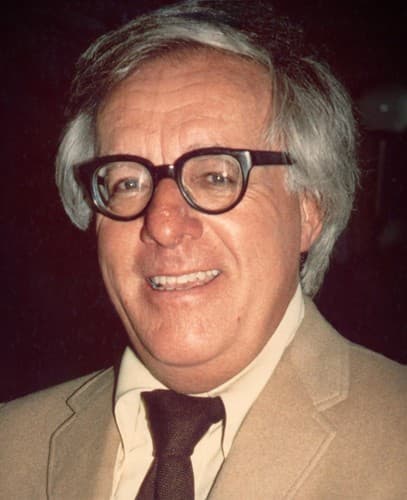
Ray Douglas Bradbury was an American author and screenwriter. One of the most celebrated 20th-century American writers, he worked in a variety of modes, including fantasy, science fiction, horror, mystery, and realistic fiction.







