“I was a man who thrived on solitude; without it I was a half-dead thing.”
— Henry Chinaski reflecting on his need for being alone amidst his various jobs.


Charles Bukowski (1975)
Genre
Thriller / Mystery
Reading Time
200 min
Key Themes
See below
Sign in to track this book
Henry Chinaski, a defiant, drunken poet, stumbles through WWII-era America, leaving a trail of broken jobs and sordid encounters.
Henry Chinaski, a young man who likes drinking and dislikes steady work, is called to the draft board during World War II. He presents himself as a malcontent, openly expressing his dislike for authority and the war. After a brief psychological evaluation where he deliberately provokes the doctors, he is classified 4-F, unfit for military service. This deferment allows him to continue his aimless life, moving from one basic job to another, always with the desire to write, though he rarely does. His immediate goal is always the next drink and a place to sleep, setting the stage for his wandering existence across America.
Chinaski goes to Los Angeles, taking on a series of unskilled jobs: a pickle factory, a dog biscuit factory, a packing house. He finds these jobs awful and temporary, always quitting or getting fired. During this time, he meets Laura, a woman he finds attractive despite her heavy drinking and unstable nature. Their relationship involves drunken arguments, shared poverty, and a mutual disinterest in conventional life. They move into cheap rooms, their days often revolving around finding enough money for alcohol and food. Chinaski occasionally tries to write poetry, but his efforts are sporadic and fueled by his disillusionment.
Seeking a change and hoping to escape his situation with Laura, Chinaski takes a bus to New Orleans. He tries to find work, briefly getting a job as a dishwasher, but his usual pattern of boredom, heavy drinking, and an inability to tolerate authority quickly returns. He stays in rundown hotels, his days a blur of alcohol and brief encounters. The new location does little to change him or his habits. He eventually decides to leave New Orleans, realizing that his problems are not tied to a specific place but are part of his way of life, prompting him to return to California.
Upon returning to Los Angeles, Chinaski falls back into the familiar cycle of temporary jobs and excessive drinking. He meets Jan, a woman who is even more eccentric and alcoholic than Laura. Their relationship is similar to his previous one, marked by shared poverty, squalid living conditions, and frequent drunken escapades. Jan often has money from unknown sources, which they quickly spend on alcohol. Their dynamic is volatile, with arguments and brief moments of camaraderie, all in low-rent apartments and the constant search for the next bottle. Chinaski continues to write, finding inspiration in his degenerate lifestyle.
Chinaski and Jan move from one dilapidated hotel room to another, with few possessions and a transient existence. He continues his string of short-lived jobs: working in a picture frame factory, a lamp factory, and as a shipping clerk. Each job is torture, filled with oppressive supervisors, monotonous tasks, and dehumanizing conditions. He either quits in disgust or is fired for insubordination or absenteeism. The only constant is his drinking, which intensifies with each new disappointment. Jan's presence provides a warped companionship, but their shared misery often leads to further conflict and deeper self-destruction.
Feeling suffocated by Los Angeles and his relationship with Jan, Chinaski takes a bus to San Francisco. He hopes for a fresh start or at least a temporary break from his routines. However, the new city brings little change to his circumstances. He struggles to find work, encountering the same exploitative employers and soul-crushing labor. His drinking continues, and he finds himself in familiar bars, surrounded by familiar types of people. He realizes that his environment is less the problem than his own nature, leading him to conclude that changing locations offers no true escape.
Back in Los Angeles, Chinaski becomes interested in horse racing. He sees it as a potential way to make quick money without the indignity of conventional labor. He spends his meager earnings and often Jan's on betting, studying the racing forms with intense, though often misguided, focus. While he experiences occasional small wins, his overall luck is poor, and the track becomes another drain on their finances. This period shows his constant search for an easy way out of poverty, a desire that consistently clashes with his self-destructive tendencies and lack of discipline.
The relationship between Chinaski and Jan gets worse, marked by increasing hostility, resentment, and violent drunken outbursts. Their shared apartment becomes a battleground. Eventually, a particularly nasty fight, fueled by alcohol and mutual frustration, leads to their definitive separation. Chinaski feels a weary relief, though he is again alone and facing the same struggles. This breakup is another turning point, leaving him free to continue his solitary, wandering existence, but with the same ingrained habits and lack of direction.
After separating from Jan, Chinaski enters a period of greater isolation. He finds a small, cheap room and focuses more intently on his writing. He sends out manuscripts to various literary magazines, often receiving rejections but occasionally some encouragement. This phase shows his deeper commitment to his art, even as his daily life remains in poverty and heavy drinking. He sees writing as his only true escape and purpose, a way to make sense of his chaotic experiences and to assert his individuality against a world he largely dislikes. His experiences become material for his raw, honest prose.
Chinaski continues his pattern of taking and quickly losing various basic jobs. He works as a stock boy, a truck loader, and in another factory, each experience reinforcing his contempt for the working world and its demands. He finds the work mind-numbing, the supervisors oppressive, and his fellow workers either pathetic or complicit. His inability to conform or find meaning in these jobs solidifies his identity as an outsider. These episodes emphasize his unwavering commitment to his own individual freedom, even if it means perpetual poverty and social alienation, all while his ambition to write remains.
Chinaski has a brief, unsettling encounter with a wealthy, older woman who is attracted to his raw, unconventional nature. She invites him to her luxurious home, offering him a glimpse into a world of comfort and privilege different from his own. However, he feels out of place and uncomfortable. The encounter is short-lived, as he quickly retreats to his familiar squalor, unable to connect with her world or accept her help. This episode highlights his deep alienation from mainstream society and his preference for his own self-imposed marginalization, even if it means continued hardship.
Throughout his endless cycle of jobs, relationships, and geographical shifts, Chinaski consistently returns to his typewriter. He continues to send out his poems and short stories, enduring countless rejections. The act of writing becomes the central part of his existence, the one thing that provides meaning and a sense of self amidst the chaos and squalor. He sees himself as a chronicler of society's underbelly, finding beauty and truth in the lives of the downtrodden. His resilience in pursuing his craft, despite overwhelming odds, shows his artistic drive and his refusal to succumb to the despair of his circumstances.
The Protagonist
Chinaski remains largely unchanged in his core philosophy, but his journey solidifies his identity as a writer and an outsider, reaffirming his chosen path despite its hardships.
The Supporting
Laura's character arc is limited; she serves as a reflection of Chinaski's early relationships and lifestyle choices.
The Supporting
Jan's character arc is primarily a descent, mirroring the increasingly chaotic nature of Chinaski's life during their time together.
The Antagonists/Supporting
These characters are static, serving as foils to Chinaski's anti-establishment worldview.
The Mentioned/Supporting
These characters are static, serving a specific plot function to enable Chinaski's freedom from military service.
The Supporting
These characters are static, serving as background and thematic reinforcement.
A central theme is Chinaski's critique of conventional work. Every job he takes—from pickle factory to lamp factory—is depicted as soul-crushing, monotonous, and exploitative. He rejects the idea that work provides meaning or dignity, viewing it instead as a form of imprisonment that strips individuals of their humanity. His frequent firings and resignations are acts of rebellion against this system, even if they lead to more poverty. This theme is evident in scenes where he describes the mind-numbing repetition of tasks or the petty tyranny of his supervisors, such as his experience at the dog biscuit factory where the smell and the endless conveyor belt drive him to despair.
“How in the hell could a man enjoy being awakened at 6:30 AM, summer or winter, fall or spring, to eat, shit, shave, brush his teeth, and commute to some goddamn job he hated, where he would be kept awake by caffeine and cigarettes, only to rush home to a meal he was often too tired to eat and then fall asleep so he could start the whole thing over again?”
Alcohol is both a coping mechanism and a destructive force throughout the novel. Chinaski and his companions (Laura, Jan) are chronic alcoholics, their lives revolving around getting and consuming drinks. Alcohol fuels their arguments, numbs their despair, and provides a temporary escape from their squalid realities. However, it also makes their problems worse, leading to violence, homelessness, and further alienation. The constant presence of drinking, from cheap wine to rotgut whiskey, highlights the cycle of addiction that traps Chinaski, even as he uses it to fuel his artistic output. A poignant example is when he and Jan spend their last money on alcohol instead of food, prioritizing the immediate high over basic needs.
“The beer was good, the company was bad, and I was drunk.”
Chinaski is an outsider, always alienated from mainstream society. He rejects its values, its institutions, and its people, preferring the company of other outcasts or his own solitude. His inability to conform to societal norms, whether in work, relationships, or social interactions, reinforces his status as a perpetual wanderer. This theme is evident in his disdain for the draft board, his contempt for his co-workers, and his discomfort with the wealthy woman. His alienation is not just a consequence of his circumstances but a deliberate choice, a way to maintain his integrity and artistic freedom in a world he finds contemptible.
“I was never a misanthrope, I just wanted to be left alone.”
Despite his wild lifestyle, Chinaski's main goal is to be a writer. His experiences, however sordid, become material for his art. The novel shows the harsh reality of an aspiring artist living in poverty, facing constant rejection, and struggling to find time and energy for his craft amidst the demands of survival. His commitment to writing, even when it seems futile, serves as his ultimate purpose and salvation. This theme is most evident when he dedicates himself more seriously to writing after his breakup with Jan, sending out manuscripts and finding a fragile sense of meaning in the creative act itself, transforming his suffering into art.
“I was a writer. I just hadn't been discovered yet.”
The novel emphasizes the impermanence of everything in Chinaski's life: jobs, relationships, living spaces, and even cities. He is constantly moving, drifting from one temporary situation to the next, never settling down. This transience reflects his internal restlessness and his inability to find a stable place in the world. Each new city or room offers a brief hope for change, quickly dashed as old patterns return. The constant movement underscores his lack of roots and his detachment from any particular place or person, showing a life lived on the margins with no fixed anchor.
“I moved from room to room, from city to city, from woman to woman, from job to job, and I was always looking for something, but I never found it.”
A series of loosely connected vignettes rather than a linear plot.
The novel is structured as a series of distinct episodes, each detailing Chinaski's experiences in a different job, city, or relationship. There isn't a strong overarching narrative arc with a clear rising action, climax, and resolution. Instead, the chapters often stand alone as vignettes, reflecting the fragmented and aimless nature of Chinaski's life. This structure mirrors the protagonist's transient existence, where one job or relationship quickly gives way to another, emphasizing the cyclical and repetitive nature of his struggles rather than progressive development. It allows for a focus on specific moments and observations.
The story is told entirely from Chinaski's cynical and unfiltered perspective.
The entire novel is narrated by Henry Chinaski, allowing readers direct access to his raw, cynical, and often darkly humorous thoughts and observations. His distinct voice – blunt, disillusioned, and unflinchingly honest – shapes the reader's perception of events and other characters. This device immerses the reader in Chinaski's subjective experience, making his alienation and contempt for society palpable. The unfiltered nature of his narration reinforces the authenticity of his 'low-life' existence and his identity as an outsider, providing insight into his motivations and the bleak beauty he finds in his degenerate world.
Alcohol represents both escape and entrapment for Chinaski.
Alcohol in 'Factotum' functions as a powerful symbol. On one hand, it represents a temporary escape from the drudgery of work, the pain of poverty, and the existential angst Chinaski experiences. It fuels his creative impulses and provides a sense of camaraderie with others on the margins. On the other hand, it symbolizes his entrapment and self-destruction, leading to violence, poor decisions, and a perpetual cycle of hardship. The constant presence of drinking, from cheap wine to rotgut whiskey, underscores the dual nature of his addiction – both a comfort and a curse, a catalyst for both insight and further despair.
Recurring patterns of jobs, relationships, and geographical shifts.
A key plot device is the deliberate repetition of similar situations: Chinaski takes a job, hates it, gets fired or quits; he enters a relationship, it descends into drunken chaos, it ends; he moves to a new city, but his problems follow him. This cyclical pattern emphasizes the unchanging nature of Chinaski's core personality and his inability or unwillingness to break free from his chosen lifestyle. It highlights the futility of seeking external solutions to internal struggles and reinforces the novel's thematic focus on the individual's struggle against an indifferent world, suggesting that true change must come from within, if at all.
“I was a man who thrived on solitude; without it I was a half-dead thing.”
— Henry Chinaski reflecting on his need for being alone amidst his various jobs.
“The problem was you had to keep going, you had to find something to do with all that time, you had to fill your life with something.”
— Chinaski contemplating the relentless march of time and the need for purpose.
“How in the hell could a man enjoy being awakened at 6:30 AM, five days a week, by an alarm clock, leap out of bed, dress, force-feed, shit, piss, brush teeth, comb hair, and fight traffic to get to a job that drained him of any life he might have felt for 8 or 9 hours, and then return home to eat and try to recuperate enough to do it again the next day?”
— Chinaski's famous rant against the monotony and drudgery of the working life.
“Some people never go crazy, what truly horrible lives they must lead.”
— Chinaski's sardonic observation on conformity and the lack of wildness in some people's lives.
“Drinking was a way of ending the day. It was a way of saying, I'm done, it's over, it's finished. And it was a way of starting the night.”
— Chinaski's view on his relationship with alcohol as a transition.
“The less I needed, the better I felt.”
— Chinaski's minimalist philosophy on possessions and desires.
“Genius might be the ability to say a profound thing in a simple way.”
— Chinaski's musing on the nature of genius while working a menial job.
“I wasn't a misanthrope. I was a pessimist.”
— Chinaski clarifying his worldview, distinguishing between hating people and expecting the worst.
“It was difficult to get to know yourself when you were working all the time.”
— Chinaski reflecting on how demanding jobs hinder self-discovery.
“The world was a place where you could do anything you wanted to do, if you had the nerve.”
— Chinaski's belief in the power of audaciousness, despite his own circumstances.
“People are strange: they are constantly angered by trivial things, but on a matter of life and death, they will be indifferent.”
— Chinaski observing the peculiar priorities and reactions of others.
“I was looking for a way out, any way out, but there was no way out, there was only a way in, and I didn't want to go in.”
— Chinaski's feeling of being trapped by his circumstances, yet resisting engagement.
“If you're going to try, go all the way. Otherwise, don't even start.”
— Chinaski's advice on commitment and effort, often applied to his writing and drinking.
“It was as if I had been born to be a bum, and the world had been waiting to confirm it.”
— Chinaski's sense of predestination regarding his transient and underachieving lifestyle.
Ready to see how well you understood this book? Take our interactive quiz with 10 questions.
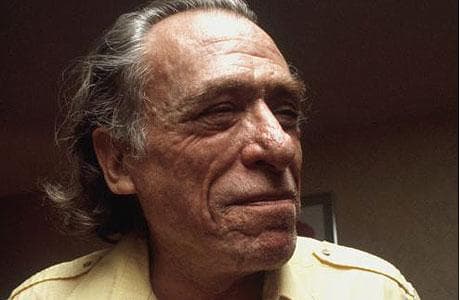
Charles Bukowski was a prolific German-American poet and novelist, often celebrated for his raw, autobiographical style. His notable works include 'Notes of a Dirty Old Man,' 'Factotum,' and 'Ham on Rye,' which vividly depict the gritty realities of working-class life and his own struggles with alcohol and poverty. Bukowski's unflinching prose and anti-establishment themes have cemented his status as a counter-culture icon.







