“There are things you can't forgive. They just are. You have to live with them, and they will always be there.”
— Wallander reflecting on the nature of certain crimes and their lasting impact.


Henning Mankell (2011)
Genre
Thriller / Mystery
Reading Time
284 min
Key Themes
See below
Sign in to track this book
A small-town Swedish detective, battling personal demons, must navigate a rising tide of xenophobia and a brutal double murder triggered by a dying whisper to catch the 'faceless killers' before his community implodes.
Early one January morning in the quiet Scania countryside, farmer Yngve Holm makes a horrific discovery at the Lofa farm. He finds Johannes Lövgren bludgeoned to death and his wife, Maria Lövgren, barely clinging to life, tied to a kitchen chair. Before Maria succumbs to her injuries, she whispers a single, chilling word: "foreign." Inspector Kurt Wallander of the Ystad police station is assigned the case. His personal life is in disarray, with his wife Mona leaving him and his daughter Linda estranged. The brutal nature of the crime and Maria's dying utterance immediately ignite a wave of xenophobia in the community, fueled by media sensationalism and right-wing political groups, making Wallander's investigation tense from the outset.
Wallander and his team, including Rydberg, Martinsson, and Hansson, begin their investigation at the Lofa farm. They find no forced entry, suggesting the victims knew their attackers or were surprised. The only physical evidence is a piece of string and a footprint. As news of Maria's dying word spreads, public opinion quickly turns against immigrants and asylum seekers, particularly those at a nearby refugee camp. Wallander, while privately empathetic to the plight of immigrants, must navigate the political pressure and the growing racial animosity, which threatens to overshadow the actual search for the killers. He is frustrated by the lack of concrete leads and the difficulty of separating fact from prejudice.
The investigation takes a dangerous turn when Svedberg, a young police officer, is brutally attacked and beaten unconscious while investigating a lead related to the refugee camp. This incident further inflames public sentiment and puts the police force on edge. Wallander realizes the killers are not only ruthless but also willing to silence anyone who gets too close. The attack on Svedberg reminds Wallander of the personal risks involved in the case and intensifies his determination to find the culprits. He begins to suspect that the motive might be more complex than a simple robbery or hate crime, given the specific nature of the violence.
The case attracts national attention, with politicians and media outlets weighing in on the 'immigrant crime' narrative. Wallander is summoned to meetings where he's pressured to declare the killers foreign, despite lacking concrete evidence. He resists these attempts to politicize the investigation, insisting on following the facts. The media, particularly the tabloid press, sensationalizes every detail, fanning the flames of xenophobia and making Wallander's job even harder. He feels increasingly isolated and burdened by the weight of public expectation and the moral imperative to conduct an unbiased investigation in a highly charged atmosphere.
Rydberg, Wallander's experienced colleague, uncovers an old, unsolved bank robbery from several years prior. He notices a subtle but significant detail: the way the robbery was carried out, particularly the use of specific knotting techniques, resembles the way Maria Lövgren was tied. This new lead shifts the focus away from the immediate xenophobic theories and provides a more concrete direction for the investigation. Wallander, initially skeptical, begins to see the potential for a deeper, more calculated motive behind the Lövgren murders, suggesting a long-simmering revenge or an attempt to silence witnesses to a past crime.
Wallander and his team examine the details of the old bank robbery. They discover that the Lövgrens, known for their reclusive nature, lived relatively close to the bank and might have been unwitting witnesses to the getaway. This theory gains traction as they find no other plausible motive for such extreme violence, especially given the Lövgrens' age and lack of obvious enemies. Wallander speculates that Maria's dying word, "foreign," might have been a deliberate misdirection by the killers, or a misunderstanding, to throw the police off track and exploit existing social tensions. The team focuses on identifying the bank robbers and their possible connection to the Lövgrens.
Through painstaking police work, including reviewing old case files and interviewing informants, Wallander's team identifies a group of local criminals known for their involvement in petty crimes and their association with more serious offenses. One name, in particular, stands out: a man named Alfred Harder, who was linked to the bank robbery. The team starts to build a profile of the suspects, realizing they are not foreign, but rather local Swedes who meticulously planned the Lövgren murders to eliminate any potential witnesses to their past crime. This revelation challenges the prevailing public narrative and deepens Wallander's frustration with the public's quick judgment.
Acting on new intelligence, Wallander and his team locate Alfred Harder and his accomplices. A tense standoff ensues, culminating in a dramatic confrontation. The killers are apprehended after a brief struggle. During interrogation, they confess to the Lövgren murders, confirming that the motive was to silence the elderly couple who had witnessed their bank robbery years ago. They admit to using Maria's dying word to deliberately mislead the police and incite racial hatred, hoping to divert suspicion. The capture brings a sense of relief to Wallander, but also a deep weariness from the emotional toll of the case and the societal divisions it exposed.
The news of the killers' capture and their Swedish identity sends shockwaves through the community. The revelation that Maria's dying word was a deliberate ruse by the murderers, and not an accusation against foreigners, forces the public and the media to confront their hasty judgments and the dangers of xenophobia. Wallander faces the press, explaining the true motive and the deliberate manipulation. While the immediate crisis of the murders is resolved, the underlying social tensions and the ease with which prejudice can be exploited leave Wallander feeling disillusioned and pensive about the state of Swedish society. He reflects on the damage done by the baseless accusations.
With the case closed, Wallander attempts to process the emotional and psychological toll it has taken. His personal life remains fractured, and the brutal nature of the crime, coupled with the societal hatred it exposed, leaves a lasting impression. He contemplates the fragility of justice, the pervasive nature of prejudice, and his own aging and increasing weariness. Despite solving the murders, Wallander feels no triumph, only a deep sense of melancholy and concern for the future of Sweden. He finds himself unable to fully reconcile the darkness he has witnessed, both in the criminals and in the broader community, leaving him with a deep sense of isolation and introspection.
The Protagonist
Wallander begins as a personally fragmented detective, and while he solves the case, the experience further deepens his introspection and highlights his increasing weariness with the world's injustices.
The Victim
His death serves as the inciting incident for the entire plot, sparking the investigation and the subsequent societal turmoil.
The Victim
Her dying word, though a misdirection by her killers, becomes the central catalyst for the story's themes of prejudice and media manipulation.
The Supporting
Rydberg remains a steadfast and crucial support for Wallander, his experience proving vital to solving the case.
The Supporting
Martinsson grows in competence and understanding under Wallander's guidance, gaining valuable experience in a complex case.
The Antagonist
Harder is introduced as a shadowy figure from a past crime and is ultimately exposed and captured as the central antagonist.
The Supporting/Mentioned
His attack intensifies the stakes of the investigation and fuels Wallander's resolve.
The Mentioned
His discovery initiates the plot.
The novel powerfully explores the dangerous ease with which prejudice can take root and spread, particularly when fueled by fear and misinformation. Maria Lövgren's dying word, "foreign," immediately triggers a wave of anti-immigrant sentiment, amplified by media and political opportunism. Wallander constantly battles this tide of xenophobia, which threatens to derail the investigation and obscure the truth. The theme culminates in the revelation that the killers deliberately used this prejudice to mislead the police, highlighting the calculated manipulation of societal divides. This is evident in the public's immediate assumption of foreign perpetrators and the pressure on Wallander to confirm this bias.
““Foreigners. That’s what she said. Foreigners.””
Mankell uses the Lövgren murders and their aftermath to critique what he perceives as a decline in Swedish society, particularly the loss of traditional values and the rise of crime and social fragmentation. Wallander frequently reflects on the changing nature of Sweden, lamenting the increase in violence and the erosion of community trust. The novel suggests that the idyllic image of Sweden is cracking, revealing underlying tensions and a sense of moral decay. This is seen in Wallander's personal struggles mirroring societal ones, and the capacity for local Swedes to commit such brutal acts.
““He saw a society in the process of disintegrating, a new kind of violence, a new kind of cruelty.””
The novel examines the immense personal and professional toll that seeking justice takes on those who pursue it, particularly Kurt Wallander. He is portrayed as a detective constantly battling exhaustion, self-doubt, and a deteriorating personal life, all made worse by the demands of his job. The case's brutality, coupled with the political and social pressures, weighs heavily on him. Even after solving the crime, Wallander experiences no triumph, only a deep sense of weariness and disillusionment, underscoring the idea that justice often comes at a high personal cost and doesn't always bring peace.
““He felt tired, profoundly tired, as if all the violence and hatred in the world had taken root inside him.””
The book critically examines the powerful and often detrimental role of the media in shaping public opinion and influencing criminal investigations. Tabloid newspapers sensationalize Maria Lövgren's dying word, igniting and fanning the flames of xenophobia without regard for the facts. This media frenzy creates immense pressure on Wallander and his team to conform to a predetermined narrative. The killers' deliberate use of the "foreign" clue is a direct manipulation of this media landscape, highlighting how easily public perception can be swayed and exploited for nefarious purposes, making the police's job infinitely harder.
““The headlines screamed, the radio blared. The word 'foreign' echoed like a death knell across the country.””
Faceless Killers explores the unsettling nature of evil, demonstrating that it can originate not just from obvious external threats, but also from within a seemingly peaceful society. The revelation that the Lövgren murders were committed by local Swedes, rather than foreign perpetrators as initially assumed, challenges preconceived notions of who is capable of such brutality. The killers' calculated cruelty and their manipulation of social tensions reveal a chilling, 'faceless' evil that is both mundane and profoundly disturbing, lurking beneath the surface of everyday life. This forces Wallander to confront a darker side of his own countrymen.
““The evil was not foreign; it was here, among them, in their own backyard.””
Maria Lövgren's dying word, "foreign," intentionally misleads the investigation.
The most prominent red herring in the novel is Maria Lövgren's whispered final word: "foreign." This single word immediately directs the police investigation and public opinion towards immigrant communities, fueling xenophobia. The killers deliberately planted this clue to divert suspicion from themselves. Wallander spends a significant portion of the investigation battling this preconceived notion, until the true motive (silencing witnesses to a past bank robbery) is uncovered, revealing the calculated deception. This device effectively highlights the theme of prejudice and the dangers of hasty judgment.
A clue that is ambiguous or intentionally misleading.
Similar to a red herring, but with an emphasis on the ambiguity, Maria's dying word acts as an unreliable clue. It isn't entirely false – the killers were 'foreign' to the Lövgrens' intimate circle – but it's presented in a context designed to be misinterpreted. This unreliability forces Wallander to constantly question assumptions and look beyond the obvious, reinforcing his methodical approach despite external pressures. It also underscores the manipulative nature of the antagonists and the vulnerability of victims to have their last words twisted.
Wallander's personal struggles mirror the societal decay.
The novel interweaves the central murder investigation with the deteriorating state of Kurt Wallander's personal life – his wife leaving him, his strained relationship with his daughter, his unhealthy habits. This parallel narrative serves to deepen Wallander's character, making him more relatable and human. It also acts as a microcosm of the larger societal decay that the book explores, suggesting that personal fragmentation reflects broader social disintegration. His personal struggles amplify the emotional weight of the case and his weariness.
Rydberg's wisdom guides Wallander through the complex investigation.
Rydberg, Wallander's older and more experienced colleague, functions as an experienced mentor. His calm demeanor, meticulous attention to detail, and ability to recall past cases (like the old bank robbery) are crucial in providing the breakthrough Wallander needs. He offers a grounded counterpoint to Wallander's often emotional and intuitive approach, and his insights prevent the investigation from being completely consumed by the xenophobic narrative. Rydberg represents traditional police wisdom, a steady hand in a turbulent case.
“There are things you can't forgive. They just are. You have to live with them, and they will always be there.”
— Wallander reflecting on the nature of certain crimes and their lasting impact.
“He knew that the world was full of evil, but he also knew that there were people who fought against it.”
— Wallander's internal thoughts about the constant struggle between good and evil.
“The greatest evil is not to act when one can.”
— A philosophical statement about responsibility and inaction in the face of injustice.
“Sometimes the truth is so simple that you miss it completely.”
— Wallander's realization during an investigation that he overcomplicated a solution.
“He was tired of the darkness, but he knew he had to keep going.”
— Wallander's weariness with the grim realities of his job but his determination to continue.
“The past always catches up with you, sooner or later.”
— A general observation about the inescapable nature of past actions and their consequences.
“It's easy to hate, much harder to understand.”
— Wallander contemplating the motivations behind crime and the difficulty of empathy.
“Silence can be more terrifying than any scream.”
— Describing the oppressive atmosphere of a crime scene or a tense moment.
“Every secret has a price.”
— A reflection on the cost of hidden truths and their eventual revelation.
“He felt like a man walking through a fog, never quite sure where he was going.”
— Wallander's feeling of disorientation and uncertainty during a complex case.
“Justice is not always about punishment, but about understanding.”
— Wallander's evolving perspective on the deeper meaning of justice beyond simple retribution.
“The world was not a logical place, and crime even less so.”
— Wallander's frustration with the irrationality and unpredictability of human behavior in crime.
“He knew that sometimes you had to break the rules to do what was right.”
— Wallander contemplating ethical dilemmas and the necessity of bending rules for a greater good.
“The wind carried the smell of rain and something else, something indefinable, like old sorrow.”
— A sensory description that evokes the somber mood and underlying sadness of the setting.
Ready to see how well you understood this book? Take our interactive quiz with 10 questions.
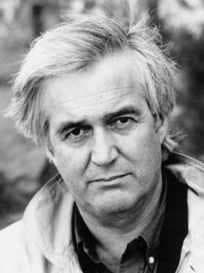
Henning Georg Mankell was a Swedish crime writer, children's author, and dramatist, best known for a series of mystery novels starring his most noted creation, Inspector Kurt Wallander. He also wrote a number of plays and screenplays for television.







