“Mitch Rapp had always known that good intentions rarely paved the road to anything but more trouble.”
— Rapp's cynical view on the world and the futility of good intentions in the face of evil.

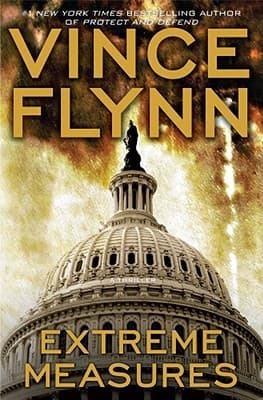
Vince Flynn (2008)
Genre
Thriller / Mystery / Romance
Reading Time
9-10 hours
Key Themes
See below
Sign in to track this book
When a dedicated counterterrorism operative is betrayed by the very government he swore to protect, he must fight to clear his name while uncovering a conspiracy that threatens the nation he loves.
Mike Nash, a highly skilled CIA operative and protégé of Mitch Rapp, is in Hamburg, Germany, on a mission to surveil an Iranian nuclear scientist. While conducting his surveillance, Nash is ambushed by a team of CIA operatives led by Marcus Dumond. Dumond's team attempts to capture or kill Nash, but Nash, using his extensive training and combat skills, fights back fiercely. He manages to eliminate several of his attackers and escape, though he sustains injuries. This unexpected betrayal by his own agency leaves Nash disoriented and determined to uncover the truth behind the sudden attempt on his life.
After his narrow escape in Hamburg, a wounded and paranoid Mike Nash manages to make contact with his mentor, Mitch Rapp, who is currently operating deep within Pakistan. Nash explains the ambush, his confusion, and his belief that he has been targeted by elements within the CIA. Rapp, despite being thousands of miles away and dealing with his own high-stakes mission, immediately recognizes the gravity of the situation and begins to subtly investigate from his remote location, offering Nash guidance and a lifeline while urging extreme caution.
CIA Director Irene Kennedy is presented with a politically charged situation involving Mike Nash. She is informed that Nash has gone rogue and is being hunted by an internal task force. Unbeknownst to her, elements within the government, specifically the powerful Senator Betsy Ross and her allies, are orchestrating a covert operation to eliminate operatives like Nash who they deem 'too extreme' or 'uncontrollable.' Kennedy, a staunch supporter of Rapp and Nash, senses a deeper conspiracy at play and begins her own discreet investigation, trying to protect her agents while navigating treacherous political waters.
Senator Betsy Ross, a powerful and ambitious politician, is revealed to be the architect behind the clandestine 'clean-up' operation targeting operatives like Mike Nash. Believing that certain counterterrorism tactics are unethical and that agents like Nash operate outside the bounds of law, she has formed a secret committee within the government. This committee, without proper oversight or public knowledge, is actively working to eliminate or neutralize a list of highly effective but often brutal operatives, viewing them as liabilities to be purged rather than assets to be protected.
Mike Nash, now a fugitive within his own country, uses his extensive training to stay ahead of his pursuers. He goes deep underground, utilizing safe houses and contacts, while meticulously trying to piece together the puzzle of who is behind the attempts on his life. He realizes the operation is highly coordinated and involves powerful figures. His primary goal shifts from mere survival to uncovering the truth and exposing those responsible, understanding that his life depends on it and that many other operatives might also be targeted.
Despite being in Pakistan, Mitch Rapp leverages his vast network of contacts and intelligence assets to aid Mike Nash. He feeds Nash crucial information, helps him anticipate his enemies' moves, and even arranges for covert assistance when possible. Rapp's support is vital for Nash's survival and progress, demonstrating the deep loyalty and trust between mentor and protégé. Rapp also begins to apply pressure on key figures within the intelligence community, subtly exposing inconsistencies and forcing the conspirators to react.
Through his relentless investigation and with Rapp's guidance, Mike Nash uncovers evidence of a highly classified 'kill list' or 'purge list' sanctioning the elimination of specific counterterrorism operatives. This revelation confirms his worst fears: he is not the only one targeted, and the conspiracy extends far beyond a simple rogue operation. The list includes other highly effective but unconventional agents, all deemed problematic by Senator Ross and her committee, solidifying Nash's resolve to expose the truth.
Mike Nash tracks down Marcus Dumond, the operative who led the ambush in Hamburg. In a tense and brutal confrontation, Nash forces Dumond to reveal details about the conspiracy. Dumond, under duress, confesses that he was acting under orders from Senator Ross's committee and explains the political motivations behind the purge. This encounter provides Nash with concrete evidence and a clearer understanding of the forces arrayed against him, confirming the deep-seated corruption within the government.
Armed with growing evidence, Irene Kennedy directly confronts Senator Betsy Ross and her allies. Kennedy exposes the illegal and unconstitutional nature of their secret committee and the 'kill list.' This confrontation escalates into a high-stakes political battle, with Kennedy fighting to protect her agency and her operatives, while Ross attempts to maintain control and bury the scandal. The political maneuvering is intense, with careers and lives hanging in the balance.
Mike Nash, having gathered irrefutable evidence, prepares to make his final move: exposing the entire conspiracy to the public. He understands the immense risks involved, but believes it's the only way to hold the powerful figures accountable and prevent further harm to dedicated operatives. His actions force the conspirators into a corner, leading to a desperate attempt by them to silence him permanently before he can reveal the truth, setting the stage for a climactic showdown.
In a climactic sequence, Mike Nash, with the indirect help of Mitch Rapp and the direct support of Irene Kennedy, successfully exposes Senator Ross's clandestine committee and their illegal operations. The evidence Nash meticulously collected, combined with Kennedy's political maneuvering, leads to the downfall of Ross and her co-conspirators. While not all details become public, enough truth emerges to dismantle the rogue committee and ensure accountability. Nash's name is cleared, and he, along with other targeted operatives, is reinstated, though the scars of betrayal remain.
The Protagonist
Nash transforms from a dedicated operative into a hunted fugitive, forced to fight his own government, ultimately emerging as a resilient survivor who exposes corruption.
The Supporting
Rapp maintains his role as a formidable protector, demonstrating unwavering loyalty and strategic brilliance even while geographically distant from the main conflict.
The Supporting
Kennedy fights to uncover and dismantle a conspiracy threatening her agency and operatives, reaffirming her integrity and authority.
The Antagonist
Ross descends deeper into corruption in her attempt to control intelligence operations, ultimately facing exposure and political ruin.
The Supporting
Dumond goes from an active participant in the betrayal to a terrified informant, revealing crucial details under duress.
The Supporting
Coleman remains a steadfast and reliable asset in Rapp's network, ready to assist when called upon, reinforcing the theme of loyalty.
The novel explores betrayal, especially when it comes from within one's own government. Mike Nash, a dedicated operative, is targeted by those he swore to protect, making him question everything. This contrasts with the loyalty shown by Mitch Rapp and Irene Kennedy, who risk their careers to protect Nash. The internal conflict highlights the moral questions of intelligence work and the personal cost of such betrayals, as seen when Dumond eventually breaks under Nash's pressure.
““The hardest part wasn’t fighting the enemy. It was realizing the enemy was wearing the same uniform.””
Extreme Measures looks at the personal sacrifices made by those in covert operations. Mike Nash has lied to his family for years, endured violence, and dedicated his life to protecting his country, only to be deemed a liability and targeted. The story questions what 'patriotism' means and whether the ends justify the means, especially when the 'means' involve actions deemed 'extreme' by political figures like Senator Ross. It shows the psychological cost on operatives who work outside legal boundaries for national security.
““They wanted men to do the dirty work, but they didn’t want to look at the dirt.””
A central theme is the danger of unchecked government power and the need for accountability, even in national security. Senator Betsy Ross's secret committee operates outside constitutional bounds, creating a 'kill list' of operatives without due process. The story criticizes this overreach, showing how good intentions can lead to tyranny. Irene Kennedy's fight to expose the committee highlights the need for transparency and oversight to prevent such abuses of power within democratic institutions, leading to Ross's downfall.
““Power without accountability was a cancer, eating away at the very fabric of democracy.””
The book examines different ideas of justice. Senator Ross believes justice is served by eliminating 'unethical' operatives, even if through illegal means. Mike Nash and Mitch Rapp, however, believe justice is about protecting the nation by any means necessary against its true enemies, and that those who betray their own should be held accountable. The struggle between these viewpoints drives much of the conflict. The story ultimately supports a form of justice that, while sometimes brutal against external threats, upholds fairness and accountability within its own ranks.
““Justice wasn't always clean, but it had to be true.””
A clandestine document sanctioning the elimination of specific operatives.
This central plot device serves as the primary macguffin and driver of the conflict. The 'kill list' is a secret document created by Senator Ross's committee, detailing the operatives deemed 'too extreme' or 'uncontrollable' who are to be neutralized. Its discovery by Mike Nash confirms the conspiracy against him and other agents, fueling his fight for survival and justice. It raises the stakes significantly, as Nash realizes he is not just fighting for his own life but for the lives and reputations of his colleagues.
Mitch Rapp's remote guidance of Mike Nash.
This device highlights the deep bond and trust between Mitch Rapp and Mike Nash. Despite Rapp being thousands of miles away in Pakistan, his guidance, intelligence, and moral support are crucial for Nash's survival and success. Rapp's ability to pull strings and provide critical insights from afar demonstrates his vast influence and the strength of his network. This relationship underscores themes of loyalty and the passing of knowledge within the covert operations community, making Nash's journey less solitary.
The plot to eliminate operatives originating from within the government.
This device creates heightened tension and a sense of betrayal, as the threat comes not from external enemies but from powerful figures within the protagonist's own government. The internal conspiracy, spearheaded by Senator Ross, forces Nash to fight against his own countrymen and agency, blurring the lines between friend and foe. It challenges the conventional 'us vs. them' narrative of thrillers, making the conflict more personal and morally complex for the characters involved.
“Mitch Rapp had always known that good intentions rarely paved the road to anything but more trouble.”
— Rapp's cynical view on the world and the futility of good intentions in the face of evil.
“The problem with absolute power, he thought, was that it always found a way to corrupt absolutely.”
— Rapp reflecting on the nature of power and its inevitable corrupting influence, a recurring theme.
“Sometimes, the only way to save a life was to take another.”
— Rapp's justification for his violent actions, highlighting the moral compromises he often makes.
“Fear was a powerful motivator, but it was also a crippling one if you let it control you.”
— Rapp's internal monologue about the role of fear in high-stakes situations.
“He understood the rules of the game, and he knew that sometimes, to win, you had to break every single one of them.”
— Rapp's willingness to disregard conventional rules and morality to achieve his objectives.
“In his line of work, trust was a luxury he rarely afforded.”
— Rapp's inherent distrust of others, a characteristic born from his dangerous profession.
“The greatest weapon in any war was not a gun or a bomb, but information.”
— Rapp's emphasis on intelligence and knowledge as crucial elements in his operations.
“Revenge, he knew, was a dish best served cold, but sometimes, a little warmth made it all the more satisfying.”
— Rapp's contemplation on the nature of revenge, mixing classic adage with his own brutal pragmatism.
“There were no easy answers in the world he inhabited, only difficult choices.”
— Rapp's constant struggle with moral ambiguity and the lack of clear-cut solutions in his life.
“He didn't seek trouble, but he was always prepared for it.”
— A concise summary of Rapp's proactive and vigilant nature.
“The world was a dangerous place, and someone had to be willing to get their hands dirty to keep it safe.”
— Rapp's self-justification for his role as a covert operative, embracing the necessary ugliness.
“Love, he had learned, was both a strength and a weakness, a shield and an Achilles' heel.”
— Rapp reflecting on the complicated role of personal relationships in his dangerous life.
“Sometimes, the only way to truly understand evil was to stare it directly in the face.”
— Rapp's direct confrontation with antagonists and his willingness to engage with dark forces.
“He was a ghost in a world of shadows, and that was exactly how he liked it.”
— A description of Rapp's preferred mode of operation and his comfort in anonymity.
Ready to see how well you understood this book? Take our interactive quiz with 10 questions.

Biography coming soon.







