“The world is a stage on which we play out our parts, and I have always been a particularly bad actor.”
— Wolfgang, the narrator, reflecting on his life and role within his family.

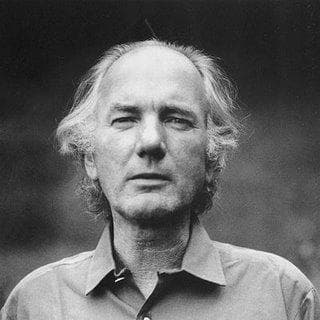
Thomas Bernhard (1996)
Genre
Literary Fiction
Reading Time
670 min
Key Themes
See below
Sign in to track this book
An intellectual, self-exiled from Austria and his land-owning family, must confront the estate he despises when he inherits it after his parents' sudden death.
Franz-Josef Murau, an Austrian intellectual living in a small Rome apartment, focuses on his studies and his student, Maria. He has intentionally distanced himself from his wealthy family at Wolfsegg, Austria, which he sees as hypocritical, uncultured, and involved with Nazism. One day, a telegram from his sisters, Caecilia and Amalia, informs him that his parents and brother, Johannes, died in a car accident on their way to a hunting lodge. This news disrupts his life of exile and forces him to confront the past he tried to escape. His first reaction is complex detachment, almost relief, rather than immediate grief, showing his deep separation from his family.
After the news, Murau begins a long monologue, dictated to Maria, about his family, Wolfsegg, and his philosophical views. He recounts his childhood and youth, feeling like an outsider, an intellectual among the unthinking. He describes his parents as superficial, his sisters as vain, and his brother as simple, destined to inherit the estate. Wolfsegg itself is a place of oppressive tradition, false piety, and the very Austrian mentality he despises. He criticizes the family's art collection, the local clergy, and his homeland's social structure, all through his self-proclaimed intellectual superiority.
With his brother Johannes also dead, Murau realizes he is now the sole male heir and master of Wolfsegg. This unexpected turn fills him with dread and a sense of entrapment. He had planned his life to be free of Wolfsegg, to 'extinguish' its influence. Now, the very thing he sought to escape is forced upon him. He considers the implications of owning such an estate: the financial duties, social expectations, and the symbolic weight of maintaining a legacy he despises. The thought of returning to Austria, even for the funeral, is terrible to him, yet the practicalities of inheritance begin to weigh on his mind.
Reluctantly, Murau travels back to Wolfsegg for the funeral. His return is filled with anxiety and renewed alienation. He observes the funeral with a critical eye, noting the performed grief of relatives, the empty words of local officials, and the pervasive provincialism. He feels disgusted by the people and customs he fled. The familiar landscape and ancestral home evoke both repulsion and a strange, grudging recognition. He sees the entire event as a grotesque spectacle, confirming everything he detested about his origins, reinforcing his belief that Wolfsegg is a place of intellectual and moral decay.
At Wolfsegg, Murau has strained interactions with his two surviving sisters, Caecilia and Amalia. He finds them as superficial and concerned with appearances as ever. They focus on the estate's practicalities, the inheritance, and their social standing, showing little genuine grief or intellectual depth. Murau's contempt for them is clear, and he finds their attempts at conversation tiresome. Their inability to understand his intellectual life or his disdain for their world only confirms his belief that he is different from them, further isolating him in his family's home.
After days of thought, Murau makes a radical decision about Wolfsegg's future. Driven by his desire to break free from its oppressive legacy and to make a statement against the provincial, often anti-Semitic, Austrian past, he decides to give the entire estate, including all its properties, to the Jewish community of Vienna. This act is not just charitable but a symbolic destruction of his family's history and its role in a problematic national identity. It is his ultimate act of 'extinction,' a way to cleanse himself of Wolfsegg's influence and ensure it can no longer perpetuate the values he despises.
Murau explains his reasons for giving Wolfsegg to the Jewish community. He sees it as an act of atonement, a symbolic gesture to counter historical injustices and the anti-Semitism he perceives in Austrian society, and implicitly, within his own family's past. This is the only meaningful way to rid himself of Wolfsegg's burden and transform its tainted legacy into something positive. This decision comes from his intellectual and moral convictions, representing a radical rejection of his heritage and an attempt to use his inheritance to challenge the foundations of the society that produced him. He believes this act will finally sever his ties to the past.
Murau formalizes his decision. He instructs his lawyer to draft a comprehensive will, detailing the bequest of Wolfsegg and its contents to the Jewish community of Vienna. This process is presented with Bernhard's characteristic repetition, highlighting Murau's unwavering commitment to this radical act. The legal document becomes the physical form of his philosophical stance, an irreversible step towards the 'extinction' he desires. Writing the will is not just a legal formality but a profound, almost ritualistic, declaration of independence from his origins and a definitive statement about his ancestral home's future.
Murau expects the outrage, incomprehension, and condemnation his decision will cause among his sisters, relatives, and Austrian society. He enjoys the thought of their shock, seeing it as further proof of their intellectual and moral failings. He foresees their accusations of madness and betrayal, but remains firm, convinced his act is the only logical and ethical course. This anticipation of conflict is not a source of anxiety for Murau, but rather a confirmation of his path, solidifying his identity as an outsider and a truth-teller in a world he sees as flawed.
The novel ends with Murau having finished dictating his monologue to Maria. By speaking his memories, grievances, and final decision about Wolfsegg, he achieves a deep sense of closure and freedom. Narrating his story, putting his thoughts into words, becomes a cathartic process, allowing him to finally process and 'extinguish' the past's hold on him. While the future implications of his decision are yet to unfold, completing his testimony marks the successful completion of his personal 'extinction' project, leaving him, psychologically, free from Wolfsegg's burden and his Austrian heritage.
The Protagonist
Murau moves from a state of intellectual exile and bitter resentment to a decisive act of symbolic annihilation of his past, achieving a form of liberation through the bequest of Wolfsegg.
The Supporting
Maria remains largely static, serving as a catalyst for Murau's development rather than undergoing significant personal change.
The Mentioned
N/A (deceased before the main narrative begins, her character is defined by Murau's fixed perception).
The Mentioned
N/A (deceased before the main narrative begins, his character is defined by Murau's fixed perception).
The Supporting
N/A (her character remains static, serving as a foil for Murau).
The Supporting
N/A (her character remains static, serving as a foil for Murau).
The Mentioned
N/A (deceased before the main narrative begins, his character is defined by Murau's fixed perception).
The Supporting
N/A (a functional character without personal arc).
Exile is a central theme, shown in Franz-Josef Murau's self-imposed move from Austria to Rome. This move is driven by his deep separation from his family and homeland. He sees his exile as a necessary intellectual and moral cleansing, a way to escape Wolfsegg's 'philistinism' and 'hypocrisy.' Even when he reluctantly returns for the funeral, he remains an outsider, observing with critical detachment, feeling no real connection to the mourners or traditions. His alienation is not just physical but deeply intellectual and emotional, making him an eternal outsider.
“I had left Wolfsegg not to return, because I had always hated Wolfsegg, as I hated everything that came from Wolfsegg, everything that had happened there, everything that was Wolfsegg.”
Murau struggles with his family's legacy, especially the Wolfsegg estate, which he sees as tainted by provincialism, social climbing, and involvement with a problematic Austrian past. He wants to 'extinguish' this legacy rather than continue it. His decision to give Wolfsegg to the Jewish community is the ultimate rejection of his inheritance, turning a symbol of his family's perceived moral failures into an act of symbolic atonement. This radical act is his way of breaking the oppressive ties of the past and ensuring the estate can no longer represent what he despises.
“I had inherited Wolfsegg, and I had to extinguish Wolfsegg. I had to extinguish it absolutely.”
A main tension in the novel is Murau's constant claim of intellectual superiority against his family's and Austrian society's perceived lack of culture. He constantly criticizes their superficiality, conventionality, and inability to grasp true art or philosophy. Wolfsegg becomes a small example of this provincialism, a place where real thought is suppressed. Murau's monologue is an extended argument for his own refined intellect and a condemnation of the 'unthinking' masses, positioning himself as a lone voice of critical thought in a sea of banality.
“They were all philistines, my parents and my sisters, and my brother, they were all nothing but philistines, and Wolfsegg was a philistine establishment.”
The entire novel is Murau's dictated monologue, a process of sifting through his memories and expressing his grievances. This narration helps Murau, allowing him to systematically analyze and ultimately 'extinguish' the psychological hold his past has on him. By meticulously recounting every detail, every slight, every philosophical conviction, he processes his trauma and solidifies his radical decision. Speaking and recording his story becomes as important as the decision itself, giving Murau closure and freedom from his origins' burden.
“I had to write everything down, I had to dictate everything, for only in this way could I make an end to it, only in this way could I extinguish it.”
Underlying Murau's personal grievances is a broader critique of Austrian national identity, especially its perceived involvement with Nazism and its failure to address its past. Murau's family, particularly his parents, are linked to this problematic history through their provincialism and conventional attitudes. His radical decision to give Wolfsegg to the Jewish community of Vienna is not just a personal act but a profound symbolic gesture addressing historical guilt and the need for atonement, suggesting a way for Austria to confront its own 'extinction' of moral responsibility.
“Wolfsegg was not just Wolfsegg, Wolfsegg was Austria, and I hated Austria, as I hated Wolfsegg.”
The entire novel is presented as Franz-Josef Murau's continuous, uninterrupted spoken account.
The novel is structured as a single, extended first-person monologue delivered by Franz-Josef Murau to his student, Maria. This device immerses the reader directly into Murau's consciousness, providing unfiltered access to his thoughts, memories, and philosophical arguments. The lack of external dialogue or narration reinforces his isolation and intellectual self-absorption. The monologue's repetitive nature and spiraling arguments mirror Murau's obsessive thought patterns, making the form inseparable from the character's psychology and the novel's thematic concerns of memory, critique, and catharsis.
Murau's thoughts flow continuously, often without clear transitions, mirroring the natural process of memory and rumination.
Closely tied to the monologue, the narrative employs a stream-of-consciousness style. Murau's thoughts jump between past and present, specific events and philosophical generalizations, often without conventional paragraph breaks or clear chronological order. This technique allows for a highly subjective and associative exploration of his mind, reflecting the chaotic yet deeply interconnected nature of his memories and obsessions. It creates a sense of immediacy and intimacy, drawing the reader into the intricate workings of Murau's intellect and his struggle to process his past.
Key phrases, ideas, and criticisms are frequently repeated, often with subtle variations, to emphasize Murau's obsessions.
Bernhard's distinctive use of repetition and variation is a prominent plot device. Murau frequently reiterates certain phrases, judgments, and ideas about Wolfsegg, his family, and his own intellectual superiority. This stylistic choice is not merely a quirk but serves several functions: it underscores Murau's obsessive nature, reinforces the central themes of the novel (e.g., the 'extinction' of Wolfsegg, the 'philistinism' of his family), and creates a hypnotic, almost musical rhythm. The subtle variations in repetition suggest a mind constantly circling back to, and refining, its core grievances and convictions, building an argument through accumulation.
Murau's deceased parents and brother are central to the narrative, though they never appear 'live' in the present.
Murau's parents and brother, whose deaths trigger the entire narrative, are crucial absent characters. They exist solely through Murau's subjective and highly critical recollections. By presenting them only in memory and through his prejudiced lens, the novel emphasizes Murau's internal struggle and his psychological relationship to his past, rather than their objective reality. Their absence in the present allows Murau to fully project his resentments and intellectual frameworks onto them, making them symbols of the 'Wolfsegg' he seeks to extinguish, rather than fully fleshed-out individuals.
“The world is a stage on which we play out our parts, and I have always been a particularly bad actor.”
— Wolfgang, the narrator, reflecting on his life and role within his family.
“Everything is ridiculous when one thinks about it, even one's own self, especially one's own self.”
— Wolfgang's internal monologue while contemplating his family and their estate.
“Life is nothing but a continuous process of dying.”
— A recurring pessimistic thought of Wolfgang's as he reflects on mortality.
“We are all fundamentally alone, even in the midst of the most intense intimacy.”
— Wolfgang's musings on human connection and isolation.
“One must always exaggerate to make oneself understood.”
— Wolfgang considering the nature of communication and truth.
“The greatest misfortune is to be born.”
— A stark, recurring philosophical statement made by Wolfgang.
“Memory is a treacherous thing; it distorts, it embellishes, it invents.”
— Wolfgang reflecting on the unreliability of his recollections.
“Art is the only way to endure existence.”
— Wolfgang's view on the purpose and necessity of art.
“To be silent is to betray oneself.”
— Wolfgang pondering the importance of speaking one's mind, however uncomfortable.
“All families are fundamentally pathological.”
— Wolfgang's harsh assessment of his own and other families.
“The dead are always present, more present than the living.”
— Wolfgang's thoughts on the enduring influence of deceased family members.
“One writes in order not to go mad.”
— Wolfgang's justification for his own literary pursuits and the act of writing.
“Everything is a constant struggle against stupidity.”
— Wolfgang's cynical view of the world and human intelligence.
“To be understood is to be misinterpreted.”
— Wolfgang's pessimistic take on the possibility of genuine understanding between people.
Ready to see how well you understood this book? Take our interactive quiz with 10 questions.
Biography coming soon.







