“Every man has a right to his own land. Every nation has a right to its own land.”
— Ari Ben Canaan's passionate belief in the Jewish claim to Palestine.


Leon Uris (1958)
Genre
Historical Fiction
Reading Time
12-15 hours
Key Themes
See below
Sign in to track this book
An American nurse and an Israeli freedom fighter start a dangerous journey to build a new nation from an ancient homeland, fighting against great challenges and world skepticism in post-WWII Europe.
The novel begins in British-controlled Cyprus in 1947. American nurse Kitty Fremont volunteers at a displaced persons' camp. She meets Ari Ben Canaan, a Haganah operative, who is organizing the illegal transport of Jewish refugees, mostly Holocaust survivors, to Palestine. Ari has bought an old ship, the Exodus, and filled it with 611 Jewish refugees, including many orphans and children. British authorities, led by Major Caldwell, try to stop the ship, understanding its symbolic importance. Ari and his passengers go on a hunger strike and threaten mass suicide, attracting international media attention. Kitty, initially not involved, feels more and more affected by the refugees' situation and Ari's resolve. The British, facing bad public relations, eventually let the Exodus sail to Palestine. This is a moral victory, not a legal one.
After the Exodus arrives in Palestine, Kitty, deeply changed by her experience, decides to follow Ari. She joins him at Gan Dafna, a youth kibbutz in the Jezreel Valley, where many of the Exodus children are settling in. Kitty, at first a detached observer, begins to lose her American superficiality as she sees the difficult realities of pioneer life. She is especially drawn to Dafna, a young girl traumatized by the Holocaust, and Karen Hansen Clement, a Danish girl looking for her family. Kitty learns about the Jewish people's fight for a homeland, the constant threat from Arab neighbors, and the dedication needed to turn a barren land into a community. Her relationship with Ari grows stronger amid their shared purpose and dangers.
Through Kitty's interactions and Ari's stories, the histories of several refugees are shown. Karen Hansen Clement, a Danish girl, was hidden by a Christian family during the war but lost her entire Jewish family. She hopes to find her father. Dov Landau, a troubled young man from Warsaw, survived the Holocaust through extreme means, including working in the Łódź Ghetto and fighting in the Warsaw Ghetto Uprising, where he had to make impossible choices. His past as a counterfeiter and his violent tendencies make him a difficult but valuable community member. These individual stories show the collective trauma and strength of the Jewish people, fueling their wish for a safe homeland.
The story shows Ari Ben Canaan's family history, tracing his family line back to Jossi Ben Canaan, a Russian Jew who moved to Palestine in the late 19th century as part of the First Aliyah. Jossi and his son, Barak, helped establish early settlements and develop the Haganah, the underground Jewish defense group. Ari, Barak's son, inherited this leadership and commitment to Jewish self-defense. He is a skilled military planner and a strong supporter of a Jewish state, having grown up amid the constant fight against both British Mandate authorities and Arab hostility. His personal history is closely linked to the Zionist movement and the fight for independence.
As the United Nations considers dividing Palestine into separate Arab and Jewish states, tensions rise. The Haganah, Irgun, and Lehi (Stern Gang) increase their operations against British and Arab forces. Ari, a Haganah leader, is involved in planning and dangerous missions. Kitty, now fully committed, sees the bombings, retaliations, and constant fear that define daily life. The British, tired of the conflict, struggle to keep control. The Jewish community, though divided on tactics, agrees on establishing a sovereign state. The upcoming UN vote becomes a focus of hope and worry for everyone.
Dov Landau, at first disliked for his past, finds a purpose within the Irgun, a more militant Zionist underground group. His skills as a counterfeiter and his experience with urban warfare are very useful. He is given a dangerous mission: to blow up a British prison in Acre, where many Jewish political prisoners are held. Dov's struggle between his violent past and his wish for a meaningful future is central here. He works with Jordana Ben Canaan, Ari's sister, and earns respect for his courage and cleverness. The Acre prison break shows the determination and sacrifices made by the Jewish underground.
Karen Hansen Clement, feeling she belongs at Gan Dafna, still wants to find her father. She travels to Jerusalem, following a lead, but her search ends sadly. Meanwhile, the growing conflict between Jews and Arabs takes innocent lives. Karen, returning to Gan Dafna, is tragically ambushed and killed by Arab irregulars. Her death deeply affects the kibbutz community, especially Kitty and Ari. It shows the great personal cost of the conflict. Karen's unfulfilled dream and violent end show the harsh realities of the fight for the land and the constant dangers everyone faced. Her death strengthens the community's resolve.
On May 14, 1948, the State of Israel is declared, fulfilling an old dream. However, the joy is short-lived as five surrounding Arab nations immediately invade the new state. The War of Independence begins, pitting the poorly equipped but determined Haganah (now the Israel Defense Forces) against professional Arab armies. Ari Ben Canaan takes on a command role, leading his forces in desperate battles. Kitty, now part of the community, works as a nurse on the front lines, seeing the horrors of war. The kibbutz Gan Dafna, like many settlements, becomes a frontline outpost. Its residents fight to defend their homes and their existence.
Gan Dafna, the youth kibbutz, comes under direct attack from Arab forces. The children and staff, including Kitty, Dov, and Jordana, must defend their home. Dov Landau, despite his past, proves to be a courageous and skilled fighter, using his tactical knowledge to protect the children. Kitty, as a nurse, cares for the wounded under fire, showing great bravery. The battle for Gan Dafna represents the larger struggle, where every settlement and every life matters. The community, made of Holocaust survivors, pioneers, and children, fights with strong spirit, united by their shared history and their will to survive.
Against great challenges, Israel wins the War of Independence, securing its borders and its existence, though at a great cost. Many lives are lost, and the land is damaged, but the dream of a Jewish state is real. Ari Ben Canaan becomes a national hero, but he remains committed to the land and his people. Kitty Fremont, having found her purpose and love with Ari, chooses to stay in Israel, fully embracing her new life. The survivors of the Exodus, like Dov Landau, now have a homeland and a future, changed by their experiences but hopeful for the new nation. The novel ends with a sense of hard-won success and the promise of continued struggle and building.
The Protagonist
Ari begins as a hardened operative focused solely on his mission and slowly allows himself to open up to love and a more personal future, while always remaining dedicated to his nation.
The Protagonist
Kitty transforms from a grieving, detached American observer into a fully committed participant and advocate for the nascent Israeli state, finding a new home and identity.
The Supporting
Dov evolves from a traumatized, vengeful survivor with a criminal past into a courageous and dedicated soldier for Israel, finding a new purpose and belonging.
The Supporting
Karen seeks to reclaim her lost family and identity, only to tragically lose her life just as she begins to find a new home.
The Supporting
Jordana remains steadfast in her commitment to fighting for Israel, evolving from a partisan fighter to a key participant in the War of Independence.
The Supporting
Barak remains a steadfast leader and guiding force, witnessing the culmination of his life's work in the establishment of Israel.
The Antagonist
Caldwell remains a committed British officer throughout his appearances, representing the declining British control and inevitable withdrawal from Palestine.
The Supporting
Akiva leads the Irgun through its most audacious operations, playing a significant role in pressuring the British, until his eventual capture or death.
The Mentioned
Though largely a historical figure, Jossi's legacy is foundational to the Ben Canaan family's commitment to Zionism, influencing generations.
A main theme of 'Exodus' is the difficult and often violent creation of the State of Israel. The novel details the political actions, underground resistance, and international discussions that led to the UN Partition Plan and the War of Independence. It shows the Jewish people's strong will to achieve self-rule after centuries of persecution and the Holocaust, turning a desperate dream into a political reality. The collective will of the people, seen in characters like Ari Ben Canaan and the refugees on the Exodus, is shown as the main force behind this historic event.
“This land is ours. We have bought it with blood and sweat and tears and we will hold it with our lives.”
Many characters, especially Holocaust survivors like Dov Landau and Karen Hansen Clement, struggle with their identity and look for a place to belong. Having lost their families and homelands, they find a new, shared identity in the common goal of building Israel. Kitty Fremont, at first an outsider, also changes greatly, losing her American detachment to find her true self and a home in Palestine with Ari. The kibbutz Gan Dafna helps create new identities and a sense of family among the displaced, showing that belonging comes from shared struggle and purpose.
“Here, in this land, we are all one family, one people. We have nowhere else to go.”
The novel explores human strength when facing great trauma, especially concerning the Holocaust survivors. Characters like Dov Landau carry deep emotional scars, but their will to survive and fight for a future is huge. The collective trauma of the Jewish people fuels their wish for a safe place, turning their suffering into a powerful drive for nation-building. The children of the Exodus, many orphaned and abused, represent both the deep wounds of the past and the hope for a future free from persecution. This shows the human spirit's great ability to endure and rebuild.
“We were dead men walking, but we refused to die. We carried the ashes of our past, but we built with them a new future.”
The personal relationships in the novel, especially between Kitty and Ari, are connected to the larger struggle. Their love story happens amid the constant threat of war and the demands of nation-building. This shows the sacrifices individuals make for a greater cause. Characters like Karen Hansen Clement make the ultimate sacrifice. Her death shows the brutal cost of the conflict. The theme of sacrifice goes beyond individual lives to the collective effort of the pioneers, who dedicate their lives to changing the land and defending it, seeing their personal desires as less important than the national goal.
“In this land, love is not a luxury, it is a weapon. It is what we fight for, and what we fight with.”
The novel addresses the idea of justice, both in the historical context of the Holocaust and the immediate struggle for a homeland. The Jewish characters feel a deep sense of historical injustice and believe that creating Israel is a form of correction. This also appears in the actions of groups like the Irgun, who seek revenge against the British for perceived wrongs and for preventing Jewish immigration. The moral complexities of violence and resistance are explored, as characters like Dov Landau navigate the line between fighting for justice and giving in to vengeance, all in pursuit of a just future.
“Justice for our people is not a plea, it is a demand. And if it is not given, we will take it.”
The entire novel is built around real historical events of the birth of Israel.
Uris uses the actual historical events surrounding the illegal immigration movement (Aliyah Bet), the British Mandate in Palestine, the UN Partition Plan, and the 1948 War of Independence as the backbone of his narrative. Fictional characters and their personal stories are meticulously woven into this factual framework, giving the novel a powerful sense of authenticity and epic scope. The plot points, from the Exodus ship incident to the battles of the War of Independence, are directly inspired by real occurrences, making the historical context integral to the plot's progression and character motivations.
The narrative frequently shifts to explore the detailed backstories of key characters.
Instead of a linear plot, Uris often pauses the main narrative to delve into the extensive backstories of central characters like Ari Ben Canaan, Dov Landau, and Karen Hansen Clement. These detailed flashbacks, sometimes spanning generations or entire continents, serve to explain their motivations, reveal the historical context of their suffering (e.g., the Holocaust), and build empathy. This device enriches the characters, provides historical depth, and underscores the collective trauma and resilience that drives the Zionist movement, making the personal stories microcosms of the larger historical struggle.
The ship itself symbolizes the desperate plight and unwavering hope of Jewish refugees.
The dilapidated ship 'Exodus' is more than just a vessel; it becomes a powerful symbol of the Jewish people's desperate plight, their unwavering determination to reach their homeland, and the international moral dilemma surrounding their situation. Its journey from Cyprus to Palestine, filled with Holocaust survivors, captures the essence of Aliyah Bet. The stand-off with the British authorities on board the ship, threatening mass suicide, highlights the refugees' absolute commitment and the symbolic weight of their struggle, turning a simple transport into an international rallying cry for a Jewish state.
Gan Dafna represents the idealistic and challenging reality of building Israel.
The youth kibbutz, Gan Dafna, serves as a microcosm for the larger Zionist project. It is a place where Holocaust survivors, often traumatized and orphaned, are integrated into a new society, learning to farm, defend themselves, and build a collective future. It embodies the idealistic vision of communal living and the practical challenges of transforming barren land. The struggles and triumphs within Gan Dafna—from agricultural development to defending against Arab attacks—reflect the broader struggles of the nascent nation, showcasing the resilience, unity, and pioneering spirit required to build a new society.
“Every man has a right to his own land. Every nation has a right to its own land.”
— Ari Ben Canaan's passionate belief in the Jewish claim to Palestine.
“We are not going to be led like lambs to the slaughter again.”
— A recurring sentiment among Holocaust survivors and early Zionist fighters.
“The soil of Palestine is not merely earth; it is the dust of twenty centuries of longing.”
— A powerful expression of the deep historical and spiritual connection to the land.
“There are some things in life worth fighting for, and freedom is one of them.”
— A general principle guiding the actions of the protagonists.
“To be a Jew is to be a part of a covenant, a promise, and a destiny.”
— Exploring the identity and heritage of the Jewish people.
“A nation is not born in a day, nor is it built by the faint of heart.”
— Reflecting on the immense challenges faced in establishing Israel.
“Hope is a dangerous thing, but it is also the only thing that keeps us alive.”
— Kitty Fremont's internal struggle and observations.
“The world had turned its back on them, but they would not turn their backs on each other.”
— Describing the solidarity among the displaced persons and pioneers.
“They had learned to live with the impossible, to make the impossible possible.”
— Highlighting the ingenuity and determination of the early settlers.
“There is no peace without justice, and no justice without the right to exist.”
— A foundational argument for the establishment of Israel.
“The children of Israel, after two thousand years of wandering, had come home.”
— The fulfillment of the Zionist dream.
“Sometimes you have to break the rules to do what's right.”
— The moral dilemmas faced by characters like Ari Ben Canaan.
“The desert was a cruel master, but it also taught them strength.”
— Describing the harsh conditions and their transformative effect on the settlers.
“Love, like freedom, is not given; it is earned and fought for.”
— Kitty Fremont and Ari Ben Canaan's relationship.
Ready to see how well you understood this book? Take our interactive quiz with 10 questions.
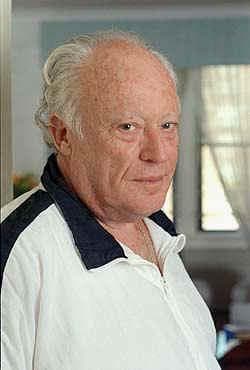
Biography coming soon.







