“We are all migrants through time.”
— A recurring thought about the universal human experience of change and movement.

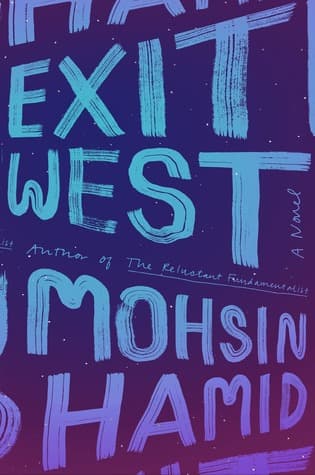
Mohsin Hamid (2017)
Genre
Literary Fiction / Fantasy / Romance
Reading Time
231 min
Key Themes
See below
Sign in to track this book
Nadia and Saeed find love and an escape through mystical doors in a war-torn world, but leaving their homeland is only the start of their journey of self-discovery and lasting connection.
Nadia, an independent young woman, meets Saeed, a gentle and traditional man, in an evening class in an unnamed, war-torn city. Their initial interactions show mutual attraction, but also their contrasting personalities and lifestyles. Nadia, who lives alone, is drawn to Saeed's quiet charm and devout nature. Saeed, in turn, is captivated by Nadia's boldness. Their dates often involve shared meals and quiet conversations, all while the background noise of impending conflict grows louder in their city. Checkpoints become more frequent, and the distant sounds of gunfire begin to punctuate their daily lives, forcing their new relationship to deepen quickly under the shadow of uncertainty.
The violence in their city escalates dramatically when a missile strikes near Saeed's family home. This event shatters any lingering illusion of safety and brings the war directly to their doorstep. Saeed's parents are deeply affected, and the couple begins to spend more time together, finding comfort in each other's presence. Nadia moves into Saeed's family home, a decision born more out of necessity and the desire for mutual protection than a traditional progression of their relationship. This shared vulnerability strengthens their bond, but also highlights the precariousness of their existence, as the city transforms into a battleground and essential services begin to fail.
Tragedy strikes Saeed's family when his mother is killed by a stray bullet while searching for food. This devastating loss plunges Saeed into grief and further intensifies the couple's sense of vulnerability and desperation. Nadia stays by his side, offering comfort and support, but the death is a stark reminder of the conflict's indiscriminate nature. The city is now fully engulfed in war, with constant shelling, sniper fire, and a complete breakdown of infrastructure. Saeed's father, though heartbroken, remains resolute, but the couple begins to seriously consider the rumors of mystical doors that can transport people to safer lands.
With the city becoming uninhabitable, and the threat of death constant, Nadia and Saeed make the difficult decision to leave their homeland. They hear whispers of 'doors' – mysterious portals that can transport people across the world, though for a price and with considerable risk. Saeed's father, despite his grief, encourages them to go, understanding that staying means almost certain death. He chooses to remain in his home, an act of defiance and attachment to his roots. Nadia and Saeed gather what few possessions they can carry, make arrangements with a smuggler, and prepare to step into the unknown, leaving behind everything they have ever known.
Nadia and Saeed step through their first door and emerge onto a beach on the Greek island of Mykonos. The transition is disorienting and immediate. They find themselves in a sprawling, chaotic refugee camp, filled with people from various war-torn countries, all sharing similar stories of displacement. The camp is overcrowded, and conditions are basic, but there is a sense of temporary safety. Here, they experience their first taste of life as refugees, navigating bureaucracy, scarce resources, and cultural clashes. Their relationship is tested by the stress and uncertainty, but they cling to each other as their primary source of comfort in this alien environment.
After a period in Mykonos, Nadia and Saeed find another door, leading them to London. They arrive in a city grappling with a massive influx of migrants, and social tensions are high. They find refuge in a large, abandoned mansion that has been squatted by hundreds of other refugees. This communal living arrangement is a stark contrast to their previous lives, forcing them to adapt to a new social dynamic. While there is a sense of solidarity among the migrants, the close quarters and lack of privacy also strain their relationship. The outside world views them with suspicion, and the narrative explores the growing anti-migrant sentiment in the host country.
In London, the pressures of their refugee status and communal living begin to chip away at Nadia and Saeed's relationship. Saeed, ever more devout, finds solace in prayer and the company of other religious migrants, seeking to recreate a semblance of his old life. Nadia, on the other hand, embraces the freedom and anonymity of their new existence, exploring her independence and seeking out new experiences. Their differing coping mechanisms create a growing distance between them. Saeed longs for familiar traditions and the community of his past, while Nadia is drawn to the possibilities of a future unburdened by convention, leading to subtle but significant conflicts.
The precarious peace of the London squat is shattered when authorities move in to clear the mansion. The migrants are dispersed, and Nadia and Saeed are once again forced to relocate. This renewed upheaval further strains their already fragile relationship. The constant movement and uncertainty amplify their individual anxieties and highlight their diverging paths. Saeed's desire for stability and traditional family life clashes with Nadia's increasing embrace of a more fluid, independent existence. Being uprooted again, combined with the lack of a stable home, makes them question the future of their relationship and their ability to stay together.
Nadia and Saeed find a door to Marin, California. This new location presents a different kind of challenge. While seemingly more peaceful and affluent than their previous destinations, it also marks a significant turning point in their relationship. They decide to live separately for a period, recognizing the growing divide between them. Nadia finds work and begins to build a new life, embracing her independence. Saeed, still clinging to his past and his religious practices, struggles more to adapt. This separation, though painful, allows them both space to explore their individual identities and desires, acknowledging that their paths may no longer align.
In Marin, Nadia and Saeed fully embark on their individual journeys. Nadia thrives in her new environment, finding a sense of belonging and purpose, and developing new relationships. Saeed, while still searching for connection, finds solace in nature and a community that reminds him of home. They meet occasionally, their encounters marked by a bittersweet nostalgia for their shared past and the love they once had. They reflect on the people they were before the war, and the people they have become through their migration. Though their romantic relationship has ended, a deep affection and respect remains, shaped by the extraordinary circumstances they endured together.
Decades later, when both Nadia and Saeed are elderly, they find themselves back in their original, now rebuilt, city. The city has transformed, but traces of its past remain. They encounter each other by chance in a marketplace, an unexpected reunion that brings back a flood of memories. Their conversation is gentle and reflective, touching upon their separate lives, their regrets, and the lasting impact of their shared journey. They discuss the doors, the choices they made, and the people they became. The meeting shows the lasting connection they forged in the crucible of war and displacement, even as their lives ultimately diverged.
Their brief reunion in the rebuilt city is a powerful conclusion, emphasizing the lasting nature of their bond, even after their romantic love faded. They share a meal, reminiscing about the small, intimate moments of their youth and the harrowing experiences of their migration. The encounter is not about rekindling a romance, but about acknowledging the profound impact they had on each other's lives. It speaks to human resilience, adaptation, and the way significant relationships, even those that end, shape who we become. They part ways with a quiet understanding, carrying the echoes of their shared history into their respective futures.
The Protagonist
Transforms from a cautiously independent woman into a fully self-actualized individual, embracing her freedom and adapting to new environments.
The Protagonist
Grapples with loss and displacement, struggling to adapt and clinging to his past, eventually finding a quiet peace later in life.
The Supporting
Remains steadfast in his homeland, choosing dignity and memory over displacement, a symbol of enduring roots.
The Mentioned
Her brief presence and tragic death serve as a catalyst for the main characters' journey.
The Supporting
Offers temporary stability and a chance for the protagonists to establish separate lives in a new land.
The Supporting
A brief but important presence, symbolizing the shared experience and resilience of refugees.
The Supporting
Represents the politicization of displacement and the fight for migrant rights.
The Mentioned
Facilitate the plot's central mechanism, but remain undefined, representing the transactional and often perilous nature of migration.
The novel explores how forced migration strips individuals of their familiar identity, making them redefine themselves in alien lands. Saeed clings to his past, his religion, and his culture as anchors, struggling to adapt and feeling a loss of self. Nadia, conversely, finds freedom in shedding her old identity and embracing new possibilities. Constant movement through the doors means they are always 'other,' never fully belonging, showing the psychological toll of being perpetually uprooted. This is evident in London, where they are part of a massive squat, and in Marin, where they are welcomed but still outsiders.
“We are all migrants, even within our own lives.”
The novel's core is the evolving relationship between Nadia and Saeed under extreme duress. Their love blossoms in the crucible of war, with initial intimacy forged by shared fear and vulnerability. However, as they move through different doors and face varying challenges as refugees, their individual coping mechanisms and desires diverge. Saeed seeks comfort in tradition and the familiar, while Nadia yearns for independence and new experiences. Their relationship ultimately fractures not due to a lack of love, but because the pressures of displacement force them onto separate paths, illustrating how external circumstances can reshape and redefine intimate bonds.
“It was said that in every city a door was opening, and that to pass through these doors was to be transformed.”
Hamid uses the fantastical element of the doors to allegorically represent the global refugee crisis, making it immediate and personal. The novel depicts the desperate choices people make to survive, the dangers of the journey, and the often unwelcoming reception in host countries. From the chaotic refugee camps of Mykonos to the tense, xenophobic atmosphere of London, the story illustrates the human cost of conflict and displacement. It challenges readers to empathize with refugees, highlighting their resilience, humanity, and the systemic failures that create and perpetuate their suffering.
“When we migrate, we murder from our lives those we leave behind.”
The concept of 'home' is central to the novel. For Saeed, home is tied to his physical city, his family, and his religious practices, and he struggles immensely with its loss. For Nadia, home is more fluid, a feeling of belonging that she can create anywhere she finds freedom and purpose. Saeed's father's decision to stay in their war-torn city, even after his wife's death, is a powerful statement about the unbreakable bond some have with their homeland. The doors, while offering escape, also sever ties, forcing characters to constantly re-evaluate what 'home' truly means in a world of constant movement.
“We are all just a door away from another life.”
The narrative weaves together moments of despair with glimmers of hope. The initial hope of escape through the doors is often met with the grim realities of refugee camps and hostile environments. The death of Saeed's mother and the constant threat of violence represent the depths of despair. However, characters like Nadia find new purpose and community, and the occasional acts of kindness they encounter, like the old man in Marin, provide moments of hope. The ending, with Nadia and Saeed's peaceful reunion decades later, suggests a quiet, enduring hope for healing and connection beyond the immediate trauma.
“It is strange, what you get used to.”
Mysterious portals that instantly transport people across the world.
The 'doors' are the central magical realist element, functioning as an allegorical representation of migration. They appear spontaneously, often in unexpected places, and offer instantaneous, albeit dangerous, passage to other parts of the world. By making migration a literal, sudden step rather than a long, arduous journey, Hamid emphasizes the abruptness of displacement and the arbitrary nature of where one might end up. The doors remove the geographical barriers, focusing instead on the psychological and social impacts of being an 'instant' refugee, highlighting the universality of the experience.
The unnamed war-torn city and generic host countries.
Hamid deliberately leaves the initial city and many of the subsequent locations (Mykonos, London, Marin) largely unnamed or generalized. This stylistic choice allows the story to transcend specific geopolitical conflicts, making it a universal allegory for any war-torn region and any refugee crisis. By not naming the city, the author invites readers to project their understanding of conflict onto the narrative, fostering a broader empathy for all displaced peoples rather than focusing on a single, identifiable situation. This universality emphasizes the core human experience of love, loss, and displacement.
A detached, sometimes philosophical narrator offering broad observations.
The novel uses a third-person omniscient narrator who not only follows Nadia and Saeed but also frequently interjects with broader philosophical observations about migration, human nature, and societal changes. This narrative voice provides context and expands the personal story of the protagonists into a more universal commentary on the state of the world. The narrator often offers insights into the wider implications of the doors and the global shifts occurring, creating a sense of distance and a more analytical perspective on the events, while still retaining intimacy with the characters' experiences.
Brief glimpses into the future or the fates of other characters.
Throughout the narrative, Hamid occasionally inserts brief, almost poetic, paragraphs that foreshadow future events or provide glimpses into the lives of other, unnamed migrants who also use the doors. These mini-narratives serve to broaden the scope of the story beyond Nadia and Saeed, illustrating the widespread impact of the doors and the diverse experiences of other refugees. They also create a sense of inevitability and underscore the novel's larger themes of global interconnectedness and the shared human condition, subtly hinting at the long-term consequences of displacement.
“We are all migrants through time.”
— A recurring thought about the universal human experience of change and movement.
“It was said in those days that the only people who did not wish to flee were those too old to do so, or too infirm, or too poor, or too mad, or too in love with their country to wish it harm, or too in love with their country to wish it to be anything other than what it was.”
— Describing the widespread desire to escape the war-torn homeland.
“He knew that the only way to get through it was to keep moving, to keep walking, to keep putting one foot in front of the other, to keep breathing.”
— Saeed's internal monologue while navigating the perilous journey of migration.
“When we migrate, we murder from our lives those we leave behind.”
— Nadia reflecting on the painful severing of ties that comes with migration.
“In a city swollen by refugees, it was not uncommon to see people who looked as if they had been born in different centuries.”
— Observation of the diverse influx of people into the refugee camps and cities.
“She had always been a solitary creature, and he, while not a recluse, had always preferred his own company to that of others.”
— Describing the initial personalities of Nadia and Saeed, highlighting their independent natures.
“We are all just a few bad decisions away from being refugees.”
— A stark reminder of the fragility of stability and the universality of potential displacement.
“It was not a thing of beauty, this migration, but it was a thing of necessity.”
— A pragmatic view of the forced movement of people, devoid of romanticism.
“Each time a new door appeared, it was not a question of whether to go through, but only when.”
— Referring to the magical doors that offer escape routes, symbolizing inevitable choices.
“And perhaps that is the most important thing, to be able to hear the music in the silence, to find the beauty in the ordinary.”
— A reflection on finding meaning and solace amidst difficult circumstances.
“He thought that perhaps it was the fate of all people to be uprooted, to move from one place to another, to be forever searching for a home that was no longer there.”
— Saeed's melancholic musing on the nature of human existence and the concept of home.
“It was a strange feeling, to be so utterly alone and yet to be surrounded by so many others who were also alone.”
— Describing the paradox of loneliness within a crowded refugee camp or city.
“The end of the world can be a beautiful thing, if you know how to look at it.”
— A provocative statement suggesting that even destruction can lead to new beginnings or perspectives.
“We are all just trying to make it through, to find a place where we can breathe.”
— A universal sentiment about the struggle for survival and peace.
“He found himself wondering if it was possible to live in a world without borders, a world where everyone was free to go wherever they pleased.”
— A hopeful and idealistic thought about a future without national divisions.
Ready to see how well you understood this book? Take our interactive quiz with 10 questions.
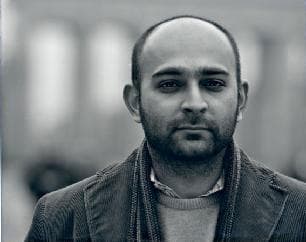
Biography coming soon.







