“I was an old man, and I had been an old man for a long time. It was just that I was tired of being an old man.”
— Swede's internal reflection on his age and weariness.


Philip Roth (2007)
Genre
Literary Fiction
Reading Time
292 min
Key Themes
See below
Sign in to track this book
An aging, reclusive writer returns to New York after 9/11 and finds his quiet life disrupted by a young woman, a former muse from his past, and a biographer, forcing him to face old desires, memories, and his own literary standing.
Nathan Zuckerman, a writer who has lived alone on a New England farm for eleven years, returns to New York City. He has prostate cancer and needs a new, experimental treatment. His long absence was a deliberate escape from society, mostly because of his health problems (incontinence after a prostatectomy) and a wish to focus on writing without interruption. The city he comes back to has changed, still showing the effects of the 9/11 attacks. He had purposefully cut himself off from this world. His first experiences in the busy, anxious city show how disconnected he is and how much his personal world has shifted.
In New York, Zuckerman meets a young couple, Jamie and Richard Logan, at a literary event. Richard is a struggling writer, and Jamie is an attractive young woman. On impulse, Zuckerman offers them his quiet New England farmhouse for a year in exchange for their small Greenwich Village apartment. He says this is to help with his cancer treatment and recovery in the city, but it soon becomes clear his deeper reason is a growing attraction to Jamie. The Logans are surprised but accept the offer, setting the stage for Zuckerman's return to city life and complicated human connections.
While staying in the city, Zuckerman tries to reconnect with Amy Bellette, a woman who held a special, almost legendary, place in his youth. Amy was the partner and muse to E.I. Lonoff, Zuckerman's literary hero, a figure from his early writing days as shown in *The Ghost Writer*. Now, Amy is an old woman, fragile and weakened by illness, living in a nursing home. Their reunion is bittersweet; she is a faint image of the lively woman he remembers, and her memories of Lonoff are both cherished and sad, reflecting a life lived largely in his shadow. Zuckerman finds himself facing the passage of time and the fading of beauty.
Zuckerman finds himself pursued by Billy Davidoff, a young, ambitious, and somewhat unethical literary biographer. Davidoff is determined to uncover a 'great secret' about E.I. Lonoff, believing it will be the key to an important biography. He persistently questions Zuckerman, hoping to get any hidden details or scandalous stories about Lonoff's private life, especially his relationship with Amy Bellette. Zuckerman, wanting to protect Lonoff's reputation and tired of Davidoff's prying, resists, leading to a strained intellectual contest. This interaction forces Zuckerman to re-evaluate his own connection to Lonoff's work and public image.
As Zuckerman settles into the Logans' apartment, his attraction to Jamie grows stronger. He constantly thinks about her, imagining a romantic and physical relationship despite their age difference and her marriage. He is drawn to her youth, energy, and beauty, which represent everything he thought he had left behind in his isolated life. This renewed sense of desire and longing is both thrilling and unsettling for Zuckerman, waking up old emotions and challenging his carefully built solitude. He feels a strong return of erotic feelings, a sharp contrast to his previous eleven years.
Driven by his desire for Jamie, Zuckerman invites the Logans to dinner at his temporary apartment. This is a deliberate move, allowing him to watch Jamie more closely and extend their time together. During dinner, Zuckerman tries to talk with Jamie, subtly asking about her thoughts and feelings, while mostly ignoring Richard. The evening is filled with unspoken tension and Zuckerman's thinly hidden intentions. He feels a renewed sense of purpose and excitement, despite the clear impropriety of his feelings, as if Jamie's presence has brought back a part of him he thought was gone.
After dinner, Zuckerman, encouraged by what he sees as Jamie's subtle interest, makes a direct approach. He misreads her politeness and warmth as a sign of mutual interest. However, Jamie firmly and politely rejects his advances, making it clear she is not interested in him romantically. This rejection hurts Zuckerman, forcing him to face the reality of his age, his physical limits, and the unsuitability of his desires. It shatters his brief illusion of renewed youth and romantic possibility, leaving him feeling foolish and deeply let down.
In talks with Amy Bellette, Zuckerman eventually learns the 'great secret' Billy Davidoff is so eager to find about E.I. Lonoff. The secret, however, is not a scandal or hidden flaw, but a deeply personal tragedy: Lonoff's profound, lifelong guilt and suffering over the accidental death of his young daughter, which he kept hidden. This revelation shows Lonoff's rich inner life and the sacrifices he made for his art, contrasting sharply with Davidoff's superficial search for scandal. It also gives Zuckerman a deeper understanding of his literary hero's humanity.
After learning the truth about Lonoff's 'secret,' Zuckerman confronts Billy Davidoff. He tries to convince Davidoff not to write a sensationalized biography, explaining that the real story of Lonoff's life is more complex and tragic than any scandal he might invent. Zuckerman emphasizes the privacy of Lonoff's suffering and the integrity of his work, urging Davidoff to respect the artist's legacy. However, Davidoff, driven by ambition and a desire for a bestseller, remains mostly unmoved, showing the difference in literary ethics between generations and the commercialization of artists' lives.
Zuckerman thinks deeply about E.I. Lonoff's life and work, especially the discovery of his profound private sorrow. He understands that Lonoff's strict artistic style was not an act but a shield, a way to contain immense personal grief. This understanding adds new layers to Zuckerman's appreciation of Lonoff's work and the sacrifices artists make. He considers literary immortality and how an author's private life can be twisted or exaggerated after death, contrasting Lonoff's quiet dignity with Davidoff's intrusive approach. He feels a renewed duty to protect the integrity of the artists he admires.
Zuckerman attends his follow-up appointment for his cancer treatment. The doctor's report is cautiously good, suggesting the experimental treatment has worked. This news brings relief but also makes Zuckerman face his own mortality and what remains of his life. He thinks about returning to his solitary life in the country, now with a new outlook gained from his brief return to the city, desire, and past figures. The future, though still shadowed by age and illness, now holds a different kind of possibility, shaped by his recent experiences.
As the year ends and the Logans prepare to return to their apartment, Zuckerman gets ready to leave New York and go back to his farmhouse. He reflects on his intense, though short, re-engagement with life: his attraction to Jamie, his renewed connection with Amy Bellette, and his confrontation with Billy Davidoff. He understands that his desire for Jamie was a final, desperate attempt to reclaim lost youth and energy, and that while painful, its rejection was a necessary step toward accepting his current reality. He leaves the city with a greater awareness of human desire's complexities, memory's lasting power, and the solitude that ultimately defines his life as a writer.
The Protagonist
Zuckerman moves from a state of detached, self-imposed isolation to a brief, intense re-engagement with desire, memory, and the complexities of human connection, ultimately accepting his present reality with a renewed sense of self.
The Supporting
Jamie remains largely unchanged, serving as a mirror for Zuckerman's projections and desires, ultimately maintaining her integrity and boundaries.
The Supporting
Richard's arc is less central, serving primarily as a plot device for the home swap and as a contrast to Zuckerman's artistic solitude.
The Supporting
Amy's character provides a poignant link to the past, revealing truths that challenge Zuckerman's youthful perceptions and offering a final, dignified portrayal of Lonoff.
The Antagonist/Supporting
Davidoff remains steadfast in his ambition, serving as a foil to Zuckerman's more traditional and respectful approach to literature and biography.
The Mentioned/Influential
Lonoff's character is explored retrospectively, moving from a perceived austere literary figure to a more complex, suffering human being through the revelations of Amy Bellette.
The novel explores the physical and mental challenges of aging, especially for a man like Nathan Zuckerman, who has focused on his mind and body throughout his life. His incontinence and cancer treatment are clear reminders of physical decline. His attraction to Jamie shows a longing to regain lost youth and energy, a desperate effort to resist the inevitable. The frailty of Amy Bellette, once lively, highlights how time moves on, as does the memory of Lonoff's death. Zuckerman struggles to accept his own mortality and his body's decreasing abilities, even as his mind stays sharp. This theme is central to his inner conflict and his thoughts on what his remaining years mean.
““There was no such thing as being young and old at the same time. There was only the old man wishing he were young and the young man not even knowing he was young.””
A strong theme is the return of desire in old age. Zuckerman, after years of simple solitude, feels a powerful and unsettling attraction to the young, beautiful Jamie Logan. This desire is not just sexual; it is a yearning for connection, for vitality, for a return to life he thought was over. His fantasies about Jamie are vivid and all-consuming, showing how enduring erotic power is even as the body ages. Jamie's painful rejection forces him to face how unsuitable his desires are and the harsh truths of age, yet the experience itself revives him, if only for a short time.
““Desire was a ghost in him, a phantom limb that still ached.””
The novel is filled with memory, especially Zuckerman's recollections of his early writing years and his relationship with E.I. Lonoff. His reunion with Amy Bellette directly engages with his past, bringing to life people and events from *The Ghost Writer*. He constantly compares the present with his memories, often finding a sad difference between the two. Billy Davidoff's search for Lonoff's 'secret' makes Zuckerman actively deal with how the past is remembered, understood, and possibly altered, especially concerning artists' lives. The past is not just a background but an active force shaping Zuckerman's current understanding of himself and the world.
““The past, of course, was never dead. It wasn’t even past.””
The novel examines literary legacy, the ethics of biography, and the privacy of an artist's life. Zuckerman, a writer himself, cares deeply about protecting E.I. Lonoff's reputation from Billy Davidoff's attempts to sensationalize it. The discovery of Lonoff's deep, hidden grief over his daughter's death shows the personal sacrifices and inner life often kept hidden behind an artist's public image. Zuckerman supports the idea that an artist's work should stand on its own, and that intrusive biographical details can lessen or distort the true nature of their contribution. This theme contrasts the commercial drive of modern biography with respect for artistic privacy.
““Why was it that the more private a man’s life, the more publicly it had to be ransacked?””
Zuckerman's eleven years of living alone in the country are set against his brief, intense return to the busy life of New York City. His initial return is for medical reasons, but his later actions, especially the home swap and his attraction to Jamie, show a deeper, perhaps unconscious, longing for connection. While he values the uninterrupted focus his solitude gives his writing, he also feels the deep loneliness that comes with it. The novel explores the tension between an artist's need for solitude to create and the human need for closeness and belonging. Ultimately, Zuckerman finds a complex balance, returning to his solitude with a richer understanding of what he has both gained and given up.
““I wanted to be alone. I wanted to be alone with my books. I wanted to be alone with my ghosts. And then I wanted not to be alone.””
Zuckerman's impulsive offer to exchange his country home for the Logans' city apartment.
The home swap serves as the central inciting incident, physically relocating Zuckerman from his rural isolation back into the vibrant, unsettling environment of New York City. This device immediately thrusts him into proximity with Jamie and Richard Logan, catalyzing his infatuation and setting in motion the main personal and emotional conflicts. It is not merely a logistical arrangement but a symbolic act, representing Zuckerman's desire to shed his old life and embrace, however briefly, a renewed engagement with the world, even if his stated reasons are practical (medical treatment).
The mystery surrounding a hidden aspect of Zuckerman's literary hero's life.
The 'secret' about E.I. Lonoff, eagerly sought by Billy Davidoff, acts as a narrative hook and a thematic anchor. It drives Davidoff's actions and forces Zuckerman to revisit his own understanding of Lonoff. This device allows the novel to explore themes of literary integrity, the ethics of biography, and the private lives of artists. The eventual revelation that the 'secret' is not a scandal but a profound, hidden tragedy subverts expectations and deepens the character of Lonoff, highlighting the difference between sensationalism and genuine human suffering.
The story is told entirely from Nathan Zuckerman's first-person perspective.
Nathan Zuckerman's first-person narration provides intimate access to his thoughts, memories, desires, and anxieties. This subjective viewpoint allows for deep psychological exploration of his aging, his infatuation, and his reflections on literature and life. His voice is highly analytical, introspective, and often melancholic, shaping the reader's perception of events and other characters, particularly Jamie and Davidoff, through his own biased lens. This device emphasizes the internal drama and intellectual wrestling that defines Zuckerman's character and the novel's themes.
References and direct connections to Roth's earlier novel, *The Ghost Writer*.
Allusions to *The Ghost Writer* serve as a powerful intertextual device, enriching the narrative for readers familiar with Roth's earlier work. Amy Bellette and E.I. Lonoff are direct callbacks, establishing a continuity within the Zuckerman canon. These allusions provide a deeper historical context for Zuckerman's relationship with Lonoff and Amy, highlighting how his youthful perceptions have evolved with age. They underscore the theme of memory and how past experiences continue to shape the present, creating a layered reading experience that spans across Roth's fictional universe.
“I was an old man, and I had been an old man for a long time. It was just that I was tired of being an old man.”
— Swede's internal reflection on his age and weariness.
“It was the first time I had ever been called a ghost. And it was exactly what I felt like.”
— Swede's reaction to Jamie's description of him.
“The past, after all, is a foreign country. They do things differently there.”
— A general reflection on the past, echoing a famous literary line.
“You don't get over things. You just keep going.”
— Swede's pragmatic view on dealing with life's difficulties.
“The greatest freedom is to be oneself. But that's also the greatest prison.”
— A philosophical musing on the nature of identity and freedom.
“What does a man do when he's no longer a man?”
— Swede's internal question about his diminishing virility and purpose.
“Every life is a story. And every story has an ending. But sometimes the ending is just a new beginning.”
— A hopeful, yet melancholic, thought about life's narrative.
“He knew, with a certainty that was both chilling and comforting, that he had outlived himself.”
— Swede's realization about his extended life and fading relevance.
“There are some things you never recover from, only learn to live with.”
— Swede's acceptance of enduring pain and loss.
“He was a man who had lost his audience, his stage, and his lines.”
— A metaphor for Swede's feeling of irrelevance in his later years.
“The trick is not to disappear entirely.”
— Swede's internal struggle to maintain some presence and identity.
“Memory is a kind of haunting, isn't it? The ghosts of what was.”
— A reflection on the nature of memory and its spectral quality.
“You can't go home again, they say. But what if you never really left?”
— Swede's contemplation of his past and its enduring hold on him.
“The future was a blank page, and he had no pen.”
— Swede's sense of powerlessness and lack of agency over his remaining life.
Ready to see how well you understood this book? Take our interactive quiz with 10 questions.
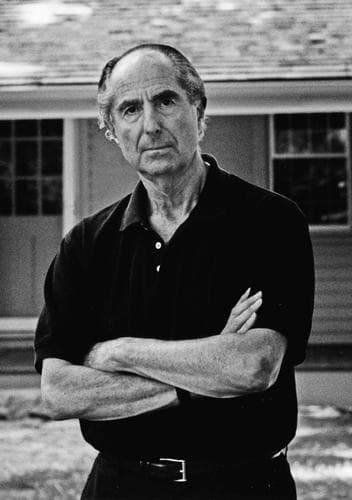
Philip Milton Roth was an American novelist and short story writer. Roth's fiction—often set in his birthplace of Newark, New Jersey—is known for its intensely autobiographical character, for philosophically and formally blurring the distinction between reality and fiction, for its "sensual, ingenious style" and for its provocative explorations of American identity. He first gained attention with the 1959 short story collection Goodbye, Columbus, which won the U.S. National Book Award for Fiction. Ten years later, he published the bestseller Portnoy's Complaint. Nathan Zuckerman, Roth's literary alter ego, narrates several of his books. A fictionalized Philip Roth narrates some of his others, such as the alternate history The Plot Against America.







