“The greatest misfortune is that we are alone, and that we must die alone.”
— From 'The Adulterous Woman', as Janine contemplates her life and the vastness of the desert night.


Albert Camus (1958)
Genre
Literary Fiction / Philosophy
Reading Time
213 min
Key Themes
See below
Sign in to track this book
In six stark parables, Camus unveils the raw, often agonizing epiphanies of individuals grappling with their freedom, their faith, and the crushing weight of existence in desolate landscapes.
Janine, a middle-aged Frenchwoman, travels with her husband, Marcel, a traveling salesman, through Algeria. Their marriage is routine and emotionally distant. While Marcel works, Janine observes local Arab women and feels an increasing sense of alienation. One night, unable to sleep, she wanders out and stands alone on a terrace, gazing at the vast, star-filled desert. In this solitude, she experiences an intense connection with the indifferent, ancient land, feeling herself dissolve into its immensity. This experience is exhilarating and terrifying, leaving her with liberation but also an awareness of her insignificance. She returns to Marcel, who is oblivious, and slips back into bed, weeping silently.
A French missionary, driven by a fervent desire to convert the 'savages,' travels to a remote desert outpost inhabited by a fierce, sun-worshipping tribe. He believes he is bringing light, but his mission quickly turns into a nightmare. Captured, he is tortured, his tongue cut out. Through this brutalization, he is 'converted' by the tribe's leader, who embodies a cruel god. He internalizes their hatred and violence, becoming a renegade. He is consumed by a desire for revenge against his former self and the world he once represented. He waits to betray a new missionary, hoping to show his allegiance to his new masters.
Yvars, a foreman at a cooperage, and his fellow barrel-makers have been on strike for several weeks, demanding better wages. The strike has been long and difficult, causing hardship. When they finally return to work, defeated and without having achieved their demands, their boss, M. Lassalle, meets them. Lassalle, still grieving the recent death of his child, maintains a cold silence. He refuses to acknowledge their return or their suffering. This silence, more than any verbal confrontation, crushes the workers' spirits, showing their powerlessness and the chasm between them and their employer. Yvars feels humiliation and resentment, recognizing the injustice of their situation.
Daru, a French schoolteacher, lives alone on an arid plateau in Algeria, teaching Arab children. One day, Balducci, a gendarme, brings an Arab prisoner, accused of murder, to Daru's schoolhouse. He orders Daru to deliver the man to police headquarters. Daru, who despises the colonial system, refuses to act as a jailer. He offers the prisoner food and shelter, treating him with respect. The next morning, Daru gives the Arab a choice: follow the path to Tinguit and surrender, or take the path to freedom among the nomads. The Arab chooses the path to Tinguit. Daru returns to his schoolhouse to find a threatening message on his blackboard from the Arab's relatives, accusing him of handing over their kinsman, despite his attempt to offer freedom. Daru is left isolated and misunderstood.
Jonas, a once-obscure painter, finds unexpected success. His apartment becomes a constant hub of activity, filled with admirers, critics, and students. His wife, Louise, and their children struggle with the chaos. Jonas, overwhelmed by fame, finds it difficult to find the solitude needed for creative work. He builds a small platform high in his studio, hoping to escape the clamor and paint in peace. However, even there, he is plagued by self-doubt and pressure. He eventually collapses from exhaustion. His final, enigmatic painting, barely visible, bears a single word, which can be interpreted as either 'solitary' or 'solidary,' reflecting his conflict between artistic isolation and communal connection.
D'Arrast, a French engineer, arrives in the Brazilian port city of Iguape to oversee bridge construction. He is a pragmatic man, but he finds himself drawn into the local culture and its mystical beliefs. He encounters a cook named Socrate, who has vowed to carry a massive stone from the quarry to the church during a religious procession, fulfilling a vow he made after surviving a shipwreck. During the procession, Socrate collapses under the weight of the stone. D'Arrast, moved by Socrate's devotion, takes the stone upon his own shoulders and carries it through the town. Instead of taking it to the church, he carries it to Socrate's humble hut, placing it in the center of the room. This act shows D'Arrast's acceptance of shared humanity and a spiritual burden, transcending his rationalist worldview and finding a new kind of solidarity.
The Protagonist
Janine moves from a state of quiet resignation to a moment of intense, unsettling spiritual awakening, which leaves her both liberated and profoundly alone.
The Protagonist
From a fervent, self-assured missionary, he is brutally broken and transformed into a vengeful, hate-filled servant of a cruel desert god, embodying total spiritual exile.
The Protagonist
Daru attempts to maintain his moral integrity amidst colonial injustice, leading to his profound isolation and the realization that good intentions can still be misinterpreted.
The Protagonist
Jonas's journey illustrates the paradox of artistic success, as he moves from obscurity to overwhelming fame, ultimately seeking refuge from it to reclaim his creative solitude.
The Protagonist
D'Arrast transforms from a detached, rational engineer to a man who embraces shared human burden and spiritual solidarity, finding redemption through a selfless act.
The Supporting
Marcel remains largely unchanged, serving as a static contrast to Janine's internal transformation.
The Supporting
Socrate's physical and spiritual struggle to fulfill his vow serves as an inspiration and catalyst for D'Arrast's own moral awakening.
The Mentioned
M. Lassalle's character is static, serving as a symbol of unyielding power and the crushing effect of silence on the workers.
This central theme appears in various forms across the stories. Characters often find themselves geographically or spiritually exiled, feeling like outsiders in their own lives or communities. Janine experiences an internal exile from her husband and her mundane existence, finding a brief, terrifying connection in the vast desert. The Renegade is exiled from his former self and beliefs. Daru is exiled by his moral choices, caught between two cultures. Jonas finds himself exiled from his creative solitude by fame. This theme shows the human condition of being fundamentally alone and often misunderstood, even amidst others.
“She was nothing but a tiny fragment of darkness, whose dizzying fall she felt, a fall that was nevertheless arrested on the desert's smooth, cold surface. But on that surface, something was beginning to stir.”
Camus's philosophical concept permeates these tales. Characters confront the indifference of the universe, the meaninglessness of their struggles, and the lack of inherent purpose. The vast, silent desert in "The Adulterous Woman" and "The Renegade" symbolizes this indifferent cosmos. The workers' futile strike in "The Silent Men" and Daru's thankless moral stand in "The Guest" show the absurdity of striving for meaning or justice in a world that often refuses to acknowledge it. Yet, the stories also suggest that in confronting this absurdity, characters can find moments of profound, albeit temporary, connection or rebellion, as seen in Janine's mystical experience or D'Arrast's act of solidarity.
“He knew that the path was long and that the world was hard, but he wanted to live.”
Despite the pervasive sense of alienation, moments of human connection and solidarity emerge as potential antidotes to exile. D'Arrast's act of carrying the stone for Socrate in "The Growing Stone" is the most explicit example, representing a shared burden and a human bond that transcends cultural divides. Daru's compassionate treatment of the Arab prisoner, offering him freedom despite the risks, is another instance, even if misunderstood. Jonas's final enigmatic word, potentially 'solidary,' hints at the artist's struggle between isolation and connection. These moments suggest that while the world may be absurd, human beings can find meaning and dignity in acts of mutual recognition and shared suffering.
“He had to help. He had to help him carry his burden, and the burden of all men, even if it meant being crushed himself.”
Many characters are driven by a quest for a more authentic existence or a deeper meaning in their lives. Janine's desert experience is an attempt to break free from the inauthenticity of her marriage. The Renegade's initial missionary zeal, though misguided, stems from a desire for absolute truth. Jonas struggles to maintain the authenticity of his art against the corrupting influence of fame. This theme explores how individuals grapple with societal expectations, personal failures, and the vastness of existence in their pursuit of a life that feels true to themselves, often leading to painful revelations or moral dilemmas.
“He only knew that he had to be true to himself, even if it meant being alone.”
The vast, desolate desert or foreign settings mirroring characters' internal states.
Camus frequently uses expansive, often harsh, landscapes as a powerful plot device. The Algerian desert in 'The Adulterous Woman,' 'The Renegade,' and 'The Guest' is not merely a backdrop; it actively reflects and amplifies the characters' inner turmoil, feelings of alienation, and the absurdity of human striving. Its vastness and indifference serve as a mirror to Janine's spiritual emptiness and subsequent awakening, the Renegade's isolation, and Daru's moral solitude. Similarly, the exotic, mystical setting of Iguape in 'The Growing Stone' highlights D'Arrast's initial detachment and eventual immersion in a different worldview. These landscapes function as externalizations of internal exile.
Physical items or gestures laden with deeper, often ambiguous, meaning.
Camus imbues seemingly simple objects or actions with profound symbolic weight. The 'growing stone' in the final story is the most obvious example, representing a spiritual burden, a vow, and ultimately, a shared humanity. The threatening message on Daru's blackboard symbolizes the futility of good intentions and the inescapable misunderstanding between people. Jonas's cramped platform represents his desperate attempt to reclaim creative solitude. The silence of M. Lassalle is not just an absence of sound, but a powerful act of contempt and assertion of power. These symbols enrich the narratives, inviting deeper interpretation of the characters' struggles and the thematic concerns.
Situations forcing characters to make difficult ethical decisions with profound consequences.
Several stories hinge on a critical moral dilemma that forces the protagonist to confront their values and the nature of justice. Daru's choice of whether to deliver the Arab prisoner to the authorities or offer him freedom is the clearest example, placing him in an impossible position between duty and conscience. Janine's decision to wander into the desert at night, driven by an unspoken yearning, is a less explicit but equally profound moral choice to seek truth beyond her conventional life. These dilemmas highlight the complexity of human morality, often leading to isolation or unintended consequences, and underscore the individual's responsibility in an indifferent world.
The deliberate absence of communication conveying alienation, power, or profound emotion.
Silence is a potent device in several stories. In 'The Silent Men,' M. Lassalle's deliberate silence crushes the workers more effectively than any spoken reprimand, symbolizing class divisions and the unbridgeable gulf between them. Janine's profound, mystical experience in the desert is largely unspoken, both to Marcel and within herself, emphasizing its deeply personal and incommunicable nature. The Renegade's literal loss of his tongue underscores his complete dehumanization and the stripping away of his former identity and beliefs. Silence often signifies alienation, power dynamics, or the ineffable nature of certain human experiences.
“The greatest misfortune is that we are alone, and that we must die alone.”
— From 'The Adulterous Woman', as Janine contemplates her life and the vastness of the desert night.
“There are times when the world is so beautiful that you feel you might burst.”
— A reflection on the overwhelming beauty of nature, often experienced by characters in moments of heightened awareness.
“Happiness is a matter of choice, not a matter of circumstance.”
— A philosophical observation woven into the narratives, suggesting agency in one's emotional state despite external hardships.
“Each man is an island, and at the same time, he is a part of the continent.”
— A paradoxical thought about human individuality and interconnectedness, echoing themes in 'The Adulterous Woman'.
“One cannot be a judge and an innocent man at the same time.”
— A central theme from 'The Renegade or a Confused Spirit', where the protagonist struggles with his actions and beliefs.
“The only way to deal with an unfree world is to become so absolutely free that your very existence is an act of rebellion.”
— A powerful statement reflecting the spirit of defiance against oppression, visible in various characters' struggles.
“Man is the only creature who refuses to be what he is.”
— A fundamental philosophical insight from Camus, exploring human dissatisfaction and the search for meaning beyond inherent nature.
“To be happy, we must not be too concerned with others.”
— From 'The Silent Men', where characters grapple with their own desires versus their obligations and perceptions of others.
“There is no love of life without despair of life.”
— A deep philosophical paradox, suggesting that an appreciation for life is born from an understanding of its inherent difficulties and limitations.
“What is called a reason for living is also an excellent reason for dying.”
— A stark existential observation, highlighting the fragility and arbitrary nature of human motivations and existence.
“Only by living in the present can we be truly free.”
— A recurring idea that emphasizes the importance of embracing the immediate moment, free from past regrets or future anxieties.
“The need to be loved is a kind of sickness.”
— From 'The Growing Stone', where D'Arrast reflects on human desires and the burdens they create.
“One can be an exile in the midst of one's own country, in one's own house, and in one's own heart.”
— A core theme of the collection, illustrating that exile is not just geographical but also an internal state of alienation.
“The absurd is born of this confrontation between the human need and the unreasonable silence of the world.”
— A foundational concept of Camus's philosophy, explaining the feeling of meaninglessness that arises from humanity's search for purpose in an indifferent universe.
Ready to see how well you understood this book? Take our interactive quiz with 10 questions.
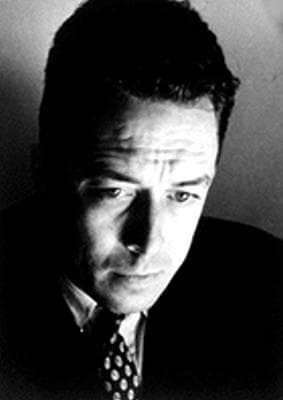
Albert Camus was a French-Algerian philosopher, author, dramatist, and journalist. He was the recipient of the 1957 Nobel Prize in Literature at the age of 44, the second-youngest recipient in history. His works include The Stranger, The Plague, The Myth of Sisyphus, The Fall, and The Rebel.







