“‘Because I don’t believe in luck. I believe in people. I believe in you.’”
— Connor speaking to the other inmates about their chances.

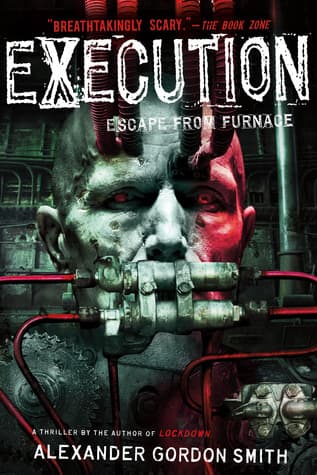
Genre
Thriller / Fantasy / Science Fiction / Young Adult
Reading Time
6-7 hours
Key Themes
See below
Sign in to track this book
Haunted by his own monstrous transformation, Alex Sawyer must confront the tyrannical Alfred Furnace in a world where humanity is enslaved and the line between executioner and executed blurs with every desperate, world-ending choice.
Alex Sawyer, having escaped the terrifying underground prison called the Furnace, reaches the surface to find a world completely changed. The sky is dark, buildings are in ruins, and the streets are full of 'Freaks' that hunt and kill humans. He quickly learns that Alfred Furnace, the sadistic warden of his former prison, is now the ruler of this devastated world. Humans are either killed or enslaved, forced to work in grim camps. Alex is disoriented but desperately needs to find his friends and understand what happened to the world.
While navigating the dangerous streets, Alex is attacked by Freaks but is rescued by a small group of human survivors. He meets Sara, a fierce fighter, and others who are part of a resistance movement against Alfred Furnace. They are initially wary of Alex, given his strange appearance and sudden emergence, but his fighting skills and clear hatred for Furnace soon earn their trust. They explain Furnace's control and the systematic oppression of humanity, saying that Furnace somehow unleashed the Freaks and now commands them.
As Alex fights with the resistance, he discovers he has extraordinary abilities. He can sense the Freaks, and in extreme danger, he can show monstrous strength and resilience, even healing quickly from severe injuries. These powers are both a help and a problem, making him a strong weapon but also setting him apart from his human allies, who see him with a mix of awe and fear. Alex realizes that his time in the Furnace, and the experiments on him, have changed him, making him similar to the monsters he fights.
The resistance, helped by Alex's unique abilities, plans to strike a blow against Alfred Furnace. Their target is one of Furnace's main strongholds, a fortified compound where he is believed to be conducting more experiments and strengthening his power. The mission is dangerous, requiring them to navigate hordes of Freaks and Furnace's human guards. Alex's knowledge of Furnace's methods and his own growing powers are vital to their success, but the cost of failure is unimaginable for the dwindling human population.
During the infiltration, Alex has a reunion with some of his former friends from the Furnace, who are now enslaved and traumatized. Their condition fuels his anger against Alfred Furnace. He also learns more about Furnace's plan: Furnace is not just a tyrant but is trying to reshape humanity, believing the Freaks are the next evolutionary step and that he is their leader. Alex learns that his own transformation is a direct result of Furnace's experiments, making him a unique hybrid, a link between human and Freak, and possibly the key to both salvation and destruction.
The resistance's attack on the stronghold starts well, but they soon realize they have walked into a trap. Alfred Furnace anticipated their move, and an ambush destroys a large part of their forces. It becomes clear there was a traitor among them, giving Furnace vital information. Alex is forced to face the reality that Furnace is always several steps ahead, and his control over the Freaks and the remaining humans is far more complete than they first thought. The survivors are scattered and demoralized.
After the ambush, Alex becomes more isolated. His powers are growing, making him more effective against the Freaks, but also more like them. He struggles with the fear of losing his humanity and becoming just another one of Furnace's creations. Sara and the remaining resistance members look to him as their last hope, putting a huge burden on him. Alex struggles with the moral implications of his power, knowing that to defeat Furnace, he might have to embrace the very monstrousness he hates in himself.
Driven by vengeance and humanity's desperate plea, Alex tracks Alfred Furnace to his central command, a monument to his power. The final confrontation is brutal. Furnace reveals the full extent of his transformation, showing powers that rival Alex's. He taunts Alex, calling him a failed experiment and a mirror of his own ambition. The battle is not just physical but ideological, a clash between Furnace's vision of a new, monstrous world and Alex's desperate fight for humanity's survival.
In the height of their battle, Alex realizes that simply defeating Furnace might not be enough. Furnace's power is deeply connected to the world he created, and destroying him could unleash an even greater disaster. Alex faces an impossible choice: to kill Furnace and risk complete annihilation, or to find another way, potentially sacrificing his own humanity or even his life to contain the destruction. He must decide if he is the executed, a victim of Furnace's plans, or the executioner, making the ultimate decision on the world's future.
The battle ends with a lasting change. While Furnace is defeated, the world is not simply restored. The effects of his reign and the presence of the Freaks continue to shape reality. Alex, having made his decision, emerges as a different being, forever marked by his experiences and his powers. The remaining humans, though scarred, begin the long process of rebuilding. Alex's future is unclear; he is neither fully human nor fully monster, a guardian of a fragile new world, forever balancing the light and darkness within himself.
The Protagonist
Alex transforms from a traumatized escapee into a powerful, conflicted hero who must embrace his monstrous side to save humanity, ultimately finding a new identity beyond human or monster.
The Antagonist
Furnace solidifies his control over the world and his monstrous vision, culminating in a final, all-or-nothing confrontation where his ambition is met with Alex's resolve.
The Supporting
Sara maintains her strong will and leadership, becoming a vital support for Alex and a symbol of humanity's enduring fight.
The Antagonistic/Mentioned
The Freaks remain a constant threat, their existence integral to Furnace's power, until their fate is determined by the final confrontation.
The Supporting/Mentioned
Their collective fate serves as a narrative device to highlight the stakes and Alex's motivations.
This theme explores what it means to be human in a world overrun by monsters, and how close the line is between the two. Alex Sawyer embodies this conflict, as he has monstrous abilities but tries to keep his empathy and moral compass. His internal struggle reflects the external conflict: is humanity worth saving if it means becoming a monster to do so? Alfred Furnace represents the extreme corruption of humanity, embracing monstrosity as an ideal. The existence of the Freaks makes characters question the definition of 'human' and 'monster.'
““He was a monster, yes, but he was *their* monster, and perhaps that was the only hope left.””
The story's core is the desperate struggle for survival against overwhelming odds. Humanity is almost extinct, enslaved and hunted by Alfred Furnace and his Freaks. The resistance movement, led by figures like Sara, shows the human spirit to fight back, even when hope seems lost. This theme highlights the resilience, cleverness, and sacrifices needed to survive in a dystopian world. Every action and decision focuses on the immediate need for survival and the long-term goal of reclaiming their world from tyranny.
““We fight not because we think we'll win, but because we refuse to lose.””
Alex's journey is about identity. Transformed by Alfred Furnace's experiments, he deals with his new powers and the monstrous changes within him. He questions who he is now - a human, a Freak, or something entirely new? This theme explores the psychological effect of radical transformation, the fear of losing oneself, and the challenge of accepting a new, powerful, but potentially terrifying identity. His story involves coming to terms with his hybrid nature and understanding how it defines his role in the world.
““He looked into the broken glass, seeing not himself, but a stranger, a weapon, a thing that used to be a boy.””
Alfred Furnace's complete control over the devastated world is the ultimate tyranny. He enslaves humans, unleashes terror, and seeks to reshape existence according to his twisted will. The entire struggle of the resistance, and Alex's personal quest, is a fight for freedom - not just political freedom, but the freedom to exist as humans, to choose their own destiny, and to rebuild a world free from oppression. The story contrasts the suffocating grip of Furnace's regime with the desperate, often violent, desire for liberation.
““Furnace didn't just want to rule; he wanted to own every breath, every thought, every beat of a human heart.””
A ruined world provides a backdrop of constant danger and despair.
The devastated surface world, with its crumbling cities and roaming 'Freaks,' immediately establishes a high-stakes, desperate atmosphere. This setting underscores the severity of Alfred Furnace's power and the fragility of human existence. It forces characters into extreme situations, highlighting their resilience and moral dilemmas. The ruins serve as a constant reminder of what was lost and what humanity is fighting to reclaim, amplifying the sense of urgency and the brutal nature of the conflict.
Alex's hybrid nature grants him abilities essential for fighting the antagonist but creates internal conflict.
Alex's transformation into a super-powered hybrid is a central plot device. His abilities are crucial for the resistance to stand a chance against Furnace and the Freaks, making him the 'chosen one' or last hope. However, these powers come with a heavy price: the constant threat of losing his humanity and becoming what he fights. This internal conflict adds depth to his character and creates moral dilemmas, making his journey not just about physical battles but also about the preservation of his soul. It links him directly to the antagonist's experiments, making their conflict deeply personal.
The true nature and origin of the 'Freaks' and Furnace's plan are gradually revealed.
Initially, the 'Freaks' are presented as a terrifying, inexplicable force. The gradual revelation of their connection to Alfred Furnace and his experiments, as well as Alex's own transformation, builds suspense and deepens the mystery. This device allows the author to slowly unveil the full scope of the antagonist's ambition and the true stakes of the conflict, making each discovery a significant plot point. It keeps the reader engaged, piecing together the horrifying truth alongside Alex.
A hidden informant within the resistance leads to a devastating ambush.
The presence of a traitor within the human resistance serves as a powerful plot twist, creating internal conflict and mistrust among the allies. This betrayal leads to a significant setback for the protagonists, highlighting the cunning of the antagonist and the desperation of the situation. It raises the stakes by demonstrating that danger can come from within, not just from the obvious external threats. This device also serves to isolate Alex further, forcing him to rely more on his own judgment and powers.
“‘Because I don’t believe in luck. I believe in people. I believe in you.’”
— Connor speaking to the other inmates about their chances.
“‘They want us to hate each other. They want us to tear each other apart. Don’t let them win.’”
— Connor trying to unite the prisoners against the Syndicate.
“‘Sometimes the only way to survive is to pretend you’re already dead.’”
— Connor reflecting on the mental toll of the Death Row.
“‘Fear is a weapon. But it’s a weapon that can be turned against its wielder.’”
— Connor realizing the Syndicate's reliance on fear.
“‘We are not criminals. We are victims. And victims fight back.’”
— Connor rallying the inmates for a rebellion.
“‘Every choice has a consequence. Even the choices you don’t make.’”
— Connor reflecting on his past actions and their impact.
“‘Hope is a dangerous thing. But it’s also the only thing that keeps us alive.’”
— Connor contemplating the thin line between hope and despair.
“‘They built this place to break us. But they forgot we were already broken.’”
— Connor observing the resilience of the Death Row inmates.
“‘The greatest prison isn’t behind bars. It’s inside your own head.’”
— Connor struggling with his own internal demons and doubts.
“‘You can take everything from me, but you can’t take who I am.’”
— Connor defiant in the face of the Syndicate's torture.
“‘Sometimes, the only way to win is to change the rules of the game.’”
— Connor devising a new plan against the Syndicate.
“‘There’s a difference between surviving and living. And I choose to live.’”
— Connor's resolve to fight for a better future.
“‘The truth is a weapon. And it’s time we started using it.’”
— Connor realizing the power of exposing the Syndicate's lies.
“‘Even in the darkest places, there can be light. You just have to find it.’”
— Connor offering comfort and encouragement to a fellow inmate.
Ready to see how well you understood this book? Take our interactive quiz with 10 questions.
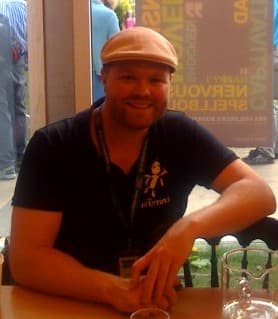
Alexander Gordon Smith is the author of the acclaimed "Lockdown" series, including "Lockdown," "Execution," and "Death Sentence." Known for his gripping young adult dystopian thrillers, Smith crafts fast-paced narratives with high stakes and compelling protagonists. His work often explores themes of survival, rebellion, and the fight for freedom in oppressive societies.







