“Britain was a land of ghosts, and it was time for me to join them.”
— Mourning the state of Britain and his own fate near the end.

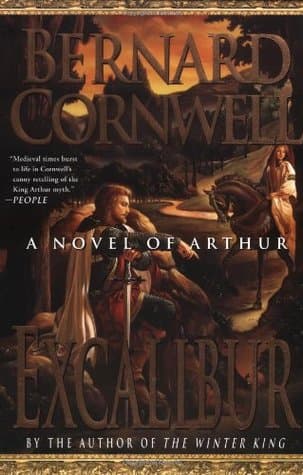
Bernard Cornwell (1997)
Genre
Fantasy / Historical Fiction
Reading Time
10-12 hours
Key Themes
See below
Sign in to track this book
Arthur, a reluctant warlord, makes his final stand against Saxon invaders and internal threats, both human and mystical, as his fractured kingdom and a reborn love face destruction.
The story begins with Arthur's Britons preparing for a final fight against the Saxons at Mynydd Baddon. Derfel, the narrator, is a veteran warrior thinking about the long war. Arthur plans a decisive battle to stop the Saxon advance. Meanwhile, Merlin, wanting to restore old gods and lost treasures, goes to Ireland with Nimue, seeking the Cauldron of Clyddno, a powerful artifact. Their journey is dangerous, and Merlin's growing disinterest in worldly matters worries Arthur's followers, who need his advice and magic.
The Battle of Mynydd Baddon begins, a brutal fight. Arthur, though hurt, leads his men, inspiring them. Derfel fights bravely. The battle is hard-fought with many losses, but Arthur's tactics and the Britons' resolve win the day. The Saxons are defeated, retreating and asking for peace. This victory is the peak of Arthur's military career, bringing a time of peace and cementing his legend as a warlord.
Merlin returns from Ireland with the Cauldron of Clyddno. He plans to use its power to bring back the old gods and Britain's ancient ways, believing this is the only way to save the land. He tries a ritual with the Cauldron, but the results are unexpected. The Cauldron's magic is strong but unpredictable, and its use seems to deeply affect Merlin, further separating him from Arthur and the Christian group. Nimue, his apprentice, gains more power and influence, often speaking for him.
Despite the peace, problems grow in Arthur's court. Guinevere, Arthur's wife, continues her affair with Lancelot, a once-loyal warrior whose ambition has grown. Derfel, loyal to Arthur, watches this betrayal with sadness. Lancelot, charming but selfish, manipulates Guinevere and other nobles, slowly weakening Arthur's power. This personal betrayal reflects the larger divisions in Britain, as Christian and pagan groups clash, and the peace from Mynydd Baddon starts to break under internal conflict and personal ambition.
As Arthur deals with internal issues, Gorfyddyd, a clever and ruthless king, takes over Powys, a key ally. Gorfyddyd, backed by some less loyal British lords, openly challenges Arthur and threatens the fragile peace. This act forces Arthur to fight again, taking his attention and resources from the Saxon threat and growing internal rifts. Derfel finds himself back on the battlefield, fighting fellow Britons, a sad reality showing the land's fractured state.
During these conflicts, Derfel remembers Ceinwyn, his wife, who was taken years ago. He believes she is alive and goes on a quest to find and rescue her, often risking his life. His journey takes him through dangerous lands and brings him into contact with various groups, both friends and enemies. This personal story runs alongside the larger political and military struggles, showing Derfel's loyalty and lasting love, even amidst despair and betrayal.
Lancelot, encouraged by his affair with Guinevere and his growing influence, openly sides with Mordred, Arthur's son and heir, who is manipulated by Christian priests. Together, they plan to undermine Arthur's rule, creating distance between him and his remaining loyal followers. Their betrayal leads to a direct challenge to Arthur, starting a civil war. Derfel, loyal, fights against former comrades, seeing the destruction of all Arthur built. This internal conflict proves more damaging than any outside threat.
The civil war ends in the Battle of Camlann. Arthur, tired and heartbroken by betrayals, leads his loyal warriors into this final, desperate fight against Lancelot and Mordred's forces. The battle is brutal and chaotic, with huge losses on both sides. Derfel fights hard, seeing Arthur's dream destroyed. Arthur confronts Mordred, leading to a tragic, fatal meeting. The battle leaves Arthur mortally wounded, and his vision of a united Britain is shattered, marking the end of an era.
After Camlann, a wounded Arthur is taken by his last loyal companions, including Derfel, towards the mysterious Summer Lands. This journey is filled with myth and sadness as Arthur dies. Before he leaves, Arthur tells Derfel to return his sword, Excalibur, to the Lady of the Lake. Derfel, doing his duty, throws the sword into the water, a symbolic act marking the end of Arthur's rule and the old ways. The legend of Arthur begins as his physical presence fades.
After Arthur's death and the resulting chaos, Britain breaks apart further. Derfel, tired of the endless wars and betrayals, eventually finds peace as a monk. He becomes Brother Derfel and carefully writes the true story of Arthur, trying to separate fact from the growing myths. His writings aim to be an accurate account of Arthur's life, his struggles, and his failure to unite Britain, ensuring the warlord's legacy is remembered truthfully, not as a fable, but as a tragic historical figure.
The Protagonist/Narrator
From a slave boy to a legendary warrior, Derfel ultimately transforms into a monk, dedicating his life to preserving the true history of Arthur.
The Protagonist
Arthur rises to become the greatest warlord of Britain, achieving his greatest victory, only to see his dream of a united kingdom shattered by internal strife and personal betrayal, leading to his tragic demise.
The Supporting/Antagonist (in a sense)
Merlin's quest for the Cauldron of Clyddno culminates in his attempt to restore the old gods, leading him to a mystical, almost other-worldly existence, ultimately beyond the concerns of men.
The Supporting/Antagonist
Nimue evolves from Merlin's apprentice to a powerful and vengeful sorceress, ultimately becoming a tragic figure consumed by her devotion to the old gods and her desire for retribution.
The Antagonist
Lancelot rises as a celebrated warrior but falls into infamy as a treacherous usurper, ultimately contributing to Arthur's downfall.
The Supporting/Antagonist
Guinevere's initial role as Arthur's queen is overshadowed by her infidelity, leading to her becoming a symbol of betrayal and a catalyst for the kingdom's fracturing.
The Antagonist
Mordred, born of Arthur's transgression, is manipulated into becoming the instrument of his father's downfall.
The Supporting
Ceinwyn's abduction and eventual rescue by Derfel underscore the enduring power of love and loyalty amidst a crumbling world.
Arthur's dream of a united, peaceful Britain is built over years of war and diplomacy, only to be ruined by betrayals, personal ambitions, and religious conflict. The victory at Mynydd Baddon is a temporary break, as problems within his court, especially the affair between Lancelot and Guinevere, and Mordred's actions, lead to the civil war at Camlann. The novel shows that even good goals can fail because of human flaws.
“We were a land of dreams, and we woke to a nightmare. That is the truth of it.”
This theme is key to the story, shown through characters like Derfel's loyalty to Arthur, contrasted with the betrayals by Lancelot, Guinevere, and Mordred. Derfel's steady devotion highlights Lancelot's selfish ambition, which leads him to work against his lord. The personal betrayals in Arthur's inner circle are as damaging, if not more so, than outside threats from the Saxons, showing how broken trust can destroy a kingdom.
“A man's loyalty is his shield, but a king's trust is a fragile thing.”
The conflict between paganism (Merlin and Nimue) and Christianity (priests and Mordred) is always present. Merlin's strong efforts to bring back old gods with the Cauldron of Clyddno clash with Christianity's growing power, which seeks to end ancient beliefs. This religious struggle causes many political divisions and moral problems, showing how deep beliefs can divide a society and contribute to its fall, even when facing a common enemy.
“The gods of the old ways are dying, and the new god is a jealous one.”
Through Derfel's narration as a monk, the novel questions the difference between history and myth. Derfel states he wants to record the 'truth' of Arthur's life, removing the romantic legends that will form around him. He tells of the gritty realities of war and politics, highlighting the human flaws and complex reasons behind events, rather than idealized heroic stories. This approach lets the author examine the Arthurian legend itself.
“I write of the man, not the myth. The man was greater.”
Despite Arthur's efforts for peace, Britain remains stuck in constant violence. The Saxon defeat at Mynydd Baddon only leads to civil war and more bloodshed at Camlann. The story highlights the relentless nature of conflict, both outside and inside, and how hard it is to escape it. Even after Arthur's death, the land remains divided, suggesting that lasting peace is hard to find, and people often resort to conflict.
“There is no end to war, only pauses.”
The story is told years later by Derfel Cadarn, now a monk.
This device allows for a deeply personal and reflective account of Arthur's reign. Derfel, as Brother Derfel, recounts events from a future vantage point, offering insights into the consequences of actions and the ultimate fate of characters. This perspective also allows for the explicit deconstruction of Arthurian myth, as Derfel contrasts the 'truth' he lived with the legends he knows will later emerge. His voice is often world-weary and pragmatic, lending authenticity and a sense of historical realism to the fantastical elements.
A powerful magical artifact sought by Merlin to restore the old gods.
The Cauldron serves as a MacGuffin and a symbol of the ancient pagan power Merlin seeks to revive. Its retrieval and attempted use by Merlin represent the extreme efforts to cling to the old ways in a changing world. It highlights the mystical elements of the story and the conflict between the magical and the mundane, and its unpredictable power underscores the dangers of meddling with forces beyond human control. It is a tangible representation of Merlin's grand, but ultimately doomed, ambition.
Arthur's legendary sword, a symbol of his authority and the hope for Britain.
Excalibur is more than just a weapon; it is a potent symbol of Arthur's legitimate rule, his prowess, and the fragile hope for a united Britain. Its presence inspires loyalty and fear. Its eventual return to the lake, as per Arthur's dying wish, marks the definitive end of his era and the fading of the old order. This act symbolizes the passing of the torch, not to another king, but to memory and legend, as the sword itself returns to the mystical realm from which it came.
Foreshadowing and mystical guidance, often interpreted by Merlin and Nimue.
Throughout the narrative, prophecies and omens, often interpreted by Merlin and Nimue, provide a sense of fate and predestination, while also adding to the mystical atmosphere. These are not always clear-cut and can be open to interpretation, reflecting the uncertainty of the future. The prophecy surrounding Mordred, for instance, casts a long shadow over Arthur's reign, creating dramatic irony as characters try, and often fail, to avert their destined paths. This device enhances the feeling of a world caught between ancient magic and an encroaching, more rational future.
“Britain was a land of ghosts, and it was time for me to join them.”
— Mourning the state of Britain and his own fate near the end.
“The gods do not care for us, Derfel. They care only for their own amusement.”
— Merlin's cynical view on the divine.
“Love is a battlefield, and I was losing.”
— Derfel reflecting on his complicated romantic life.
“A man's word is his bond, and a king's word is his kingdom.”
— Emphasizing the importance of oaths and promises.
“We fight for Britain, not for Arthur. We fight for what Britain could be.”
— Derfel's motivation for continuing the struggle.
“The past is a foreign country; they do things differently there.”
— A general reflection on the historical setting and changes over time.
“There are always choices, Derfel. Always. Even when it seems there are none.”
— Merlin offering advice and a glimmer of hope.
“Peace is not the absence of war, but the presence of justice.”
— A philosophical statement on true peace.
“Sometimes, the best thing a man can do is to know when he is beaten.”
— Reflecting on the wisdom of knowing when to retreat or surrender.
“The sword is only as good as the hand that wields it.”
— A classic observation about skill and the tool.
“He was a king without a kingdom, a god without worshippers.”
— Describing Arthur's diminishing power and influence.
“Dreams are important, Derfel. They are what keep us alive when all else dies.”
— Merlin discussing the power of hope and vision.
“The world is a harsh place, and only the strong survive.”
— A bleak but realistic view of the struggle for existence.
“Every man has his breaking point, even a king.”
— Observing the limits of human endurance, regardless of status.
Ready to see how well you understood this book? Take our interactive quiz with 10 questions.
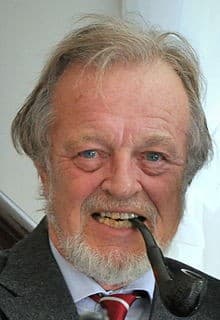
Bernard Cornwell is a prolific British author celebrated for his masterful historical fiction. He is best known for his Sharpe series, chronicling the Napoleonic Wars, and his Warlord Chronicles, which reimagines Arthurian legend. Cornwell's work is lauded for its meticulous research, gritty realism, and compelling narratives.







