“The truth, however ugly in itself, is always curious and beautiful to seekers after it.”
— Hercule Poirot reflecting on the nature of truth in a murder investigation.

Agatha Christie (1941)
Genre
Thriller / Mystery
Reading Time
240 min
Key Themes
See below
Sign in to track this book
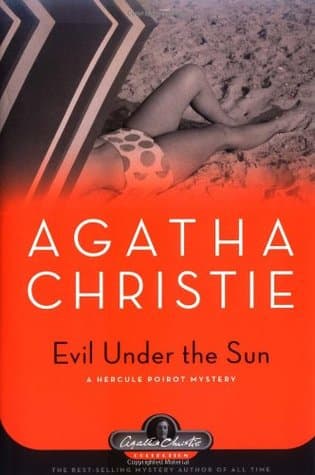
On a sun-drenched Devon beach, Hercule Poirot's holiday is interrupted by the murder of the notoriously provocative Arlena Stuart, forcing him to unravel a complex web of passion, jealousy, and meticulously planned evil beneath the idyllic surface.
Hercule Poirot, seeking a quiet holiday, arrives at the Jolly Roger Hotel, a fashionable resort on Smugglers' Island, off the coast of Devon. He quickly observes the guests, including the beautiful and provocative former actress Arlena Stuart Marshall, who is vacationing with her seemingly devoted husband, Kenneth Marshall, and his quiet stepdaughter, Linda. Also present are Patrick Redfern and his athletic wife Christine, the wealthy Horace Blatt, the Reverend Stephen Lane, the feminist Rosamund Darnley, and the proprietors, Major Barry and Miss Brewster. Poirot notes the immediate tension created by Arlena's flirtatious behavior, especially with Patrick Redfern, much to the chagrin of his wife Christine, and the apparent distress of her own husband, Kenneth.
Arlena Stuart continues to openly flirt with Patrick Redfern, much to the exasperation of his wife, Christine, who is often seen looking pale and unwell. Kenneth Marshall, Arlena's husband, appears outwardly calm but is clearly suffering under her public indiscretions. Linda Marshall, Arlena's stepdaughter, openly expresses her hatred for Arlena, wishing her dead and even attempting to use an old spell. Other guests, such as Rosamund Darnley, Arlena's former business partner, and Horace Blatt, a man Arlena has previously swindled, also harbor ill feelings towards her. The atmosphere at the hotel becomes charged with unspoken resentments and jealousies, all centered around Arlena's magnetic yet destructive personality.
On a sunny morning, the guests disperse for various activities. Arlena Stuart announces her intention to sunbathe alone in Pixy Cove, a secluded beach accessible only by a difficult path or boat. Kenneth Marshall stays at the hotel, writing letters. Linda Marshall goes sailing with Patrick Redfern, who later drops her off at a different cove before returning to pick up his wife, Christine, for a game of tennis. Christine, however, claims to have sprained her ankle and remains in her room. Poirot himself is relaxing, observing the comings and goings. The stage is set for the inevitable tragedy, with alibis beginning to form, or unravel, for each character.
Later that morning, Christine Redfern, having apparently recovered from her ankle sprain, goes for a walk and meets Patrick. They decide to row to Pixy Cove. Upon their arrival, they discover Arlena Stuart's body lying face down on the sand. She has been strangled with her own bikini top. Patrick immediately checks for a pulse, confirming her death, and then races back to the hotel to raise the alarm. Christine remains with the body, visibly distressed. The discovery sends shockwaves through the hotel, confirming Poirot's earlier premonition of 'evil under the sun.' The local police, led by Inspector Japp, are called to the scene.
Hercule Poirot, now drawn into the investigation, observes Inspector Japp's initial questioning of the guests. Kenneth Marshall claims he was writing letters. Linda Marshall was sailing with Patrick. Patrick Redfern states he dropped Linda off, then rowed to meet Christine, only to find her at Pixy Cove. Christine claims she was in her room with a sprained ankle, but later went for a walk. Reverend Lane was meditating in a grotto. Rosamund Darnley and Horace Blatt were golfing. Each alibi seems plausible on the surface, but Poirot's keen eye for human psychology immediately detects subtle inconsistencies and hidden motives among the seemingly innocent vacationers. He notes a particularly strong alibi from an unexpected source: a woman who claims to have heard Arlena speaking to someone at the exact time of death, making the strangling seem impossible.
Poirot's investigation uncovers several peculiar details. A small, inexpensive clock belonging to Linda Marshall goes missing. There are conflicting reports about the exact time Arlena was last seen alive and the time her body was discovered. A crucial witness, Miss Emily Brewster, claims to have seen Arlena alive and talking to someone at the exact time the murder is believed to have occurred. This seemingly solid alibi for the killer creates a significant puzzle for Poirot. He also learns of Arlena's past as a manipulative woman, notorious for her affairs and for financially exploiting men, including Horace Blatt. These details suggest a more complex motive than a simple crime of passion.
Linda Marshall, under intense emotional strain and guilt over her hatred for Arlena, confesses to Poirot that she attempted to kill her stepmother by placing a piece of gas piping on the beach where Arlena often sunbathed, hoping it would fall on her head. However, she claims her attempt failed. Shortly after, Linda is found unconscious, having attempted suicide by taking an overdose of sleeping pills. She is saved by quick medical attention. Her confession, though not directly related to Arlena's strangulation, adds another layer of dark intent to the case and highlights the impact Arlena had on those around her, further complicating the investigation.
Poirot, using his 'little grey cells,' meticulously reconstructs the movements of every guest on the morning of the murder, paying close attention to the weather conditions, particularly the heat. He considers the precise timing of each alibi and the physical capabilities of the suspects. He questions the credibility of Christine Redfern's sprained ankle and the exact route taken by Patrick. Poirot also re-examines the witness testimony about Arlena being alive at a certain time, realizing that a crucial element of the crime must have been designed to create a false impression of time and presence. He begins to suspect a far more elaborate and cunning plot than initially thought.
In a dramatic confrontation, Poirot gathers all the suspects and reveals the true murderers: Patrick Redfern and his wife, Christine. He explains that Arlena Stuart was not killed by a lover's quarrel but by a meticulously planned scheme for financial gain. The 'sprained ankle' was a ruse by Christine, who was secretly a strong swimmer. The plan involved Christine strangling Arlena while Patrick created a distraction and a false alibi. Christine then swam back to the hotel, changing into a swimsuit to appear as if she had only just gone for a walk, creating the impression that Arlena was killed later than she actually was. The missing clock and the witness who heard Arlena speak were all part of the elaborate deception.
Poirot explains that Christine, a former actress herself and an accomplished swimmer, was the actual killer. While Patrick was ostensibly sailing with Linda, Christine, feigning a sprained ankle, left her room, swam to Pixy Cove, strangled Arlena, and then swam back to the hotel, arriving before Patrick could pick her up. She then changed, and later 'discovered' the body with Patrick. The 'voice' heard by the witness, Emily Brewster, was actually Patrick throwing his voice to imitate Arlena, creating the illusion that Arlena was alive and speaking at a time when she was already dead. The Redferns, deeply in debt, had targeted Arlena for her wealth, planning to frame Kenneth Marshall.
Poirot reveals that Patrick and Christine Redfern were not only deeply in debt but also had a history of similar schemes, having previously murdered Patrick's first wife for her inheritance. Their motive for killing Arlena was purely financial, intending to inherit her wealth by framing Kenneth Marshall. They had carefully cultivated a public image as a devoted couple, with Christine feigning illness and timidity, to deflect suspicion. With Poirot's meticulous reconstruction of the crime and the exposure of their elaborate deception, Patrick and Christine Redfern are arrested. Kenneth Marshall is finally free from Arlena's destructive influence, and Linda begins to heal from her trauma, as peace is restored to Smugglers' Island, albeit with the memory of 'evil under the sun.'
The Protagonist
Poirot transitions from a holidaymaker to an active investigator, using his intellect to restore order and justice.
The Victim
Her character is static as she is the victim, but her past actions drive much of the plot's tension and motive.
The Supporting
He is initially trapped by Arlena's influence and her death frees him from her toxic presence.
The Supporting
Her character is initially consumed by hatred and despair, but Arlena's death allows her to begin healing.
The Antagonist
Initially appearing as a passionate lover, his true nature as a cold, calculating murderer is revealed.
The Antagonist
Her initial appearance as a frail victim is shattered, revealing her as a ruthless and calculating killer.
The Supporting
His role is primarily to provide moral commentary and a red herring for the investigation.
The Supporting
Her character remains consistent, serving as a voice of pragmatic observation.
The Supporting
His character remains static, representing another victim of Arlena's schemes.
The Supporting
Her character serves as a plot device to complicate the timeline, highlighting the killer's cunning.
This theme is central to 'Evil Under the Sun,' as nearly every character presents a facade that belies their true nature or intentions. Christine Redfern, in particular, epitomizes this, appearing as a frail, sympathetic victim of her husband's infidelity, while secretly being a cunning and ruthless murderer. Patrick Redfern's charm masks his predatory nature. Arlena Stuart's glamorous exterior hides a manipulative and destructive personality. Poirot's entire investigation centers on peeling back these layers of deceit to uncover the grim reality beneath the sunny, idyllic setting.
“''It is not the face, but the expressions on the face, that are important.'”
The book explores how evil can operate even in the most beautiful and seemingly innocent settings. The title itself, 'Evil Under the Sun,' highlights this contrast. Arlena Stuart, though the victim, is portrayed as a source of petty evil through her manipulation and cruelty, while the Redferns represent a more premeditated evil driven by greed. The novel suggests that evil is not confined to dark alleys but can thrive amidst sunshine and leisure, disguised by charm and superficiality. It is a reminder that human darkness can exist anywhere, regardless of external beauty.
“''It is not a crime of passion, Inspector. It is a crime of calculation, of cold-blooded, heartless calculation.'”
Jealousy is a pervasive undercurrent throughout the novel, driving many of the characters' actions and initially pointing suspicion in various directions. Christine Redfern's feigned jealousy over Patrick's affair with Arlena is a key part of her disguise. Linda Marshall's intense hatred and jealousy of Arlena, stemming from her impact on her father, leads to her own desperate acts. Kenneth Marshall's quiet suffering also suggests a deep-seated jealousy and hurt. The novel uses these emotional responses as red herrings, making the reader believe a crime of passion is more likely than a calculated murder.
“''Hate, you see, is a living thing. It can grow and fester.'”
A significant theme and plot device is the manipulation of time and space to create false alibis and confuse the investigation. The Redferns' elaborate plan hinges on altering the perceived timeline of Arlena's death through Christine's swimming, Patrick's ventriloquism, and the misdirection of a crucial witness. Poirot's challenge is to disentangle these temporal and spatial distortions to find the true sequence of events. The book highlights how easily perceptions of reality can be skewed when cleverly orchestrated, making the seemingly impossible appear true.
“''The essence of a perfect crime is not its brutality, but its cleverness, its artistry.'”
A meticulously constructed alibi designed to make the murder appear impossible.
The perfect alibi is central to the Redferns' plot. Christine feigns a sprained ankle and then uses her swimming prowess to reach Pixy Cove, commit the murder, and return undetected, while Patrick creates a separate alibi involving Linda Marshall. Crucially, Patrick also uses his ventriloquism skills to make a witness believe Arlena was alive and speaking at a time when she was already dead. This elaborate web of deception makes it seem as though the killers were elsewhere or that the murder occurred at a different time, making the true solution incredibly difficult to uncover.
Patrick Redfern's use of ventriloquism to create a false witness testimony.
Patrick Redfern's unexpected skill as a ventriloquist is a crucial plot device. He uses this ability to throw his voice, making Emily Brewster believe she heard Arlena Stuart speaking at Pixy Cove at a time when Arlena was already dead. This creates a seemingly unshakeable alibi for the actual time of death and confuses the timeline for the investigators. It's a highly unusual and clever method of misdirection, designed to make the murder appear to have happened later, thereby implicating others.
Christine Redfern's deliberate portrayal of frailty to deflect suspicion.
Christine Redfern consistently portrays herself as delicate, frail, and suffering from a sprained ankle. This feigned weakness serves multiple purposes: it garners sympathy, deflects suspicion from her physical capability to commit the murder, and provides a crucial element of her alibi. Her 'sprained ankle' allows her to be 'confined' to her room, while in reality, she is an excellent swimmer and uses this skill to commit the crime undetected. This device highlights the theme of appearance versus reality.
The remote island resort provides a confined cast of suspects.
The Jolly Roger Hotel on Smugglers' Island serves as a classic 'closed circle' setting. Being on an island, the number of potential suspects is immediately limited to the guests and staff of the hotel, forcing Poirot to look inward at the relationships and motives within this confined group. This isolation enhances the psychological tension and ensures that the murderer must be one of the seemingly innocent holidaymakers, intensifying the sense of 'evil under the sun' within a beautiful, yet inescapable, environment.
“The truth, however ugly in itself, is always curious and beautiful to seekers after it.”
— Hercule Poirot reflecting on the nature of truth in a murder investigation.
“The impossible could not have happened, therefore the impossible must be possible in spite of appearances.”
— Poirot explaining his method of solving a seemingly impossible crime.
“I have a bourgeois attitude to murder. I disapprove of it.”
— Poirot humorously stating his moral stance on murder.
“It is a curious thing, but I have found that there is often something a little wrong with the most beautiful people.”
— Poirot musing on the deceptive nature of appearances among suspects.
“The sun shines, the sea is blue, but you forget there is evil everywhere under the sun.”
— A character remarking on the dark undercurrents in an idyllic seaside setting.
“One must never neglect details.”
— Poirot emphasizing the importance of small clues in detective work.
“People who are very beautiful make their own laws.”
— Observation about how attractive individuals often receive special treatment.
“There is nothing so dangerous for anyone who has something to hide as conversation!”
— Poirot noting how talkative suspects can inadvertently reveal secrets.
“The psychology, it is the most important thing.”
— Poirot stressing the role of understanding human behavior in solving crimes.
“It is completely unimportant. That is why it is so interesting.”
— Poirot discussing a seemingly trivial clue that proves crucial.
“Murder is a habit-forming drug.”
— A dark observation about the potential for killers to repeat their crimes.
“The sea is so very calm. It gives one a false sense of security.”
— Reflecting on the deceptive tranquility of the seaside resort where the murder occurs.
“I do not approve of murder. But if one must murder, one should do it with efficiency.”
— Poirot making a wry comment about the criminal's methods.
“The little grey cells—they are what matter.”
— Poirot referring to his reliance on intellect and deduction.
Ready to see how well you understood this book? Take our interactive quiz with 10 questions.
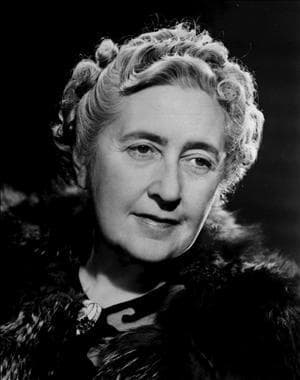
Dame Agatha Mary Clarissa Christie, Lady Mallowan, was an English writer known for her 66 detective novels and 14 short story collections, particularly those revolving around fictional detectives Hercule Poirot and Miss Marple. She also wrote the world's longest-running play, the murder mystery The Mousetrap, which has been performed in the West End since 1952. A writer during the "Golden Age of Detective Fiction", Christie has been called the "Queen of Crime". She also wrote six novels under the pseudonym Mary Westmacott. In 1971, she was made a Dame (DBE) by Queen Elizabeth II for her contributions to literature. Guinness World Records lists Christie as the best-selling fiction writer of all time, her novels having sold more than two billion copies.







