“There are things we know, and things we don’t know. And then there are things we know we don’t know.”
— Reflecting on the nature of knowledge and the unknown, particularly in the face of tragedy.

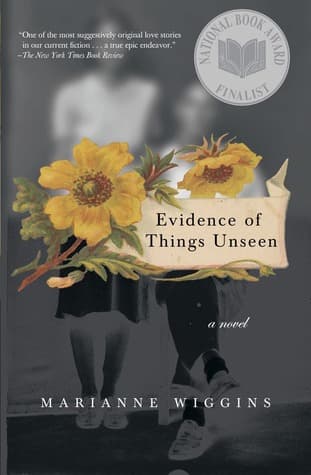
Marianne Wiggins (2003)
Genre
Literary Fiction / Historical Fiction
Reading Time
10-12 hours
Key Themes
See below
Sign in to track this book
A photographer's belief in science is shattered as America pursues nuclear power, from bioluminescence to the atomic bomb.
Fos returns to Tennessee after World War I, changed by the trenches in France. The war leaves a mark, but it also sparks his interest in light, electricity, and X-rays. He sees science as a way to understand hidden truths and a brighter future. He opens a photography studio in Knoxville with his Army friend, Flash, a charismatic and reckless man. Fos's scientific leanings show in his photography, where he tries to capture more than just surface appearances.
Driven by scientific curiosity, Fos travels to the Outer Banks of North Carolina to see the Perseid meteor shower. This trip, meant for scientific study, changes when he meets Opal, a young woman whose father is a glassblower. Opal, like her father, understands light, color, and creation, but through art rather than science. Their shared interest in visible and invisible light brings them together, and Fos, taken by Opal's spirit and beauty, quickly falls in love with her. Their connection feels immediate and deep.
Fos brings his new wife, Opal, back to Knoxville, where they start their life together. Fos continues to run his photography studio with Flash, whose cheerful nature and disregard for Prohibition laws often get him into trouble. Flash, against temperance, is involved in bootlegging, supplying illegal alcohol during Prohibition. His pursuit of pleasure and profit, however, attracts unwanted attention. The illicit world Flash inhabits eventually conflicts with the law and, more ominously, with the local Ku Klux Klan, whose presence looms large in their lives.
Flash's bootlegging escalates, leading to a violent clash with the Ku Klux Klan. This encounter results in a tragedy that deeply affects Fos and Opal. The incident is harrowing, leaving emotional and physical scars. The danger from the KKK and the legal consequences of Flash's actions make it unsafe for Fos and Opal to stay in Knoxville. They are forced to leave their city life and seek refuge, deciding to move to Opal's mother's farm on the Clinch River, hoping to escape the threats.
On Opal's mother's farm by the Clinch River, Fos and Opal try to rebuild their lives. The rural setting contrasts sharply with the dangerous life they left in Knoxville. Here, amidst nature and farm work, they find a period of peace and stability. Their son, Lightfoot, is born, bringing joy and new purpose. Fos, always an observer, finds wonder in the natural world, even as his scientific mind deals with farm life. The family settles into a quieter existence, cherishing their time together.
Their peace on the Clinch River farm ends with the New Deal. The Tennessee Valley Authority (TVA), a government project for flood control, electricity, and economic development, designates their land for acquisition. This means the family's farm will be submerged as part of the TVA's dam-building. Fos and Opal are again uprooted, losing their home and stability. This forced displacement is another disruption, showing the relentless march of progress and its human cost.
With their farm lost to the TVA, Fos must find new work. His scientific background and photography skills lead him to a mysterious government facility known as Site X, later revealed as Oak Ridge. This secret site is a center of scientific activity, part of the government's race to develop the atomic bomb during World War II. Fos, needing to provide for his family and believing in scientific advancement, takes a job there, unaware of the project's true nature. He works with advanced photographic and X-ray equipment, documenting processes and materials.
While living near Oak Ridge, Opal begins to suffer from a mysterious and debilitating illness. Her health quickly worsens, showing symptoms that puzzle local doctors. Fos, using his knowledge of unseen scientific forces, especially X-rays and radioactive materials, slowly uncovers the truth. He realizes Opal's illness is not natural, but radiation poisoning, likely from exposure to the secret work at Site X. The science he once revered has become a source of immense danger to his wife.
The discovery of Opal's radiation poisoning shatters Fos's lifelong faith in science as a purely good force. He had always seen technology and scientific discovery as paths to enlightenment and progress, ways to understand and improve the world. Now, seeing the devastating impact of unchecked scientific advancement on his wife, his worldview crumbles. The 'manmade suns' at Oak Ridge, meant to end a war, also bring an invisible, deadly peril into his home. This betrayal by his core beliefs forces Fos to confront the moral and ethical implications of scientific power.
As Opal's condition worsens, the story explores the broader implications of the Atomic Age. The 'evidence of things unseen' shifts from Fos's early interest in X-rays and bioluminescence to the insidious, invisible threat of radiation. The story shows the shift in human understanding and trust — from an innocent belief in a safe future to the reality of humanity's capacity for self-destruction. Fos and Opal's personal tragedy becomes a small example of the larger anxieties and moral dilemmas facing America and the world as humanity grapples with the power it has unleashed.
The Protagonist
Fos begins as an optimistic believer in science and progress, but his faith is ultimately shattered by the devastating consequences of atomic research on his family.
The Protagonist/Foil to Fos
Opal's journey sees her adapt to various challenges, culminating in her tragic fate, which serves as a poignant symbol of the unseen costs of scientific progress.
The Supporting/Catalyst
Flash's character remains largely static, serving as a force of nature whose actions have profound consequences for others.
The Supporting
Lightfoot's arc is less about personal development and more about representing the innocent future impacted by his parents' experiences.
The Supporting
Her arc is primarily to provide a safe haven, which is then disrupted by external forces.
The Antagonist
The KKK serves as an external antagonistic force that drives early plot conflicts.
This theme explores humanity's changing relationship with science and technology. Fos starts with an almost spiritual belief in science's power to reveal and improve. His interest in X-rays, electricity, and bioluminescence represents this early optimism. However, as the story progresses, especially with the atomic bomb at Oak Ridge and Opal's radiation poisoning, this promise turns to danger. The 'unseen things' shift from wonders to threats, showing how unchecked scientific advancement can lead to unforeseen and devastating consequences. The novel questions the moral responsibility that comes with such power.
“There was evidence of things unseen that would transfigure our unquestioned trust in a safe future.”
The novel shows a heartbreaking journey from individual and national innocence to a more complex understanding of the world. Fos and Opal's early life, with their innocent interest in 'things that glow,' symbolizes a pre-Atomic Age optimism. Their move from the peace of the Clinch River farm to the shadow of Oak Ridge marks a significant loss. This theme extends to a national scale, reflecting America's shift from perceived safety and promise to the reality of the atomic age, where humanity's destructive capabilities became clear. The 'manmade suns' forever change human trust.
“Their lives have traveled with touching inevitability from their innocence and fascination with 'things that glow' to the new world of manmade suns.”
Light, in its various forms, is a recurring motif and theme. Fos's initial interest in light—through photography, X-rays, and celestial events—represents his desire to see and understand the unseen. Opal's background with her glassblower father also connects her to manipulating light and color. This theme evolves from a symbol of wonder to a symbol of unseen danger, as the invisible radiation that sickens Opal is a form of light, or energy, that is both destructive and undetectable. The novel explores the limits of human vision and the impact of forces beyond our immediate perception.
“He believes in science and the future of technology... Opal, whose father is a glassblower who can spin color out of light.”
The novel weaves major 20th-century American historical events into Fos and Opal's personal lives. From Fos's WWI experiences, to Prohibition and the rise of the KKK, the New Deal's TVA project, and finally, the Manhattan Project at Oak Ridge—each national event directly shapes their decisions, displacements, and fates. This theme shows how larger societal shifts and government actions, often driven by progress or necessity, have profound and often tragic consequences for individuals, demonstrating that no life is separate from history.
“But when the New Deal claims their farm for the TVA, Fos seeks work at the Oak Ridge Laboratory -- Site X in the government's race to build the bomb.”
Early fascination with X-rays hints at later radiation exposure.
Foreshadowing is skillfully used throughout the novel, particularly in Fos's initial, almost innocent fascination with X-rays and 'things that glow.' This early interest in invisible forces and their power subtly hints at the devastating role unseen radiation will play later in the story with Opal's illness. The title itself, 'Evidence of Things Unseen,' sets a tone of anticipation for hidden truths and dangers. This device creates a sense of tragic inevitability, making the later events feel both surprising and deeply resonant as the reader connects the dots.
Light represents both wonder and unseen danger.
Light is a pervasive and evolving symbol. Initially, it symbolizes wonder, knowledge, and scientific progress, seen in Fos's photography, his study of meteors, and Opal's father's glassblowing. It's associated with beauty and understanding. However, as the story progresses and the atomic bomb is developed, light transforms into a symbol of destructive power and unseen peril (radiation). The 'manmade suns' of the bomb represent a corrupted form of light, bringing death rather than enlightenment. This dual symbolism underscores the central theme of science's promise and its potential for devastation.
Contrasting elements highlight thematic shifts and character arcs.
The novel frequently employs juxtaposition to highlight its central themes. The early scientific optimism of Fos is juxtaposed with the later tragic reality of radiation poisoning. The natural beauty and peace of the Clinch River farm are contrasted with the secretive, ominous industrial landscape of Oak Ridge. Opal's artistic, intuitive understanding of light is set against Fos's scientific, analytical approach. These contrasts emphasize the profound shifts in the characters' lives and the broader American experience, underscoring the loss of innocence and the moral complexities of the atomic age.
Physical displacements reflect internal and historical shifts.
The constant physical displacement of Fos and Opal throughout the novel serves as a powerful journey motif. Their moves from Knoxville to the Clinch River farm, and then to the vicinity of Oak Ridge, are not merely changes of address but represent significant shifts in their lives, their understanding of the world, and the historical context. Each forced relocation marks a loss of innocence and a step further into the complex, dangerous new world of the 20th century. The physical journey mirrors their emotional and intellectual journey, from hope to disillusionment.
“There are things we know, and things we don’t know. And then there are things we know we don’t know.”
— Reflecting on the nature of knowledge and the unknown, particularly in the face of tragedy.
“Memory is a kind of seeing, a way of keeping what's gone from being entirely gone.”
— The narrator contemplates the power and purpose of memory in preserving the past.
“What is it about the human heart that makes it want to believe in something beyond what it can see?”
— Exploring faith and the human need for belief in the unseen, often in times of hardship.
“The past is never dead. It's not even past.”
— A character grappling with the lingering effects of historical events and personal history.
“We live in a world of invisible forces, some benevolent, some not.”
— Discussing the unseen influences that shape lives and events, from physics to fate.
“Every photograph is a lie, but a beautiful one.”
— Considering the deceptive yet compelling nature of photography as a representation of reality.
“Grief is a landscape you walk through, and sometimes you get lost.”
— Describing the experience of grief as a journey, often disorienting and profound.
“The greatest inventions are often born of the greatest necessities.”
— Reflecting on the ingenuity and innovation that arise from urgent needs or challenges.
“Silence can be a kind of language, too, full of unsaid things.”
— Observing the unspoken communication and hidden meanings within moments of silence.
“To be truly seen, sometimes you have to disappear first.”
— A character's realization about visibility and authenticity, often after a period of obscurity.
“Love is not a single thing, but a spectrum of understandings.”
— Exploring the multifaceted and complex nature of love in its various forms.
“The world keeps turning, indifferent to our individual sorrows.”
— A poignant observation on the vastness of the world compared to individual human suffering.
“We are all just trying to make sense of the light and the dark.”
— A universal reflection on the human endeavor to understand life's dualities and mysteries.
“Sometimes the greatest truths are found in the smallest details.”
— Highlighting the significance of minute observations in uncovering deeper realities.
Ready to see how well you understood this book? Take our interactive quiz with 10 questions.







