“When you're a kid, you don't realize you're being raised by people who are as confused as you are.”
— Primrose reflects on her parents' disappearance and her own understanding of the world.

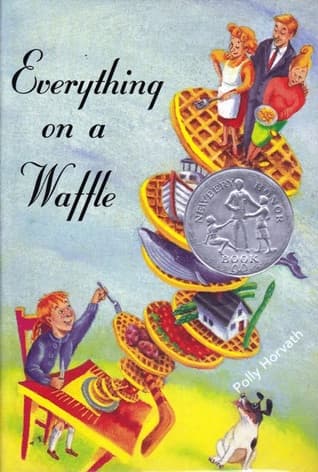
Polly Horvath (2001)
Genre
Children's / Young Adult
Reading Time
150 min
Key Themes
See below
Sign in to track this book
After her parents are lost at sea, an eccentric eleven-year-old navigates the unusual adults of a small Canadian town, finding comfort, culinary knowledge, and belief in her parents' return at a diner where every dish, including the guinea pig, might just end up on a waffle.
Eleven-year-old Primrose Squarp lives in the fishing village of Coal Harbour, British Columbia. One day, her parents, Elna and Hans Squarp, go out on their fishing boat despite a storm. Primrose feels uneasy and tries to stop them, but they reassure her and leave. The storm hits hard, and after a search, their boat is found empty and capsized. The community, including her Uncle Jack, her father's brother, and the police, conclude that Primrose's parents are lost at sea and presumed dead. However, Primrose believes they will return.
After her parents disappear, Primrose moves in with her Uncle Jack, a kind but often absent fisherman who struggles with his own grief and raising a child. To ensure Primrose is cared for, Uncle Jack hires Miss Perfidy, an elderly woman known for her odd habits and dislike of children, to be her guardian. Miss Perfidy mostly ignores Primrose, leaving her to herself and complaining about the smell of children. Primrose navigates this new, lonely life, holding onto her belief that her parents are alive.
Primrose finds a special place in Coal Harbour: 'The Girl on the Red Swing,' a restaurant owned by the kind Kate Bowzer. At Kate's restaurant, every dish, from lasagna to fish and chips, is served on a waffle. Kate takes an interest in Primrose, offering her a place and teaching her to cook. Unlike other adults, Kate never talks down to Primrose or dismisses her belief that her parents will return. This restaurant becomes a source of comfort and stability for Primrose, and Kate becomes a needed confidante and mentor.
At school, Primrose is assigned to Miss Honeycut, the guidance counselor, to help her cope with her loss. However, Miss Honeycut, an overly dramatic and self-absorbed British woman, is unhelpful. Instead of listening to Primrose, Miss Honeycut tells long, irrelevant stories about her own past adventures and romantic troubles. Primrose quickly learns that Miss Honeycut cares more about herself than providing support, further isolating Primrose in her grief and unique perspective.
While learning to cook with Kate Bowzer, Primrose brings her guinea pig, 'Lady,' to the restaurant. In a moment of childish curiosity, Primrose places Lady too close to the oven. Lady's fur catches fire, and the guinea pig dies. This accidental incident deeply upsets Primrose and shows her sometimes naive approach to the world. Kate, true to her character, handles the situation with understanding and compassion, helping Primrose process the event without judgment.
Despite time passing and the community accepting her parents' death, Primrose never stops believing that Elna and Hans Squarp are alive and will come home. She prepares for their return, keeping their house ready, their clothes clean, and even cooking their favorite meals. This hope defines Primrose, setting her apart from others and often causing confusion or concern among adults, who see her persistence as a refusal to accept reality.
The adults in Coal Harbour, especially Uncle Jack, Miss Perfidy, and Miss Honeycut (in her own self-centered way), worry about Primrose's belief that her parents are alive. They see her conviction as denial or an inability to process grief. They try to gently (or not-so-gently) persuade Primrose to accept the truth, but she remains firm. This concern shows the community's struggle to understand and support Primrose in her unique way of coping with loss.
One day, while cleaning her parents' old fishing gear, Primrose finds a hidden message carved into wood by her father, Hans. The message, though cryptic, suggests that he and Elna are alive and trying to return. This discovery excites Primrose, giving her proof for her long-held belief. It strengthens her resolve and gives her new energy to continue waiting and preparing, now with a concrete piece of information to hold onto, further separating her perspective from the rest of the town.
Tragedy strikes again when Primrose's house, where she waited for her parents, catches fire. The fire, whose origin is unclear, destroys the house and everything in it. This event forces Primrose to face another loss, but also moves her into a new living situation. With her home gone, Uncle Jack, overwhelmed, arranges for Primrose to move in permanently with Kate Bowzer at 'The Girl on the Red Swing,' which brings Primrose much-needed stability and emotional support.
Living with Kate at the restaurant is a transformative experience for Primrose. She thrives under Kate's unconventional, yet loving and understanding, guardianship. Primrose continues to improve her cooking skills, learns about life from Kate's perspective, and finds a true home where her beliefs are accepted. Kate's practical wisdom and support give Primrose the emotional foundation she needs, allowing her to grow and maintain her hopeful outlook without feeling isolated or misunderstood.
One day, as Primrose is at 'The Girl on the Red Swing,' a boat pulls into Coal Harbour. To the community's surprise, Primrose's parents, Elna and Hans Squarp, step off the boat, alive. They tell their story of survival, having been shipwrecked on a remote island and spending months finding their way back. Their return confirms Primrose's belief and shows the power of her intuition and hope, bringing a joyful end to her long wait.
The reunion of Primrose with her parents is a moment of joy and relief for the Squarps and the entire community of Coal Harbour, who must re-evaluate their skepticism. Elna and Hans are welcomed back, and the family begins to rebuild their lives. Primrose, no longer alone in her conviction, can finally share her experiences with her parents. The story ends with a sense of restored order, and the magic of Primrose's unique perspective having been proven right, leaving the community with a deeper appreciation for the unexpected.
The Protagonist
Primrose starts as a grieving, isolated child clinging to hope, and through the support of Kate, she grows into a more confident and self-assured individual whose unique perspective is ultimately validated.
The Supporting
Kate remains a consistent source of wisdom and support, embodying unwavering compassion and proving to be Primrose's most vital advocate.
The Supporting
Uncle Jack grapples with grief and responsibility, eventually entrusting Primrose's daily care to Kate, acknowledging his limitations.
The Supporting
Miss Perfidy remains largely unchanged, serving as a static, comical foil to Primrose's needs for connection.
The Supporting
Miss Honeycut remains oblivious and self-involved, never truly connecting with or helping Primrose.
The Supporting
Elna is initially presumed lost, but her miraculous return fulfills Primrose's faith, reuniting the family.
The Supporting
Hans is initially presumed lost, but his miraculous return fulfills Primrose's faith, reuniting the family.
The Mentioned
Lady's brief life and accidental death serve as a small, tragic event, contributing to Primrose's emotional journey.
The main theme is Primrose's belief that her parents are alive, despite all evidence and the town's opinion. Her hope carries her through loneliness and loss, allowing her to cope in her own way. This theme challenges the idea that 'acceptance' is the only valid response to grief, suggesting that some forms of hope, however illogical to others, can be sustaining. Her parents' return ultimately confirms the power of her conviction, as seen when she finds her father's hidden message (Plot Summary 8) and prepares for their return daily (Plot Summary 6).
“Just because you can't see something, doesn't mean it's not there.”
The novel explores how family can appear in unexpected places and how unconventional support can be more nurturing than traditional structures. Primrose finds belonging and guidance not with her well-meaning but overwhelmed Uncle Jack, nor with the neglectful Miss Perfidy or self-absorbed Miss Honeycut, but with the eccentric and kind Kate Bowzer. Kate's restaurant, 'The Girl on the Red Swing,' becomes a safe place where Primrose is understood and loved for who she is, showing that emotional connection and acceptance are more important than conventional family units or societal expectations. This is clear when Primrose moves in with Kate after her house burns down (Plot Summary 9, 10).
“Sometimes the right people find you when you least expect it, and they're exactly who you need.”
The story offers a portrayal of grief, especially through Primrose's coping mechanism. While the adults around her expect her to 'accept' her parents' death, Primrose's refusal is not denial but a personal, intuitive way of processing her loss. Her actions, like keeping her parents' house ready and cooking their favorite meals, are her ways of mourning and staying connected. The book suggests that there is no single 'right' way to grieve and that children, in particular, might process trauma in ways that seem illogical to adults. The community's concern over Primrose's 'unusual' coping (Plot Summary 7) highlights this theme.
“Grief is a peculiar thing. It takes its own shape in every heart, and no two are quite the same.”
The novel questions what 'reality' is and how individual perception shapes it. For Coal Harbour, Primrose's parents are dead, a fact based on evidence. For Primrose, her parents are alive, a reality based on intuition and faith. The story ultimately confirms Primrose's subjective reality, making the community reconsider their own certainties. This theme suggests that truths exist beyond what can be seen or logically explained, and that a child's perspective can sometimes hold a deeper understanding. The climax, with the parents' return (Plot Summary 11), is the ultimate example of this theme.
“The world is full of things that can't be explained, if you just open your eyes to them.”
The story is told from Primrose's innocent and unique point of view, shaping the perception of events.
While not strictly unreliable in the sense of lying, Primrose's narration is 'unreliable' in that her perception of reality differs drastically from the adult world. Her unwavering belief in her parents' return, despite all evidence, colors the narrative. This device allows the reader to experience the world through her hopeful, often whimsical, and sometimes naive lens, creating a sense of wonder and challenging conventional adult logic. The reader is invited to trust Primrose's intuition over the adults' pragmatism, leading to a satisfying resolution when her 'unreliable' perspective is proven correct.
The waffle represents comfort, unconventionality, and the ability to adapt.
At 'The Girl on the Red Swing,' everything is served on a waffle. This seemingly whimsical detail serves as a powerful symbol. The waffle, a humble and comforting food, becomes a foundation for unexpected pairings, mirroring how Primrose finds comfort and a new foundation in an unconventional setting. It signifies that support and nourishment can come in unusual forms, and that seemingly disparate elements can come together harmoniously. The waffle embodies Kate's unique approach to life and her ability to make the unconventional feel perfectly natural and comforting.
A cryptic message from Primrose's father hints at his survival, validating her hope.
The discovery of a hidden message carved by Primrose's father into a piece of wood (Plot Summary 8) serves as a subtle yet crucial piece of foreshadowing. It provides the first tangible 'proof' within the story that Primrose's belief might not be entirely unfounded, strengthening her resolve and offering the reader a glimmer of hope that her intuition is correct. This device builds suspense and anticipation for the eventual climax, affirming the power of Primrose's connection to her parents and setting the stage for their miraculous return.
“When you're a kid, you don't realize you're being raised by people who are as confused as you are.”
— Primrose reflects on her parents' disappearance and her own understanding of the world.
“Sometimes when you lose everything, you find yourself.”
— Primrose ponders the changes in her life after her parents go missing.
“There are two kinds of people in the world: those who love waffles and those who are wrong.”
— Miss Bowzer's strong opinion on waffles, a recurring theme.
“Being lonely is not the same as being alone.”
— Primrose learns this distinction while living with her various relatives.
“Life is like a waffle. You have to make it yourself.”
— A philosophical thought from Miss Bowzer, connecting life to her favorite food.
“It's a strange thing, but sometimes the people who are the most different from you are the ones who understand you best.”
— Primrose observes the unique personalities in Coal Harbour and how they connect.
“Every day is an adventure if you look at it right.”
— A hopeful outlook Primrose develops despite her challenging circumstances.
“Grown-ups often don't see what's right in front of their noses.”
— Primrose's frustration with adults who misunderstand her situation or intentions.
“You can't always choose what happens to you, but you can choose how you react to it.”
— A lesson Primrose learns about coping with her parents' disappearance.
“A good story always has a beginning, a middle, and an ending. And sometimes the ending is just the beginning of another story.”
— Miss Bowzer's musings on storytelling and the cyclical nature of life.
“Sometimes the most important things are the ones you can't see.”
— Primrose reflects on love, family, and the unspoken connections between people.
“Hope is a very stubborn thing.”
— Primrose's persistent belief that her parents will return, despite the odds.
“It takes a village to raise a child, and sometimes that village is full of peculiar people.”
— Primrose's realization about the diverse and eccentric group of people who care for her.
“Waffles are a symbol of home, comfort, and the possibility of anything.”
— Primrose's evolving understanding of what waffles mean to her and her new life.
Ready to see how well you understood this book? Take our interactive quiz with 10 questions.

Dan Gemeinhart
4.5

Kate O'Hearn
4.4

Jeanne Birdsall
4.4

Jen Wang
4.4

Wendelin Van Draanen
4.3

John Marsden
4.3

Chris Van Allsburg
4.3
Jennifer A. Nielsen
4.2