“The mind is a wild thing, always chasing after what it thinks it wants, even when it knows it shouldn't.”
— Lucia grappling with her desires and the perceived irrationality of her mind.

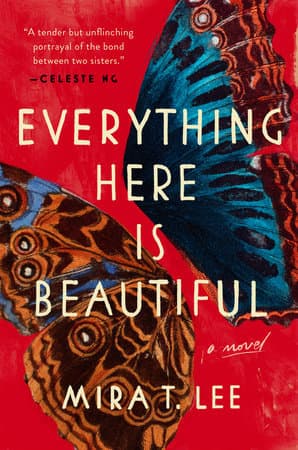
Mira T. Lee (2018)
Genre
Literary Fiction / Psychology
Reading Time
300 min
Key Themes
See below
Sign in to track this book
An older sister faces the challenge of saving her brilliant but mentally ill younger sister, forcing both to confront the limits of love and loyalty.
The story begins by showing the close but contrasting relationship between sisters Miranda and Lucia, daughters of Chinese immigrants in America. Miranda, the elder, is responsible, often looking out for her more impulsive younger sister. Even as children, Lucia shows an unpredictable nature, prone to grand gestures and emotional swings. As they enter young adulthood, Lucia's behavior becomes more erratic; she struggles with academic commitments and frequently changes plans, worrying Miranda and their parents. These early signs suggest an underlying instability, which Miranda often tries to manage, always feeling responsible for Lucia's well-being.
Lucia's erratic behavior increases during her college years. She experiences a severe manic episode with grandiose ideas, sleeplessness, and disorganized thoughts, ending in a public breakdown. This crisis forces her family, especially Miranda, to confront her mental illness. Lucia is hospitalized and diagnosed with bipolar disorder. The diagnosis shocks the family, particularly their traditional parents who struggle to understand it. Miranda, despite her own fear, supports Lucia through her initial treatment and recovery, feeling the weight of her sister's future.
After Lucia's diagnosis and initial stabilization, Miranda pursues a career in Switzerland, seeking a life separate from her sister's constant demands. She hopes her independence will allow Lucia to find hers too. Meanwhile, Lucia, despite her illness, wants to live a full life. She resists strict medication and therapy, often stopping her meds when she feels well. She embarks on various impulsive ventures, including a passionate but short relationship, seeking meaning and adventure, much to her family's worry from afar.
Lucia meets Jonah, an older, kind man, and falls in love. Jonah, a widower, accepts Lucia for who she is, including her mental illness. Their relationship brings a period of stability and happiness to Lucia's life. She moves in with Jonah, and for a time, her episodes become less frequent or better managed with Jonah's support. This period offers a glimpse of a 'normal' life for Lucia, giving hope to Miranda and their parents that Lucia might be finding her footing and a lasting source of comfort.
Seeking a fresh start and a simpler environment, Lucia and Jonah decide to move to Ecuador. Lucia, inspired to help others and connect with a different culture, feels drawn to this new adventure. Jonah, always supportive of Lucia's dreams, agrees to move for her. This move is presented as a chance for Lucia to escape triggers and pressures from the United States and build a life on her own terms, free from her past struggles. Miranda views this decision with a mix of apprehension and cautious optimism, hoping it will be a positive change.
In Ecuador, Lucia becomes pregnant and gives birth to a daughter, May. The initial joy of motherhood is deep, but the responsibilities and sleep deprivation of caring for an infant begin to affect Lucia's fragile mental state. She struggles with postpartum depression and the return of her bipolar symptoms. Jonah, despite his efforts, feels overwhelmed by caring for a newborn and a partner experiencing a mental health crisis. The idyllic vision of their life in Ecuador begins to crumble under these new challenges.
During a severe manic episode, Lucia believes May is in danger or needs protection. She impulsively takes May and disappears, leaving Jonah distraught. When Jonah contacts Miranda, she immediately leaves Switzerland and flies to Ecuador. This marks a turning point, as Miranda again takes on the role of her sister's rescuer. Her arrival in Ecuador shows her renewed commitment to helping Lucia, even as she grapples with her own life choices and sacrifices.
Miranda and Jonah search for Lucia and May across Ecuador. They follow clues and endure arduous travel, driven by their love and concern. After a harrowing period, they find Lucia and May in a remote, poverty-stricken village. Lucia is disoriented and unwell, struggling to care for May, who also shows signs of neglect. The reunion is bittersweet, marked by relief at finding them alive but also by the realization of the depths of Lucia's illness and the immediate need for medical help.
Lucia is hospitalized in Ecuador, receiving urgent medical and psychiatric care. Her recovery is slow and challenging, with periods of clarity and relapse. During this time, the family must confront Lucia's capacity to care for May. After much thought, they decide May will return to the United States to be cared for by Miranda and their parents. This decision is agonizing for everyone, especially Lucia, who deeply loves her daughter. It highlights the sacrifices required when mental illness affects a family.
With Lucia remaining in Ecuador for treatment, Miranda takes May back to the United States. She makes significant changes to her own life, putting her career and aspirations on hold to become May's primary caregiver, alongside their parents. Miranda dedicates herself to providing a stable and loving environment for May, trying to lessen the trauma of her early life. This period shows Miranda's loyalty and selflessness, as she handles the responsibilities of motherhood and the pain of her sister's absence and illness, shaping a new definition of family and love.
Lucia's journey in Ecuador continues, focusing on long-term treatment and therapy. With the support of local caregivers and her own resilience, she slowly accepts her illness and the need for consistent medication and self-care. She struggles with the grief of being separated from May but understands, in clear moments, that it is for her daughter's well-being. This stage of her story emphasizes her ongoing battle for stability and her quest to find purpose and peace within her condition, rather than fighting against it.
Years pass, and Miranda fully embraces her role as May's mother figure. She finds a deep love for May, even as she carries the burden of her sister's illness and the life she might have had. The story explores Miranda's internal struggle with resentment, love, and the complex nature of family loyalty. She comes to terms with the idea that 'saving' Lucia might look different than she first imagined, and that true love sometimes means accepting limitations and making personal sacrifices. Her journey is one of redefining happiness and fulfillment in unexpected circumstances.
Despite the distance and challenges of Lucia's illness, the bond between the sisters endures. Miranda and Lucia communicate sometimes, their interactions colored by Lucia's mental state. Miranda ensures that May knows about her mother and understands her story. The story concludes with a sense of enduring, though altered, sisterly love. It acknowledges that while Lucia's illness shaped both their lives, their connection remains a powerful force, showing the strength of family ties in adversity.
The Protagonist
Lucia's arc is one of battling her illness, seeking freedom, and eventually, a fragile acceptance of her condition, even if it means sacrificing some of her dreams.
The Protagonist
Miranda's arc is about learning to accept the limits of her control over Lucia's illness, finding fulfillment in unexpected motherhood, and redefining her own life's purpose.
The Supporting
Jonah's arc demonstrates enduring love and sacrifice, ultimately leading to a heartbreaking acceptance of the limitations of his ability to 'fix' Lucia.
The Supporting
May's arc is about growing up in a complex family dynamic, being raised by her aunt, and forming her own identity shaped by her unique circumstances.
The Supporting
Their arc involves a slow, painful process of coming to terms with Lucia's lifelong illness and adapting their expectations for their daughters.
This theme explores the sacrifices and emotional cost that love and loyalty within a family can demand, especially when a loved one has a severe mental illness. Miranda's life is shaped by her devotion to Lucia, leading her to often put her sister's needs before her own. This is clear when she repeatedly leaves her own life plans to help Lucia, from her initial breakdown to the crisis in Ecuador. The theme questions the limits of such devotion and when self-preservation must come first, as seen in Miranda's struggles with resentment and the decision for her to raise May.
“What does it take to break them?”
The novel shows the devastating effects of bipolar disorder not only on the individual but also on their entire family. Lucia's illness dictates her life choices, relationships, and even her ability to parent, causing chaos and heartbreak. The family's struggle to understand and manage Lucia's condition highlights the stigma and practical challenges involved. It shows how the illness affects everyone, forcing Miranda to become a caretaker, Jonah to make sacrifices, and the parents to deal with cultural shame and fear for their daughter's future. The story emphasizes the constant vigilance and emotional exhaustion that come with loving someone with a severe mental illness.
“Lucia lives life on a grand scale, until, inevitably, she crashes to earth.”
As daughters of Chinese immigrants, Lucia and Miranda navigate cultural expectations, particularly in contrast to their parents' traditional views. Their parents' initial difficulty accepting Lucia's mental illness, seeing it as a personal failing or something to hide, reflects a cultural clash with Western medical understanding. The sisters themselves deal with their bicultural identities—Lucia seeking freedom and self-expression often at odds with societal norms, and Miranda embodying the 'model minority' ideal of responsibility. The story explores how their immigrant background informs their resilience, sense of family obligation, and search for belonging in different parts of the world.
“At its heart, an immigrant story, and a young woman’s quest to find fulfillment and a life unconstrained by her illness.”
The theme of motherhood is explored through Lucia's difficult journey as a biological mother and Miranda's unexpected role as May's primary caregiver. Lucia's deep love for May is contrasted with her inability to consistently provide care due to her illness, leading to heartbreaking choices. Miranda, who initially imagined a different life, embraces motherhood through sacrifice, dedicating herself to May's well-being. This theme explores what it means to be a mother beyond biological ties, highlighting the selflessness, resilience, and redefinition of life goals that often come with the role, especially in unconventional circumstances.
“Only Lucia can decide whether she wants to be saved.”
The story is told from the viewpoints of multiple characters.
The novel employs alternating first-person perspectives, primarily switching between Lucia and Miranda, but also including Jonah's and even the parents' brief insights. This device allows the reader to gain a comprehensive and empathetic understanding of each character's internal struggles, motivations, and perceptions of Lucia's illness. It highlights the subjective experience of mental illness and its ripple effect on those around her, revealing the complexities and sometimes conflicting interpretations of events within the family. This technique deepens the emotional impact and prevents any single character from being seen as purely right or wrong.
The story jumps between different time periods in the characters' lives.
The narrative frequently shifts between past and present, particularly in the early sections, moving between Lucia and Miranda's childhood and their adult lives. This non-linear structure allows the author to gradually reveal the origins of Lucia's illness and the foundational dynamics of the sisters' relationship. It builds a complete picture of their history, showing how early experiences and personality traits foreshadow later events. This device helps the reader understand the deep-seated patterns of behavior and the enduring nature of their bond, as well as the long shadow cast by Lucia's condition over their entire lives.
Geographic locations symbolize different stages of the characters' lives and internal states.
The various locations in the novel—America, Switzerland, and Ecuador—serve as powerful symbols. America represents the family's immigrant roots and the initial struggles with Lucia's diagnosis. Switzerland symbolizes Miranda's attempt at independence and a 'normal' life away from the family chaos. Ecuador, initially a symbol of Lucia's quest for freedom and a new beginning, ultimately becomes the site of her deepest crisis and a place of profound sacrifice. These shifts in location underscore the characters' internal journeys, their desires for escape or belonging, and the relentless pursuit of a life unconstrained by illness.
“The mind is a wild thing, always chasing after what it thinks it wants, even when it knows it shouldn't.”
— Lucia grappling with her desires and the perceived irrationality of her mind.
“Sometimes, the only way to save someone is to let them go.”
— Lucia reflecting on her relationship with Yonah and the painful decisions she faces.
“Grief is not a linear process. It circles back, it ambushes you, it changes shape.”
— A character experiencing the unpredictable nature of mourning.
“How can you truly know another person when you barely know yourself?”
— A moment of introspection regarding self-identity and understanding others.
“We carry our pasts with us, like invisible luggage, no matter how far we travel.”
— Characters moving across countries, but unable to escape their personal histories.
“Love isn't always enough to heal the deepest wounds.”
— A realization about the limitations of love in the face of mental illness or trauma.
“The quiet spaces between words often hold the most truth.”
— Observing unspoken emotions and the nuances of communication.
“Hope is a fragile thing, easily shattered, but essential for survival.”
— Characters clinging to hope amidst difficult circumstances.
“What does it mean to be a good sister? To protect? To understand? To forgive?”
— Lucia pondering her role and responsibilities towards her sister, Yonah.
“The world keeps turning, indifferent to our pain, our joy, our existence.”
— A moment of existential reflection on the vastness of the world and human insignificance.
“Sometimes, the greatest acts of love are the ones we perform in silence.”
— Referring to quiet sacrifices and unspoken support within relationships.
“Home is not a place, but a feeling. Or perhaps, a person.”
— Characters searching for a sense of belonging and finding it in unexpected ways.
“We build walls around ourselves, thinking they protect us, but often they just trap us.”
— A character realizing the self-imposed isolation caused by emotional barriers.
“To truly see someone, you must look beyond what they show you and into what they hide.”
— An observation about understanding the complexities and hidden struggles of others.
Ready to see how well you understood this book? Take our interactive quiz with 10 questions.







