“Old age is not a battle; it is a massacre.”
— The protagonist's reflection on his declining health and the relentless nature of aging.

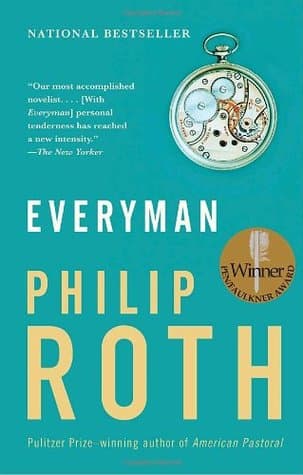
Sign in to track this book
A successful advertising man's later years are plagued by physical decay, mounting regrets, and the relentless march toward an oblivion he's been dreading since youth.
The novel opens with the funeral of the unnamed protagonist, a retired advertising art director, in his hometown of Elizabeth, New Jersey. His brother, Howie, delivers a eulogy, emphasizing their shared childhood and the deceased's lifelong struggle with health and an obsessive fear of death. The narrative then shifts to a non-linear exploration of the protagonist's life, beginning with his early experiences with illness. We learn of his various surgeries and medical procedures, starting from a childhood hernia operation and continuing through numerous adult ailments. These early health scares shape his worldview, instilling a pervasive anxiety about his body and impending mortality, which will haunt him throughout his existence. His relationship with his parents, particularly his doting mother, is also touched upon, revealing a foundation of care juxtaposed with his burgeoning hypochondria.
The protagonist's personal life is marked by failed relationships. His first marriage to a woman named Sally ends in divorce, leaving him with two sons, Lonny and Randy, who grow to resent him deeply. His second marriage, to a beautiful and ambitious woman named Phoebe, also dissolves, marked by his infidelities and her eventual departure. His third marriage, to a younger woman named Maureen, initially seems promising but ultimately succumbs to his persistent anxieties and self-absorption, as well as his continued philandering. Throughout these marriages, his focus remains largely on himself and his health, often at the expense of his partners' emotional needs. His sons, Lonny and Randy, maintain a cold distance, while his daughter, Nancy, from his second marriage, remains a source of affection and connection, though even this relationship is tinged with his self-pity.
The protagonist finds success in his career as an art director in advertising, working on prominent campaigns. His work provides a distraction and a sense of accomplishment, allowing him to channel his creative energies. However, even his professional life is not immune to his underlying anxieties. The superficiality of the advertising world, with its focus on youth and idealized images, subtly emphasizes his own deepening fears of aging and decay. He eventually retires, finding that the cessation of work leaves him with even more time to dwell on his physical ailments and the existential questions that plague him. The camaraderie of his colleagues offers fleeting comfort, but the core of his solitude and self-preoccupation remains untouched by professional triumphs.
A significant relationship in the protagonist's life is with his older brother, Howie. Howie, a successful jeweler, is a stark contrast to the protagonist. He is robust, healthy, and seemingly content, enjoying a stable marriage and a less tumultuous existence. The protagonist, despite a lingering affection for his brother, harbors a deep-seated envy of Howie's good health and perceived good fortune. This envy is a recurring motif, intensifying as the protagonist's own health deteriorates. Howie often tries to offer support and practical advice, but the protagonist's self-pity and obsession with his own suffering often create a barrier between them. Their interactions, though infrequent in later life, reveal the complex dynamics of sibling love, rivalry, and the divergent paths their lives have taken.
After retirement, and increasingly burdened by his health issues, the protagonist moves to a retirement community in coastal New Jersey. He initially finds some comfort in the structured environment and the companionship of other residents, all facing similar challenges of aging. Here, he develops a relationship with a kind and compassionate nurse, a Danish woman named Merete. Merete offers him genuine affection and care, and for a time, he experiences a measure of peace and even happiness. He appreciates her directness and her ability to see beyond his self-pity. This relationship is one of the last attempts at connection and intimacy in his life, providing a brief respite from his internal struggles and the loneliness that has increasingly defined his later years. However, even this relationship cannot entirely dispel his fundamental anxieties.
As the protagonist ages, his body becomes a battlefield of ailments. He undergoes a seemingly endless series of surgeries and medical interventions: a quadruple bypass, a carotid artery operation, prostate surgery, angioplasties, and various other procedures. Each operation brings a temporary reprieve, followed by new complications or the emergence of another health crisis. These experiences are recounted in vivid, often graphic detail, emphasizing the physical pain and psychological toll they exact. He becomes intimately familiar with hospitals, doctors, and the language of medicine. His body, once a source of youthful pride, transforms into a constant reminder of his fragility and the inevitability of decay. The repetitive nature of his medical ordeals emphasizes the relentless march of time and the body's ultimate betrayal.
Throughout his life, and particularly in his later years, the protagonist is consumed by existential dread. He constantly ponders the meaning of his life, the choices he made, and the legacy he will leave behind. He reflects on his failed marriages, his estranged sons, and the fleeting nature of his career achievements. The proximity of death forces him to confront his own self-absorption and the ways in which his anxieties have shaped his relationships. He struggles to find solace in anything beyond his own physical existence, often questioning the purpose of suffering and the ultimate silence of oblivion. His internal monologue is filled with a sense of regret and a desperate, though often futile, search for redemption or understanding in the face of his impending end.
Among his children, only his daughter, Nancy, from his second marriage, maintains a consistent loving relationship with him. She visits him frequently at the retirement community, offering companionship, affection, and practical help. Their bond is a poignant counterpoint to the bitterness and estrangement he experiences with his sons. Nancy is a lifeline, a connection to genuine love and concern in a life otherwise dominated by self-pity and failed relationships. He cherishes her visits and her unwavering devotion, recognizing it as one of the few unblemished joys in his later years. Her presence offers him a measure of comfort, a reminder that not all his human connections have been broken, even as his physical self continues its decline.
In his final months, the protagonist enrolls in an art class at the retirement community, specifically a life drawing class. Ironically, given his lifelong obsession with his own deteriorating body, he finds a peculiar solace in sketching the nude female model. This act of artistic creation, observing and rendering another human form, offers him a temporary escape from his self-absorption. It allows him to focus outward, to appreciate beauty and form, rather than constantly dwelling on his own internal decay. This brief engagement with art represents a momentary reclaiming of life and aesthetic appreciation, a final, unexpected attempt at finding meaning and connection through observation and creation, before his body ultimately gives out.
The protagonist's death occurs unexpectedly while he is swimming in the retirement community's pool. He suffers a heart attack, sinking to the bottom of the pool. The scene is described with a sense of quiet inevitability, a stark contrast to the dramatic medical crises that have punctuated his life. There is no last struggle, no protracted illness, just a sudden, silent end. This final moment, while tragic, also possesses a degree of peace, as if his lifelong anxieties about death are finally resolved in a moment of unconscious release. His body, which had been the source of so much suffering and preoccupation, ultimately gives out in a simple, natural act, bringing his long, health-obsessed journey to an abrupt and silent close. His death is discovered by others at the pool, marking the end of the 'everyman's' story.
The Protagonist
He begins and ends his life consumed by the fear of death, with intermittent moments of connection and solace that are ultimately overshadowed by his physical decline and existential anxieties.
The Supporting
Howie remains a steady, grounded presence, largely unchanged by his brother's tumultuous life, symbolizing a different path not taken.
The Supporting
Nancy remains a steadfast source of love and care, a constant in her father's declining life.
The Supporting
Merete provides a brief, loving interlude in the protagonist's life, offering comfort and companionship without seeking to change him.
The Mentioned
Her story is largely defined by her divorce from the protagonist and her role in raising their estranged sons.
The Mentioned
Her story is primarily defined by her marriage and divorce from the protagonist, and her role as Nancy's mother.
The Mentioned
Her arc is one of hope turning to disappointment, mirroring the protagonist's broader struggles with commitment.
The Mentioned
His arc is one of continued estrangement and resentment towards his father.
The Mentioned
His arc, like Lonny's, is defined by his deep-seated resentment and estrangement from his father.
The central theme of 'Everyman' is the protagonist's lifelong obsession with mortality and his fear of death. From childhood health scares to a relentless series of adult ailments and surgeries, his body is a constant reminder of his fragility. This fear shapes his entire existence, influencing his relationships, his career, and his internal monologue. He constantly grapples with the indignities of aging, the inevitability of decay, and the ultimate oblivion that awaits. The novel details his physical decline, making the body itself a central character and a symbol of life's impermanence. His final, peaceful death in the pool is an ironic twist, a release from the very anxieties that consumed him.
“What had once been a man's body was going to be a man's coffin.”
Closely linked to mortality, the theme of the body's betrayal is explored in detail. The protagonist's body, initially a source of youthful pleasure and vitality, becomes a relentless source of pain, illness, and anxiety. It undergoes multiple surgeries — heart bypass, prostatectomy, carotid artery operation — each leaving him more diminished and aware of his physical limitations. The novel emphasizes the body's vulnerability and its ultimate refusal to obey the will of its owner. This physical deterioration impacts his psychological state, fueling his hypochondria and deepening his existential despair. The body is not just a vessel for life, but a constant, inescapable reminder of life's finite nature.
“His body was a battlefield, and he was losing the war.”
Despite his success and multiple marriages, the protagonist experiences profound loneliness. His self-absorption and preoccupation with his own health lead to a series of failed relationships. His three marriages end in divorce, and his two sons grow to resent him deeply. Even his professional life, while successful, ultimately provides little genuine connection. The novel portrays him as isolated by his anxieties, unable to fully connect with others or sustain intimacy. Only his daughter, Nancy, and later the nurse Merete, offer him fleeting moments of true connection, highlighting the scarcity of genuine human warmth in his life. His loneliness is a direct consequence of his inability to transcend his own suffering and fully engage with the world outside himself.
“He was alone, as he had always been, and he would die alone.”
As the protagonist ages and his health declines, he engages in intense self-reflection, often filled with regret. He looks back on his choices, particularly his failed marriages and his strained relationships with his sons, and questions the meaning and purpose of his life. He grapples with the legacy he will leave behind, aware of his personal failings. This search for meaning is intertwined with his fear of oblivion; he desperately wants his life to have counted for something. However, his introspection often circles back to his own suffering, making it difficult for him to find true redemption or peace. The novel suggests that while self-reflection is inevitable, it doesn't always lead to solace.
“Had he lived well enough? Had he lived at all?”
The relationship between the protagonist and his older brother, Howie, highlights themes of sibling rivalry and envy. Howie, depicted as healthy, stable, and successful, is a constant point of comparison and a source of deep-seated envy for the protagonist. This envy is not malicious but stems from the protagonist's own insecurities and his lifelong struggle with health. Howie's seemingly effortless good fortune contrasts sharply with the protagonist's endless ailments and personal turmoil. This dynamic emphasizes the protagonist's sense of being perpetually shortchanged by life, even as he acknowledges a lingering fraternal bond.
“He envied his brother his robust health, his uncomplicated life, his very ordinariness.”
The story jumps between different periods of the protagonist's life.
The novel employs a non-linear narrative, opening with the protagonist's funeral and then weaving back and forth through his life. This structure allows the author to explore the protagonist's lifelong anxieties about mortality from various angles, showing how early experiences influenced later ones and how past decisions shaped present circumstances. It also mirrors the fragmented nature of memory and the way a life is pieced together in retrospect, emphasizing the cumulative effect of his health struggles and personal failures on his ultimate fate. This approach deepens the psychological portrait of the 'everyman'.
The main character is never given a name, emphasizing his universal 'everyman' quality.
The protagonist is deliberately left unnamed throughout the novel. This device serves to universalize his experiences, making him an 'everyman' whose struggles with aging, illness, loneliness, and the fear of death are relatable to a broad audience. By removing a specific name, Roth invites readers to project themselves onto the character, intensifying the novel's exploration of shared human anxieties. It underscores the idea that these existential questions are not unique to one individual but are fundamental to the human condition, making his story resonate on a more profound, archetypal level.
Detailed descriptions of surgeries and ailments underscore the body's vulnerability.
The novel features extensive and often graphic descriptions of the protagonist's numerous medical procedures, illnesses, and hospital experiences. This detailed focus on physical suffering and the mechanics of the body's decay is a crucial plot device. It immerses the reader in the protagonist's reality, making his fear of death palpable and visceral. It highlights the theme of the body's betrayal and the indignities of aging, forcing both character and reader to confront the harsh realities of physical decline. This unflinching portrayal contributes to the novel's stark realism and its powerful meditation on mortality.
The protagonist's memories and reflections drive much of the narrative.
Much of the novel's content is conveyed through the protagonist's internal thoughts, memories, and reflections on his past. Flashbacks to his childhood, his marriages, and his career are used to reveal the origins of his anxieties and the patterns of his life. This device allows for deep psychological exploration, providing insight into his motivations, regrets, and his evolving understanding of himself. The act of remembering becomes a way for the protagonist to grapple with his life's meaning, or lack thereof, as he faces his inevitable end, giving the narrative a contemplative and retrospective quality.
“Old age is not a battle; it is a massacre.”
— The protagonist's reflection on his declining health and the relentless nature of aging.
“What does a man live for but to have a girl in his arms?”
— His recurring desire for female companionship throughout his life, despite its complexities.
“Everybody has a death that belongs to him.”
— A thought on the unique and personal nature of each individual's demise.
“The worst thing about getting old is that it's a trial.”
— His feeling of being constantly tested and diminished by the process of aging.
“He lived in the present, but the present was a memory.”
— His life in retirement, where past experiences heavily influence his current reality.
“The body is the instrument of our being, and it's also the instrument of our undoing.”
— A reflection on the physical body as both the source of life's pleasures and its ultimate downfall.
“Regret was a useless emotion.”
— His attempt to reconcile with his past choices and the futility of dwelling on what might have been.
“He had always believed that his health was his greatest asset, the foundation of his happiness.”
— His perspective on the importance of physical well-being, which he took for granted until it deteriorated.
“The things we've done and the things we've failed to do, they're all there.”
— A moment of introspection where he confronts the entirety of his life's actions and inactions.
“The greatest gift of all was simply to be alive.”
— A realization born from facing numerous health crises and appreciating the fundamental value of existence.
“He was an Everyman, a stand-in for anyone who had ever lived.”
— The narrator's implicit commentary on the protagonist's universal struggles and experiences.
“Each surgery, each illness, was a diminishment, a peeling away of his former self.”
— His experience of repeated medical interventions and their cumulative effect on his physical and mental state.
“He had always been a man who liked to fix things, but some things couldn't be fixed.”
— His inability to control or repair his own failing body, a stark contrast to his professional life.
“The world was full of women, and he loved them all.”
— His lifelong attraction to women and the central role they played in his emotional landscape.
Ready to see how well you understood this book? Take our interactive quiz with 10 questions.
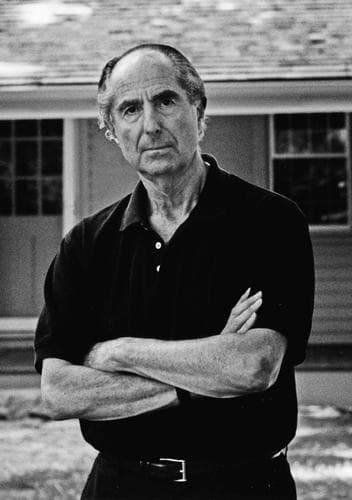
Philip Milton Roth was an American novelist and short story writer. Roth's fiction—often set in his birthplace of Newark, New Jersey—is known for its intensely autobiographical character, for philosophically and formally blurring the distinction between reality and fiction, for its "sensual, ingenious style" and for its provocative explorations of American identity. He first gained attention with the 1959 short story collection Goodbye, Columbus, which won the U.S. National Book Award for Fiction. Ten years later, he published the bestseller Portnoy's Complaint. Nathan Zuckerman, Roth's literary alter ego, narrates several of his books. A fictionalized Philip Roth narrates some of his others, such as the alternate history The Plot Against America.







