“There are some things in this world that are not for mortal eyes. Some things that, once seen, can never be unseen.”
— Early in the story, as Allie first encounters the strange elements of Everlost.

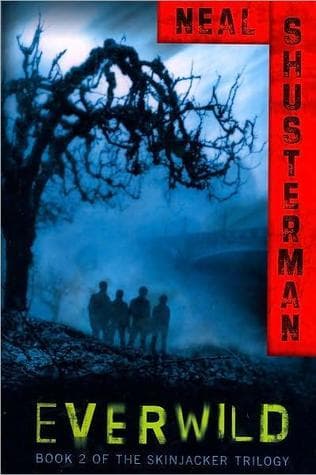
Neal Shusterman (2009)
Genre
Fantasy / Science Fiction / Young Adult / Romance
Reading Time
9-12 hours
Key Themes
See below
Sign in to track this book
In Everlost, where dead children linger, a war begins between the benevolent Chocolate Ogre, who guides souls to the light, and the fanatic Mary Hightower, who wants to trap them forever, while Allie grapples with the allure of possessing the living.
Mary Hightower, now traveling in the memory of the Hindenburg, begins her journey across Everlost, recruiting Afterlights with promises of a permanent, safe place. Her charm and the appeal of the grand airship draw many, strengthening her power. Meanwhile, Nick, now called the 'Chocolate Ogre' for his ability to make chocolate, struggles with guiding lost souls. He tries to lead Afterlights towards the light at the tunnel's end, an idea Mary strongly opposes. Nick feels the pressure of his new goal and Mary's growing threat, knowing a conflict is coming.
Allie and Mikey have left Everlost and are now in the living world. Allie wants to find her parents and reconnect with her past life, a dangerous goal for an Afterlight. Mikey, once the monster McGill, struggles with who he is and the lingering shadows of his past self. He deals with guilt from his past actions and the responsibility of protecting Allie. Allie, meanwhile, discovers the thrill of skinjacking – temporarily possessing living humans. This new ability gives her a taste of life she thought was lost, but it brings moral problems and unexpected results.
As Allie gets better at skinjacking, she notices troubling patterns and effects. She realizes that long or frequent skinjacking harms living hosts, causing them to fade or become empty. More shockingly, she finds that skinjackers are not just possessing bodies; they are slowly consuming the life force and memories of their hosts, effectively erasing them. This discovery horrifies Allie, forcing her to confront the dark side of her new power and question the ethics of her actions. She understands that seeking a living experience comes at a terrible cost to others.
Nick, with his allies Lief and the changed Jill, starts to track Mary Hightower's movement across Everlost. They follow the shimmering trail left by the Hindenburg, seeing the growing number of Afterlights who have joined Mary. The extent of her influence becomes clear, and Nick realizes that Mary's movement is gaining speed quickly. He knows he needs to find a way to counter her message and offer Afterlights another path before Mary's vision of an eternal Everlost becomes a reality for everyone.
Allie and Mikey's journey through the living world brings them into contact with various people. They meet other Afterlights, some of whom are also skinjackers, further complicating Allie's understanding of her abilities and their meaning. They also interact with living people, navigating the challenges of staying unseen and unheard. These encounters give Allie different views on life and death, and the blurred lines between Everlost and the living world. Mikey, in turn, struggles with being visible in the living world, often appearing as a ghost to those sensitive to Afterlights, which causes him distress and fear of being discovered.
Mary Hightower continues to gather power, setting up groups of Afterlights within the Hindenburg and other important Everlost places. She preaches a message of collective safety and eternal life within Everlost, painting the light at the tunnel's end as a dangerous unknown. Nick, seeing how effective her words are, faces a moral problem. He questions whether forcing Afterlights towards the light is truly right, especially when many seem content in Everlost. He struggles with the weight of his responsibility and the fear that he might be leading them to something worse, or that his efforts are useless against Mary's growing influence.
The conflict between Nick and Mary grows into an ideological war for the hearts and minds of the Afterlights. Mary uses the Hindenburg as a mobile propaganda machine, broadcasting her message of Everlost's permanence and her role as its protector. Nick, with Lief and Jill's help, tries to counter her story, stressing the importance of moving on and the chance for true peace beyond Everlost. They try to guide Afterlights towards the light, but Mary's influence is strong, and many are swayed by her promises of stability and belonging. The war is fought with words and beliefs, not weapons.
Haunted by the truth about skinjacking, Allie decides to return to Everlost. She seeks out Nick and her friends, planning to warn them about skinjacking's dangers and the ethical problems for any Afterlight considering it. Her return is dangerous, as she must navigate the increasingly unstable Everlost, where Mary's influence is strong. Allie feels a strong urgency to share her discoveries, hoping to prevent other Afterlights from falling to the attractive but destructive power of possessing the living.
Nick and Mary's opposing forces meet at an important Everlost location, a spiritual crossroads where the line between worlds is thin. Mary, with her large army of Afterlights aboard the Hindenburg, prepares for a final fight. Nick, supported by his loyal followers and Allie's knowledge, gets ready for what is coming. The stage is set for a battle of ideas, not just numbers. Both leaders believe their cause is right, and the future of Everlost's children hangs in the balance. The tension is clear as the two groups face each other.
During the main confrontation, a key event happens with the Hindenburg. As the battle of wills peaks, the Hindenburg, a memory-object, begins to fade. This unexpected event destabilizes Mary's power and causes panic among her followers. The fading of their sanctuary and symbol of permanence shatters the illusion Mary had built, showing Everlost's own impermanence. This moment marks a turning point, undermining Mary's authority and making many Afterlights question their loyalty and the true nature of their existence.
In a moment of selflessness, Mikey, using his past strength as the McGill but now changed by his new humanity, makes a critical sacrifice. He uses his unique abilities to either create a path to the light or to protect others from Mary's fading influence. This act of heroism completes his character arc, showing his change from a monster to a protector and a force for good. His sacrifice inspires many and further turns the tide against Mary, proving that even the most feared beings can find redemption and purpose in Everlost.
With the Hindenburg fading and Mikey's sacrifice, Mary's power breaks, and her control over the Afterlights significantly lessens. While Mary herself remains a strong presence, her ability to control the masses is severely weakened. The war for Everlost ends, leaving a changed landscape. Many Afterlights, now disappointed with Mary's false promises, begin to seek the light. Nick, Allie, and the remaining allies face the challenge of rebuilding and guiding the lost souls towards their true destination, starting a new era for Everlost where hope and the chance of moving on are once again important.
The Protagonist
Nick evolves from a hesitant leader to a determined guide, embracing his role in helping Afterlights find peace despite personal doubts and powerful opposition.
The Antagonist
Mary's ambition and control solidify, leading her to become a powerful, unwavering antagonist whose vision for Everlost clashes violently with Nick's.
The Protagonist
Allie grapples with the allure and moral cost of skinjacking, ultimately choosing to expose its dangers and fight for a more ethical path for Afterlights.
The Supporting
Mikey completes his transformation from a feared monster to a selfless protector, ultimately making a heroic sacrifice for the greater good.
The Supporting
Lief remains a steadfast and reliable ally, reinforcing the themes of loyalty and perseverance in the face of adversity.
The Supporting
Jill transforms from a self-serving skinjacker to a remorseful and valuable ally, demonstrating the potential for redemption and ethical growth.
The Mentioned
The Hindenburg rises as a symbol of Mary's power, only to eventually fade, mirroring the fragility of her control.
The Mentioned
Though no longer active as a character, the legacy of the McGill serves as a constant reminder of Mikey's past and his journey towards redemption.
The book explores what it means to be alive, dead, and in between. Everlost is a limbo, raising questions about death's finality and other kinds of existence. Allie's skinjacking journey directly confronts the desire for life and the ethical limits of reclaiming it, while Nick's mission questions what 'moving on' means. The Afterlights' struggle to remember their past lives and the fading of memory-objects like the Hindenburg show how temporary existence is, even in death.
“Death is not the end, but it is not the beginning either. It is a place in between.”
Characters deal with their past actions and identities. Mikey, once the terrifying McGill, is a main example, constantly fighting his monstrous past self to become a protector. Jill, a former skinjacker, seeks redemption by joining Nick. These stories show that one's past does not fully define their future, and choices can lead to big changes. The struggle to remember who they were before Everlost, and who they are becoming within it, is central to many Afterlights' journeys.
“He was not the monster he had been, but the monster was still a part of him.”
Mary Hightower's manipulation of Afterlights through the Hindenburg's broadcasts is a central theme. She presents a distorted view of Everlost as a permanent paradise, playing on the fears and desires of lost children to control them. This contrasts with Nick's belief in guiding Afterlights towards the light, emphasizing their free will to choose their path. The book explores how easily vulnerable people can be swayed by charismatic leaders and appealing stories, even when those stories are harmful.
“She offered them a haven, but it was a gilded cage.”
The different forms of power in Everwild—Mary's political power, Nick's spiritual guidance, and Allie's skinjacking ability—are all explored with their temptations and dangers. Mary's unchecked ambition leads to fanaticism and control, while Allie's struggle with skinjacking reveals the ethical cost of having power over others' lives. Nick also deals with the responsibility of his 'Ogre' abilities. The novel suggests that any power needs self-awareness and moral strength to prevent corruption and harm.
“Power was a sweet poison, and Allie had just taken her first taste.”
The ability of Afterlights to possess living bodies.
Skinjacking is a crucial plot device that allows Afterlights like Allie to temporarily inhabit the bodies of living humans. Initially presented as a thrilling way for Afterlights to experience life again, it quickly evolves into a moral dilemma. The discovery that prolonged skinjacking can harm or even erase the host's consciousness introduces a significant ethical conflict for Allie and other Afterlights. This device serves to blur the lines between life and death, explore the temptations of power, and highlight the sacrifices involved in reclaiming a semblance of life.
Physical manifestations of strong memories in Everlost.
Memory objects are physical manifestations of powerful memories that exist in Everlost. The Hindenburg is the most prominent example, serving as Mary Hightower's mobile fortress and a symbol of her grand vision. These objects provide structure and familiarity within the chaotic landscape of Everlost. Their stability is directly tied to the strength of the memories associated with them. The fading of the Hindenburg during the climax acts as a powerful symbolic and literal blow to Mary's authority, demonstrating the inherent impermanence even within Everlost itself.
The ultimate destination for Afterlights, representing true peace.
The 'light at the end of the tunnel' is a central, recurring symbol and plot device representing the true, peaceful destination for Afterlights beyond Everlost. It is the antithesis of Mary Hightower's vision of eternal stasis. Nick's entire mission revolves around guiding Afterlights towards this light, while Mary actively prevents them from reaching it. The light serves as the ultimate goal and the driving force behind the conflict, representing hope, resolution, and the natural order of the afterlife, contrasting with the artificial permanence Mary seeks to create.
Nick's power to create chocolate and attract Afterlights.
Nick's unique ability to create chocolate from nothing is a defining plot device. It is directly linked to the circumstances of his death and makes him visible and appealing to other Afterlights, particularly younger ones. This power gives him his nickname, the 'Chocolate Ogre,' and establishes him as a beacon of comfort and hope. It is essential for gathering and sustaining his followers, providing a tangible allure that counters Mary's grander promises. The chocolate serves as a symbol of comfort, childhood, and Nick's benevolent nature, directly opposing the more austere and controlling nature of Mary's influence.
“There are some things in this world that are not for mortal eyes. Some things that, once seen, can never be unseen.”
— Early in the story, as Allie first encounters the strange elements of Everlost.
“Every soul in Everlost is a story. Some are just harder to read than others.”
— Nick reflecting on the diverse inhabitants and their pasts within Everlost.
“The past is a stubborn thing. It doesn't like to stay buried, especially when it's still alive.”
— Allie grapples with her own past and the history of Everlost.
“Sometimes the greatest freedom is found in the most unexpected of prisons.”
— Mary contemplating the nature of Everlost and the choices made within it.
“Hope is a fragile thing, easily broken, but it's the only thing that truly lasts.”
— Lief expressing his enduring optimism despite the challenges.
“The world is full of ghosts, even for those who can't see them.”
— A general observation about the lingering presence of the past and the departed.
“You can't outrun your own heart, Allie. No matter how far you go.”
— Nick to Allie, emphasizing the inescapability of one's true feelings.
“Destiny isn't something you find; it's something you create.”
— Mary discussing the agency of individuals in Everlost.
“Even in eternity, there are still consequences.”
— The characters realize that their actions in Everlost have lasting repercussions.
“Love isn't about finding someone perfect; it's about seeing an imperfect person perfectly.”
— A romantic sentiment shared between characters, reflecting their growing bond.
“The greatest battles are often fought within ourselves.”
— Allie's internal struggles with her identity and purpose.
“Sometimes the most beautiful things are also the most dangerous.”
— Observing the deceptive beauty of certain aspects of Everlost.
“Every goodbye is a new beginning, if you're brave enough to see it.”
— A poignant reflection on loss and moving forward.
“The truth has a way of finding you, even if you try to bury it deep.”
— The revelation of hidden secrets and past events.
Ready to see how well you understood this book? Take our interactive quiz with 10 questions.

Biography coming soon.







