“She was to go away with him by the nightboat to Buenos Ayres.”
— Eveline contemplates her impending elopement with Frank.

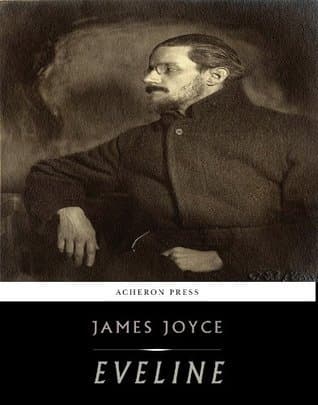
James Joyce (2014)
Genre
Historical Fiction
Reading Time
30 min
Key Themes
See below
Sign in to track this book
Trapped by the ghosts of duty and a promise to her dead mother, Eveline Dublin dreams of escape with a sailor to Buenos Aires, only to be paralyzed by fear and the suffocating familiarity of her impoverished home.
Eveline Hill sits by the window in her Dublin home, watching the familiar street and remembering her childhood. She notices changes in the neighborhood, with new houses replacing the field where she and her siblings, including her deceased brother Ernest and her living brother Harry (who works in England), used to play. She feels a sense of weariness and dust in her life, which contrasts with the promise of escape. Her thoughts turn to her abusive father, who has grown more violent since her mother's death, and her difficult responsibilities caring for the household and her younger siblings, as well as managing the family's money.
Eveline's daily life is a cycle of chores and her father's demands. She manages the household budget, often haggling with tradesmen and giving her father her entire weekly earnings. Her father frequently threatens her with physical violence, especially on Saturday nights when he is drunk, and often accuses her of wasting money. She remembers her mother's life of 'commonplace sacrifices' and believes she is headed for a similar fate. The thought of escaping this oppressive environment grows stronger as she holds two letters in her lap: one for Harry and one for her father.
Eveline's memories are shaped by her mother's suffering. She remembers her mother's constant struggle and eventual mental decline, ending with her mother's final, haunting words: 'Derevaun Seraun! Derevaun Seraun!' (an unintelligible phrase that suggests madness or despair). This memory reinforces Eveline's fear of a similar fate of domestic drudgery and emotional annihilation. She promised her mother on her deathbed that she would keep the home together, a promise that now feels like a heavy chain binding her to her current life.
Eveline's thoughts turn to Frank, a sailor she met who offers her a way out. She remembers their courtship, how he would meet her outside the shop where she worked and walk her home, telling her stories of his travels to Buenos Ayres. He is kind and lively, unlike her stern father. Frank has proposed marriage and promises to take her to Buenos Ayres, a place of warmth, new experiences, and freedom from her burdensome life in Dublin. He represents adventure and a chance for happiness, a contrast to her current existence.
Eveline's father strongly disapproves of Frank, which further complicates her decision. He had once found them together and threatened Frank, forbidding Eveline to see him again. Despite this, Eveline secretly continued their relationship. Her father's hostility towards Frank, combined with his general abusive nature, makes the idea of escaping with Frank even more appealing. However, his disapproval also fuels her guilt and indecision, as she struggles with the conflicting desires for personal happiness and filial duty.
Eveline pictures a future in Buenos Ayres with Frank, imagining a life where she would be respected as a married woman, free from the constant fear of her father's violence and the drudgery of her domestic responsibilities. She dreams of a place where she can have her own home, make her own decisions, and experience love and happiness. This vision of a new beginning is attractive, representing a complete break from the suffocating familiarity of her Dublin life. The warmth and exoticism of Buenos Ayres symbolize a fresh start.
The promise Eveline made to her dying mother—to keep the home together—weighs heavily on her conscience. This vow acts as a powerful tether, binding her to her current life and making the decision to leave incredibly difficult. She feels a strong obligation to honor her mother's memory and sacrifice, even if it means sacrificing her own happiness. The memory of her mother's hard life and her final, meaningless words, 'Derevaun Seraun,' serve as a constant reminder of the potential for despair if she stays, yet also as a moral imperative to stay.
Eveline arrives at the North Wall with Frank, the bustling port filled with the sounds of the sea and departing ships. Frank holds her hand, his excitement clear as he urges her towards the gangway. The ship's whistle blows, signaling its imminent departure. Eveline feels a growing sense of panic and internal turmoil. The reality of leaving, the finality of the decision, overwhelms her. The sights and sounds of the port, while representing freedom for Frank, intensify her fear and indecision.
As Frank pulls her towards the ship, Eveline is overcome by nausea and fear. She feels her heart pounding and her hands growing cold. In her distress, she silently prays to God to direct her, to show her what her duty is. She feels trapped between the promise of a new life and the familiar, oppressive security of her current existence. The enormity of the decision paralyzes her, and she seeks a divine sign to resolve her agonizing internal conflict.
When Frank tries to pull her onto the ship, Eveline resists, gripping the iron railing with all her might. She realizes suddenly that she cannot go. Her face turns white, and her eyes are fixed, showing no emotion or recognition of Frank. She is paralyzed by fear and indecision, unable to respond to Frank's desperate pleas. The life she knows, even with its hardships, is too powerful a force to abandon for the unknown, and she remains rooted to the spot, a statue of despair.
Frank, confused and hurt by Eveline's sudden refusal, calls out to her, urging her to come. He tries to pull her once more, but her grip on the railing is unyielding. As the ship's whistle sounds again and the vessel prepares to depart, Frank is forced to board alone, leaving Eveline behind. He faces a solitary journey, his dreams of a shared future shattered by Eveline's paralysis. Eveline, meanwhile, remains on the quay, her face blank, having chosen the familiar torment over the frightening unknown.
The Protagonist
Eveline's arc is one of stasis; despite a clear opportunity for escape, she ultimately chooses to remain in her oppressive life due to fear and a sense of duty, demonstrating a tragic lack of personal growth or liberation.
The Supporting
Frank's arc is static; he remains an eager and hopeful figure of liberation, but his dreams are thwarted by Eveline's inability to choose him.
The Antagonist
Eveline's father remains a consistently abusive and controlling figure, serving as a static representation of the forces that confine Eveline.
The Mentioned
Her arc is complete before the story begins, but her tragic life and death continue to exert a powerful, static influence on Eveline's choices.
The Mentioned
Ernest's arc is complete before the story begins, serving only as a nostalgic memory.
The Mentioned
Harry's arc is external to the story, serving as a distant family member.
This theme is central to 'Eveline,' seen in her inability to make a decisive choice and act. Despite her longing for escape and Frank's clear offer, Eveline remains rooted at the quay, unable to board the ship. Her fear of the unknown, combined with the familiar, oppressive comfort of her routine, leaves her immobile. This paralysis is not just physical; it is emotional and psychological, stemming from her conflicting desires and strong sense of duty. The story ends with her literal paralysis, her hands gripping the railing as Frank is swept away, symbolizing her entrapment in her own indecision.
“She stood motionless, in that trance of distress. A bell clanged upon her heart. She knew that it was useless to struggle against the strong will that held her. She set her white face to him, passive, like a helpless animal. Her eyes gave him no sign of love or farewell or recognition.”
Eveline is torn between her duty, especially the promise made to her dying mother to 'keep the home together,' and her desire for personal happiness and a new life with Frank. Her mother's life of 'commonplace sacrifices' and her final, despairing words haunt Eveline, emphasizing the weight of her obligation. This conflict is worsened by her abusive father, who makes her life miserable but also serves as a strange anchor of familiarity. Ultimately, her perceived duty and the fear of breaking her promise win over her longing for a better future, leading her to sacrifice her own happiness.
“She had hard work to keep the house together and to see that the two young children who had been left to her charge went to school regularly and got their meals. It was hard work—a hard life—but now that she was about to leave it she did not find it a wholly undesirable life.”
The story explores the tension between the desire for escape and the forces that lead to entrapment. Frank and Buenos Ayres represent a romantic escape from Eveline's dreary, oppressive life in Dublin. The thought of a new home, a husband, and freedom from her father's abuse is appealing. However, Eveline is trapped by several factors: her promise to her mother, her fear of the unknown, her attachment to familiar routines, and the psychological hold of her abusive father. The familiar, even if painful, becomes a prison she cannot leave, showing the psychological complexity of entrapment.
“She must escape! Frank would save her. He would give her life, perhaps love, too. But she wanted to cry. She could not go. All the seas of the world tumbled about her heart. He was drawing her into them: he would drown her. She gripped the iron railing with both hands.”
Eveline often retreats into childhood memories, recalling happy times with her siblings, especially Ernest, and the 'brown field' where they played. These nostalgic recollections contrast sharply with the harsh realities of her present life, creating a longing for lost innocence. However, the past is also a source of her entrapment, particularly the memory of her mother's suffering and the deathbed promise. The familiar sights and sounds of Dublin, even her abusive father, are deeply ingrained in her mind, making a break with the past incredibly difficult and ultimately impossible.
“She was going to leave all that old life, to leave her home. All the dear familiar objects had an appeal that she had never noticed before, an appeal that seemed to speak to her now for the last time.”
Eveline's life is defined by the relentless drudgery and emotional abuse within her home. She is responsible for managing the household, caring for her younger siblings, and enduring her father's tyranny. The description of her mother's 'commonplace sacrifices' and her eventual decline into madness shows the suffocating nature of their domestic existence. The house, rather than being a sanctuary, is a prison of duty and fear. This theme highlights the limited options and the emotional toll on women in early 20th-century Dublin, where domesticity could be a trap rather than a haven.
“She had hard work to keep the house together and to see that the two young children who had been left to her charge went to school regularly and got their meals. It was hard work—a hard life.”
A sudden, profound realization that paralyzes the protagonist.
Joyce's concept of epiphany is central to 'Eveline.' While an epiphany typically implies a moment of sudden spiritual or moral revelation, for Eveline, it's a moment of devastating realization that leads to inaction. At the quay, as Frank pulls her towards the ship, Eveline experiences a visceral, overwhelming understanding that she cannot go. This isn't a liberating insight, but rather a paralyzing one, revealing the depth of her fear and her inability to break free from her past and duties. It's a moment of anti-climax, cementing her tragic fate.
Contrasting locations representing stagnation and escape.
Dublin, particularly Eveline's home, symbolizes stagnation, oppression, and the weight of the past. It is described with images of dust, decay, and familiar misery. In stark contrast, Buenos Ayres, the destination Frank offers, symbolizes freedom, adventure, warmth, and the promise of a new, happier life. The sea and the ship act as a conduit between these two symbolic poles. Eveline's inability to cross the threshold onto the ship underscores her ultimate choice of the familiar, suffocating past over the frightening, liberating future.
A vow made to her dying mother that binds Eveline to her home.
The promise Eveline made to her mother 'to keep the home together as long as she could' is a powerful plot device that drives Eveline's internal conflict. It acts as a moral and emotional chain, preventing her from embracing the opportunity Frank offers. This promise, made in a moment of grief and vulnerability, becomes an unbreakable bond that dictates her fate. It highlights the profound influence of the deceased on the living and the burden of perceived duty, ultimately leading to her paralysis and inability to escape her circumstances.
A recurring image representing observation, longing, and confinement.
The window is a significant motif in 'Eveline.' It's where the story opens, with Eveline looking out at the familiar street, observing changes but remaining physically confined. It represents her passive observation of life passing by and her longing for something beyond her immediate grasp. She can see the world, but she cannot fully participate in it. The window symbolizes her desire for escape while simultaneously highlighting her entrapment within her home and her own psyche, unable to break through the metaphorical glass into a new reality.
“She was to go away with him by the nightboat to Buenos Ayres.”
— Eveline contemplates her impending elopement with Frank.
“Her father was not so bad then, and sometimes in the evenings he used to play the piano for her.”
— Eveline remembers a more pleasant time in her childhood.
“She had hard work to keep the house together and to see that the two young children who had been left to her charge went to school regularly and got their meals.”
— Eveline reflects on her responsibilities after her mother's death.
“She had to gather up every cent of the eight shillings her father gave her and spend it on the house.”
— Eveline describes her financial burdens and lack of personal freedom.
“He took her to see The Bohemian Girl and she felt elated as she sat in an unaccustomed part of the theatre with him.”
— Eveline recalls a romantic outing with Frank.
“He would save her. He would give her life, perhaps love, too.”
— Eveline considers Frank as her potential rescuer from her dreary life.
“Her eyes gave him no sign of love or farewell or recognition.”
— At the moment of departure, Eveline's expression is blank and unresponsive to Frank.
“She stood up in a sudden impulse of terror. Escape! She must escape!”
— Eveline experiences a sudden panic as she considers leaving her home.
“She looked at the squalid room. There she had been a child playing with her brothers and sisters.”
— Eveline surveys her home, connecting it to her past.
“All the seas of the world tumbled about her heart. He was drawing her into them: he would drown her.”
— Eveline's internal struggle at the pier, perceiving Frank as a threat.
“She felt her cheeks glow with shame and yet, she was a little proud to be there with him.”
— Eveline's mixed feelings during her dates with Frank.
“She prayed to God to direct her, to show her what was her duty.”
— Eveline's desperate plea for guidance before making her decision.
“Her father was invariably cross every Saturday night.”
— Eveline's consistent experience with her father's temper.
“She knew that she would not cry many tears at Papan's death.”
— Eveline's detached reflection on her father's eventual passing.
Ready to see how well you understood this book? Take our interactive quiz with 10 questions.
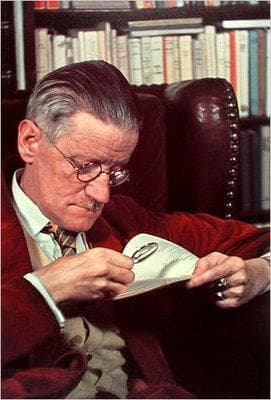
James Augustine Aloysius Joyce was an Irish novelist, poet, and literary critic. He contributed to the modernist avant-garde movement and is regarded as one of the most influential and important writers of the 20th century. Joyce's novel Ulysses (1922) is a landmark in which the episodes of Homer's Odyssey are paralleled in a variety of literary styles, particularly stream of consciousness. Other well-known works are the short-story collection Dubliners (1914), and the novels A Portrait of the Artist as a Young Man (1916) and Finnegans Wake (1939). His other writings include three books of poetry, a play, letters, and occasional journalism.







