“The world needs you. More than it needs me. More than it needs any of us.”
— The Elders explaining why Mia is so important.

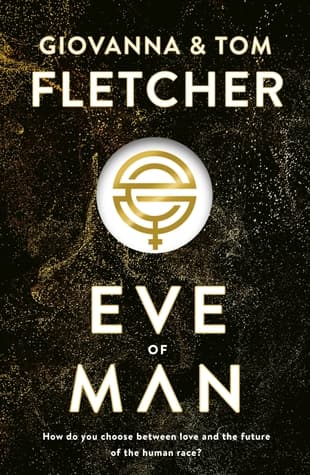
Giovanna Fletcher (2018)
Genre
Fantasy / Science Fiction / Young Adult / Romance
Reading Time
8 hours
Key Themes
See below
Sign in to track this book
The first girl born in fifty years must choose between her predetermined destiny to repopulate humanity and a forbidden love that threatens to expose a carefully constructed future.
Eve, a sixteen-year-old, lives in a secluded Sanctuary, believing she is the last female on Earth. Raised by her 'mothers' — strict female scientists and guardians — she has never seen a boy or man. On her sixteenth birthday, her primary guardian, Vivian, reveals the truth: Eve is the first girl born in fifty years. A devastating plague made all other women infertile, making Eve humanity's last hope for reproduction. She is told that three carefully selected males will soon arrive, and she must choose one to mate with, securing the future of the human race. This revelation shatters Eve's sheltered existence and introduces her to the immense pressure of her destiny.
Following Vivian's revelation, the three chosen males arrive at the Sanctuary. Caleb, a charming and confident leader, represents strength. Michael, intelligent and artistic, offers a more sensitive connection. Ezekiel, quiet and observant, understands nature and survival. Eve is overwhelmed by their presence and the sudden intimacy. Each boy interacts with Eve under the watchful eyes of the Sanctuary's guardians, all aware of the monumental task before them. Eve struggles to reconcile her 'duty' with the very different personalities of the boys.
Amidst her interactions with Caleb, Michael, and Ezekiel, a fourth boy, Bram, unexpectedly infiltrates the Sanctuary. Unlike the others, Bram is not part of the official program; he is a 'wild' boy from the outside world, resourceful and rebellious. He is initially captured and held by the guardians. However, his presence introduces a disruptive element. Bram challenges the Sanctuary's rigid control and Eve's predetermined path. He questions the 'mothers'' motives and hints at a larger, more complex world beyond the Sanctuary's walls, sparking Eve's curiosity and a desire for genuine freedom.
Despite severe warnings from Vivian and the other guardians, Eve finds herself drawn to Bram. She secretly visits him in his confinement, bringing him food and engaging in forbidden conversations. Bram shares stories of the outside world, a world of harsh realities but also of genuine human connection and choice, vastly different from Eve's controlled environment. Their secret meetings create a deep, undeniable connection between them, built on shared curiosity and a mutual defiance of authority. This growing bond directly conflicts with Eve's prescribed duty to choose one of the official suitors, complicating her emotional life and future.
The Sanctuary orchestrates various 'tests' and structured interactions for Eve with Caleb, Michael, and Ezekiel, designed to assess their compatibility. These include shared meals, supervised walks, and psychological evaluations. Eve, however, feels increasingly like a scientific subject rather than a person. While she finds aspects of each suitor appealing, her heart and mind return to Bram. The pressure to choose, combined with her growing feelings for Bram, makes these interactions feel disingenuous and forced, highlighting the contrast between duty and desire.
During their secret meetings, Bram reveals that the Sanctuary is not the benevolent institution Eve believes it to be. He claims that the 'mothers' are manipulating her, and that the outside world is not as desolate as they portray. Bram explains that there are other communities, and that the Sanctuary hoards resources and power, using Eve to maintain control over the remnants of humanity. He urges Eve to question everything she has been taught, planting seeds of doubt about her guardians' true intentions and the nature of her 'destiny,' further fueling her desire for freedom.
Convinced by Bram's revelations and her own longing for autonomy, Eve agrees to an escape plan. Bram, with his knowledge of the Sanctuary's vulnerabilities and the surrounding terrain, meticulously outlines their route. Their plan relies on precision and secrecy, as the Sanctuary is heavily guarded. Eve faces a monumental decision: embrace her predetermined fate and potentially save humanity, or risk everything for a chance at a life of her own, with Bram. The tension builds as they prepare for the perilous journey, knowing that failure means severe consequences, and success means an uncertain future.
Eve and Bram put their escape plan into motion, navigating the Sanctuary's complex layout under the cover of darkness. They bypass several security measures, but their attempt is discovered. The guardians, led by Vivian, intercept them before they can reach the outside world. The capture is brutal, and both Eve and Bram are punished severely for their defiance. Bram is taken away, his fate uncertain, while Eve is subjected to stricter surveillance and psychological manipulation, designed to break her rebellious spirit and force her back onto her predestined path.
Following the failed escape, Vivian confronts Eve, revealing a deeper layer of the Sanctuary's motivations. She explains the true desperation of humanity's situation and the extreme measures taken to ensure Eve's survival and fertility. Vivian emphasizes the immense responsibility resting on Eve's shoulders, painting Bram as a dangerous distraction who jeopardizes everything. She gives Eve an ultimatum: comply with her duty, choose a suitor, and fulfill her role as the mother of the new generation, or face severe consequences, not just for herself, but potentially for Bram and the future of humanity.
Under immense pressure, Eve seemingly succumbs to Vivian's ultimatum, agreeing to choose one of the official suitors. However, this decision is made with a hidden agenda. While outwardly complying, Eve secretly plots her next move, fueled by her love for Bram and her desire for true freedom. A subtle hint or message from Bram, or an unexpected ally within the Sanctuary, gives Eve hope that her fight is not over. The book ends with Eve's immediate future seemingly decided, but with a strong sense that her journey for self-determination and the truth is far from complete, setting the stage for the next installment.
The Protagonist
Eve transforms from a compliant pawn to a defiant individual, seeking control over her own life and destiny.
The Love Interest/Catalyst
Bram acts as the catalyst for Eve's awakening, evolving from an unknown outsider to her trusted confidant and love interest.
The Antagonist/Guardian
Vivian remains steadfast in her mission, serving as the primary obstacle to Eve's autonomy while revealing the tragic depths of her own sacrifices.
The Supporting/Official Suitor
Caleb remains consistent in his dutiful role, representing the 'perfect' choice for Eve according to the Sanctuary's design.
The Supporting/Official Suitor
Michael's arc is subtle, as he attempts to forge a genuine connection with Eve amidst the pressure of their predetermined roles.
The Supporting/Official Suitor
Ezekiel remains a steady, grounding presence, offering Eve a different perspective on her role and the world.
The Supporting/Antagonists
The Mothers collectively maintain their role as the controlling authority, their resolve hardening with Eve's defiance.
This theme explores Eve's struggle to reconcile her predetermined destiny as humanity's savior with her desire for personal choice and freedom. From the moment she learns the truth, Eve is presented with a path she is expected to follow, yet she yearns for self-determination. Her connection with Bram, an 'outsider' who embodies freedom, directly challenges the rigid structure of her destiny. The narrative revolves around Eve trying to break free from what she is 'meant' to be versus what she 'wants' to be, highlighted by her attempted escape from the Sanctuary.
““They called me Eve. The first girl born in fifty years. They called me humanity’s last hope. But what if I just want to be me?””
Eve is forced to choose between her growing love for Bram and her duty to save the human race by mating with one of the approved suitors. Her feelings for Bram represent genuine connection and personal happiness, while her duty is a heavy burden placed upon her by a dying world. This conflict is central to the plot, as her emotional life clashes with scientific and societal expectations. The pressure from Vivian and the 'Mothers' constantly reminds her of the stakes, making her choice between love and duty an agonizing one.
““How do you choose between love and the future of the human race?””
The Sanctuary, led by Vivian and the 'Mothers,' controls Eve's life, from her isolated upbringing to her choice of mate. This theme explores the ethics of manipulating an individual for the greater good. Eve's entire existence is a product of controlled experiments and carefully managed information. Bram's arrival exposes the extent of this manipulation, revealing that the 'Mothers' have withheld crucial truths and use fear to maintain their authority. The narrative questions whether such control, even with noble intentions, can ever be justified.
““They had created me. But they didn’t own me.””
The book explores what it means to be human when faced with extinction. The Sanctuary represents a scientific, almost clinical approach to survival, prioritizing reproduction above all else. In contrast, Bram and his stories of the outside world suggest that humanity also includes freedom, choice, and genuine emotional connection, even in harsh conditions. The narrative asks if mere biological survival is enough, or if true humanity requires more. The choices Eve faces reflect these differing ideas on what makes life worth living and preserving.
““What kind of future were we saving if we had to sacrifice everything that made us human to get there?””
Eve is prophesied and groomed to be humanity's sole hope.
Eve embodies the 'Chosen One' trope as she is literally the only fertile female born in fifty years, making her the sole individual capable of saving the human race from extinction. This device immediately establishes high stakes and places immense pressure on the protagonist. It sets up her journey not just as personal growth, but as a mission with global consequences, making her choices reverberate far beyond her own life. Her unique status isolates her but also gives her immense, albeit unwanted, power.
A controlled, secluded environment that limits the protagonist's worldview.
The Sanctuary serves as a crucial plot device, representing both protection and imprisonment. Its isolation from the outside world allows the 'Mothers' to control every aspect of Eve's life, shaping her beliefs and limiting her understanding of reality. This controlled environment heightens the impact of any external influence, particularly Bram's arrival, as it dramatically expands Eve's worldview and exposes the lies she's been told. The Sanctuary itself functions as a character, a symbol of the oppressive forces acting upon Eve.
Eve is presented with multiple romantic interests, complicating her choices.
The introduction of Caleb, Michael, and Ezekiel as official suitors, followed by the unexpected arrival of Bram, creates a complex love dynamic. This device is not merely for romantic tension; it directly ties into the novel's central themes of free will vs. destiny and love vs. duty. Each suitor represents a different path or set of values, forcing Eve to confront not just who she is attracted to, but also what kind of future she truly desires and what she is willing to sacrifice for it. Bram's status as the 'forbidden' love interest makes this even more potent.
A future society where humanity faces extinction and strict controls are enforced.
The novel is set in a post-apocalyptic, dystopian future where a plague has rendered most of humanity infertile. This societal backdrop justifies the extreme measures taken by the Sanctuary and creates the high stakes for Eve's mission. The dystopian elements, such as the strict societal control, the scarcity of fertile women, and the scientific manipulation of human life, highlight the desperation and moral ambiguities inherent in a fight for survival. It provides the context for Eve's extraordinary circumstances and her rebellion against a seemingly necessary evil.
“The world needs you. More than it needs me. More than it needs any of us.”
— The Elders explaining why Mia is so important.
“Hope is a dangerous thing, Mia. It makes you believe in impossible things.”
— One of the Monitors warning Mia about her dreams.
“You are not just a girl. You are the future.”
— Mia being constantly reminded of her unique role.
“Sometimes, the only way to be free is to let go of everything you think you know.”
— Mia contemplating her restricted life and longing for freedom.
“Love isn't something you can control. It just… happens.”
— Mia's blossoming feelings for Noah.
“Every choice has a consequence, Mia. Good or bad.”
— The Elders discussing the weight of Mia's decisions.
“The greatest prison is a mind that refuses to see beyond its own walls.”
— Mia realizing the limitations placed upon her by others and herself.
“Even in the darkest of times, there is always a flicker of light.”
— Mia finding moments of solace and hope amidst her confinement.
“You can't save the world if you don't first save yourself.”
— A moment of introspection for Mia about her personal struggles.
“The truth is rarely simple, and often inconvenient.”
— Mia uncovering secrets about her past and the world.
“Sometimes, the biggest risks lead to the greatest rewards.”
— Mia considering defying the rules to pursue what she believes in.
“We are all products of our environment, but we don't have to be defined by it.”
— Mia reflecting on her upbringing and desire to break free.
“The silence was louder than any scream, filled with all the things unsaid.”
— Mia experiencing the emotional weight of unspoken truths.
“To truly live, you must be willing to break the rules.”
— Mia's growing rebellion against her controlled existence.
Ready to see how well you understood this book? Take our interactive quiz with 10 questions.

Biography coming soon.







