“Belfast was not a city, it was a condition. It was not a place, it was a state of mind.”
— The narrator's reflection on the inherent nature of Belfast.

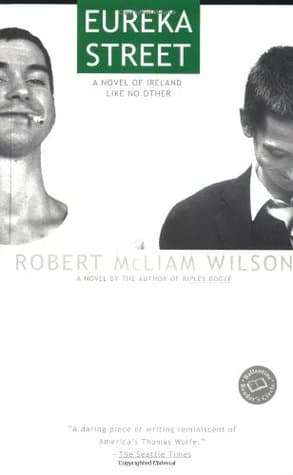
Robert McLiam Wilson (1999)
Genre
Literary Fiction / Historical Fiction
Reading Time
9-10 hours
Key Themes
See below
Sign in to track this book
During a fragile Belfast cease-fire, a poetic repo man and a dreamer hilariously navigate sectarian divides and the chaotic pursuit of love and lust in a city still simmering with its past.
The novel opens in Belfast during a tentative ceasefire, a period of uneasy peace after years of sectarian violence. Jake Jackson, a Catholic, works as a repo man, though he considers himself a philosopher and poet. His best friend, Chuckie Lurgan, a Protestant, is a charming but aimless unemployed man. Both are in their twenties, sharing a common bond of friendship despite their religious backgrounds, which is a significant factor in their city. They spend their days discussing life, women, and the absurdities of their surroundings, particularly the ongoing political situation. Jake, in particular, wants to find love and meaning amidst the city's lingering tension and the sudden, unaccustomed quiet of the ceasefire.
Chuckie Lurgan, known for his laid-back approach to life and his charm, has a chance encounter with a beautiful American woman named Max. Max is an academic visiting Belfast, drawn by the city's unique political and social landscape. Their relationship quickly blossoms, much to Chuckie's own surprise and Jake's amusement. Max, who has a sharp intellect and a practical mind, inspires Chuckie to consider more than just existing. Together, they stumble upon an idea to open a fish and chip shop, a venture that takes on symbolic weight in their post-conflict city, representing a small step towards normality and prosperity.
Jake Jackson, in his own quest for love, becomes infatuated with Aoirghe, a fiery Republican woman with a sharp tongue and an even sharper wit. Their interactions are less traditional courtship and more a series of escalating verbal sparring matches, filled with insults and political barbs. Aoirghe, whose name Jake struggles to pronounce correctly (often comically mispronouncing it), is fiercely independent and politically engaged, embodying the spirit of resistance that still permeates parts of Belfast. Despite the constant antagonism, Jake finds himself increasingly drawn to her, seeing beyond her aggressive exterior to a passionate and intelligent woman.
Chuckie and Max's fish and chip shop, named 'The American Dream,' opens its doors. The venture is a surprising success, attracting a diverse clientele from across Belfast's sectarian divide. The shop becomes a small, neutral territory where people can gather, eat, and converse, largely ignoring the political tensions that still simmer beneath the surface of the city. For Chuckie, it's a profound shift from his previous aimless existence, providing him with purpose and a sense of responsibility. However, the shop also faces challenges, from bureaucratic hurdles to the underlying anxieties of operating a business in a city still grappling with its past.
As Chuckie's life with Max and 'The American Dream' flourishes, Jake finds himself increasingly introspective and somewhat adrift. His repo man job feels more meaningless than ever, and his philosophical musings offer little solace. He struggles with feelings of inadequacy and a lack of direction, especially when contrasted with Chuckie's newfound purpose. His relationship with Aoirghe remains a volatile dance of attraction and repulsion, offering excitement but little stability. Jake questions his place in the world and what it means to be a man in a city slowly trying to rebuild itself, seeking answers in literature, philosophy, and endless conversations with Chuckie.
The fragile ceasefire is brutally shattered when a bomb explodes in Belfast, causing significant casualties and reigniting fears of a return to full-scale conflict. The bombing is a stark reminder that despite the hopes for peace, the city's deep-seated divisions and the capacity for violence remain. Jake and Chuckie, like all residents, are deeply affected by the event. The attack forces them to confront the ongoing reality of their city's struggles and the precariousness of their own lives and dreams. It highlights the absurdity and tragedy of sectarian hatred, even as they try to maintain their personal lives amidst the renewed tension.
In the wake of the bombing, Aoirghe's tough exterior begins to crack, revealing a more vulnerable and human side. The tragedy affects her deeply, reminding her of the personal cost of the conflict she has been so passionately involved in. Jake witnesses this shift, seeing beyond her political rhetoric and sharp wit to the fear and grief she carries. This exposure to her true self allows Jake to connect with her on a deeper emotional level, transcending their usual pattern of verbal sparring. Their relationship, while still complex, gains a new layer of intimacy and understanding as they navigate the shared trauma and uncertainty.
Despite the renewed tensions following the bombing, Chuckie, driven by Max's pragmatism and his own evolving sense of purpose, decides to expand 'The American Dream.' He identifies new opportunities and, with Max's help, begins to diversify their offerings, symbolizing a defiant act of hope and resilience in the face of adversity. This expansion is not just about business; it's a statement about building a future, about investing in a sense of normalcy and prosperity for themselves and their community, even when the shadow of violence looms large. Chuckie's transformation from an aimless dreamer to a committed entrepreneur is a key development.
Jake finds himself at a crossroads. His philosophical wanderings and cynical observations no longer suffice to explain or comfort him. He reflects on his past as a repo man, the often-unpleasant nature of his work, and the moral ambiguities he has navigated. The contrast between his own perceived stagnation and Chuckie's flourishing life becomes more pronounced, pushing him to a personal reckoning. He questions his choices, his relationships, and whether he can truly find meaning and love in a city so defined by its past. This period of introspection forces Jake to confront his own anxieties and desires for a different kind of life.
As the novel approaches its conclusion, both Jake and Chuckie continue their respective journeys. Chuckie, now a successful businessman and a devoted partner to Max, finds stability and a sense of belonging. Jake, though still wrestling with his existential questions, finds a tentative peace and a deeper connection with Aoirghe, moving beyond their initial antagonism towards a more genuine understanding. The city of Belfast itself remains a central character, a place of both enduring conflict and surprising resilience, where individuals strive to build lives and find love against a backdrop of complex history and an uncertain future. The friends realize that meaning is found in everyday acts of connection and perseverance.
The Protagonist
Jake grapples with nihilism and finds tentative meaning through his deepening connection with Aoirghe and a growing acceptance of life's imperfections.
The Protagonist/Supporting
Chuckie evolves from a directionless dreamer into a successful businessman and a committed partner, finding purpose and stability through his relationship with Max.
The Supporting
Max establishes a new life and a successful business in Belfast, becoming a vital part of Chuckie's transformation and a symbol of optimism.
The Supporting
Aoirghe gradually allows her tough exterior to soften, revealing her vulnerability and forming a more profound connection with Jake, moving beyond political antagonism.
The Protagonist
The narrator's voice evolves from cynical detachment to a more hopeful, albeit still philosophical, engagement with the world.
Both Jake and Chuckie, in their distinct ways, want something more fulfilling than their current lives. Jake seeks profound, intellectual love and an understanding of his place in a chaotic world, often through philosophical rumination. Chuckie, initially aimless, finds purpose and deep affection through his relationship with Max and the success of their business. This theme is central to their personal growth, as seen in Jake's pursuit of Aoirghe despite their combative dynamic, and Chuckie's commitment to Max and 'The American Dream.' The search is not just for romantic love but for a sense of belonging and significance.
“What do you want, Jackson? What do you actually want? And I thought, I want to be loved. I want to be someone's answer.”
The novel explores how personal and communal identity are shaped by the sectarian history of Belfast, even during a ceasefire. Characters grapple with their Catholic or Protestant backgrounds, and how these labels define or constrain them. Jake and Chuckie's friendship transcends these divisions, offering a hopeful counter-narrative. The city itself is a character, its scars and resilience influencing everyone. The bombing is a stark reminder that identity is still intertwined with political realities, forcing characters to reconcile their personal desires with the ongoing struggles of their community. The question of 'who am I' is often answered in relation to 'where am I' and 'what side am I on.'
“Belfast. A place that didn't just have a past, it was a past, a present, and a future all at once. And it was all about who you were, where you came from, and what side you were on.”
Robert McLiam Wilson uses dark humor and satirical observations to highlight the absurdity of human existence, particularly against the backdrop of Belfast's sectarian conflict. Jake's philosophical musings often devolve into cynical, yet comedic, assessments of life's meaninglessness. The juxtaposition of everyday mundane activities (like opening a fish and chip shop) with the ever-present threat of violence creates a sense of the absurd. The verbal sparring between Jake and Aoirghe, while a form of courtship, also reflects the often-ridiculous nature of tribal loyalties and entrenched hatreds. The novel suggests that humor is a coping mechanism in a world that often makes no sense.
“We were all just trying to get by, to make some kind of sense out of the glorious, terrifying, utterly pointless mess.”
The friendship between Jake (Catholic) and Chuckie (Protestant) is a central theme, a powerful symbol of hope and the possibility of reconciliation in Belfast. Their bond transcends the deep-seated sectarian divisions that have historically plagued their city. They are confidantes, foils, and constant companions, relying on each other for support, advice, and shared humor. Their friendship shows that personal connection can be stronger than inherited prejudice, offering a microcosm of how peace might be built on individual relationships rather than grand political gestures. It highlights the human need for connection regardless of background.
“Chuckie was my brother. Not by blood, but by Belfast. And that was a bond stronger than any sacrament.”
The entire story is told through the highly introspective and witty perspective of Jake Jackson.
This device allows for deep immersion into Jake's philosophical mind, his cynical humor, and his personal struggles. The reader experiences Belfast and its inhabitants primarily through his unique, often sardonic, lens. His lengthy internal monologues and observations shape the tone and intellectual depth of the novel, providing both comedic relief and profound insights into the human condition and the complexities of Belfast life. This narrative choice makes Jake's voice one of the most memorable aspects of the book.
Sharp, often insult-laden, dialogue used for character interaction and comedic effect.
The novel is rich with quick, intelligent, and frequently aggressive dialogue, particularly between Jake and Aoirghe, but also between Jake and Chuckie. This device serves multiple purposes: it highlights the characters' intelligence and wit, provides much of the novel's humor, and acts as a form of flirtation and connection. In the context of Belfast, it can also be seen as a safer, verbal outlet for aggression that might otherwise manifest physically, reflecting the city's complex relationship with conflict.
The business venture represents hope, normalcy, and reconciliation in a divided city.
Chuckie and Max's fish and chip shop, deliberately named 'The American Dream,' is more than just a business. It symbolizes the desire for a normal, prosperous future in a city scarred by conflict. It becomes a neutral meeting ground, a place where people from both sides of the sectarian divide can come together for a shared, everyday experience. Its success and expansion represent resilience, entrepreneurship, and a quiet, defiant act of building something positive in the face of lingering tension and potential violence.
The fragile peace and its shattering by violence act as a major plot driver and thematic element.
The initial setting of a ceasefire creates a tense, expectant atmosphere, highlighting the delicate balance between peace and conflict in Belfast. This period allows characters like Jake and Chuckie to explore personal desires in a way that might have been impossible during active violence. The subsequent bombing shatters this fragile peace, acting as a turning point that reminds characters and readers of the city's enduring struggles. This device underscores the precariousness of peace and the deep-seated nature of the conflict, forcing characters to confront reality and re-evaluate their lives.
“Belfast was not a city, it was a condition. It was not a place, it was a state of mind.”
— The narrator's reflection on the inherent nature of Belfast.
“The past is never dead. It's not even past.”
— A character's observation on the lingering impact of history in Northern Ireland.
“Love is a battlefield. But it's also a picnic, a quiet walk, a shared laugh, and a million other small, beautiful things.”
— Chuckie's evolving understanding of love and relationships.
“In Belfast, the ordinary was always extraordinary, and the extraordinary was always ordinary.”
— A commentary on the peculiar normalcy of life amidst conflict.
“We were all just trying to get by, to make sense of a world that made no sense at all.”
— The general sentiment among the characters struggling with their circumstances.
“Humour was the only weapon they had against the encroaching madness.”
— Describing how the people of Belfast cope with the Troubles.
“Every street had its stories, every house its secrets, every person their own particular brand of heartbreak.”
— A poetic description of the depth and complexity of individual lives in the city.
“The future was a rumour, the present a constant negotiation, and the past a stone tied around their necks.”
— Reflecting on the temporal perception of the characters in Belfast.
“Sometimes, the only way to move forward was to pretend you weren't looking back.”
— A character's internal struggle with past events and the need to progress.
“Belfast was a city of ghosts, both living and dead, and they all had something to say.”
— Highlighting the pervasive influence of history and memory on the city.
“It was a strange sort of freedom, to be so utterly bound by the place you were from.”
— The paradoxical feeling of belonging and constraint experienced by the characters.
“Life had a habit of throwing curveballs, and in Belfast, those curveballs often came with Molotov cocktails attached.”
— A darkly humorous take on the unpredictable and dangerous nature of life in the city.
“Hope was a dangerous thing in a place like this, but it was also the only thing worth holding onto.”
— The characters' enduring struggle to maintain optimism amidst bleak circumstances.
“You couldn't escape Belfast. It got into your bones, into your blood, into the very fabric of who you were.”
— Emphasizing the indelible mark Belfast leaves on its inhabitants.
Ready to see how well you understood this book? Take our interactive quiz with 10 questions.

Biography coming soon.







