The Smugglers' Predicament
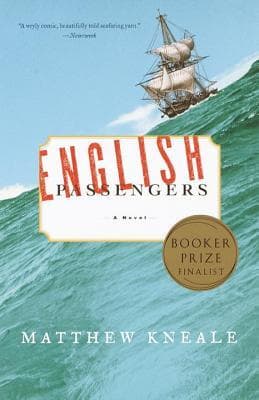
In 1857, Captain Illiam Quillian Kewley, a smuggler from the Isle of Man, and his crew, including first mate Vondy, are caught by British Customs. Much of their illegal rum is seized, leaving them in financial trouble and their ship, the 'Sincerity', unused. Facing ruin, Kewley reluctantly agrees to charter his vessel. His wife, Catherine, a practical woman, urges him to consider any offer to support their family. This unexpected event prepares the 'Sincerity' for a journey more significant and dangerous than its usual secret routes.
The Peculiar English Passengers
Captain Kewley receives an offer from two unusual Englishmen: Reverend Geoffrey Wilson and Dr. Thomas Potter. Reverend Wilson, a devoted theologian, believes the Garden of Eden is in Tasmania and wants to prove it. Dr. Potter, a quiet but keen anthropologist, secretly aims to classify human races, especially Tasmanian indigenous people, to support his theories of racial hierarchy. Their different, yet equally intense, reasons for traveling to the distant island confuse Kewley and his crew, who care mostly about the money for such a long and strange trip.
Peevay's Childhood in Pre-Colonial Tasmania
Peevay, an Aboriginal man from Tasmania, starts his story in 1824, describing his childhood among his people, the Palawa. He shows their traditional life, their connection to the land, their hunting and gathering, and their oral traditions. His early memories are full of nature's sounds, his tribe's community spirit, and his elders' teachings. This peaceful life, however, is presented with a sense of coming trouble, as Peevay's adult narration often hints at the tragedy that will befall his people from British settlers.
The Growing Conflict
As Peevay grows older, he tells of the increasing conflict between the Palawa and British settlers. He describes his people's initial confusion at the foreigners' customs, followed by fear, and then violence. The British bring diseases, livestock that destroy hunting grounds, and a harsh policy of land seizure. Peevay details the massacres, forced removals, and the systematic destruction of his people's culture and population. He sees his family and tribe's desperation and survival efforts as their world is taken from them, marking a shift from peace to constant struggle.
The Voyage to Tasmania
The 'Sincerity' sails from the Isle of Man, beginning the difficult journey to Tasmania. The trip has the usual dangers of sea travel – storms, low supplies, and life in a small ship. The crew, especially Vondy, struggles to understand their passengers' reasons. Reverend Wilson carefully records his theological findings, often unaware of the journey's practicalities, while Dr. Potter quietly watches everything and everyone, making notes for his controversial theories. Their different ways of seeing the world create tension and curiosity among the Manx sailors.
Potter's Research and Wilson's Delusions
During the voyage, Dr. Potter continues his careful, pseudoscientific research, measuring skulls and observing the crew's physical traits. He does this to support his theories on racial hierarchy. He is particularly interested in the 'primitiveness' of the Manxmen, seeing them as a transitional race. Meanwhile, Reverend Wilson mostly stays in his cabin, studying maps and biblical texts, sure that every island and land feature brings him closer to finding the Garden of Eden in Tasmania. His strong belief borders on delusion, a sharp contrast to Potter's cold, empirical, and racist pursuit of 'knowledge'.
Arrival in Tasmania and Initial Encounters
Upon arriving in Tasmania in 1857, the 'Sincerity' anchors. Reverend Wilson is eager to start his search for Eden, while Dr. Potter is just as keen to find indigenous Tasmanians for his studies. However, the reality they find is far from what they expected. The island is heavily colonized, and the indigenous population has been decimated. Kewley and his crew navigate the unfamiliar colonial society, meeting various British settlers and officials, many of whom have strong prejudices about the remaining Aboriginal people. The English passengers' initial optimism begins to clash with the realities of the colonized land.
Peevay's Survival and Adaptation
Peevay's story continues into 1857, describing his adult life in a Tasmania changed by British rule. He tells of working for settlers, observing their customs, and his ongoing fight to keep his identity and dignity. He has learned to survive in the complex and often brutal colonial society, using his intelligence and resilience. Despite the great losses his people have suffered, Peevay keeps a strong connection to his heritage and a critical view of the invading culture. His story offers a counter-narrative to the views of the English passengers and settlers.
The Search for Eden and 'Specimens'
Reverend Wilson's search for the Garden of Eden becomes more desperate and unsuccessful. He takes Kewley and his crew on trips into the Tasmanian wilderness, finding only the harsh land and disillusioned settlers. Meanwhile, Dr. Potter, frustrated by the lack of 'pure' Aboriginal specimens for his research, begins to say he wants to find any surviving indigenous people, seeing them as scientific curiosities rather than humans. His cold, dehumanizing approach to the Palawa people shows the harmful nature of his scientific racism, a sharp contrast to Wilson's well-meaning, though mistaken, spiritual quest.
The Confrontation of Worlds
The stories meet when Peevay's path crosses with the English passengers. Peevay, having learned to survive in the colonial world, becomes aware of the strange Englishmen and their goals. The clash of cultures and ideas peaks when Dr. Potter, in his pursuit of 'specimens,' meets Peevay and other surviving Aboriginal people. The encounter is full of misunderstanding, fear, and the colonizers' deep-seated prejudices, ending in a tragic event that highlights the impact of the British presence on Tasmania's indigenous people.
The Aftermath and Departure
After the tragic confrontation, the English passengers' mission fails. Reverend Wilson is disillusioned, his dream of Eden broken by Tasmania's grim reality. Dr. Potter's scientific goals are also thwarted, though his racist beliefs remain. Captain Kewley, having seen the effects of colonialism, is eager to leave. The 'Sincerity' eventually sails from Tasmania, leaving behind a land changed by British invasion and the suffering of its indigenous people. The return voyage is marked by reflection on the events and the heavy cost of their unusual charter.
Peevay's Later Life
Peevay's story extends to 1870, offering a moving ending. He reflects on his people's ongoing struggles, the further loss of their culture, and the lasting pain. Despite the odds, Peevay's voice is one of resilience and memory, ensuring the Palawa's history and suffering are not forgotten. His later life shows the strength of the human spirit when facing great hardship. His observations offer a powerful criticism of the colonial project and its legacy, long after the English passengers have gone.