“Human beings are free except when humanity needs them. Maybe even then. I don't know what I am talking about. I am a child.”
— Ender reflecting on his situation and the choices forced upon him.

Orson Scott Card (2002)
Genre
Fantasy / Science Fiction / Young Adult
Reading Time
6 hours
Key Themes
See below
Sign in to track this book
Earth is at war with aliens. A child genius, Ender Wiggin, enters a harsh military program where his strategy skills become humanity's last hope.
Andrew 'Ender' Wiggin, a smart six-year-old, lives on a future Earth where families can only have two children. He is a rare 'Third' child, allowed because of his exceptional genes. He wears a monitor that lets the International Fleet (IF) watch his thoughts and actions, identifying him as a possible military leader. After a fight with a bully named Stilson, Ender shows his strategic mind and capacity for violence, permanently stopping Stilson's bullying. The monitor is then removed, and Colonel Hyrum Graff recruits Ender for Battle School, a military academy in space.
Colonel Graff takes Ender to Battle School. Graff immediately separates Ender from other recruits, announcing Ender's supposed genius to make others dislike him. Graff believes good commanders do best under pressure and alone. On the shuttle, Ender faces his first bully, Bernard. Ender cleverly turns the situation against Bernard by hacking the student messaging system. When he arrives, Ender remains an outcast, but his intelligence and unique problem-solving skills quickly make him stand out, especially in the zero-gravity battle room, the main training area for the child soldiers.
Ender quickly masters the battle room, surprising instructors and students. He becomes friends with Alai, a respected new student, and they create new battle plans. However, Ender also faces strong dislike from older students, especially Bonzo Madrid, the commander of Rat Army, where Ender is first placed. Bonzo feels threatened by Ender's talent and abuses him physically and verbally. Ender, despite being smaller, uses his intelligence and fierce nature to defend himself, further building his reputation as a tough opponent.
After his time in Rat Army, Ender transfers to Salamander Army, still under Bonzo Madrid. Bonzo, still angry, forbids Ender from fighting and makes him practice with Petra Arkanian, a skilled female soldier. Ender secretly trains Petra and other disliked soldiers, developing new tactics. He then proves himself in a battle by ignoring Bonzo's orders and winning. Graff keeps changing Ender's environment, moving him to Rat Army and then Phoenix Army. This ensures Ender never gets comfortable and always faces new challenges and enemies, testing his adaptability and leadership.
At age nine, Ender becomes commander of the Dragon Army, an army known for losing. His soldiers are a mix of young, new students and older, unhappy ones. Ender, with his friends Alai, Petra, Dink, and Bean as his chosen team leaders, quickly makes Dragon Army an unbeatable force. He breaks all usual rules, using new and often unusual strategies in the battle room. His army wins many battles, often against multiple opposing armies at once. This success further isolates him from his peers, who resent his constant winning.
Ender's many wins and Bonzo Madrid's embarrassment lead to a violent fight in the showers. Bonzo, with some other older students, ambushes Ender, planning to hurt him badly or kill him. Ender, remembering his past with Stilson, realizes he must end the threat for good. He uses his speed and a well-aimed kick to Bonzo's face, followed by another to his groin, stopping him. Ender thinks he only injured Bonzo, but he later learns Bonzo died from his injuries. The IF hides this from him, adding to Ender's pain and guilt.
After the shower incident, Ender immediately transfers to Command School on Eros, a former Bugger colony. He trains under Mazer Rackham, the hero who defeated the Buggers in the Second Invasion. Mazer reveals that Ender's battle room training was preparation for leading a fleet in real space combat. Ender goes through increasingly complex and mentally draining simulations, where he must command entire fleets against Bugger forces. His emotional state is fragile, burdened by guilt over Bonzo and Stilson, and the constant pressure of being humanity's last hope.
Ender faces what he believes is his final, hardest simulation. He commands a large human fleet against the Bugger homeworld, using a 'Dr. Device' (Molecular Disruption Device). With his team leaders from Battle School, now his sub-commanders, Ender creates a brilliant, risky plan to destroy the Bugger homeworld. After the 'simulation' ends in victory, Mazer Rackham and Graff tell him the terrible truth: the 'simulation' was real. Ender, at age ten, has unknowingly caused the complete destruction of the entire Bugger species, committing genocide.
Devastated by learning of his genocide, Ender withdraws, struggling with immense guilt and the realization he was tricked into it. Meanwhile, on Earth, the Bugger threat is gone, and peace among nations quickly breaks down. Ender's siblings, Peter and Valentine, have gained much political power. Peter, as 'Locke,' promotes peace, while Valentine, as 'Demosthenes,' influences public opinion, unknowingly helping Peter's goal of global control. The IF, having used Ender, now fears his power.
Ender is prevented from returning to Earth. He is sent with colonists to establish new worlds. On the first colony world, he finds a Bugger queen pupa, hidden in a place the Buggers prepared for him. Through the queen, Ender learns the Buggers' peaceful intentions and their deep regret for the past wars, which were a misunderstanding. He realizes they did not understand individual life and fought without malice. Ender, taking the name 'Speaker for the Dead,' dedicates his life to traveling the stars with the Bugger queen pupa, looking for a new home for her and telling the true story of the Buggers, seeking to make up for his actions.
The Protagonist
Ender transforms from a bullied child into the savior of humanity, only to become a xenocide, and then dedicates his life to atonement as the 'Speaker for the Dead'.
The Supporting
Graff remains steadfast in his mission to create a commander, eventually facing trial for his methods but ultimately being justified by humanity's survival.
The Supporting
Valentine grows from a protective sister into a powerful, albeit manipulated, political voice, eventually guiding Ender towards his true calling.
The Antagonist
Peter evolves from a childhood bully into a masterful political strategist who achieves global dominance, representing the corrupting influence of power.
The Supporting
Mazer Rackham, a retired hero, returns to mentor Ender and oversee the final war, ultimately revealing the tragic truth of Ender's mission.
The Supporting
Alai evolves from a friendly launchie into Ender's most trusted second-in-command, demonstrating unwavering loyalty and strategic capability.
The Supporting
Bean grows from an ambitious, tiny launchie into Ender's most indispensable and intellectually challenging subordinate.
The Supporting
Petra transforms from an isolated but skilled soldier into a trusted and vital leader in Ender's command structure.
The Supporting
Bonzo's pride and resentment lead to his downfall and death at Ender's hands, serving as a catalyst for Ender's darker actions.
The novel shows the severe mental cost for child soldiers, especially Ender. Children in Battle School face extreme pressure, loneliness, and manipulation. This forces them to grow up fast and make decisions about life and death. Ender's innocence is taken away, replaced by strategic brilliance and deep trauma from the violence he causes and experiences. The story shows the difficult morality of sacrificing childhood for the greater good. It shows how these children are used and then left with deep emotional scars, as seen in Ender's guilt over Stilson and Bonzo.
“''In the moment when I truly understand my enemy, understand him well enough to defeat him, then in that precise moment I also love him.''”
Manipulation is a key theme, mainly by Colonel Graff and the International Fleet. Ender's whole life, from his birth as a 'Third' to his training and the final 'simulation,' is a carefully planned series of manipulations. These are designed to turn him into a weapon. Graff purposely isolates Ender, sets him against his peers, and creates impossible situations, all to sharpen his strategic mind. This brings up questions about free will and moral responsibility when someone is so completely controlled. This ends with Ender's unknowing act of genocide, which he was tricked into doing.
“''I am not a killer. I am not Peter. I am not a killer. I am not Peter.''”
Ender constantly struggles with who he is, fearing he will become like his cruel brother, Peter. He deals with his capacity for violence and the person he is forced to become. His journey is about finding himself, not just as a commander, but as a moral person. After the war, he sheds his identity as 'Ender Wiggin, the xenocide.' He becomes 'Speaker for the Dead,' dedicating his life to understanding and telling the truth of others, including the Buggers. This change shows his search for meaning and atonement beyond his military role.
“''He was born to be a killer. But he was also born to be a lover. And the only way to be a lover is to be a speaker.''”
The novel looks at the nature of war, especially the dangers of misunderstanding and seeing the enemy as less than human. The entire conflict with the Buggers comes from a lack of communication and an inability to understand their alien minds. Ender's unique ability to deeply understand his enemies, even to 'love' them in a strategic way, makes him a better commander. But it also leads to his deep guilt when he learns the Buggers' peaceful intentions. The book suggests that real victory might come from understanding, not destruction. It also suggests that empathy, even for an alien species, is important to avoid terrible conflict.
“''Humanity's children had been playing a game, and the Buggers had been dying.''”
Ender's Game explores different kinds of leadership. These include Bonzo Madrid's strict, traditional style and Ender's innovative, empathetic, and often unwilling command. Ender's leadership is marked by his ability to inspire loyalty, encourage teamwork among different people, and adapt to fast-changing situations. The book also examines the morality of leaders like Graff, who have great power and make morally questionable choices for what they believe is the greater good. It shows the heavy burden and ethical compromises that come with wartime leadership.
“''The essence of command is to understand the situation, to decide what to do, to make sure it gets done, and to take responsibility for it.''”
A device used to observe and select gifted children for military training.
The monitor is a small, invasive device surgically implanted in children's necks, allowing the International Fleet to observe their thoughts, emotions, and problem-solving abilities. It serves as an early plot device to introduce Ender's unique qualities and the IF's manipulative tactics. The removal of the monitor marks a significant transition for Ender, signaling his selection for Battle School and the beginning of his military career. It symbolizes the constant surveillance and control exerted over the children, highlighting the theme of manipulation.
A zero-gravity arena for tactical training and psychological conditioning.
The Battle Room is the primary training ground at Battle School, a large zero-gravity arena where children engage in simulated combat using laser guns. It is a crucial plot device for Ender's development, allowing him to hone his strategic genius and develop innovative tactics. The Battle Room serves not only as a physical training ground but also as a psychological arena, where friendships are forged, rivalries are played out, and commanders like Ender are tested under extreme pressure. Its unique environment forces unconventional thinking and problem-solving.
A psychological computer game that reveals and shapes Ender's subconscious.
The Mind Game, or Fantasy Game, is a computer simulation designed to psychologically profile and challenge the Battle School students. It adapts to the player's fears and desires, presenting a series of allegorical scenarios. For Ender, the game becomes a deeply personal and disturbing experience, reflecting his inner turmoil, guilt, and fears. The 'Giant's Drink' and the 'End of the World' sequences are particularly significant, foreshadowing his capacity for extreme violence and his ultimate act of xenocide, while also revealing his subconscious desire for peace and understanding.
A weapon of mass destruction capable of annihilating entire planets.
The 'Dr. Device' is the ultimate weapon developed by humanity, capable of disrupting molecular bonds and utterly destroying planets. It is the instrument through which Ender unknowingly commits xenocide. As a plot device, it represents the terrifying power of human technology and the ultimate cost of war. Its existence underscores the desperation of humanity and the extreme measures taken to ensure survival, while also serving as the tragic tool that transforms Ender from humanity's savior into a mass murderer, forcing him to confront the moral implications of his actions.
Online personas used by Peter and Valentine Wiggin to influence global politics.
While Ender is away, Peter and Valentine use the pseudonyms 'Locke' and 'Demosthenes' to write influential political essays and manifestos on the global nets. 'Locke' represents rational, peace-seeking diplomacy, while 'Demosthenes' embodies passionate, often aggressive, populism. This device allows Peter to gain global political power and influence events on Earth, while Valentine, though initially manipulated, finds her own voice. It highlights the power of information and rhetoric in shaping public opinion and the intricate political maneuvering occurring simultaneously with Ender's military training.
“Human beings are free except when humanity needs them. Maybe even then. I don't know what I am talking about. I am a child.”
— Ender reflecting on his situation and the choices forced upon him.
“The enemy's gate is down.”
— A crucial realization for Ender in battle school, changing his perspective on zero-G combat.
“There was no such thing as a fair fight. All advantage must be pressed. All weakness exploited.”
— Graff's philosophy on warfare and how Ender is trained.
“I need to find out if I am a killer or not.”
— Ender's internal struggle after a particularly violent encounter.
“Welcome to the human race. Nobody ever gets to see the whole show.”
— Graff's cynical remark to Ender, highlighting the limited perspective of individuals.
“He knew that he could not win if he fought them alone. But he could not lose if he fought them all.”
— Ender's strategy during a seemingly impossible battle against multiple opponents.
“You can't make a race car out of a pig. But you can make a very fast pig.”
— Graff explaining his approach to training Ender, focusing on maximizing inherent abilities.
“In the moment when I truly understand my enemy, understand him well enough to defeat him, then in that very moment I also love him.”
— Ender's profound realization about his relationship with those he defeats.
“The power to cause pain is the only power that matters, the power to kill and destroy, because if you can't kill then you are always subject to those who can, and nothing else matters.”
— Peter Wiggin's dark philosophy on power.
“I am not a hero. I'm a killer. I'm a monster.”
— Ender's self-perception after the final battle, despite being hailed as a savior.
“They were giving him a childhood, but not his own.”
— Ender reflecting on the manipulative nature of his upbringing in Battle School.
“Sometimes good comes from evil. Sometimes evil comes from good.”
— A philosophical observation on the complex nature of morality.
“We are the only ones who can save ourselves. And that is a terrible thing.”
— Ender's realization about the burden of leadership and responsibility.
“I'll carry you. I'll be your spokesman. I'll be the Speaker for the Dead.”
— Ender's commitment to understanding and speaking for the alien race he destroyed.
Ready to see how well you understood this book? Take our interactive quiz with 10 questions.
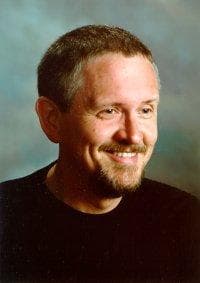
Orson Scott Card is an American writer known best for his science fiction works. He is the first and only person to win both a Hugo Award and a Nebula Award in consecutive years, winning both awards for both his novel Ender's Game (1985) and its sequel Speaker for the Dead (1986). A feature film adaptation of Ender's Game, which Card co-produced, was released in 2013. Card also wrote the Locus Fantasy Award-winning series The Tales of Alvin Maker (1987–2003).







