“The world is full of stories, but they're not all true.”
— Sunday reflecting on the nature of fairy tales and reality.

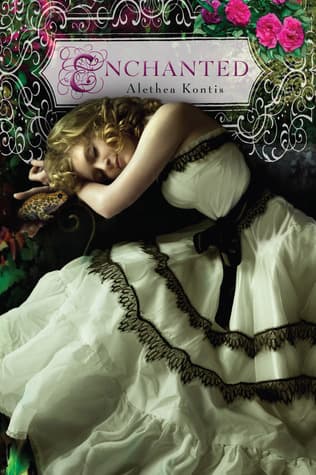
Alethea Kontis (2012)
Genre
Fantasy / Young Adult / Romance
Reading Time
360 min
Key Themes
See below
Sign in to track this book
A neglected storyteller, whose tales come true, falls for an enchanted frog only to discover he's a despised prince with a shared, hidden past, forcing her to untangle a web of magic, destiny, and forbidden love.
Sunday, the seventh and youngest daughter of a widowed woodcutter in Arilland, lives a lonely life, often overshadowed by her older sisters. Her only comfort comes from writing stories in her hidden journal, as her tales often come true. One day, by a whispering well in the woods, she meets a talking frog. The frog, who calls himself 'Frog,' is intrigued by her stories and kind nature, and they form an unlikely friendship. Sunday, despite her initial surprise, feels drawn to the frog's wisdom and kindness, sharing her thoughts and stories with him, unaware of his true identity or the magic of their meeting.
As their friendship grows, Sunday and Frog spend more time by the well. One evening, as Sunday prepares to leave, Frog expresses his sadness. Moved by his affection, Sunday spontaneously kisses Frog goodbye. This act of love breaks an enchantment, transforming Frog back into Rumbold, the Crown Prince of Arilland. Stunned but happy, Rumbold watches Sunday leave, determined to find her and make her fall in love with him as a man. Sunday leaves with no knowledge of the change, only a lingering warmth from their time together.
Prince Rumbold, now human, returns to his castle, but his thoughts stay with Sunday. He begins visiting the woodcutter's cottage, pretending to be an ordinary suitor, bringing gifts and trying to win Sunday over. Sunday is confused. She feels a strong attraction to this handsome prince, a man she barely knows, but she cannot explain this feeling. She senses a strange familiarity, a connection that goes beyond first impressions, but she cannot place it. Her family, especially her father and sisters, are wary of Rumbold due to past tensions between the royal family and their village, which further complicates Sunday's feelings and makes her resistant to his advances.
The King announces a grand ball, inviting all eligible maidens, hoping Rumbold will find a bride. Sunday, hesitant at first, is persuaded by her sisters to attend. At the ball, Rumbold, still keeping his past as the frog a secret, is captivated by Sunday. They dance, and Sunday feels an inexplicable pull towards him, a sense of destiny. As she rushes home before midnight, she loses one of her glass slippers, a gift from her late mother that seems to have a subtle magic. Rumbold finds the slipper and, recognizing its unique craftsmanship, sees it as a sign, confirming his belief that Sunday is the woman he is meant to marry, even if she doesn't yet remember their shared history.
As Sunday and Rumbold spend more time together, Sunday starts to uncover parts of the kingdom's history and Rumbold's past. She learns about a terrible dragon that once plagued Arilland, and how Rumbold was cursed by it, turned into a frog. More troubling, she discovers that her own family, specifically her mother, played a role in the events surrounding the dragon. The dragon's curse, she learns, was tied to a broken promise made by her mother, who was a storyteller with a similar gift for making her stories come true. This revelation begins to connect the dots for Sunday, hinting at a deeper, more complicated history between their families.
Through old journals and conversations with her father and Rumbold's family, Sunday reconstructs the full, tragic story. Her mother, a gifted storyteller whose tales came true, had once promised a dragon a story of its own, a story that would give it peace. However, she failed to deliver on this promise, distracted by love and family. In retaliation, the dragon, a powerful creature, cursed the royal family, transforming Prince Rumbold into a frog until he received a kiss of true love. At the same time, the dragon also placed a lesser curse upon Sunday's family: the woodcutter's axe would break, and his daughters would struggle to find love, which explains many of their past misfortunes and Sunday's unique gift.
Feeling the weight of his secret, Prince Rumbold finally confesses to Sunday that he was the enchanted frog she befriended and kissed. This revelation both clarifies and complicates Sunday's feelings. On one hand, the attraction she felt for Rumbold now makes sense; her heart had recognized him all along. On the other hand, she struggles with the deceit, the fact that he kept such a significant part of their shared history from her. She also grapples with the implications of her stories coming true, realizing the immense power she holds, much like her mother. This truth forces Sunday to confront her feelings for Rumbold and the responsibility that comes with her magical gift.
Despite the initial shock and the lingering questions, Sunday and Rumbold's love for each other wins out. They decide to marry, uniting the royal family and the woodcutter's family, hoping to mend the long-standing rift. Preparations for the royal wedding begin, bringing hope and joy to the kingdom. However, the shadow of the dragon's curse still hangs over them. Although Rumbold was freed from his frog form, the dragon itself remains a powerful, unappeased entity. Sunday, now aware of her storytelling power and her mother's past actions, realizes that merely marrying Rumbold might not be enough to truly resolve the ancient magic that binds them all.
Recognizing that the dragon's curse came from a broken promise for a story, Sunday understands that she, as her mother's daughter and a powerful storyteller, must be the one to appease the creature. She bravely seeks out the dragon, not to fight it, but to fulfill the neglected promise. Sunday tells the dragon a story, a tale of understanding, forgiveness, and the beauty of its own existence, weaving in elements of its loneliness and longing. Through her heartfelt narrative, imbued with her unique magic, Sunday finally grants the dragon the peace it sought, lifting the last parts of its ancient curse from the land and her family.
With the dragon's curse lifted and the creature at peace, a new era begins for Arilland. The discord between the royal family and the villagers starts to heal, helped by the union of Prince Rumbold and Sunday. Their wedding is a joyous celebration, marking not just their personal commitment but also the reunification of a kingdom. Sunday, now Princess of Arilland, embraces her role and her unique gift, using her storytelling not just to record reality but to shape a better future. Her love for Rumbold, forged through enchantment and understanding, becomes a symbol of hope and the power of genuine connection, ensuring peace and prosperity for their realm.
The Protagonist
Sunday transforms from an insecure, overshadowed girl into a confident princess who understands and wields her unique magical gift to heal her kingdom.
The Protagonist/Love Interest
Rumbold evolves from a cursed prince seeking freedom to a loving, patient suitor and a responsible ruler who supports Sunday's unique abilities.
The Antagonist/Catalyst
The Dragon's arc moves from a vengeful, solitary creature to one finally at peace through Sunday's understanding and fulfillment of the ancient promise.
The Supporting
He gradually comes to terms with his past grief and the magical heritage of his wife and Sunday, eventually supporting Sunday's path.
The Supporting
Saturday's initial skepticism gives way to acceptance and support for Sunday's extraordinary path.
The Mentioned/Influential
Her past actions and unfulfilled promise are revealed, shaping Sunday's understanding of her own power and responsibility.
The novel explores storytelling as a powerful, almost magical, force. Sunday's stories literally come true, a gift from her mother. This theme shows how narratives shape reality, influence perceptions, and can even alter destiny. The dragon's curse comes from a broken promise for a story, and only Sunday's heartfelt storytelling truly appeases the curse, showing that stories can heal, forgive, and bring peace. It highlights that words have tangible power.
““Stories are important. They can be more important than anything. If you tell a story, you can make a thing happen.””
This theme is central to the romance. Sunday falls in love with Rumbold when he is an enchanted frog, seeing past his monstrous appearance to his true character and kindness. Her love and acceptance break the curse. When Rumbold returns as a prince, Sunday is confused by her intense attraction to him, not realizing it is the same person. This reinforces that true love recognizes the essence of a person, regardless of their outward form, and that superficial beauty is secondary to genuine connection and inner worth.
““She had loved the frog. And now she loved the prince. It was the same person, wasn’t it? The same heart, the same mind.””
The story is about the need for forgiveness and the possibility of redemption. The dragon's curse is a result of a broken promise, a past mistake. Sunday, through her empathy and storytelling, does not defeat the dragon but offers it understanding and fulfills the ancient promise, leading to its redemption and the lifting of the curse. This extends to Rumbold's initial deception about his identity and the long-standing animosity between the royal family and Sunday's family, all of which are eventually overcome through forgiveness and a willingness to move forward.
““The greatest stories are the ones that lead to forgiveness.””
Sunday's journey involves understanding and accepting her true identity, especially her unique gift of making stories come true. Initially, she views this power with trepidation, seeing it as a burden or an oddity. As she learns about her mother's similar abilities and the consequences of their misuse, Sunday comes to terms with her magical heritage. She realizes that her gift is not something to hide but a part of who she is, a powerful tool that can be used for good. This acceptance allows her to fully embrace her destiny and her role in healing the kingdom.
““She was a storyteller. It was in her blood, and now she understood what that truly meant.””
A classic fairy tale trope used to explore themes of inner beauty and transformation.
The enchanted frog is a direct nod to the classic 'Frog Prince' fairy tale. In 'Enchanted,' it serves as the primary catalyst for the romance between Sunday and Rumbold, allowing Sunday to fall in love with Rumbold's true character before his princely appearance is revealed. This device emphasizes the theme of love beyond appearance and highlights the transformative power of genuine affection. It also creates initial mystery and sets up the central conflict of Rumbold's deception and Sunday's confusion.
A magical ability that drives the plot and connects past and present.
This is Sunday's unique magical gift, inherited from her mother. It functions as a powerful plot device, directly influencing events and creating unforeseen consequences. The fact that her mother's broken promise for a story led to the dragon's curse establishes a generational link to this power. Sunday must learn to control and utilize this ability responsibly, not only for her own life but to ultimately resolve the ancient curse, making her storytelling an active force in shaping destiny rather than just a passive hobby.
A familiar fairy tale object that acts as a symbol of destiny and recognition.
The glass slipper, a clear reference to 'Cinderella,' functions as a symbolic device. For Rumbold, finding Sunday's unique slipper after the ball solidifies his conviction that she is the woman he is meant to be with, confirming his internal recognition of her. For Sunday, it's a piece of her mother's legacy, subtly magical and hinting at a destiny she is only beginning to understand. It serves as a tangible link between the magical and mundane, guiding the characters towards their inevitable union.
“The world is full of stories, but they're not all true.”
— Sunday reflecting on the nature of fairy tales and reality.
“Sometimes the greatest love stories are the ones that are never told.”
— A general observation about hidden affections and unexpressed feelings.
“There are some things even magic can't fix, and a broken heart is one of them.”
— Sunday pondering the limitations of magic in emotional matters.
“A princess is not defined by her crown, but by her courage.”
— Sunday's internal thoughts about her own identity and strength.
“Every story needs a villain, but sometimes the villain is just misunderstood.”
— Considering the complexities of antagonists and their motivations.
“The most dangerous enchantments are the ones you don't even know you're under.”
— A warning about subtle, pervasive influences.
“It's not what you have, but what you do with it that matters.”
— A lesson about utilizing one's gifts or circumstances.
“The best way to find your own story is to live it.”
— An encouragement to experience life actively rather than passively.
“True beauty isn't something you can see, it's something you feel.”
— Sunday's realization about the deeper meaning of attractiveness.
“Sometimes the only way to save yourself is to lose yourself completely.”
— A paradoxical statement about transformation and letting go.
“A promise broken is a shard of glass in the heart.”
— Highlighting the pain and damage caused by infidelity or betrayal.
“Even the darkest forest hides the most beautiful secrets.”
— A metaphor for finding wonder and beauty in unexpected, challenging places.
“Love, like magic, is a choice you make every single day.”
— Emphasizing the active, deliberate nature of both love and magic.
“Fairy tales are more than true: not because they tell us that dragons exist, but because they tell us that dragons can be beaten.”
— A famous quote often attributed to G.K. Chesterton, used to frame the power and message of fairy tales within the novel's themes.
“You don't need a prince to save you; you need to save yourself.”
— Sunday's journey towards self-reliance and agency.
Ready to see how well you understood this book? Take our interactive quiz with 10 questions.

Alethea Kontis is a beloved children's author and storyteller, best known for her "Enchanted" series, which reimagines classic fairy tales with a modern twist. She is also the author of the "Alice in Wonderland" trilogy and "The Buried Moon." Kontis's work often explores themes of identity, courage, and the magic found in everyday life.







