BookBrief
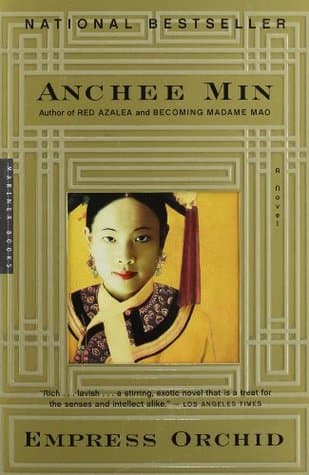
Empress Orchid cover
Archivist's Choice

Empress Orchid

Anchee Min (2004)

Genre

Historical Fiction / Romance

Reading Time

9-10 hours

Key Themes

See below

Track Your Reading

Sign in to track this book

To escape poverty and an unwanted marriage, seventeen-year-old Orchid navigates the treacherous world of the Forbidden City, seducing an emperor and defying deadly rivals, to become the last empress of a collapsing China.

Synopsis

Seventeen-year-old Orchid, from a poor Manchu family, enters the Imperial Selection to become one of Emperor Hsien Feng's wives, hoping to save her family from poverty and avoid an arranged marriage. Chosen as a low-ranking concubine, she enters the Forbidden City, a world of beauty, strict ritual, and dangerous politics. Among thousands of women vying for the Emperor's attention, Orchid quickly learns the ruthless nature of court life, where alliances are fragile and betrayal is common. She learns how to attract the Emperor's favor and manipulate situations, eventually capturing his attention and bearing him a son, Tung Chih, securing her position and power. This angers the Empress and other high-ranking concubines, leading to tensions and retaliations within the palace. As the Taiping Rebellion threatens the empire, the Imperial family flees, and the Emperor's health declines. Upon his death, Orchid, now Empress Cixi, stages a daring coup, consolidating her power and establishing a co-regency with Empress Dowager Ci'an. The novel follows her transformation from a naive girl to the controversial ruler who becomes China's last Empress, navigating power, love, and survival in a collapsing dynasty.
Reading time
9-10 hours
Difficulty
Medium
Pacing
Moderate
Mood
Atmospheric, Dramatic, Ambitious, Intense
✓ Read this if...
You enjoy historical fiction set in imperial China, stories of powerful women, and narratives about political maneuvering and survival against great odds.
✗ Skip this if...
You prefer fast-paced action or are looking for a lighthearted romance without political intrigue and darker themes.

Plot Summary

The Imperial Selection

Seventeen-year-old Orchid, from a struggling Manchu family in Wuhu, faces a future of poverty and a forced marriage to her unattractive cousin, Guixiang. Her only hope is to join the imperial selection for concubines for the young Emperor Hsien Feng. Despite her family's initial reluctance due to the low chance of success, Orchid's beauty and strong will convince them. She says goodbye to her sister, Chrysanthemum, and begins the difficult journey to Beijing, leaving behind her familiar world for the unknown, high-stakes environment of the Forbidden City. Her goal is not just personal escape, but also to bring honor and wealth back to her family.

Entering the Forbidden City

After a difficult selection process, Orchid is chosen as a 'noble lady,' a low-ranking concubine, among hundreds of other girls. She enters the vast Forbidden City, a place of beauty and strict, ancient rituals. Her initial wonder quickly turns to a realization of the intense competition and isolation within its walls. She is assigned to a small, shared room and quickly learns the complex hierarchy and unspoken rules from her eunuch attendant, An-te-hai, and the senior concubines. The Emperor, Hsien Feng, seems a distant figure, and the path to his bedchamber, and thus power, appears almost impossible for someone of her low rank.

Mastering the Arts of Seduction

Determined not to remain an unnoticed concubine, Orchid commits herself to learning. She studies the Emperor's preferences, reads books on seduction, and practices calligraphy and poetry to improve her intellect and charm. She forms a careful alliance with An-te-hai, bribing him with her small savings to gain information and opportunities. Her efforts focus on attracting the Emperor's notice, a dangerous game given the watchful eyes of the Empress and other powerful concubines. Orchid also observes the ruthless tactics others use, understanding that survival in the Forbidden City requires both beauty and cleverness.

The Emperor's Favor

Through strategic bribes to An-te-hai and her own calculated charm, Orchid finally gains an audience with Emperor Hsien Feng. She uses her intelligence and wit, engaging him in conversations about politics and poetry rather than just superficial flattery. Her unusual approach captivates the Emperor, who is tired of the predictable obedience of other concubines. She quickly becomes his favorite, spending many nights in his bedchamber. This new favor raises her status but also makes her a target for the jealousy and schemes of Empress Nuharoo and other concubines, especially Consort Li.

A Son for the Dragon Throne

The main goal for any concubine is to bear a son for the Emperor, ensuring her future and power. Orchid, now a higher rank, becomes pregnant. Her pregnancy is filled with anxiety, as she fears assassination attempts from jealous rivals. Despite the dangers, she successfully gives birth to a healthy baby boy, Tung Chih. This event is important, as Tung Chih is the Emperor's only surviving son and heir. Orchid's position within the Forbidden City is dramatically strengthened, and she is given the title of Consort Yi. Her triumph, however, increases the animosity from Empress Nuharoo, who remains childless.

The Empress's Jealousy and Retaliation

Empress Nuharoo, Emperor Hsien Feng's primary wife, views Orchid's rise with growing resentment, especially after Tung Chih's birth. Nuharoo, who has not produced an heir, sees Orchid as a threat to her own status and the imperial line. She plans various schemes to reduce Orchid's influence and discredit her in the Emperor's eyes. These include spreading rumors, manipulating court officials, and even trying to control access to the Emperor. Orchid must constantly be watchful, navigating the dangerous political landscape of the inner court while protecting her son.

The Taiping Rebellion and Imperial Flight

Outside threats begin to appear over the Qing Dynasty. The Taiping Rebellion rages in the south, weakening the empire, while Western powers, especially Britain and France, press their demands on China. The Second Opium War intensifies, leading to the invasion of Beijing by Anglo-French forces. Emperor Hsien Feng, along with his court, including Orchid and young Tung Chih, is forced to flee the Forbidden City and seek refuge in the Summer Palace, Chengde. This humiliating retreat shows the empire's fragility and the Emperor's declining health and authority. Orchid sees firsthand the dynasty's crumbling power.

Emperor Hsien Feng's Decline and Death

During their exile in Chengde, Emperor Hsien Feng's health quickly declines, made worse by his opium addiction and the stress of the ongoing rebellions and foreign incursions. He becomes increasingly weak and withdrawn, relying more on Orchid for comfort and advice. Knowing his death is near, the Emperor tries to establish a regency council to govern after him, appointing eight conservative officials. He also gives Orchid a special seal, giving her authority to counter any potential abuses by the regents, a subtle but significant empowerment. His death leaves a young Tung Chih as Emperor, creating a power vacuum.

The Coup of Xinyou

Following Emperor Hsien Feng's death, the eight regents try to consolidate their power, effectively pushing aside Orchid and Empress Nuharoo. Orchid, however, is not content to be a mere widow. She forms a secret alliance with Empress Nuharoo and the Emperor's capable half-brother, Prince Gong. Together, they stage a daring coup d'état, known as the Coup of Xinyou (1861). They quickly arrest and punish the eight regents, accusing them of corruption and treason. This decisive action allows Orchid and Nuharoo to become co-regents, ruling in the name of the child Emperor Tung Chih, marking Orchid's dramatic ascent to ultimate power.

The Co-Regency and Lingering Tensions

With the coup successful, Orchid becomes Empress Dowager Cixi, and Nuharoo becomes Empress Dowager Ci'an. They rule together as co-regents for the young Emperor Tung Chih. While they present a united front to the court, tension and rivalry between the two women remain. Cixi, with her sharp mind and political skill, quickly becomes the more dominant figure, taking a leading role in government affairs. She begins to implement reforms and consolidate her power, starting her long and controversial rule over China, forever changing her destiny from an unknown concubine to the last Empress.

Principal Figures

Orchid (Empress Dowager Cixi)

The Protagonist

Orchid transforms from an innocent, hopeful girl into a powerful, pragmatic, and sometimes ruthless Empress Dowager, learning to wield power in a male-dominated world.

Emperor Hsien Feng

The Supporting

He declines from a hopeful young Emperor to a sickly, defeated man, eventually succumbing to illness and leaving a power vacuum.

Empress Nuharoo (Empress Dowager Ci'an)

The Antagonist/Supporting

Transforms from a jealous empress to a pragmatic co-regent, forming a complex alliance with her former rival.

An-te-hai

The Supporting

His loyalty and cunning are key to Orchid's success, and he becomes her most trusted ally.

Prince Gong

The Supporting

A capable prince who becomes a crucial political ally to Orchid, helping her seize power.

Tung Chih

The Supporting

Born as an infant, his existence is the catalyst for Orchid's rise to power.

Consort Li

The Mentioned

Her attempts to rival Orchid quickly fail, demonstrating Orchid's superior cunning.

Guixiang

The Mentioned

Represents the life Orchid avoids by entering the Forbidden City.

Themes & Insights

Ambition and Survival

The novel explores ambition, especially as a way to survive in a rigid society. Orchid's first ambition is to escape poverty and a forced marriage, but it quickly becomes a relentless drive for power within the Forbidden City. Her survival depends on her ability to outwit rivals, understand court politics, and ultimately gain control. This is clear in her careful efforts to learn the Emperor's preferences, bribe eunuchs, and form strategic alliances, all to not just live, but to thrive. The cutthroat environment demands constant vigilance and a willingness to make difficult, often ruthless, choices.

In the Forbidden City, there are no friends, only interests.

Narrator (reflecting Orchid's internal thoughts)

Power and Gender in a Patriarchal Society

The novel shows the struggle for power in a patriarchal society, where women's influence is usually indirect and limited. Orchid's journey shows how a woman can wield immense power through intelligence, manipulation, and strategic alliances, even when denied direct authority. She navigates complex social structures, using her femininity, wit, and eventually motherhood, to gain influence over the Emperor and later, the empire itself. The contrast between the Emperor's nominal power and the actual power Cixi achieves highlights how traditional gender roles can be subverted in the pursuit of control. The novel also shows the limits placed on women, even those in high positions, and how they often must work through male figures to exert their will.

A woman's power in the Forbidden City is not in her title, but in her womb and her mind.

Orchid's internal thought

The Decline of Imperial China

The background for Orchid's personal rise is the decline of the Qing Dynasty. The novel integrates historical events like the Taiping Rebellion and the Second Opium War, showing how internal conflict and outside pressures from Western powers weaken and eventually cripple the once-powerful empire. Emperor Hsien Feng's weakness and indulgence reflect this decline. Orchid's rise to power happens during this national crisis, suggesting that strong, though controversial, leadership was needed. The crumbling Forbidden City, both literally and figuratively, symbolizes the end of an era and the challenges facing China.

The Dragon Throne was not merely a seat of power; it was a burden that was crushing the Emperor.

Narrator

Sacrifice and Morality

Orchid's journey includes many sacrifices and morally questionable choices. She gives up her family life, personal freedom, and often her own innocence for power and survival. The novel explores the blurred lines between practicality and ruthlessness as Orchid makes decisions that ensure her ascent but may harm others, such as her rivals or those who stand in her way. Her complex morality is central to her character, making the reader question whether her actions are justified by the circumstances or if they show a darker side of ambition. The internal conflict she faces, or sometimes chooses to ignore, is a key part of her character development.

To survive in this palace, one must shed tears in private and wear a mask of stone in public.

Orchid's internal thought

Plot Devices & Literary Techniques

The Forbidden City

A gilded cage that is both a symbol of power and a prison.

The Forbidden City serves as more than just a setting; it is a character in itself. Its vastness, intricate rituals, and hidden dangers embody the oppressive yet alluring nature of imperial power. It symbolizes the isolation, the strict hierarchy, and the ruthless competition for survival. The labyrinthine corridors and opulent chambers underscore the idea that while it promises ultimate power, it also demands ultimate sacrifice and vigilance. It is a 'gilded cage' where beauty and brutality coexist, shaping the destinies of those trapped within its walls.

The Imperial Selection

A life-altering competition that sets Orchid's destiny.

The Imperial Selection is the inciting incident that propels Orchid into the world of the Forbidden City. It functions as a crucible, immediately establishing the high stakes and ruthless competition that define life within the palace. This process not only screens for beauty but also hints at the resilience and cunning required to survive. It serves as a stark contrast to Orchid's simple village life, highlighting the dramatic shift in her environment and the immediate challenges she faces. It's the gateway to her new, dangerous reality.

The Imperial Seal

A physical object symbolizing the Emperor's trust and power.

The Imperial Seal given to Orchid by the dying Emperor Hsien Feng is a powerful symbol and a crucial plot device. It represents the Emperor's personal trust in her and grants her a legitimate claim to authority, particularly against the conservative regents. This physical object provides the legal and symbolic backing for her actions in the Coup of Xinyou, allowing her to challenge established power structures. It acts as a tangible manifestation of her burgeoning influence and a key to her ultimate political triumph.

The Birth of Tung Chih

The pivotal event that secures Orchid's future and power.

The birth of Tung Chih, the Emperor's only surviving son, is a critical plot device that fundamentally alters Orchid's status and trajectory. It transforms her from a mere concubine into the mother of the imperial heir, granting her immense influence and ensuring her future within the palace. This event intensifies rivalries but also solidifies her position, making her indispensable. It is the ultimate goal for any concubine and, for Orchid, it's the foundation upon which she builds her empire.

Critical analysis

Notable Quotes

When I was born, a dragon came to my village. Not a real dragon, of course. But the villagers believed it was. They said it flew over our roofs, its scales shimmering like a thousand tiny suns, its breath smelling of incense and ancient earth. My grandmother always said it was a sign, a prophecy that I was destined for greatness. Or perhaps, for a great sorrow.

Empress Orchid reflecting on her birth and early life, foreshadowing her future.

The Forbidden City was a cage of gold. Beautiful, yes, but a cage nonetheless. Every silk robe, every jade ornament, every whispered compliment, was a link in the chain.

Orchid's initial impressions of the Forbidden City upon becoming a concubine.

A woman’s beauty is her greatest weapon, but also her greatest vulnerability. It can open doors, but it can also attract predators.

Orchid's early understanding of her own attractiveness and its implications within the imperial court.

To survive in the Forbidden City, one must learn to smile with one's eyes, even when one's heart is weeping.

Orchid's internal struggle with the emotional demands of court life.

The Emperor was a god, but even a god could be lonely. And a lonely god was a dangerous god.

Orchid observing Emperor Xianfeng's isolation and its impact on his temperament.

Love was a luxury I could not afford. Power was my only currency.

Orchid's pragmatic view on her relationships and ambitions.

I learned to read the whispers in the wind, the shadows on the walls. In the Forbidden City, silence spoke louder than words.

Orchid developing her political acumen and observation skills.

A mother’s love is a powerful thing. It can move mountains, or it can crush them.

Orchid reflecting on her relationship with her son, Tongzhi, and the sacrifices she makes for him.

The world outside the Forbidden City was a blur of rumors and distant thunder. But inside, the storm was always brewing.

Orchid's perspective on the internal struggles of the court versus external threats.

To be an empress was to be a puppet on a thousand strings, each one pulled by tradition, by expectation, by fear.

Orchid's realization of the constraints and burdens of her imperial role.

I was a woman in a man's world, but I would not be silenced. I would not be broken.

Orchid's defiant stance against the patriarchal structure of the imperial court.

Sometimes, the greatest strength lies in appearing weak. It makes your enemies underestimate you.

Orchid's strategic approach to dealing with her rivals.

History would judge me. I knew that. But history was written by men, and men rarely understood the heart of a woman.

Orchid's contemplation of her legacy and how she would be perceived.

The dragon that came at my birth, I often wondered if it was a blessing or a curse. Perhaps it was both.

Orchid's final reflections on her life, tying back to the opening prophecy.

Quiz

Test Your Knowledge

Ready to see how well you understood this book? Take our interactive quiz with 10 questions.

10
Questions
~5
Minutes
?
Best Score

Key Questions (FAQ)

Seventeen-year-old Orchid, from an impoverished Manchu family, enters the Forbidden City as a concubine to Emperor Hsien-feng, hoping to secure her family's future and avoid an undesirable arranged marriage. She navigates the treacherous imperial court, competing with thousands of other women for the Emperor's attention and the chance to bear his heir, which ultimately leads to her rise as the last Empress of China.

About the author

Anchee Min

Anchee Min is a Chinese-born American author celebrated for her historical fiction novels, particularly those focusing on Chinese empresses. Her notable works, "The Last Empress" and "Empress Orchid," offer vivid portrayals of imperial China's powerful women. Min's writing is known for its immersive detail and compelling narratives, drawing from her own experiences and extensive research.






