The First Salvo
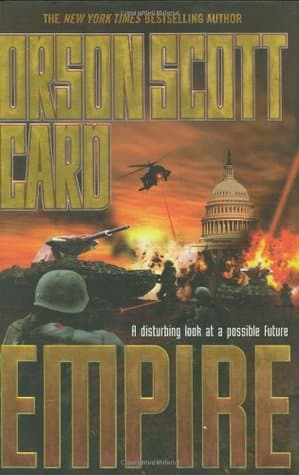
The story begins with a seemingly ordinary protest in Washington D.C., organized by the 'Righteous Cause,' a far-right militia group. This demonstration quickly turns into an attack on the White House. High-tech weapons, never before seen in civilian hands, cause massive destruction and many casualties among the Secret Service and military personnel. The President is evacuated, but the assault's boldness and effectiveness shock the nation. This event ends political discussion and starts open warfare, pushing the United States into a new civil conflict. The attack reveals a terrifying level of organization and technology within the extremist groups, far beyond what intelligence agencies expected.
The President's Dilemma
After the White House attack, President Sullivan is in a difficult position. His advisors are divided: some want a quick, overwhelming military response to crush the rebellion, while others warn against further dividing the nation and alienating potential allies. Sullivan knows the historical dangers of using military force against American citizens. He struggles to balance restoring order and punishing those responsible with preventing a full-blown civil war that could irreparably tear the country apart. His decisions are complicated by the enemy's advanced nature and the widespread support they seem to have in some regions.
The Rise of Averell and Marcus
The story introduces Averell Torrent and Marcus Gladstone, childhood friends with a shared past but now on opposite sides of the growing conflict. Averell, a brilliant but disillusioned former military strategist, joins the 'Righteous Cause' because he believes the government has become corrupt and tyrannical. Marcus, a pragmatic and loyal military officer, remains committed to defending the United States government and its constitutional principles. Their stories unfold, showing their leadership and motivations. Their eventual clash is hinted at as their influence grows within their groups.
The 'Righteous Cause' Strikes Again
The initial White House attack is followed by a series of coordinated, advanced strikes against national infrastructure. Power grids, communication networks, and transportation hubs are targeted, causing widespread chaos. These attacks are carefully planned and executed, showing the 'Righteous Cause's' deep understanding of strategic weaknesses and access to sophisticated cyber warfare. The goal is clear: to cripple the government's ability to respond, spread fear, and further erode public trust. The effectiveness of these attacks shows the seriousness of the threat and the innovative tactics used by the insurgents.
Marcus's Counter-Offensive
As the nation falls into chaos, Marcus Gladstone is tasked with leading a counter-offensive. He quickly sees the need for unconventional tactics to fight an enemy operating outside traditional military structures and possessing advanced technology. Marcus puts together a team, including intelligence experts, cyber specialists, and special operations forces. His strategy focuses on disrupting the 'Righteous Cause's' command, identifying their technology sources, and protecting remaining infrastructure. He faces immense pressure and limited resources, but his resolve and strategic skill are evident as he navigates the complex and quickly changing battlefield, trying to prevent total collapse.
Averell's Strategic Brilliance
On the opposing side, Averell Torrent is the strategic mind behind the 'Righteous Cause's' early successes. His deep understanding of military strategy, combined with his innovative and often ruthless approach, allows the insurgents to consistently outmaneuver government forces. He uses surprise, psychological warfare, and an intimate knowledge of the American landscape to his advantage. Averell sees the conflict as a battle for the American people's hearts and minds, aiming to expose the government's weaknesses and gather popular support for his cause. His brilliance is clear, even as his methods become more morally questionable.
The Civilian Toll
As the war intensifies, civilians bear the true cost. Cities become battlegrounds, supply lines are cut, and daily life is shattered. The conflict creates a refugee crisis, widespread food shortages, and a breakdown of social order in many areas. Both sides, despite their stated intentions, contribute to the suffering through their actions or inactions. The story explores the moral dilemmas faced by ordinary citizens caught between the warring groups, forced to choose sides or simply try to survive. The human tragedy of a nation at war with itself is clearly shown, highlighting the devastating consequences beyond political and military goals.
The Unveiling of the Benefactor
Marcus's investigation into the 'Righteous Cause's' advanced weaponry eventually uncovers their mysterious benefactor: a shadowy, immensely wealthy, and technologically advanced organization with global reach, aiming to destabilize the U.S. for its own geopolitical gain. This revelation changes the scope of the conflict from a domestic civil war to one with international implications. The benefactor has been secretly supplying the insurgents with cutting-edge arms, intelligence, and strategic advice, using them as proxies to achieve their objectives. This discovery complicates the government's response and highlights the deep conspiracies at play.
Averell's Moral Crisis
As the war progresses and the 'Righteous Cause' achieves significant victories, Averell Torrent starts to have a moral crisis. He sees the brutal realities of the conflict, the collateral damage, and the increasingly extreme rhetoric of some within his own ranks. More critically, he begins to suspect that their shadowy benefactors' true agenda might not align with his original vision of restoring America. The atrocities committed in the name of the cause, coupled with the growing realization that he might be a pawn in a larger, darker game, force Averell to re-evaluate his loyalties and the rightness of his actions. His internal struggle becomes a central part of his character.
The Confrontation
The inevitable confrontation between Marcus Gladstone and Averell Torrent finally happens. Their paths cross during a critical battle or strategic maneuver, forcing the two former friends to face each other on opposing sides. This encounter is not just a military clash but a deeply personal one, weighed down by their shared history and different beliefs. The confrontation highlights the tragedy of their broken friendship and the civil war's destructive power. The outcome of their direct interaction has significant implications for the broader conflict, potentially turning the tide for one side or the other, or revealing a path towards a different kind of resolution.
The Shifting Tides
Following the direct confrontation or a critical turning point, the tide of the war begins to shift, slowly and painfully. Government forces, under Marcus's leadership, start to gain an advantage, often through strategic intelligence gathered about the benefactor or internal divisions within the 'Righteous Cause.' However, these gains come at an immense cost in human lives, national resources, and deep emotional scars left on the populace. The victories are hard-won and do not necessarily mean a quick end to the conflict, but rather a prolonged struggle to rebuild and heal a deeply fractured nation. The emphasis is on the arduous path to recovery.
Averell's Redemption/Sacrifice
Faced with the full realization of his benefactors' true intentions and the devastating impact of the war, Averell Torrent makes a decision. This could involve a desperate act of redemption, such as betraying his former allies, leaking critical intelligence to the government, or making a significant personal sacrifice to mitigate the damage he has helped cause. His action, born from his moral awakening, plays a role in altering the conflict's trajectory, potentially weakening the 'Righteous Cause's' leadership or exposing the benefactor's plans. This decision solidifies his character arc from misguided idealist to a figure seeking to atone.
The Aftermath and the Future
The book concludes with the immediate aftermath of the most intense fighting, but not necessarily a complete end to all hostilities. The 'Righteous Cause' might be severely weakened or fractured, and the shadowy benefactor's influence diminished, but the nation remains deeply scarred. The challenges of reunification, rebuilding infrastructure, and healing deep societal divisions are immense. President Sullivan and Marcus Gladstone face the daunting task of forging a new path for America, one that addresses the underlying grievances that fueled the conflict while preventing future outbreaks. The ending suggests a long and difficult road ahead, emphasizing the civil war's lasting impact on the American psyche and political landscape.