“Sometimes you just have to give up trying to make sense of it all.”
— Miles Roby reflecting on his life and the town of Empire Falls.

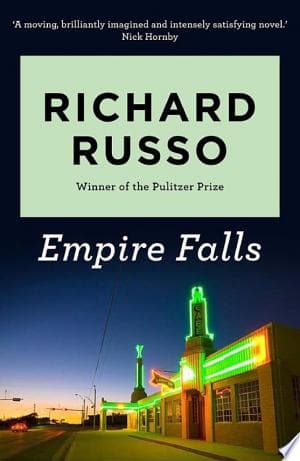
Richard Russo (2017)
Genre
Literary Fiction
Reading Time
12-15 hours
Key Themes
See below
Sign in to track this book
In the fading factory town of Empire Falls, a resigned burger-flipper navigates the comedic and heartbreaking wreckage of his past, present, and the overbearing matriarch who owns everything, including his destiny.
Miles Roby, a middle-aged manager of the Empire Grill, opens the diner for another day in the fading mill town of Empire Falls, Maine. He reflects on his long tenure, a job he inherited and feels trapped by, largely due to Francine Whiting, the town's wealthiest resident. Mrs. Whiting owns the grill and nearly every other business in town. She holds a mysterious power over Miles, hinting at a past connection involving his deceased mother, Grace Roby. Miles is also grappling with his impending divorce from Janine, who has left him for David "The Silver Fox" Rooney, the owner of a local health club. His primary focus, however, is his intelligent teenage daughter, Christina, known as Tick.
Miles's daughter, Tick, attends Empire Falls High School, where she is an outsider. Zack Minty, a jock, frequently bullies her for her intelligence and quiet demeanor, often making fun of her weight and social awkwardness. Tick finds solace in her art and her friendship with John "Sully" Sullivan, a kind but eccentric boy. Miles is concerned about Tick's well-being and her struggles to fit in, often feeling helpless in protecting her from high school and the town's stagnant environment. He frequently drives her to and from school, observing the various cliques and tensions.
Miles observes Janine's transformation as she embraces David Rooney's health-conscious lifestyle. She loses weight, exercises regularly, and seems happier, though her newfound vitality often comes with a condescending attitude towards Miles's habits and the general stagnation of Empire Falls. Miles resents David, viewing him as a superficial man who stole his wife. He often fantasizes about confronting David, though he rarely acts on these impulses. Their interactions are strained, particularly when discussing arrangements for Tick, and Miles struggles to accept Janine's new identity.
Miles frequently reflects on his deceased mother, Grace Roby, and the mysterious circumstances surrounding her life and death. He learns more about her past involvement with Mrs. Whiting, including that Grace worked for the Whiting family for many years. There are hints of a deeper, more complicated relationship between Grace and Mrs. Whiting's husband, C.B. Whiting, suggesting a possible affair or a secret that Francine has held over Miles for decades. Miles feels a growing need to understand his mother's history, believing it holds the key to Mrs. Whiting's persistent control over his life and his sense of entrapment in Empire Falls.
Miles's estranged brother, David Roby, a charming but unreliable alcoholic, returns to Empire Falls and frequently visits the Empire Grill. David often brings trouble, stirring up old memories and highlighting Miles's own frustrations. Miles's father, Max Roby, a perpetually drunk and irresponsible figure, also frequents the grill, adding to Miles's burdens. The grill is a central hub for the town's characters, witnessing numerous arguments, confessions, and moments of dark humor, further emphasizing Miles's role as an observer and reluctant participant in the town's slow decline. Miles's interactions with his family often leave him feeling more isolated and responsible.
Tick, encouraged by her English teacher, Mr. Meriweather, decides to participate in the school play, "Our Town." This decision is a significant step for her, as she is typically withdrawn and avoids the spotlight. During rehearsals, Tick struggles with stage fright but eventually finds her voice and confidence, impressing her peers and teachers with her natural talent. Miles attends the play, filled with pride and a sense of hope for his daughter. The play reflects themes of small-town life, loss, and the beauty of ordinary moments, resonating deeply with Tick's experiences.
A hunting trip involving Zack Minty and his father, Walt, ends in tragedy. Walt Minty accidentally shoots and kills Zack during a misunderstanding in the woods. This event sends shockwaves through Empire Falls, particularly at the high school, where Zack was a prominent figure. The community grapples with the sudden loss, and Tick, despite being bullied by Zack, feels a complex mix of emotions, including shock and unease. The accident highlights the underlying tensions and dangers present in the seemingly quiet town, foreshadowing further violence.
Miles finally uncovers the long-held secret: his biological father was C.B. Whiting, Mrs. Whiting's husband. This revelation explains Mrs. Whiting's peculiar hold over Miles and her insistence on keeping him in Empire Falls, managing the Empire Grill. She had promised Miles's mother, Grace, that she would look after Miles, but her actions were driven more by a desire to control and punish him, seeing him as a constant reminder of her husband's infidelity. The truth shatters Miles's understanding of his past and his family, revealing a lifetime of manipulation and hidden resentments that have shaped his existence.
In a violent climax, John Sullivan, deeply affected by the hunting accident and his own struggles, enters the Empire Grill with a gun. He is seeking revenge on Walt Minty, Zack's father, whom he blames for Zack's death and other perceived injustices. Sully shoots Walt Minty and then turns the gun on himself. Miles, witnessing the horrific events, tries to intervene, but it is too late. The scene is chaotic and devastating, leaving a permanent scar on Miles and the town. This explosion of violence shatters the illusion of Empire Falls as a quiet town, revealing the simmering resentments and despair beneath the surface.
In the aftermath of the shooting, Empire Falls is changed. Miles is traumatized but also experiences a profound shift in perspective. The violent events, coupled with the revelation of his true parentage, force him to confront his past and reassess his future. Mrs. Whiting, shaken by the tragedy, finally releases Miles from his obligation to the Empire Grill, offering him a chance to escape her control. While the pain of the recent events lingers, Miles, with Tick by his side, begins to consider leaving Empire Falls and pursuing a new life, free from the shadows of his past and the town's influence.
The Protagonist
Miles begins as a man resigned to his fate but, through tragedy and revelation, finds the strength to break free from the past and envision a new future.
The Supporting
Tick begins as a withdrawn and bullied teenager but gains confidence through her artistic expression and finds her voice, ultimately becoming a source of strength for her father.
The Antagonist
Mrs. Whiting begins as an unyielding and controlling figure but is ultimately forced to relinquish her hold over Miles after the town's tragic events.
The Supporting
Janine transforms from an unhappy, overweight woman into a confident, health-conscious individual, representing a successful, albeit painful, break from her past.
The Supporting
Sully begins as a quiet, supportive friend to Tick but is consumed by his internal struggles and the town's violence, leading to a tragic end.
The Supporting
Max remains largely unchanged, a static representation of the pervasive problems and stagnation in Empire Falls.
The Supporting
David remains a static character, serving as an antagonist and a symbol of Miles's resentment and Janine's transformation.
The Mentioned
Grace's character is revealed posthumously, her past actions and secrets driving much of the plot's mystery and resolution.
Empire Falls is a microcosm for decaying industrial towns in America, grappling with economic hardship, social stagnation, and a sense of lost glory. The closed mills, dilapidated buildings, and lack of opportunity for younger generations (like Tick) highlight this decline. Miles's own entrapment in the Empire Grill, a relic of the town's past, symbolizes this theme. The recurring motif of people leaving Empire Falls only to return shows the difficulty of truly escaping its pervasive influence, as seen in David Roby's sporadic reappearances.
““Empire Falls was the kind of town where you could still believe in the possibility of a second chance, if only because so many people were on their third or fourth.””
Miles Roby's life is defined by the legacies he inherited: the Empire Grill from his mother, the obligation to Mrs. Whiting, and the general burden of his family's past. He feels trapped by these circumstances, unable to pursue his own desires or leave Empire Falls. The revelation of his true parentage (being C.B. Whiting's son) explains the depth of Mrs. Whiting's control, revealing a generational cycle of secrets and manipulation. This theme explores how the past, particularly family history, can dictate an individual's present and future, making escape seem almost impossible until a catalyst forces change.
““He'd been given a life, and he'd accepted it, even though it wasn't the one he'd have chosen.””
The novel explores parent-child dynamics, particularly the loving and protective bond between Miles and Tick, which contrasts with Miles's own strained relationship with his irresponsible father, Max. Miles's devotion to Tick drives many of his actions and anxieties, as he tries to shield her from the town's harsh realities and ensure she has opportunities he never did. The hidden parentage of Miles himself, and the complex, manipulative 'maternal' influence of Mrs. Whiting, further complicates this theme, showing how these relationships, both biological and imposed, shape identity and destiny.
““He loved her with a ferocity that sometimes scared him, as if his love might somehow damage her, make her too fragile for the world.””
Francine Whiting embodies the theme of control and power in Empire Falls. She owns almost everything and exerts a profound influence over the town and its residents, particularly Miles. Her control is not just economic but psychological, rooted in her knowledge of past secrets and her ability to manipulate people's lives. The novel examines how power can be wielded, both overtly and subtly, to maintain a specific social order and to punish perceived transgressions, ultimately stifling individual agency. The tragic climax shows the devastating consequences when those under pressure lose all control.
““Mrs. Whiting had a way of looking at him that made him feel as if he were a part of her property, something she had bought and paid for.””
While seemingly a quiet town, Empire Falls is punctuated by acts of violence, both implied and explicit. The bullying Tick endures, the tragic hunting accident involving Zack Minty, and the climactic shooting at the Empire Grill, highlight the simmering tensions and frustrations beneath the surface of small-town life. These acts of violence are not random but often stem from long-standing resentments, despair, and a sense of powerlessness. The novel explores the lasting impact these events have on individuals and the community, forcing characters like Miles to confront harsh realities and re-evaluate their lives.
““Sometimes a town just couldn’t hold all the sadness, all the anger. Sometimes it just spilled over.””
A central setting symbolizing stagnation and Miles's entrapment.
The Empire Grill is more than just a diner; it's the symbolic heart of Empire Falls and a representation of Miles Roby's stagnant life. It's where Miles feels trapped, bound by an old promise to Mrs. Whiting. The grill serves as a gathering place for the town's eccentric characters, a stage for everyday dramas, and ultimately, the site of the novel's tragic climax. Its unchanging nature reflects the town's resistance to progress and Miles's inability to escape his past. It is both his prison and his only familiar comfort.
Hidden truths about Miles's parentage and his mother's past.
The long-held secrets surrounding Miles's mother, Grace Roby, and her relationship with the Whiting family, particularly C.B. Whiting, are a primary plot device. These secrets create suspense and drive Miles's quest for understanding. The eventual revelation that C.B. Whiting is Miles's biological father not only explains Mrs. Whiting's peculiar control over Miles but also provides a deeper context for the town's social hierarchy and the pervasive sense of obligation that defines Miles's life. This device unravels the complex web of relationships and power dynamics.
A narrative voice that provides deep insight into characters' thoughts and the town's history.
Richard Russo employs an omniscient narrator who delves deeply into the inner lives of multiple characters, particularly Miles Roby, revealing their thoughts, anxieties, and motivations. This narrative perspective allows for a comprehensive understanding of the complex relationships and the historical context of Empire Falls. The narrator often offers wry observations and philosophical insights into human nature and the struggles of small-town life, enriching the reader's experience and providing a sense of both intimacy and broader social commentary. It helps to build empathy for even the most flawed characters.
Subtle hints and recurring motifs that hint at future tragic events.
Russo skillfully uses foreshadowing throughout the novel to build tension and hint at the dark events to come. Examples include the recurring discussions about guns and hunting, the underlying violence in Zack Minty's bullying, and John Sullivan's quiet, increasingly troubled demeanor. These subtle clues create a sense of unease and inevitability, preparing the reader for the tragic hunting accident and the shocking climax at the Empire Grill. The foreshadowing ensures that while the violence is sudden, it doesn't feel entirely unearned, rooted in the characters' circumstances and suppressed emotions.
“Sometimes you just have to give up trying to make sense of it all.”
— Miles Roby reflecting on his life and the town of Empire Falls.
“It didn't matter what you did, the town always pulled you back.”
— Miles's recurring feeling about the inescapable nature of Empire Falls.
“The past, Miles had come to understand, was not a place but a state of mind.”
— Miles contemplating the enduring influence of past events and relationships.
“There was no such thing as a small lie. Every lie was a crack in the foundation.”
— Miles's internal thought about the corrosive nature of deceit.
“Maybe what people called character was just the sum of their limitations.”
— Miles's cynical observation about human nature and personal boundaries.
“Money was supposed to free you, but sometimes it just created a different kind of prison.”
— Miles reflecting on the influence of the Whiting family's wealth on the town and his own life.
“People were always trying to escape something, even if it was just themselves.”
— Miles observing the various characters in Empire Falls and their personal struggles.
“You could leave a place, but a place never really left you.”
— Miles's sentiment about the indelible mark of one's hometown.
“Life had a way of surprising you, even when you thought you'd seen it all.”
— Miles's experience with unexpected turns of events in his seemingly mundane life.
“The truth was always more complicated than anyone wanted it to be.”
— Miles grappling with the complex web of relationships and secrets in Empire Falls.
“It wasn't that he didn't try; it was just that trying didn't always seem to be enough.”
— Miles's frustration with his persistent efforts often yielding disappointing results.
“Some people were just born to be unhappy, no matter what they did.”
— Miles's bleak assessment of certain individuals' inherent disposition.
“Every family had its secrets, and Empire Falls was one big family.”
— Miles's understanding of the interconnectedness and hidden truths within the town.
“Sometimes the things you wanted most were the very things that would destroy you.”
— Miles's reflection on his desires and their potential negative consequences.
Ready to see how well you understood this book? Take our interactive quiz with 10 questions.

Richard Russo is an American novelist, short story writer, screenwriter, and teacher. In 2002, he was awarded a Pulitzer Prize in Fiction for his novel Empire Falls.







