“The wind was a constant companion, a presence that shaped the trees and the people who lived amongst them.”
— Describing the pervasive natural forces in the rural setting.

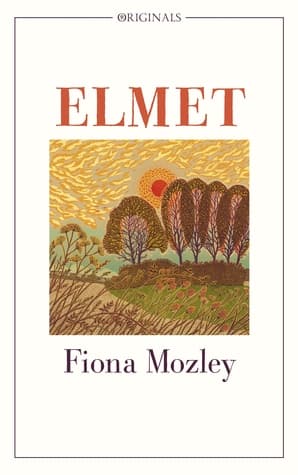
Fiona Mozley (2017)
Genre
Literary Fiction
Reading Time
240 min
Key Themes
See below
Sign in to track this book
In rural Yorkshire, a father's fierce love and his children's wild freedom clash with greedy landowners, threatening to destroy their handmade world.
Daniel remembers his childhood with his older sister Cathy and their father in a house their father built in Elmet, Yorkshire. Their life was off-grid; they hunted, foraged, and lived by their own rules, away from society. Their father, a large man who was once a bare-knuckle boxer, taught them survival skills and gave them a deep connection to the land. Despite their unusual upbringing, their small family had a strong sense of love and safety. They sometimes went to school, where their differences from other children were clear.
Their father often disappeared for days or weeks without explanation. He would return with money and either a deep calm or unsettling rage. Daniel and Cathy learned to understand their father's moods, knowing his anger was powerful, though rarely aimed at them. These absences and returns made the family more insular, as they relied only on each other for support, strengthening their bond and their separation from the outside world.
When Daniel and Cathy briefly attended school, they were immediately seen as outsiders. Cathy, especially, showed strong independence and a quick temper, often fighting with other children. During this time, they learned about the local gentry, the Tyke family, who owned most of the land and controlled the village. The Tykes' children attended the same school, and the social hierarchy was obvious. These brief interactions hinted at the class tensions and power imbalances that would later threaten their family's way of life.
As Daniel and Cathy grew older, their family's isolation was increasingly threatened. The Tykes, especially Mr. Tyke and his sons, began to assert ownership over the woodland their father believed was theirs. This led to early, hidden confrontations where the Tykes made their intentions clear, demanding the family leave. Their father, usually a man of few words but great physical presence, responded with quiet defiance, refusing to be intimidated. These encounters were unsettling, bringing a sense of dread and hinting at the growing conflict over their home and way of life.
Cathy's personality grew tougher as outside pressures increased. She became fiercely protective of Daniel and their father, showing a quick temper and a willingness to use violence when provoked. This mirrored her father's own suppressed aggression, suggesting a shared trait. She was not afraid to confront those who threatened them, whether local bullies or the encroaching Tykes. Her actions, born of loyalty and love, also hinted at a dangerous potential, making her a formidable, yet unpredictable, force in the family's struggle for survival.
The Tykes' provocations became more open and aggressive. They trespassed on the family's land, damaged their property, and openly threatened them, trying to force them out. These acts were meant to break the family's resistance and show the Tykes' power. Their father, despite his great strength, tried to calm things down, seeking a peaceful solution, but his patience wore thin. The family's once peaceful life was shattered by constant watchfulness and fear of the Tykes, pushing them to their limit.
Through fragmented memories and quiet talks, Daniel and Cathy learned more about their father's past. They discovered he was a famous bare-knuckle boxer, known for his strength and ferocity. This violent past explained his physical power and his deep wish for a peaceful, secluded life, away from conflict. His reclusiveness was a deliberate choice, an attempt to escape a life of violence and protect his children from it. This revelation added depth to his character, explaining both his immense strength and his hesitation to use it.
The Tykes' harassment reached a critical point, making their father abandon his peaceful approach. A final, brutal fight occurred between him and the Tyke men. The fight was savage, showing their father's raw strength and years of suppressed violence. He defended his family and home with primal ferocity, severely injuring his opponents. This climactic battle was a desperate act of self-preservation, but it also had severe consequences, ending any hope of a peaceful resolution or continued isolation.
After the violent confrontation, their father disappeared. Daniel and Cathy were left to deal with the immediate aftermath, including the injured Tykes and the now undeniable intrusion of the outside world. His disappearance was a profound blow, leaving them feeling abandoned and vulnerable. They had to face the harsh realities of their situation without his protection, dealing with the legal and social fallout of the fight and the sudden void left by his absence.
Cathy, driven by strong loyalty to her father and belief in their right to the land, refused to accept defeat. Filled with anger and a desire for justice, she took decisive, violent action against the Tykes. Her actions were extreme, reflecting her deep love for her family and her ingrained capacity for revenge. This act of revenge was a tragic end to the family's struggle, ensuring the conflict left a lasting mark on everyone involved and solidifying Cathy's transformation into a formidable figure.
Years later, Daniel, now an adult, is still haunted by his childhood events. He sets out on a journey, driven by a deep need to find Cathy and understand the full truth of what happened. His quest is not just a physical search but also an emotional and psychological one. He revisits memories and tries to reconcile the idyllic past with the violent present. He seeks closure and a connection to his lost family, hoping to find his sister and, in doing so, find peace for himself.
The Protagonist
From a sheltered, innocent child, Daniel matures into a reflective adult seeking to understand and reconcile his past, grappling with the legacy of violence and loss.
The Supporting/Co-protagonist
Cathy transforms from a spirited, protective sister into a vengeful force, driven by love and loss, ultimately becoming a tragic figure of defiance.
The Supporting/Pivotal
Daddy tries to maintain a peaceful, isolated life but is ultimately forced to confront his violent past to defend his family, leading to his disappearance.
The Antagonist
Remains a static antagonist, consistently driven by greed and a sense of entitlement, ultimately facing the violent consequences of his actions.
The Supporting Antagonists
Remain consistent in their role as enforcers of their father's will, facing the repercussions of their aggressive actions.
The Setting/Character
The land remains a constant, enduring backdrop, witnessing both the family's idyllic existence and their tragic downfall, symbolizing enduring nature versus human conflict.
The novel explores the tension between a life in harmony with nature and the demands of modern society, shown by the Tyke family. Daniel's family thrives in their wild, self-sufficient life, but this independence is threatened by the legal, property-driven world outside. The ancient woods of Elmet contrast sharply with the cultivated fields and the Tykes' 'ownership' of the land. This highlights the clash between primal freedom and societal control. This is clear in the family's foraging life versus the Tykes' desire for profit from the land.
“''We lived apart, in the house that Daddy built for us with his bare hands. We foraged and hunted. When we were younger, Daniel and Cathy had gone to school. But we were not like the other children then, and we were even less like them now.''”
At its heart, 'Elmet' is a powerful look at fierce, unconditional love and loyalty within a family, especially between father and children, and siblings. Despite their isolation and unusual lives, Daniel, Cathy, and Daddy share an unbreakable bond, protecting each other fiercely. Cathy's extreme actions are driven by overwhelming love for her father and brother. This theme explores the sacrifices people make to defend their family, even when it leads to tragic outcomes, as seen in Cathy's vengeful acts after her father's disappearance.
“''Daddy always said that the little copse in Elmet was ours alone. Not in the way that the Tykes owned their land, with paper and deeds, but in the way that it belonged to us because we lived in it, and breathed it, and knew every tree and stream.''”
The novel examines the pervasive nature of violence, both inherited and provoked. Daddy's past as a bare-knuckle boxer suggests a tendency for aggression that he tries to suppress but cannot escape. This capacity for violence is mirrored in Cathy, who becomes increasingly fierce and vengeful. The story suggests that violence, once started, creates a cycle, leading to more retribution and destruction, even when justified by self-defense or loyalty. The confrontations with the Tykes show how outside aggression can ignite hidden violence, continuing a tragic chain of events.
“''The terrible violence in Daddy grew. Not a violence that he used on us, but one that was always there, simmering, waiting for a reason to break out.''”
The contrast between the Tyke family and Daniel's family highlights themes of social class, power dynamics, and injustice. The Tykes, representing the wealthy gentry, feel entitled to control the land and the lives of those beneath them. Their actions are driven by a sense of ownership and a desire to maintain social dominance, ignoring the family's deep connection to the land. This conflict exposes the unfairness of a system where legal ownership often outweighs moral right and where the powerful can exploit the vulnerable, creating a deep sense of injustice for the family.
“''They circled like vultures. Local men, greedy and watchful. They wanted our land. They always had.''”
The story is told through Daniel's fragmented memories, shifting between past and present.
The narrative structure of 'Elmet' is non-linear, with Daniel recounting his childhood memories while simultaneously describing his present-day search for Cathy. This device creates a sense of mystery and suspense, as the reader gradually pieces together the events that led to the family's downfall. It also allows for a deeper exploration of themes like memory, trauma, and the enduring impact of the past on the present, highlighting how Daniel continually grapples with his experiences.
Subtle hints and ominous descriptions throughout the early chapters hint at the impending violence and tragedy.
Foreshadowing is skillfully used to build tension and a sense of impending doom. Descriptions of Daddy's 'terrible violence' simmering beneath the surface, Cathy's growing fierceness, and the early, unsettling encounters with the Tykes all hint at the violent climax that will eventually unfold. This technique creates a pervasive atmosphere of dread, making the reader aware that the family's idyllic but precarious existence cannot last, heightening the emotional impact of the eventual tragedy.
The natural landscape symbolizes freedom, refuge, and the wild, untamed spirit of the family.
The woods of Elmet are a powerful symbol throughout the novel. Initially, they represent freedom, self-sufficiency, and a sanctuary from the outside world for Daniel's family. As the conflict escalates, the woods also symbolize the untamed, primal nature of the family's spirit and their resistance to domestication. The encroaching 'civilization' attempting to claim the woods represents the loss of this freedom and the destruction of their unique way of life, making the landscape integral to the family's identity and struggle.
The complete absence of a mother figure emphasizes the unique and intense father-children bond.
The complete absence of a mother figure in Daniel's family is a significant plot device. It accentuates the intense, almost insular bond between Daddy, Cathy, and Daniel, making their family unit feel even more unique and isolated. This absence strengthens the thematic focus on paternal love and sibling loyalty, as well as highlighting the children's reliance solely on their father for guidance and protection, amplifying the impact of his eventual disappearance.
“The wind was a constant companion, a presence that shaped the trees and the people who lived amongst them.”
— Describing the pervasive natural forces in the rural setting.
“We lived by different rules, rules written in the earth and the sky, not in any book.”
— Reflecting on the family's isolated, self-sufficient lifestyle.
“A man's worth isn't measured by what he owns, but by what he can do with his hands.”
— Father's philosophy on value and labor.
“The woods kept our secrets, swallowed them whole, and gave nothing back.”
— Highlighting the protective and isolating nature of the forest.
“Violence was a language he understood, a language he spoke with his whole body.”
— Referring to John, the father's, capacity for physical conflict.
“There was a wildness in us, a refusal to be tamed, that ran deeper than blood.”
— Reflecting on the inherent untamed spirit of the family.
“The world outside our clearing was a place of noise and rules, a place we didn't belong.”
— Contrasting their secluded life with mainstream society.
“Justice, when it came, was often a rough and ready thing, shaped by the land itself.”
— Discussing the informal and often violent form of justice in their world.
“We learned to read the land, to understand its moods, its promises, and its threats.”
— Describing the children's education in nature.
“The past was a weight, a heavy coat we couldn't shed, no matter how far we ran.”
— Reflecting on the inescapable impact of their history.
“Sometimes the quiet was so deep it felt like a sound in itself.”
— Describing the profound silence of their natural surroundings.
“Love was a complicated thing, tangled with loyalty and fear, and a fierce, protective instinct.”
— Exploring the complex emotions within the family.
“Every tree had a story, every stone a memory, if you only knew how to listen.”
— Emphasizing the deep connection to the natural world and its history.
“We were ghosts in the making, fading slowly into the landscape.”
— A poignant reflection on their eventual disappearance or assimilation.
Ready to see how well you understood this book? Take our interactive quiz with 10 questions.







