“I am looking for Elizabeth. Have you seen her?”
— Maud's recurring question to almost everyone she encounters as she struggles with her memory.

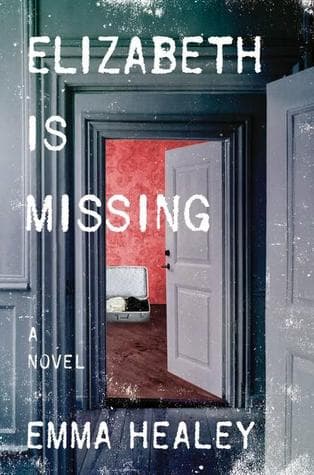
Emma Healey (2014)
Genre
Thriller / Historical Fiction / Mystery
Reading Time
320 min
Key Themes
See below
Sign in to track this book
An elderly woman with dementia, haunted by her best friend's disappearance and her sister's vanishing decades ago, uncovers a shattering truth hidden in her fragmented memories.
Maud, an elderly woman with progressive dementia, lives a life made fragmented by memory loss. Despite the challenges, she is sure her best friend, Elizabeth, has disappeared. She constantly writes notes to herself, like 'Elizabeth is missing' and 'Look for Elizabeth,' to remind her of her urgent search. Maud often calls the police, her daughter Helen, and Elizabeth's son Peter, but her worries are dismissed as symptoms of her deteriorating mind. She finds a crumpled note from Elizabeth, which increases her anxiety, and she tries to recall her last interactions with Elizabeth, which are becoming harder to remember accurately.
As Maud tries to put together clues about Elizabeth, her mind often goes back to her youth, specifically to the time after World War II. These memories are often clearer than her present experiences. She remembers her beautiful, lively older sister, Sukey, who vanished when Maud was a teenager. Sukey's disappearance has been an unresolved trauma in Maud's life, and now, the worry over Elizabeth seems to bring up these suppressed memories, creating a confusing overlap between the two mysteries. She remembers details about Sukey's boyfriend, Frank, and local men, including Douglas.
Maud repeatedly visits Elizabeth's house, often letting herself in with a key she believes Elizabeth gave her. She notices a broken glass on the floor, which she carefully sweeps up, and an untidy garden; she sees both as signs of something wrong. These small details become obsessions, concrete anchors in her otherwise fluid reality. She tries to explain their meaning to Helen and the police, but her explanations are disjointed and often contradictory because of her dementia. The broken glass, in particular, becomes a recurring image, linking to a past memory of a shattered object during a confrontation.
Helen, Maud's daughter, deals with the most difficult parts of her mother's condition. She is constantly called on to manage Maud's erratic behavior, her repeated calls to the police, and her insistence that Elizabeth is missing. Helen tries to provide the best care, arranging for caregivers and making sure Maud is safe, but she is clearly tired and frustrated. She believes Elizabeth is simply in a care home or has moved away, unable to accept her mother's more dramatic theories. Helen's patience is tested daily, but beneath her frustration is a deep love and concern for her mother.
Maud often contacts Peter, Elizabeth's son, hoping he will explain his mother's disappearance. However, Peter is consistently evasive and dismissive of Maud's concerns. He suggests Elizabeth is fine, perhaps just away, and shows little interest in Maud's theories. His attitude only strengthens Maud's suspicion that something is wrong and that Peter is hiding something. Maud recalls past interactions with Peter, noting his often unpleasant manner, which adds to her distrust. She believes he is deliberately obstructing her search, reinforcing her belief that Elizabeth is in danger.
As Maud remembers more about Sukey, Frank, Sukey's possessive and often violent boyfriend, becomes central. Maud remembers their difficult relationship, their arguments, and Frank's controlling nature. She recalls a specific incident where Frank hit Sukey, leaving a lasting impression on young Maud. These memories are unsettling and suggest a dark side to Sukey's life before she vanished. Maud starts to associate Frank with danger and believes he played a significant role in Sukey's fate, a connection that will later become important in understanding both mysteries.
Initially, the police treat Maud's calls as the ramblings of an elderly woman with dementia. However, as Maud continues, and perhaps because of Helen's more coherent reports, they begin to look more closely at Elizabeth's disappearance. This renewed attention from the authorities, though slow, gives Maud a glimmer of hope. The police's investigation into Elizabeth's case unintentionally opens a cold case file on Sukey's disappearance, linking the two mysteries officially for the first time. The present investigation into Elizabeth's absence starts to uncover long-buried truths about Sukey's past.
Maud revisits her childhood home, now dilapidated, where she and Sukey grew up. The house itself triggers many memories. She remembers a specific place in the garden, a shed, and a feeling of dread associated with it. A vivid, almost hallucinatory memory surfaces: a confrontation between Sukey and Frank, a struggle, and a terrifying discovery. These fragmented images are deeply disturbing and suggest a violent end for Sukey. The house and its garden become a crucial site for unlocking the ultimate truth, connecting Maud's fragmented memories and the reality of Sukey's fate.
Through a powerful breakthrough in her memory, triggered by her relentless searching and the specific details she's been focusing on, Maud finally recalls the full, horrifying truth of what happened to Sukey. She remembers witnessing Frank's rage and violence, his attack on Sukey, and the subsequent cover-up. The broken glass, the untidy garden, and the shed all come together into a clear, devastating story. Maud remembers seeing Frank bury Sukey's body in the garden of their childhood home. This memory is clear, complete, and utterly shattering, revealing the decades-long secret she had suppressed.
With the truth about Sukey's murder now clear, Maud understands Elizabeth's connection to the past. Elizabeth had known about Sukey's death and Frank's involvement, having been a witness or having discovered the truth. She had kept the secret for decades, likely out of fear or loyalty to Frank, who was her father. Elizabeth's recent 'disappearance' is not a kidnapping or a tragedy, but a voluntary retreat. Overwhelmed by the resurfacing memories and the guilt of her long-held secret, Elizabeth has checked herself into a care facility, unable to face the truth being uncovered, or perhaps to protect herself from the implications.
With Maud's now-clear, though still fragmented to others, memories and the police investigation, authorities revisit the old house. Forensic examination of the garden confirms Maud's memory: Sukey's remains are discovered, finally bringing closure to her disappearance after decades. At the same time, Elizabeth's whereabouts are confirmed; she is indeed in a care home, having sought refuge from the re-emerging past. The two mysteries, linked by a shared secret and a brutal act, are finally resolved, though the emotional toll on Maud and Helen is immense. The truth, however painful, brings a form of peace.
Even with the truth revealed, Maud's dementia continues to worsen. She may not always remember the full details of Sukey's discovery or Elizabeth's situation, but a sense of justice and resolution subtly affects her fragmented world. Helen, while still burdened by her mother's condition, understands the deep impact of the past on Maud. The story ends with Maud still dealing with her memory, but the central worries that drove her — the missing Elizabeth and the lost Sukey — have been addressed. The weight of the unresolved past has been lifted, even if the present remains challenging.
The Protagonist
Maud's arc isn't one of traditional character development, but rather a journey of fragmented remembrance that ultimately leads to the resolution of a decades-old mystery, bringing a form of peace despite her ongoing cognitive decline.
The Supporting/Catalyst
Elizabeth's arc is revealed through Maud's memories and the plot's unfolding, showing her transformation from a complicit secret-keeper to someone overwhelmed by guilt, seeking escape.
The Supporting
Helen's arc involves moving from exasperated dismissal of her mother's 'delusions' to a profound understanding and acceptance of the deep-seated trauma that fueled Maud's quest.
The Supporting/Catalyst
Sukey's 'arc' is revealed retrospectively, moving from a vibrant, independent young woman to a tragic victim whose truth is finally uncovered after decades.
The Antagonist
Frank's 'arc' is revealed through Maud's recovered memories, transforming from a suspect to the confirmed perpetrator of a heinous crime.
The Supporting
Peter's arc remains largely unchanged; he serves as an obstacle and a representation of the challenge Maud faces in being taken seriously.
The Supporting
The carers' arcs are static; they serve as a consistent, if sometimes bewildered, presence in Maud's daily life.
The novel explores the link between memory and identity, especially through Maud's experience with dementia. As her short-term memory fades, her sense of self becomes fragmented. Yet, old traumatic memories from her youth surface with surprising clarity. This suggests that identity is not just about present recall but also about the lasting impact of past events. Maud's search for Elizabeth, driven by a note she wrote, shows how memory is essential to her understanding of relationships and her place in the world. Her unreliable memory makes her quest both frustrating and brave, as she must piece together her past to understand her present, proving that even with dementia, her core self — a seeker of truth and justice — remains.
““I am trying to remember. I am trying to remember what Elizabeth said. I am trying to remember what I am looking for.””
The story shows the destructive and lasting impact of secrets, both on individuals and on relationships. The main secret — Sukey's murder and its cover-up — has festered for decades, affecting Maud, Elizabeth, and their families. Elizabeth's involvement in keeping Frank's crime hidden leads to her own eventual breakdown and retreat, showing how carrying such a burden can destroy one's peace of mind. Maud's dementia, while obscuring the secret, also allows it to surface. The novel suggests that secrets, no matter how deeply buried, eventually need to be uncovered, and their revelation, though painful, is often necessary for healing and justice. The silence around Sukey's fate created an emptiness that only truth could fill.
““It's not just that I can't remember, it's that I can't forget. The things I want to remember are gone, but the things I want to forget are stuck fast.””
The novel offers a look at the challenges of aging, particularly the experience of dementia, and how society often dismisses the elderly. Maud's worries about Elizabeth are repeatedly ignored by her daughter, the police, and Peter, simply because her memory is failing. This shows how older people, especially those with cognitive impairments, can be marginalized and disbelieved, their voices unheard. The physical and emotional strain on caregivers like Helen is also shown, highlighting the immense difficulty of providing care. Through Maud's struggle to be taken seriously, the novel criticizes a society that often overlooks the wisdom and validity of the elderly, even when their fragmented insights hold important truths.
““They think I'm mad. They think I'm making it up. But Elizabeth is missing.””
Emma Healey explores the elusive nature of truth and the long, winding path to justice. For decades, Sukey's disappearance remained an unsolved mystery, a truth buried and forgotten. Maud's dementia, while hindering her in the present, becomes the way to uncover this past truth. Her fragmented memories, first dismissed as delusions, eventually come together into a clear picture of what happened. Justice for Sukey is delayed by over fifty years, showing that truth can last and eventually surface, even through the most unlikely means. The novel suggests that true justice is not always swift or simple, but its eventual arrival can bring a deep sense of resolution, even to those whose memories are fading.
““You can't bury the past forever. It always comes back, one way or another.””
Maud's dementia makes her an unreliable, yet ultimately truthful, narrator.
Maud's dementia causes her to constantly confuse past and present, forget recent events, and misinterpret situations. This makes her an unreliable narrator, as the reader must piece together the 'truth' from her fragmented and often contradictory accounts. However, this unreliability is also her strength; the very nature of her illness allows long-suppressed memories of Sukey's disappearance to surface with vivid clarity, making her an accidental, yet ultimately truthful, witness to a decades-old crime. Her notes, though often jumbled, are her attempts to anchor reality, serving as a meta-commentary on her own narrative struggle.
Two intertwined mysteries—Elizabeth's disappearance and Sukey's past vanishing—drive the plot.
The novel employs a dual narrative structure, alternating between Maud's present-day search for Elizabeth and her vivid, intrusive memories of her sister Sukey's disappearance shortly after WWII. These two mysteries are presented in parallel, initially seeming separate but gradually revealing their deep interconnectedness. The present-day search for Elizabeth acts as a catalyst, unlocking Maud's suppressed memories of Sukey, and the resolution of the past mystery ultimately provides the key to understanding Elizabeth's situation. This structure heightens suspense and demonstrates how unresolved trauma from the past can profoundly impact the present.
Objects, places, and sensations trigger Maud's crucial, often traumatic, memories.
Maud's fragmented memories are frequently triggered by specific objects (like the broken glass), places (Elizabeth's unkempt garden, her childhood home), or sensations. These triggers act as catalysts, unlocking crucial pieces of information from her past, leading to moments of anagnorisis (recognition or discovery). For example, the broken glass and the overgrown garden at Elizabeth's house are not just random details; they resonate with a similar scene from her past involving Sukey and Frank. These triggers allow the narrative to slowly assemble the truth, even as Maud struggles to articulate it coherently.
Maud's handwritten notes serve as her attempt to anchor herself to reality and drive the plot.
Maud's constant practice of writing notes to herself—'Elizabeth is missing,' 'Look for Elizabeth,' 'Don't forget the glass'—serves as a crucial epistolary element. These notes are both a coping mechanism for her dementia and a structural device for the reader. They highlight her internal struggle with memory loss, her fierce determination, and the specific clues she is trying to track. The notes often appear at the beginning of chapters, guiding the reader through Maud's thought process and underscoring the urgency and confusion of her quest, even when the details surrounding them are forgotten.
“I am looking for Elizabeth. Have you seen her?”
— Maud's recurring question to almost everyone she encounters as she struggles with her memory.
“I write notes to myself, but then I don't remember writing them.”
— Maud reflecting on her attempts to cope with her deteriorating memory.
“The past is a foreign country; they do things differently there.”
— A general reflection on the nature of memory and how past events feel distant and altered.
“It’s like looking through a window that keeps getting dirtier.”
— Maud describing her struggle to remember things clearly.
“You can't lose something if you don't know you had it in the first place.”
— Maud pondering the nature of loss when memory is unreliable.
“I’m not mad. I’m just trying to remember.”
— Maud asserting her state of mind amidst the confusion caused by her dementia.
“Sometimes I think the past is clearer than the present.”
— Maud observing how her long-term memories are often more vivid than recent events.
“If I write it down, it's true. If I don't, it might never have happened.”
— Maud's reliance on notes to anchor her reality.
“The feeling of knowing, but not knowing what you know.”
— Maud articulating the frustrating experience of having a memory on the tip of her tongue.
“It’s not just Elizabeth I’m looking for. It’s what happened.”
— Maud realizing the deeper purpose behind her search for Elizabeth.
“Some things, once broken, can never be mended.”
— A somber reflection on irreparable loss and damage, both physical and emotional.
“The more I forget, the more I remember.”
— A paradox Maud experiences, where the loss of short-term memory allows older, more significant memories to surface.
“I think I’m losing her again, just as I’m finding her.”
— Maud's emotional struggle as she pieces together the past, knowing the present is still fading.
“The truth is always there, even if you can't see it.”
— A hopeful sentiment about the enduring nature of truth, despite memory's failings.
Ready to see how well you understood this book? Take our interactive quiz with 10 questions.

Biography coming soon.







