“The past is a stubborn thing. It clings to you, no matter how hard you try to shake it off.”
— A reflection on the inescapable nature of one's history and its impact on the present.

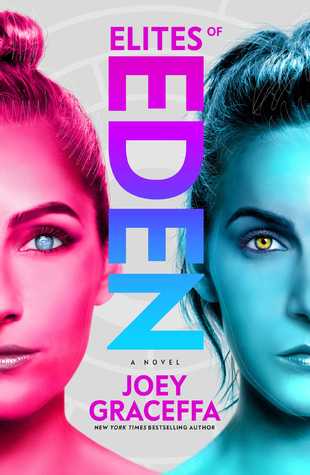
Joey Graceffa (2017)
Genre
Fantasy / Science Fiction / Young Adult
Reading Time
279 min
Key Themes
See below
Sign in to track this book
In a dystopian Eden, a privileged socialite and a hunted illegal second child discover their shared past and a destiny that could either unite or shatter their strictly regulated world.
Yarrow is a prominent student at The Oaks, an exclusive boarding school for the children of Eden's most powerful families. She embodies the ruthlessness and entitlement of the elite, frequently tormenting those she deems inferior, such as an unnamed girl she pushes into a pool. Her life is a blur of lavish parties, designer clothes, and casual cruelty, all under the watchful, yet seemingly indifferent, eye of her mother, a high-ranking member of the Council. Yarrow's existence is one of extreme comfort and unquestioned authority, completely insulated from the harsh realities faced by the majority of Eden's population, particularly the severe population control measures.
Rowan's story begins in stark contrast to Yarrow's. She is an illegal second child, her existence a crime in Eden's population-controlled society. After her father betrayed his family and her mother was killed by the government, Rowan found refuge in a secret underground sanctuary. This sanctuary is home to other illegal children and protects the last living tree on Earth, a symbol of hope and a vital resource. Here, Rowan lives with her adoptive family, including the fearless Lachlan, with whom she shares a deep bond and a budding romance. Their daily lives are defined by secrecy, survival, and the constant threat of discovery by the government.
Rowan's peaceful existence in the sanctuary is shattered when she is captured by the government's enforcers. She is taken to a sterile, intimidating facility where she undergoes brutal interrogations. The authorities attempt to extract information about the sanctuary and its inhabitants, particularly the location of the tree. Rowan resists fiercely, but she is subjected to advanced memory manipulation and psychological torture. Her captors, led by a cold and calculating figure, aim not just to break her will but to rewrite her past and reshape her identity. This process begins to blur her sense of self and reality.
Back at The Oaks, Yarrow's carefully constructed world begins to fray when she encounters Lark, a new student with striking lilac hair and an enigmatic aura. Lark challenges Yarrow's worldview and, unlike others, is unafraid of her. Their interactions, though initially contentious, spark an undeniable attraction in Yarrow. More significantly, Lark's presence and certain conversations trigger fragmented, unsettling memories in Yarrow — flashes of a different life, a different family, and a sense of unease that her privileged existence might be a carefully constructed lie. These nascent doubts begin to chip away at her former certainty.
Through sheer determination and the unexpected intervention of an ally, Rowan manages to escape her government captors. However, the ordeal has left her deeply scarred. The memory manipulation has taken a significant toll, leaving her with fractured recollections and a profound sense of disorientation. She struggles to distinguish between what is real and what has been implanted. The faces of Lachlan and her adoptive family are hazy, and the sanctuary's location is elusive. She is on the run, hunted, and desperately trying to piece together her identity while navigating a world that feels both familiar and alien.
Yarrow and Lark's relationship at The Oaks intensifies. Lark's unconventional wisdom and genuine kindness stand in stark contrast to Yarrow's usual companions. As Yarrow spends more time with Lark, her fragmented memories become more frequent and coherent. She starts to recall images of a loving mother, a hidden tree, and a life far removed from the sterile luxury of Eden's elite. These memories are often accompanied by strong emotions — a sense of loss, longing, and a growing conviction that her current life is not her true one. Lark seems to understand Yarrow's internal struggle, offering cryptic guidance.
The narrative reaches a key moment when Yarrow and Rowan's paths finally converge, either through a direct encounter orchestrated by Lark or through a shared, powerful memory surge. They realize the shocking truth: they are twin sisters, separated at birth. Yarrow was raised as an elite, her memories of her true family erased and replaced. Rowan, as the illegal second child, was hidden and later targeted for her knowledge of the sanctuary. The government, particularly Yarrow's 'mother,' orchestrated this elaborate deception to maintain control and exploit their unique connection to the last tree.
Armed with their reunited memories, Yarrow and Rowan confront the authorities, particularly Yarrow's 'mother,' a key figure in the Council and the mastermind behind their separation. They expose the government's practices: the culling of illegal children, the manipulation of the elite, and the systematic destruction of the natural world, leaving only the last tree as a source of life and power for the ruling class. The confrontation reveals the full extent of Eden's dystopian reality, where the privileged few thrive at the expense of everyone and everything else, built on a foundation of lies and control.
The revelation ignites a rebellion. Yarrow and Rowan, now fully aware of their shared past and destiny, join forces with Lachlan and the other members of the underground sanctuary. Their immediate goal is to protect the last living tree, which the Council intends to fully exploit or destroy to maintain its power. A climactic battle ensues between the rebels and the government's forces. The sisters, utilizing their unique connection and combined knowledge, lead the charge, fighting not just for their freedom but for the future of Eden and the restoration of its natural balance.
The combined efforts of Yarrow, Rowan, Lachlan, and the rebels lead to the downfall of the corrupt Council. The truth about Eden's desolate state and the government's atrocities is exposed to the populace, shattering their illusions. While the immediate victory is celebrated, the path forward is daunting. Eden is a broken world, environmentally devastated and socially fractured. The sisters, with their unique perspectives — one from the elite, one from the oppressed — commit to working together to rebuild society, restore the environment, and establish a more equitable and sustainable future, offering a glimmer of hope for a true new Eden.
The Protagonist
Yarrow transforms from a spoiled antagonist into a compassionate leader, embracing her true identity and fighting for justice.
The Protagonist
Rowan overcomes extreme trauma and memory loss to reclaim her identity and lead the fight for a better world.
The Supporting
Lark helps Yarrow uncover her past and embrace her destiny, revealing her role as a crucial guide.
The Supporting
Lachlan continues to be a steadfast protector and leader, supporting Rowan and the rebellion.
The Antagonist
Her reign of power and deception is ultimately exposed and overthrown by the protagonists.
The Mentioned
Her legacy inspires her daughters to fight for a better world.
The central theme involves the protagonists' journey to uncover their true identities. Yarrow's pampered existence is a carefully constructed lie, and her interactions with Lark gradually peel back the layers of her false self, revealing a past she never knew. Rowan, traumatized by memory manipulation, struggles to piece together her fragmented self. Their eventual discovery of their twinship and shared history forces them to confront who they truly are, not just as individuals but as connected beings with a shared destiny. This theme is evident in Yarrow's unsettling flashes of memory and Rowan's desperate attempts to remember Lachlan and the sanctuary.
““The truth isn’t always what you want it to be. Sometimes, it’s what you need it to be.””
The novel starkly portrays the extreme social stratification of Eden. The Elites live in opulence, oblivious or indifferent to the suffering of the majority, particularly the 'illegal' second children. This theme is embodied by the contrast between Yarrow's lavish life at The Oaks and Rowan's precarious existence in the underground sanctuary. The government's draconian population control and environmental exploitation maintain the Elites' power and comfort at the expense of everyone else. The rebellion is a direct response to these deep-seated injustices, highlighting the inherent corruption in a system built on inequality.
““They built their paradise on our graves.””
Eden's desolate landscape, with the last living tree protected as a sacred relic, shows the devastating consequences of humanity's past actions. The government's control over the tree symbolizes their continued exploitation of natural resources for their own benefit, rather than for the good of all. The sanctuary's mission to protect the tree is a powerful metaphor for preserving what little remains of the natural world and advocating for a more sustainable future. This theme is important as it provides a tangible goal for the protagonists beyond personal freedom — the restoration of the planet.
““The tree is our past, our present, and our only hope for a future.””
Memory is a powerful and often unreliable force in the narrative. The government's use of advanced technology to erase and implant memories is a key plot device, directly impacting both Yarrow and Rowan. Yarrow's journey is one of recalling repressed truths, while Rowan's struggle involves distinguishing authentic memories from fabricated ones. This theme explores how identity can be shaped and distorted by external forces and the psychological impact of having one's past stolen or rewritten. The recovery of true memories is essential for the protagonists to reclaim their agency and expose the government's lies.
““They can steal your past, but they can’t steal who you truly are.””
A futuristic technology used by the government to control and alter individuals' memories.
This device is central to the plot, allowing the government to erase Yarrow's true past and implant a false one, raising her as an elite. It's also used to torture and disorient Rowan, attempting to extract information and break her will. The technology serves as a powerful symbol of the government's total control over information and individual identity, making the protagonists' struggle to reclaim their memories a fight for their very selves and the truth of Eden's history.
A sacred and vital natural resource, the last remnant of Eden's natural world.
The tree is both a literal and symbolic plot device. Literally, it's the last source of natural life and potentially a power source the government exploits. Symbolically, it represents hope, the lost natural world, and the fight for environmental preservation. Its protection is the primary goal of the underground sanctuary and becomes a rallying point for the rebellion, tying the personal stories of the protagonists to a larger, existential crisis for Eden.
The innate, almost telepathic bond between Yarrow and Rowan, intensified by their shared past.
This inherent connection between Yarrow and Rowan is a crucial plot device that facilitates their eventual reunion and understanding. It manifests as shared flashes of memory, emotional resonance, and an inexplicable pull towards each other, even when they are unaware of their relationship. This bond allows them to overcome the government's manipulation, piece together the truth, and ultimately combine their unique perspectives and strengths to lead the rebellion. It signifies that some bonds cannot be broken by external forces.
An exclusive institution for Eden's elite, serving as a microcosm of its oppressive society.
The Oaks functions as a setting that highlights the stark class divide and the indoctrination of the elite. It's where Yarrow's privileged, cruel nature is cultivated, but also where the seeds of her awakening are sown through her encounters with Lark. The school serves as a controlled environment where the government's ideology is reinforced, making Yarrow's eventual rebellion against it even more impactful as she breaks free from the very system that raised her.
“The past is a stubborn thing. It clings to you, no matter how hard you try to shake it off.”
— A reflection on the inescapable nature of one's history and its impact on the present.
“Sometimes the greatest prisons are the ones we build for ourselves inside our own minds.”
— A character contemplating self-imposed limitations and psychological barriers.
“Hope is a dangerous thing, but a world without it is far more terrifying.”
— Discussing the double-edged sword of hope in a bleak situation.
“We are all just pieces in a game we don't fully understand, played by forces beyond our control.”
— A character's cynical view on the larger machinations at play in their world.
“True strength isn't about how many battles you win, but how many times you get back up after you fall.”
— An encouraging statement about resilience and perseverance.
“The truth is rarely simple, and often, it's the most uncomfortable thing of all.”
— Reflecting on the complexity and difficulty of confronting reality.
“Fear can make monsters out of shadows, but courage can turn those shadows into allies.”
— A character's internal struggle with fear and finding bravery.
“To truly change the world, you first have to be willing to break it.”
— A radical idea about the necessity of disruption for progress.
“Every choice we make, no matter how small, ripples through the fabric of existence.”
— Contemplating the far-reaching consequences of individual decisions.
“Sometimes the greatest enemy isn't an external force, but the doubt that festers within.”
— A character struggling with self-doubt and internal conflict.
“Silence can be a weapon, a shield, or the loudest scream of all.”
— Exploring the multifaceted nature and power of silence.
“We are all searching for a place to belong, even if we don't always realize it.”
— A universal theme about the human need for connection and acceptance.
“The most beautiful lies are often the ones we tell ourselves.”
— A commentary on self-deception and comforting illusions.
“Even in the darkest corners, a flicker of light can ignite a revolution.”
— An optimistic outlook on finding hope and initiating change in dire circumstances.
Ready to see how well you understood this book? Take our interactive quiz with 10 questions.

Biography coming soon.







