“The first thing you gotta learn is that everybody in Buxton is free. And the second thing is that everybody in Buxton is free.”
— Elijah's mother emphasizes the foundational principle of the Buxton settlement.

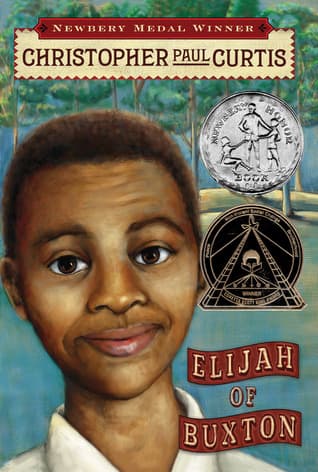
Christopher Paul Curtis (2007)
Genre
Children's / Historical Fiction / Young Adult
Reading Time
360 min
Key Themes
See below
Sign in to track this book
The first child born free in a Canadian settlement of former slaves travels to the dangerous American South to get back stolen money, confronting the realities his family escaped and finding his own path to freedom.
Elijah Freeman, an eleven-year-old, lives in Buxton, Canada, a settlement for former slaves who escaped through the Underground Railroad. He is the first child born free in the community and is known for an embarrassing incident with Frederick Douglass, where he vomited on the orator. Elijah spends his days with his best friend, Cooter, doing chores and getting into mischief, like trying to catch a fish for his mother. Adults tell him stories of hardship and bravery from their experiences with slavery and their journey to freedom. His parents, especially his Ma, teach him the importance of education and kindness, even though Elijah is often scared.
A new character, a preacher, arrives in Buxton. He is charismatic and well-dressed. He quickly makes friends with the community, especially MaWee and Mr. Leroy, by telling vivid stories of his efforts to buy his enslaved family members' freedom. The Preacher says he has a lot of money to buy his wife and children out of bondage and promises to return to the South to do it. Elijah is wary of the Preacher, sensing he is not genuine, but many in Buxton are moved by his stories and his dedication to freeing his loved ones. The Preacher's presence brings hope to the settlement.
Mr. Leroy, a kind and hardworking man in Buxton, has been saving money for years to buy his wife and children's freedom; they are still enslaved in the American South. He keeps his money in a small, locked box. The Preacher, having gained Mr. Leroy's trust, stays in his cabin. One day, Mr. Leroy finds his money box broken into and all his savings gone. The Preacher has disappeared. The community is upset by this betrayal, especially Mr. Leroy, who is heartbroken. Elijah sees Mr. Leroy's grief and the injustice, and feels a strong need to help.
Elijah feels he must help Mr. Leroy, so he decides to follow the Preacher into the United States to get the stolen money. Mr. Segee, a formerly enslaved man known for his skill with horses and knowledge of southern routes, goes with him. Elijah's parents are unsure but agree, understanding the mission's importance and trusting Mr. Segee. The journey is dangerous. Crossing into America means entering a place where slavery is legal and any Black person is at risk. Elijah quickly begins to understand the harsh realities outside Buxton.
As Elijah and Mr. Segee travel deeper into American territory, Elijah's sheltered upbringing in Buxton is broken by what he sees. He sees enslaved people treated with cruelty, forced into hard labor, and living in bad conditions. He watches a slave auction, where people are bought and sold like property. This deeply disturbs and frightens him. The constant fear and oppression defining enslaved people's lives become real to Elijah, contrasting sharply with the freedom and dignity he has always known. He begins to understand the true meaning of the stories his parents and other Buxton residents shared.
Elijah and Mr. Segee follow the Preacher's trail, finding clues from people they meet. They learn the Preacher is indeed traveling south, continuing his deceit. They hear reports of a Black man fitting the Preacher's description, often charming people but leaving suspicion. The journey is slow and dangerous, requiring constant vigilance against slave catchers and suspicious white people. Elijah's bravery is tested as they travel through unfamiliar and hostile territory, relying on Mr. Segee's experience and their shared goal to get back Mr. Leroy's money.
During their pursuit, Elijah accidentally gets separated from Mr. Segee and finds a slave coffle—a group of enslaved people chained together and being marched to be sold. He hides and watches in horror as the slave catchers abuse the captives. Among them, he recognizes a woman he had seen before, a mother separated from her child. The sight of their suffering, exhaustion, and brutal treatment affects Elijah deeply. This direct encounter with slavery is traumatic, forcing him to face its evil.
Elijah eventually finds the Preacher, but not as he expected. He finds him in a horrifying situation: the Preacher is trying to sell a young mother and her baby, claiming they are his own family, even though he told Mr. Leroy his family was older. Elijah overhears the Preacher's negotiations and realizes the man is not just a thief, but a wicked person who profits from selling human beings. The Preacher is a 'slave catcher' or 'kidnapper' himself, preying on vulnerable free Black people or those who have escaped, or even selling those he claims to be 'freeing.' The stolen money from Mr. Leroy was not meant to buy freedom.
Seeing the Preacher's act, Elijah, despite his fear, feels a surge of courage. He confronts the Preacher, demanding Mr. Leroy's money back and trying to stop the sale of the mother and child. His intervention is risky and puts his life in danger. He creates a distraction and, in the chaos, helps the mother and child escape. This moment is a turning point for Elijah, showing his growth from a timid boy to someone willing to stand up against injustice, even with great personal risk. He has fully embraced the compassion and courage taught in Buxton.
After Elijah's intervention, Mr. Segee, who had been looking for Elijah, arrives to help. Together, they get the mother and child to safety, away from the Preacher and the slave traders. Elijah does not get back Mr. Leroy's money, as the Preacher escapes. However, he has saved two lives, a greater accomplishment. With the immediate danger passed, Elijah, Mr. Segee, the mother, and her baby begin their journey back to Buxton. Elijah carries the weight of what he has seen, but also the satisfaction of having acted with courage and compassion. He returns a changed boy, having experienced the horrors of slavery firsthand and showing remarkable bravery.
The Protagonist
Elijah transforms from a 'fragile' and somewhat naive boy into a brave, principled young man willing to risk his life for others, gaining a profound understanding of the world his parents escaped.
The Supporting
She remains a steadfast source of wisdom and love, her character showing the enduring strength and hope of former slaves raising a free child.
The Supporting
His character reinforces the steadfastness and wisdom of the Buxton community, supporting Elijah's growth while remaining a constant source of strength.
The Supporting
Cooter remains a loyal friend, symbolizing the stable, free life Elijah temporarily leaves behind.
The Antagonist
His true villainous nature is gradually revealed, from a seemingly benevolent figure to a cruel human trafficker, serving as the catalyst for Elijah's journey and transformation.
The Supporting
He experiences profound hope and then devastating betrayal, serving as the emotional core that motivates Elijah's quest for justice.
The Supporting
He acts as a guide and protector for Elijah, sharing his practical wisdom and experience of the dangers of the South, enabling Elijah's journey and growth.
The Mentioned
His brief appearance serves as an early, humorous anchor for Elijah's character and Buxton's historical context.
The main theme contrasts the free life in Buxton with the realities of slavery in the American South. Elijah, born free, sees the difference firsthand, understanding the value of his freedom. The novel shows the physical and psychological horrors of slavery, from slave owners' cruelty to the devastation of family separation, set against a community built on liberty. This contrast shows how fragile and precious freedom is.
“''First freedom, then freedom to be free.' That's what Ma always said. She meant that getting free was only the first step, then you had to learn how to be free, how to act free, how to think free.”
Elijah's journey from a scared boy to a courageous young man forms his character arc. His experiences in the South make him face evil, pushing him past his comfortable Buxton life. He learns to overcome his fears and act on his strong morals, leading to his intervention to save the mother and child. This theme highlights the development of personal integrity and the ability for heroism in young people when faced with injustice.
“I wasn't fragile anymore, not really. Not when I saw what them folks had to put up with. No, I wasn't fragile, but I was scared. And that was okay. You could be scared and still be brave.”
The novel explores the strength and weaknesses of the Buxton community. The residents, united by their shared history and commitment to freedom, create a supportive society. But, this trust is broken by the Preacher's betrayal, who exploits their generosity and hope. This shows how outside evils can damage even good communities, but also how community bonds can inspire people like Elijah to seek justice and protect each other.
“Buxton was a place where folks looked out for each other, where you knew your neighbor and they knew you. That's why what the Preacher done hurt so bad, it wasn't just stealing money, it was stealing trust.”
Stories are important in the novel; they educate, warn, and connect the community. Adults in Buxton share their experiences of slavery and their journeys to freedom, shaping Elijah's understanding of his heritage. The Preacher, however, uses deceptive storytelling to manipulate. This theme shows how stories, true or false, can influence perception, preserve history, and pass on values, ultimately affecting actions and community identity.
“Ma always said stories were like seeds, you plant 'em and they grow. Some grow good things, some grow weeds, but they all grow something.”
The pursuit of justice for Mr. Leroy's stolen money starts Elijah's journey, but it becomes a quest for a broader justice—saving innocent lives from slavery. While Elijah does not get the money back, his actions save others. This theme explores the idea that justice is not always about getting something back but can also be about preventing harm and upholding morals, even without personal gain. Elijah's act, though not getting the money, is a profound act of moral justice.
“I didn't get Mr. Leroy's money back, but I got them folks out. Maybe that was a different kind of pay, a better kind.”
Provides an intimate, often humorous, and naive perspective on profound historical events.
The story is told through the eyes of Elijah Freeman, an eleven-year-old boy. This narrative choice allows the author to present the harsh realities of slavery through a filter of innocence and developing understanding. Elijah's unique voice, marked by his literal interpretations, his 'fragile' stomach, and his evolving bravery, makes the historical context accessible and emotionally resonant for young readers. His internal thoughts and observations provide both humor and a growing sense of gravity as he encounters the world outside Buxton.
The free settlement serves as a stark contrast to the enslaved South, highlighting the value of liberty.
The town of Buxton functions as a symbolic and literal haven of freedom and self-determination for formerly enslaved people. It represents the successful establishment of a Black community, thriving on education, hard work, and mutual support. This setting provides a powerful contrast to the brutal realities of the American South. By showing Elijah's life in Buxton first, the novel emphasizes what was gained by escaping slavery and what is at stake, making his journey into the slave states all the more impactful and terrifying.
A catalyst for Elijah's journey and a symbol of internal and external threats.
The Preacher's character and his elaborate deception serve as the primary plot device that propels Elijah's adventure. His charming facade and subsequent betrayal highlight the dangers of misplaced trust and the insidious ways evil can manifest. He is not just a thief but a symbol of the continued threats to Black freedom, even in free territories, and the moral corruption that slavery fosters. His actions force Elijah out of his sheltered existence and into a direct confrontation with the darker aspects of human nature.
Represents Elijah's initial innocence and sensitivity to the world's harshness.
Elijah's recurring 'fragile' stomach, which causes him to vomit when he is scared, nervous, or overwhelmed, serves as a symbolic representation of his initial innocence and his visceral, often physical, reaction to the harsh realities of the world. As he journeys into the South and confronts the horrors of slavery, his ability to control his stomach, or at least to act despite its turmoil, mirrors his growth in courage and his increasing ability to cope with profound trauma and injustice. It externalizes his internal emotional state.
“The first thing you gotta learn is that everybody in Buxton is free. And the second thing is that everybody in Buxton is free.”
— Elijah's mother emphasizes the foundational principle of the Buxton settlement.
“I was the first child born free in Buxton, and that makes me special, but it also makes me a fra-gile boy.”
— Elijah introduces himself, highlighting his unique status and perceived vulnerability.
“Sometimes you gotta do what's right, even if it scares you half to death.”
— Elijah reflects on courage during his dangerous journey to help others.
“A man's word is his bond, and a boy's word is practice for being a man.”
— Elijah learns about integrity and responsibility from the adults in Buxton.
“Hope is a powerful thing. It can keep you going when nothing else will.”
— A character discusses resilience in the face of slavery's horrors.
“You don't know what freedom means until you've had it taken away.”
— A formerly enslaved person shares wisdom with Elijah.
“The world ain't always fair, but that don't mean we stop trying to make it right.”
— Elijah grapples with injustice during his adventures.
“Laughter is good medicine, even when your heart is heavy.”
— Elijah finds moments of joy amidst serious themes.
“We look out for each other in Buxton. That's what makes us strong.”
— Emphasizing the community's solidarity and support system.
“Sometimes the bravest thing you can do is ask for help.”
— Elijah learns about vulnerability and interdependence.
“The past has a way of catching up, but we don't have to let it define us.”
— Reflecting on the characters' histories and their paths forward.
“Freedom ain't just a place; it's a state of mind.”
— A philosophical insight shared with Elijah about inner liberation.
“Even in the darkest times, there's light to be found if you know where to look.”
— A message of optimism during Elijah's challenging journey.
Ready to see how well you understood this book? Take our interactive quiz with 10 questions.
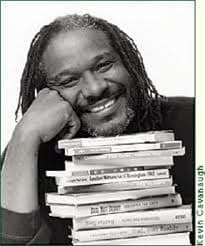
Christopher Paul Curtis is a celebrated author of children's historical fiction, renowned for his engaging narratives and authentic portrayals of African American life. His Newbery Medal-winning novel, "Bud, Not Buddy," and the Newbery Honor book "Elijah of Buxton" are cornerstones of his acclaimed body of work, earning him widespread recognition for bringing history to life for young readers.

Dan Gemeinhart
4.5

Kate O'Hearn
4.4

Jeanne Birdsall
4.4

Jen Wang
4.4

Wendelin Van Draanen
4.3

John Marsden
4.3

Chris Van Allsburg
4.3
Jennifer A. Nielsen
4.2