“When you have nothing left to lose, you have everything to gain.”
— Nick's internal thought as he faces a dire situation.

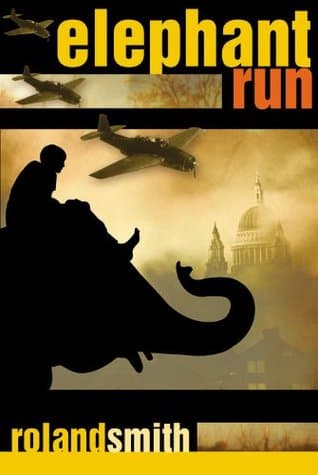
Roland Smith (2007)
Genre
Children's / Historical Fiction / Young Adult
Reading Time
360 min
Key Themes
See below
Sign in to track this book
Stranded in Japanese-occupied Burma during WWII, a British boy and his local friend journey by elephant through the jungle to rescue their families from a POW camp.
In 1941, a German bomb destroys twelve-year-old Nick Freestone's London apartment. His mother, concerned for his safety, sends him to live with his father, who runs a teak plantation in Mogok, Burma. Nick does not want to leave his mother and England, but he begins the long journey. When he arrives, the jungle's unfamiliar sights, sounds, and smells strike him immediately. He meets his father, whom he has not seen in years, and learns about the elephant logging camp, where elephants are central to the work and daily life.
Nick struggles to get used to the heat, humidity, and lack of modern things. His father is often busy, leaving Nick to explore. He quickly becomes friends with Indaw, a young mahout, and his sister Mya, who is his age. Indaw teaches Nick about the elephants, especially the matriarch, Hannibal, and her calf, High-Boy. Nick also meets Nang, a wise old mahout who becomes a guide for him. He learns about jungle dangers, elephant training, and local customs, slowly feeling more at home in the remote Burmese village.
Life on the plantation changes suddenly when Japanese soldiers invade Mogok. The villagers are afraid, and the Japanese quickly take control, seizing supplies and logging operations. Nick's father, along with other European plantation workers, is taken prisoner and marched to a POW camp. Before being taken, Nick's father secretly tells him to look for a hidden map. Nick, Mya, Indaw, and the other villagers live under strict Japanese rule, forced to work for their new oppressors, with Nick becoming a servant for Colonel Nagayoshi.
Under Japanese rule, life is hard and dangerous. Nick works as a houseboy for Colonel Nagayoshi, dealing with his demands and constant observation. He secretly searches for the map his father mentioned, believing it holds clues to his father's location or a way to help him. Mya and Indaw help Nick, often distracting soldiers or giving information. The children live in fear, but the hope of finding the map and rescuing Nick's father keeps them going.
After much searching and several close calls, Nick finds the hidden map. It is in a hollow leg of a table in his father's study. The map does not show the POW camp, but it shows where his father and the British had hidden a large amount of teak logs from the Japanese. These logs were for the British war effort. Finding the map changes Nick's goal: he realizes the teak is valuable, and if the Japanese find it, it will help their war. He must stop them from finding it.
With the map, Nick, Mya, and Indaw realize they cannot stay on the plantation. They make a plan to escape, not just for their freedom, but also to find Nick's father and Mya's brother, Hill-Boy, who was also taken to the POW camp. They decide to use elephants for their journey, as they are the only reliable way to travel through the dense jungle. They also plan to stop the Japanese from finding the hidden teak, perhaps by leading them away or destroying the logs. Nang, the wise old mahout, helps them prepare for their journey.
Under cover of night, Nick, Mya, and Nang, along with Hannibal and High-Boy, quietly leave the plantation. Their journey through the Burmese jungle immediately brings challenges. They must navigate dense plants, cross rivers, and avoid Japanese patrols. They rely on Nang's knowledge of the jungle and the elephants' instincts to guide them. Nick, despite his lack of experience, quickly learns mahout work, bonding with Hannibal and High-Boy. The children also deal with the emotional toll of being separated from their families and the constant threat of being found.
As they go deeper into the jungle, the group meets various dangers. They barely escape a Japanese patrol, showing Nick's quick thinking and Mya's knowledge of hiding places. They also face natural threats like leeches, difficult ground, and wild animals. Nang guides them through secret paths and teaches them survival skills. The journey is tiring, but their drive to reach the POW camp and save their loved ones keeps them going, strengthening the bond between Nick, Mya, and Nang.
After weeks of travel, they reach the area near the POW camp, a heavily guarded and grim place. They watch the camp from a distance, gathering information about its layout and guard routines. Nang, using his experience, helps them make a risky rescue plan. The plan is to create a diversion to draw away the guards, allowing Nick and Mya to enter the camp and find their father and Hill-Boy. The risks are high, and one mistake could mean capture or death for them all.
Carrying out their plan, Nang creates a diversion with the elephants, causing noise near the camp. Nick and Mya use this chance to sneak inside. They find Nick's father and Hill-Boy, who are weak and thin but happy to see them. With help from the mahouts who were captured with Nick's father, they get out of the camp and meet Nang and the elephants. The escape is dangerous, with Japanese soldiers chasing them, but they get away, disappearing into the Burmese jungle, heading toward British lines.
With Nick's father and Hill-Boy rescued, the group, now larger, continues their journey through the jungle, aiming for British-controlled territory. Nick's father, though weak, uses his knowledge of the area to help with navigation. They face ongoing threats from the Japanese and the harsh jungle, but their spirits are lifted by their reunion. Eventually, after more days of travel and close calls, they meet a British patrol. They are finally safe, and Nick's father and Hill-Boy get needed medical care. Nick thinks about how he changed from a city boy to a jungle survivor.
The Protagonist
Nick transforms from a naive, sheltered city boy into a courageous and resourceful survivor, capable of navigating the jungle and leading a daring rescue.
The Supporting
Initially a distant father figure, his capture and subsequent rescue solidify his bond with Nick and highlight his resilience.
The Supporting
Mya demonstrates unwavering loyalty and bravery, evolving from a local guide to an indispensable partner in a dangerous mission.
The Supporting
Indaw acts as a mentor to Nick, demonstrating leadership and mahout skills that are crucial for the group's survival.
The Supporting
Nang serves as a steadfast mentor and protector, guiding the younger characters through extreme danger with his wisdom and experience.
The Antagonist
Colonel Nagayoshi remains a consistently cruel and oppressive figure, symbolizing the enemy forces throughout the narrative.
The Supporting
Hannibal acts as a silent but powerful force, providing physical and emotional support, showcasing the deep bond between elephants and their mahouts.
The Supporting
High-Boy grows from a dependent calf to a more capable young elephant, symbolizing hope and the continuation of life.
The Supporting
Hill-Boy endures the suffering of imprisonment and is eventually rescued, representing the innocent victims of war.
The main theme is Nick's and the Burmese villagers' fight for survival under Japanese rule and their hard journey through the jungle. Nick, at first a sheltered city boy, must quickly adjust to a tough new environment, learning to find food, navigate, and avoid danger. Mya and Nang show great strength and cleverness, using their knowledge of the jungle and elephants to overcome difficult problems. This shows how people can endure and overcome hardship.
“'Survival in the jungle wasn't about strength or speed, but about knowing the land, listening to the animals, and never giving up.'”
Strong family and loyalty drive much of the plot. Nick's main goal is to rescue his father, and Mya wants to save her brother, Hill-Boy. Loyalty goes beyond immediate family to friends, like Nick's bond with Mya and Indaw, and Nang's protective role for the children. The connection between mahouts and their elephants also shows loyalty, as the elephants are important partners in their escape and rescue, showing a deep bond between species.
“'We don't leave family behind, Nick. Not ever.'”
Nick changes greatly from a naive English boy to a brave and capable young man. His experiences in Burma, the war's horrors, and jungle survival challenges make him grow up fast. He learns to ride and care for elephants, understand local customs, and make important decisions. This journey of self-discovery and growth is central to the story, as Nick sheds his old identity and takes on a new, stronger self shaped by hardship.
“'He was no longer the boy who had arrived from London, afraid of leeches and uncomfortable in the heat. He was a jungle runner now.'”
The novel clearly shows the wide-reaching and damaging effects of World War II on remote Burma. It shows how the conflict disrupts normal lives, leading to occupation, imprisonment, and forced labor. The Japanese invasion turns a peaceful logging community into a place of fear, making civilians, including children, face dangerous situations. The story highlights the loss of innocence, the cruelty of the occupying forces, and the sacrifices made by ordinary people caught in a global conflict.
“'The war, which had seemed so distant in London, was now breathing down their necks in the Burmese jungle.'”
The unique relationship between humans and elephants is a key part of the book. The elephants, especially Hannibal and High-Boy, are not just animals but intelligent beings important to the community's way of life and essential for the escape. The mahouts, like Indaw and Nang, share a deep bond with their elephants, relying on them for work, travel, and companionship. This theme stresses respect for nature and the powerful relationship that can exist between humans and animals.
“'An elephant remembers everything, Nick. And they never forget those who are kind to them, or those who are cruel.'”
A crucial plot device guiding Nick's initial quest and the overall mission.
The map, hidden by Nick's father in a hollow table leg, serves as a primary plot driver. It initially provides Nick with a tangible goal during his captivity – to find what his father wanted him to see. While it doesn't directly show the POW camp, it reveals the location of the hidden teak, which is valuable to both the British and the Japanese. This discovery shifts Nick's objective, giving him a purpose beyond mere survival and leading directly to the escape and rescue plan. It symbolizes his father's foresight and his trust in Nick.
Essential characters and a means of survival and transport.
The elephants are more than just animals; they are integral characters and a vital plot device. Hannibal and High-Boy are the primary means of transport through the dense, unforgiving jungle, making the escape and rescue possible. Their strength, intelligence, and jungle navigation skills are indispensable. They also symbolize the deep cultural connection of the Burmese people to their environment and their traditional way of life. The bond between the mahouts and the elephants underscores themes of loyalty and the human-animal connection, providing emotional depth and practical solutions to challenges.
The ultimate destination and a symbol of the war's brutality.
The POW camp is the physical destination for the rescue mission and serves as a powerful symbol of the brutality and dehumanizing effects of war. Its existence drives the children's desperate journey and highlights the suffering of Nick's father and Hill-Boy. The descriptions of the camp, though not overly graphic for a YA novel, convey the harsh conditions and the constant threat of violence. It acts as a focal point for the narrative's tension and the ultimate test of the characters' courage and determination.
A microcosm of colonial life disrupted by war.
The teak plantation in Mogok serves as a vivid and immersive setting that is crucial to the story. It represents a specific way of life – a blend of colonial management and traditional Burmese mahout culture – that is abruptly shattered by the war. The plantation's resources (teak logs, elephants) become strategic assets, making it a target for the Japanese. Its isolation emphasizes Nick's vulnerability and the challenges of escape, while its natural beauty contrasts sharply with the violence of the occupation, highlighting the destruction wrought by conflict.
“When you have nothing left to lose, you have everything to gain.”
— Nick's internal thought as he faces a dire situation.
“The jungle doesn't care if you're a boy or a man. It only cares if you're smart enough to survive.”
— Indra telling Nick about the harsh realities of the jungle.
“An elephant never forgets, and neither should you.”
— Mya's advice to Nick, emphasizing the importance of memory and learning.
“Sometimes the greatest strength is knowing when to run.”
— Pop's philosophical advice to Nick about strategic retreat.
“Hope is a dangerous thing, but it's the only thing that keeps us going.”
— Nick reflecting on his situation and the power of hope.
“The jungle gives life, and the jungle takes it away.”
— Observations about the dual nature of the jungle.
“You can always find a way if you look hard enough. And if you can't find one, you make one.”
— Pop encouraging Nick to be resourceful.
“Fear is a good thing if it keeps you alive.”
— Indra explaining the practical use of fear.
“The war may be far away, but its shadow reaches everywhere.”
— Nick realizing the widespread impact of World War II.
“Family is not just blood. It's who you choose to stand with.”
— Nick's growing understanding of his bond with the villagers.
“Every creature has its place, and every place has its dangers.”
— A general observation about the ecosystem of the jungle.
“Silence can be a weapon, and it can be a shield.”
— Nick learning the value of quiet observation and movement.
“Sometimes the smallest things can make the biggest difference.”
— Nick noticing how minor details can be crucial for survival or escape.
“The best way to hide is in plain sight, if you know how to blend.”
— A lesson learned about camouflage and remaining undetected.
Ready to see how well you understood this book? Take our interactive quiz with 10 questions.

Biography coming soon.
Dan Gemeinhart
4.5
Kate O'Hearn
4.4

Jeanne Birdsall
4.4

Jen Wang
4.4

Wendelin Van Draanen
4.3

John Marsden
4.3

Chris Van Allsburg
4.3
Jennifer A. Nielsen
4.2