“The greatest enemy is one that never dies.”
— Murtagh reflects on his forced servitude to Galbatorix.

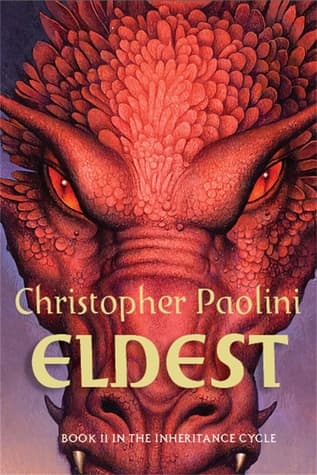
Christopher Paolini (2005)
Genre
Fantasy / Young Adult
Reading Time
12-15 hours
Key Themes
See below
Sign in to track this book
As war rages and shadows deepen, Eragon journeys to the elven lands for intense training, only to discover that the greatest threats may come not from the enemy, but from within his own alliances and the desperate fight for his cousin's life.
After the Battle of Farthen Dûr, Eragon suffers a back injury from the Shade Durza. Arya, the elven princess, temporarily eases the pain, but a permanent cure needs elven help. Ajihad, leader of the Varden, is ambushed and killed by Urgals, and his daughter Nasuada becomes his successor. Eragon, Saphira, and Arya, with Orik, a dwarf, go to Ellesméra, the elven capital, for healing and training. Their journey is dangerous as they travel through Alagaësia, always aware of the Empire's pursuit.
In Carvahall, Eragon's cousin Roran becomes the village leader after Eragon and Brom leave. The Empire, led by the Ra'zac and their mounts, the Lethrblaka, arrives looking for Eragon. When they don't find him, they focus on Roran, believing he knows where Eragon is. Roran defends his village, but the Ra'zac kidnap Katrina, his betrothed. Driven by love and responsibility, Roran gathers the villagers, convincing them to leave Carvahall and go to the coastal city of Teirm, hoping to find safe passage and rescue Katrina.
In Ellesméra, Eragon meets Oromis, an ancient elven Dragon Rider, and his golden dragon, Glaedr. Oromis, also injured in the fall of the Riders, becomes Eragon's teacher, showing him advanced magic, swordsmanship, and the true history of the Riders. Saphira trains with Glaedr, learning dragon magic and flight. During the Agaetí Blödhren, the Blood-oath Celebration, Eragon changes greatly. A spectral dragon appears and touches him, healing his back injury and giving him elven-like strength, speed, and pointed ears, making him more than human.
Roran's journey with the villagers from Carvahall to Teirm is full of danger. They face attacks from Imperial soldiers and must overcome natural problems. Roran shows strong leadership, cleverness, and courage, earning his people's respect. He faces challenges that test him, forcing him to make hard choices for his group's survival. His desire to rescue Katrina and protect his community grows with every difficulty, making him a true leader, willing to give everything for those he cares about.
Oromis teaches not only practical magic but also a deep understanding of the ancient language, energy, and the philosophy behind magic. Eragon learns that true magic is about precision, control, and understanding how everything connects, not just raw power. He also considers the ethics of magic and the heavy responsibility of being a Dragon Rider. Oromis's lessons challenge Eragon's old ideas, broadening his view and preparing him for the complex moral problems he will face in the war against Galbatorix.
After a difficult journey, Roran and the villagers reach Teirm. There, they meet Jeod, an old friend of Brom's, who helps them get passage on a ship. Their destination is Surda, the allied kingdom where the Varden are now based. Upon arriving, Roran contacts Nasuada, the new leader of the Varden. He promises his loyalty and his villagers' strength to her cause, driven by his desire for revenge against the Ra'zac and the Empire, and his strong resolve to rescue Katrina. Nasuada, seeing his courage and determination, accepts their help.
Eragon's training ends early when news arrives of a large Imperial army marching towards the Varden's new base in Surda. Eragon and Saphira, now much stronger, fly to join the Varden in battle. During a fierce air fight, they are ambushed by a red dragon and its Rider. To Eragon's horror, the Rider is Murtagh, his half-brother, who was captured by Galbatorix. Murtagh, now a Dragon Rider, reveals he is bound by an unbreakable oath to Galbatorix and wields Zar'roc, a powerful sword that was once Eragon's. This shocking meeting leaves Eragon deeply conflicted and shaken.
The Battle of the Burning Plains is a devastating fight between the Varden and the Imperial forces. Eragon and Saphira fight bravely, their improved abilities helping turn the tide against the Empire's large army. Roran, using a hammer, proves to be a strong warrior on the ground, leading his villagers with inspiring courage. The battle ends with a direct fight between Eragon and Murtagh. Despite Eragon's improved skills, Murtagh's dragon, Thorn, is larger and more experienced, and Murtagh's magic is strong. Murtagh reveals that he is Eragon's full brother, both sons of Morzan, a revelation that further unsettles Eragon.
During their air duel, Murtagh overpowers Eragon, showing he is the stronger Rider. He reveals that both he and Eragon are sons of Morzan, one of the Forsworn, making them full brothers. Murtagh explains that Galbatorix captured him and forced him to swear an unbreakable oath of loyalty, binding him to the king's will. He also takes Zar'roc, the red sword that once belonged to Morzan and was given to Eragon by Brom, claiming it as his birthright. Murtagh, under Galbatorix's command, spares Eragon's life but leaves him with a crushing defeat and the weight of a devastating family secret.
After the Battle of the Burning Plains, the Varden win a costly victory, but the revelation of Murtagh as a Rider and the loss of Zar'roc deeply affect Eragon. He struggles with the knowledge of his true parents and what it means for his future. Nasuada, despite the Varden's losses, remains determined. She sees that Eragon needs to continue his training and that the Varden need to strengthen their alliances. Eragon, though emotionally wounded, decides to become stronger, to understand his power, and to eventually confront Galbatorix and free Murtagh.
The Protagonist
Transforms from an untrained youth into a more formidable and skilled Dragon Rider, while grappling with his identity and the complex moral landscape of his war.
The Supporting
Matures into a more powerful and self-aware dragon, deepening her bond with Eragon and understanding her role in the war.
The Supporting
Transforms from a civilian farmer into a respected warrior and leader, driven by love and a desire for justice.
The Supporting
Serves as a wise guide, imparting ancient knowledge and shaping Eragon's understanding of his role.
The Supporting
Guides Saphira in her growth, passing on the knowledge and traditions of the dragons.
The Supporting
Ascends to leadership and proves her capability as a military and political strategist for the Varden.
The Antagonist
Revealed as a powerful new Dragon Rider, tragically bound to Galbatorix, becoming Eragon's unwilling adversary.
The Supporting
Serves as the primary motivation for Roran's heroic journey, her abduction driving his actions.
The Antagonist
His tyrannical rule and manipulative power are further established, proving him a formidable and cunning adversary.
This theme is central to Eragon's journey as he deals with his role as a Dragon Rider, his human origins, and his new elven traits after the Agaetí Blödhren. The reveal of his true parentage as Morzan's son further complicates his sense of self, making him question who he is and where he belongs. Roran also struggles with identity, changing from a farmer to a village leader and then a warrior, finding his place among the Varden. Both cousins seek to define themselves by their actions and choices, not by their family or circumstances.
“What is it to be a Rider? It is not merely to ride a dragon. It is to be bound to it, heart and soul, to become one with it in mind and spirit. It is to be a guardian, a protector, a warrior for justice.”
Both Eragon and Roran are put into leadership roles, facing great pressure and making difficult, often life-or-death, decisions. Eragon, as a Rider, carries the hope of the Varden, while Roran leads his entire village to safety and then into battle. Nasuada, as the new leader of the Varden, shows this theme, demonstrating courage and strategic thinking against overwhelming odds. The book explores the personal cost of leadership, the sacrifices required, and the moral problems in guiding others during wartime. They learn that leadership is about service and sacrifice, not power.
“A leader must be willing to sacrifice for their people, even their own desires, for the good of all.”
Love, in its various forms, drives much of the story. Roran's deep love for Katrina fuels his desperate quest to rescue her and his fight against the Empire. Eragon's love for his family and friends motivates his training and his commitment to the Varden. However, these loves often come with loss, as seen with Ajihad's death and Katrina's abduction. The desire for revenge, especially Roran's against the Ra'zac, becomes a powerful, though complex, motivator. The book explores how love can inspire heroism, but also how loss can lead to destructive impulses if not managed well.
“When you love someone, you will do anything for them. Anything.”
Eldest explores magic in more detail, moving beyond simple spells to look at its philosophical and ethical sides. Oromis teaches Eragon that true magic comes from understanding the ancient language and energy flow, not just raw force. The book contrasts the responsible use of magic by the elves and Eragon with Galbatorix's corrupt and controlling use of power. It also introduces unbreakable oaths, showing how magic can bind and control, as seen with Murtagh. The theme questions whether power itself is good or evil, or if the wielder's intention defines it.
“Magic is not a toy, Eragon. It is a force, like a river, that can be channeled for good or ill. The choice is always yours.”
The novel clearly shows the harsh realities and human cost of war. From the destruction of Carvahall to the devastating Battle of the Burning Plains, the story shows the violence, loss of life, and emotional toll of conflict. Characters like Roran become warriors, and even Eragon, despite his magic, experiences the horrors of combat. The long-term effects of Galbatorix's tyranny are clear in the suffering of common people and the sacrifices made by the Varden. The book emphasizes that victory often comes at a high price, leaving lasting scars on people and communities.
“War takes everything. It leaves only ashes and sorrow in its wake.”
An elven festival that results in Eragon's magical transformation.
The Agaetí Blödhren is an ancient elven festival where the elves renew their allegiance to the Dragon Riders. During this celebration, a spectral dragon appears and touches Eragon, miraculously healing his crippling back injury. This event also imbues him with enhanced elven-like strength, speed, and senses, and subtly alters his appearance, giving him pointed ears. This plot device serves as a significant turning point for Eragon, not only physically healing him but also symbolically bridging the gap between his human and Rider identities, making him more formidable for the battles to come and deepening his connection to the magical world.
A magical binding that controls Murtagh's actions.
The Unbreakable Oath is a powerful magical binding created by Galbatorix to control Murtagh. Through this oath, Murtagh is compelled to obey the king's commands, even against his will, making him a tragic antagonist. This device highlights Galbatorix's cunning and cruelty, demonstrating his ability to manipulate even powerful Riders. It also creates a profound moral dilemma for Eragon, who must fight his own brother, knowing Murtagh is not acting of his own free will. The oath underscores the dangers and ethical complexities of magic, particularly when used for coercion and control, and raises the stakes of the conflict.
Morzan's red sword, a symbol of inheritance and conflict.
Zar'roc is the red sword that once belonged to Morzan, one of the Forsworn, and was given to Eragon by Brom. In Eldest, it becomes a crucial plot device when Murtagh, revealed to be Morzan's son and thus Eragon's brother, reclaims it as his birthright during their duel. The sword symbolizes the complicated and tragic inheritance of the Dragon Riders, linking Eragon and Murtagh to their shared, dark past. Its loss to Murtagh is a significant defeat for Eragon, both physically and emotionally, and further solidifies the familial conflict at the heart of the story, representing a tangible piece of their shared, cursed heritage.
The tragic history of the Dragon Riders, fueling the rebellion.
The Fading of the Riders refers to the near-extinction of the Dragon Riders due to Galbatorix's betrayal. This historical event serves as a foundational plot device, providing the motivation for the Varden's rebellion and the urgency of Eragon's training. Oromis and Glaedr, as the last surviving free Rider and dragon, embody this fading, representing a lost era of peace and power. Their existence, despite their injuries, offers a glimmer of hope for the restoration of the Riders. This device constantly reminds the characters and the reader of the immense stakes of the war and the legacy Eragon is fighting to restore.
“The greatest enemy is one that never dies.”
— Murtagh reflects on his forced servitude to Galbatorix.
“It is one thing to slay a dragon, and another to befriend one.”
— Eragon learns about the complexities of his bond with Saphira.
“Knowledge without wisdom is a load of books on the back of an ass.”
— Oromis teaches Eragon about the difference between information and understanding.
“The past is a stubborn thing. It will not be ignored.”
— Eragon grapples with the history of the Riders and his own family.
“Power is a dangerous thing. It can corrupt the best of men and make monsters of the rest.”
— Oromis warns Eragon about the temptations of immense power.
“A true leader knows when to follow.”
— Eragon learns humility and the value of listening to others.
“Grief is a disease. It saps your strength and blinds you to the world.”
— Eragon struggles with his grief over Brom's death and others.
“Only those who are willing to risk everything can truly be free.”
— Murtagh reflects on his lack of freedom under Galbatorix.
“Magic is not inherently good or evil; it is merely a tool.”
— Oromis explains the nature of magic to Eragon.
“Hate is a weapon, and like any weapon, it can be turned against you.”
— Eragon considers the consequences of his anger towards Galbatorix.
“To truly know someone, you must know their pain.”
— Eragon begins to understand the complexities of his allies and enemies.
“The greatest battles are fought not with swords, but with words.”
— Oromis emphasizes the importance of diplomacy and strategy.
“Hope is the most powerful weapon of all.”
— The Varden cling to hope in their fight against the Empire.
“The world does not care what you intended. It only cares what you do.”
— Eragon learns about accountability for his actions, regardless of intent.
Ready to see how well you understood this book? Take our interactive quiz with 10 questions.
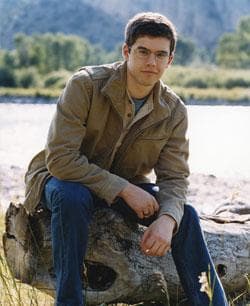
Christopher Paolini is the bestselling author of The Inheritance Cycle, a fantasy series that began with Eragon. Published when he was just 19, the series has sold over 40 million copies worldwide and was adapted into a major motion picture. Paolini's intricate world-building and epic storytelling have captivated millions of readers globally.







