BookBrief
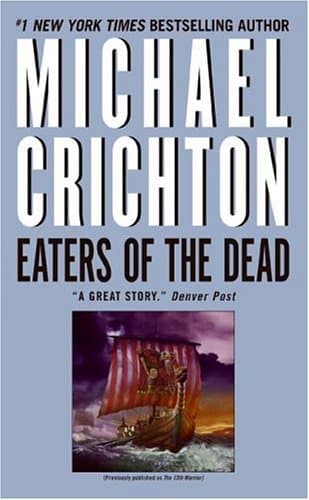
Eaters of the Dead cover
Archivist's Choice

Eaters of the Dead

Michael Crichton (1976)

Genre

Thriller / Fantasy / Historical Fiction / Science Fiction

Reading Time

360 min

Key Themes

See below

Track Your Reading

Sign in to track this book

In 10th-century Scandinavia, an Arab diplomat joins a Viking quest to fight ancient, mist-shrouded monsters under the northern lights.

Synopsis

In 922 A.D., the Arab courtier Ibn Fadlan is exiled and sent north as an ambassador. He is unwillingly made to join a band of Viking warriors led by Buliwyf, to help them fight a monstrous threat. As they travel into the harsh northern lands, Fadlan struggles to adapt to the Vikings' customs and language, observing their ways and preparing for an unknown enemy. At King Hrothgar's hall, they find a mysterious enemy called the 'wendol' – savage, bear-like creatures who come from the mist to kill and eat the local people. Fadlan, at first an unwilling observer, becomes more involved as the Vikings suffer losses. He uses his intellect and observation to understand the wendol's patterns and weaknesses, helping Buliwyf plan. The group goes on a dangerous quest to find the wendol's hidden home, confronting their old, female leader, the Mother, and her oracle. During the main battle, Buliwyf is badly hurt but makes a final, heroic stand, letting his people win. Fadlan, having seen and taken part in the brutal fight, eventually says goodbye to the surviving Vikings, changed by his experiences and the realities of the northern world.
Reading time
360 min
Difficulty
Medium
Pacing
Moderate
Mood
Gritty, Adventurous, Suspenseful, Ancient
✓ Read this if...
You enjoy historical adventures blended with monster horror, a fish-out-of-water perspective, and a strong sense of anthropological detail.
✗ Skip this if...
You prefer traditional fantasy or hard sci-fi, or dislike graphic violence and cultural clashes.

Plot Summary

Exile and the Invitation to the North

Ahmad ibn Fadlan, a diplomat from Baghdad, is exiled after an affair. He is sent to the Volga Bulgars, traveling through various nomadic tribes. He meets a group of Norsemen, or 'Rus,' on the Volga River. He is at first disgusted by their customs, which he sees as crude and uncivilized, observing their burial rituals and open sexuality. While he is with them, a messenger arrives, calling one of their chieftains, Buliwyf, and his warriors to help a distant king against a scary, old threat, the 'wendol,' described as mist-shrouded monsters.

The Oracle's Prophecy and Fadlan's Unwilling Enlistment

After getting the summons, Buliwyf and his men consult an old 'angel of death' woman, a witch. She performs a ritual and says that thirteen warriors must go to face the wendol, and the thirteenth warrior 'must not be a Northman.' This statement immediately points to Ibn Fadlan, who is the only non-Norseman present. Despite his strong protests and fear, he is forced to join Buliwyf's group. He is given a small, ill-fitting sword and armor, and starts the hard journey north with the twelve Viking warriors, regretting his fate and trying to learn their language.

Journey North and Cultural Clash

The journey north is long and hard. Ibn Fadlan, used to the comforts of Baghdad, struggles greatly with the Vikings' rough food, lack of cleanliness, and brutal living conditions. He is especially bothered by their casual violence and the amount of mead they drink, which he thinks dulls their senses. Despite his discomfort, he starts to observe and learn about their culture, language, and fighting ways. He notices their toughness and practical skills, slowly gaining respect for their warrior spirit. The land becomes more desolate and cold, showing they are nearing the troubled areas.

Arrival at King Hrothgar's Hall

Buliwyf and his twelve warriors, including a reluctant Ibn Fadlan, finally reach King Hrothgar's village. The king's people are being terrorized by the wendol. The village is full of fear and despair, with homes burned and people killed. Hrothgar explains that the attacks happen at night and in the mist, and the wendol are impossible to fight well. Fadlan sees the fear in the villagers' eyes and the destruction caused by the unseen enemy, realizing how serious the threat is, despite his early doubts about 'monsters.'

First Encounters with the Wendol

Soon after they arrive, the wendol attack the village. Ibn Fadlan sees firsthand how fierce and stealthy the creatures are. They are large, bear-like figures, riding horses and appearing through the mist, their faces hidden by furs and helmets. The Vikings fight bravely, but the wendol are relentless and seem unaffected by regular weapons. Several warriors are killed, and Fadlan, despite his fear, manages to help in the defense, though clumsily. He is horrified by the brutality and terror the wendol inspire, confirming they are not just bandits but something far more powerful and old.

Investigation and Understanding the Enemy

After the first attacks, Buliwyf and his men start to plan. They realize the wendol are not supernatural but highly skilled, organized, and brutal humans, disguising themselves to look monstrous. Fadlan, using his observation skills, helps by noting details about their movements and gear. They find out the wendol live in caves and have a female leader, called the 'mother,' who guides them. This understanding changes their approach from just defending to looking for the wendol's home and leaders, a task that needs intelligence as much as strength.

The Quest for the Wendol Lair

Buliwyf and his remaining warriors, driven by the need to find the wendol's stronghold, leave Hrothgar's village. They travel through dangerous land, navigating forests and mountains, looking for clues. During this time, they face ambushes and traps set by the wendol, further reducing their numbers. Fadlan, though still an outsider, slowly earns some respect for his quick thinking and ability to understand the wendol's 'language' (their grunts and calls). He also starts to form a bond with some of the warriors, especially Herger, who teaches him the Norse language and customs.

The Serpent's Cave and the Fire Worms

The warriors eventually find the entrance to the wendol's large cave system, a dark and complex network. Inside, they find proof of the wendol's simple but effective technology, including their 'fire worms' – glowing, poisonous insects kept in gourds, used to light the caves and confuse their enemies. They realize the wendol are not just warriors but also skilled cave dwellers. Buliwyf plans to go into the caves, understanding that they must eliminate the wendol's leaders to stop the attacks for good, despite the dangers of fighting in such tight spaces.

Confronting the Mother and the Oracle

Deep inside the caves, Buliwyf and his dwindling group finally confront the wendol's 'mother' and their 'oracle,' who are the true leaders. The 'mother' is an old, powerful woman who directs the wendol's actions, while the 'oracle' is a younger woman who speaks for her. A fierce battle happens, and several more of Buliwyf's warriors die. Buliwyf himself is badly wounded by a poisoned claw or tooth from the mother, but he manages to kill her. The oracle escapes, and the remaining wendol scatter.

Buliwyf's Decline and Last Stand

After killing the mother, Buliwyf slowly weakens from the poison. His strength fades, but his determination remains. Knowing he will die soon, he gathers his few remaining warriors and the villagers for a final, desperate fight against the now leaderless but still dangerous wendol. In a climactic battle, Buliwyf, despite his failing health, charges into the wendol, inspiring his men and the villagers. He fights with great fierceness until his last breath, making sure the wendol are completely defeated.

Victory and Farewell

With Buliwyf's sacrifice and everyone's effort, the wendol are finally gone. The remaining warriors and villagers mourn their dead but celebrate their hard-won victory. Ibn Fadlan, having seen and taken part in the brutal conflict, has changed greatly. He is no longer the refined, fearful courtier but a tough survivor who has gained a deep understanding and respect for the Norse way of life. He takes part in Buliwyf's Viking funeral, thinking about the courage and honor he witnessed. Having done his unwilling duty, he prepares to continue his journey, forever marked by his time among the 'Eaters of the Dead.'

Principal Figures

Ahmad ibn Fadlan

The Protagonist

From a prejudiced and fearful observer, he transforms into a hardened warrior who understands and respects the Norse culture, finding courage within himself.

Buliwyf

The Protagonist/Leader

He remains steadfast in his duty and leadership, even in the face of certain death, fulfilling his destiny as a heroic chieftain.

Herger the Joyous

The Supporting

He remains a loyal and supportive warrior, acting as a cultural guide for Fadlan and a pillar of strength for Buliwyf.

Wiglaf

The Supporting

He serves as a steadfast warrior, demonstrating courage and loyalty throughout the perilous journey and battles.

King Hrothgar

The Supporting

He begins as a desperate and fearful leader but finds hope and eventual relief through Buliwyf's intervention.

The Wendol Mother

The Antagonist

She maintains her reign of terror until she is ultimately defeated and killed by Buliwyf.

The Wendol Oracle

The Antagonist

She serves the Mother and attempts to continue the wendol's reign, ultimately escaping the final confrontation.

Melchisidek

The Supporting

He serves his purpose as a translator and guide, then fades from the narrative as Fadlan becomes more self-sufficient.

Themes & Insights

Cultural Clash and Understanding

The novel explores cultural clash through Ibn Fadlan's eyes. At first, Fadlan is shocked by the Vikings' perceived savagery, lack of cleanliness, and open sexuality, comparing it to his refined Arab culture. But as he is forced to live and fight with them, he starts to see their courage, loyalty, and practical wisdom, slowly losing his biases. This change shows that real understanding comes from shared experience and empathy, going beyond surface differences. The book shows how necessity can create unexpected connections between cultures.

I came to understand that the Northmen, while they might lack the refinements of Baghdad, possessed a nobility of spirit and a fierce loyalty that was admirable.

Ibn Fadlan (narrator)

Identity and Transformation

Ibn Fadlan's journey is about identity and personal change. Stripped of his familiar comforts and forced into a brutal world, he loses his old identity as a sophisticated diplomat. He learns to fight, to endure hardship, and to find courage he didn't know he had. His initial fear and disgust turn into tough resolve and a new respect for the warrior's life. This theme is central to his character, showing how extreme situations can create a new self, changing one's values and outlook.

I was no longer the soft courtier of Baghdad; I was a warrior, a Northman in all but blood.

Ibn Fadlan (narrator)

Courage and Sacrifice

The novel shows courage and sacrifice, especially through Buliwyf and his warriors. They face a terrifying, seemingly supernatural enemy with steady bravery, knowing many will die. Buliwyf's ultimate self-sacrifice, fighting until his last breath despite being poisoned, is an example of this theme. Even Fadlan, at first scared, finds his own courage when facing overwhelming odds. The story illustrates that true courage is not not feeling fear, but being able to act despite it, especially when protecting one's people.

Buliwyf fought as a god might fight, as if the poison within him lent him a strength beyond mortal men.

Ibn Fadlan (narrator)

The Nature of Fear and the 'Monstrous'

A theme is the nature of fear and how 'monsters' can be seen. The wendol are at first presented as mythical, almost supernatural creatures, hidden in mist and terror. But as the story goes on, Fadlan and the Vikings discover they are human, though brutal and primitive, who use mind games and disguises to make themselves seem more terrifying. This demystification of the monsters shows how fear can grow when facing the unknown and how understanding the enemy, even if still formidable, can lessen its power.

They were not demons, nor spirits of the mist, but men, albeit men who had forgotten what it was to be human.

Ibn Fadlan (narrator)

History, Myth, and Reality

Crichton blends historical accounts with mythological elements, creating a story that explores the blurry lines between history, myth, and reality. The novel is presented as Ibn Fadlan's historical account, yet it includes Beowulf-like monsters. This theme suggests that many ancient myths might have come from real, terrifying events, changed and exaggerated over time. It asks the reader to consider how historical accounts are shaped by the observer's perspective and cultural context, and how primal fears can become lasting legends.

And I, who had scoffed at their tales of monsters, now faced them in the flesh.

Ibn Fadlan (narrator)

Plot Devices & Literary Techniques

First-Person Narrative / Found Manuscript

The story is presented as a translated historical document by Ibn Fadlan.

The entire novel is presented as an annotated translation of an actual 10th-century Arabic manuscript by Ahmad ibn Fadlan, giving it an air of historical authenticity. This first-person perspective allows the reader to experience the cultural shock and transformation alongside Fadlan. It also serves as a framing device, lending credibility to the fantastical elements by embedding them within a seemingly factual historical account. The 'author's notes' and 'translations' further enhance this realism, even though the core story is fictionalized.

Cultural Immersion and Language Barrier

Fadlan's struggle to understand and communicate with the Vikings.

A key device is the initial language barrier and Fadlan's gradual cultural immersion. His inability to understand Norse initially isolates him and highlights his outsider status. As Herger teaches him the language, he gains access to their thoughts, jokes, and strategies, which mirrors his growing acceptance of their culture. This device allows Crichton to explain Viking customs and beliefs through Fadlan's learning process, making the foreign culture accessible to the reader while emphasizing Fadlan's transformation.

The 'Thirteenth Warrior' Prophecy

A supernatural prophecy that forces Fadlan's unwilling participation.

The prophecy delivered by the völva, stating that thirteen warriors must go and one 'must not be a Northman,' is a crucial plot device. It directly forces Ibn Fadlan into the narrative, overcoming his reluctance and providing the impetus for his character arc. It adds a mystical, fated element to the otherwise brutal reality, linking the historical setting to the mythological underpinnings of the Beowulf legend. This prophecy is the catalyst for Fadlan's transformation and the central conflict.

Demystification of the Monster

The gradual reveal that the 'monsters' are human, not supernatural.

Crichton employs the device of demystification to gradually reveal the true nature of the 'wendol.' Initially presented as terrifying, mist-shrouded beasts, they are slowly exposed as human beings who use elaborate disguises, psychological warfare, and primitive technology (like the 'fire worms') to create their monstrous image. This device grounds the fantastical elements in a more rational, albeit brutal, reality, playing on the tension between perceived supernatural threat and human ingenuity/savagery, a common Crichton trope.

The Bear Motif (Wendol Appearance)

The wendol's bear-like appearance as a symbol of primal savagery.

The wendol are consistently described as appearing bear-like, wearing furs, grunting, and moving with the strength and ferocity of bears. This motif serves several purposes: it enhances their 'monstrous' appearance, taps into ancient fears of predatory animals, and symbolizes their primal, uncivilized nature. The bear imagery helps to convey their brute strength and the deep-seated terror they inspire, linking them to a more ancient, animalistic form of humanity that predates the Vikings' own warrior code.

Critical analysis

Notable Quotes

Lo, there do I see my father. Lo, there do I see my mother and my sisters and my brothers. Lo, there do I see the line of my people, back to the beginning. Lo, they do call to me. They bid me take my place among them, in the halls of Valhalla, where the brave may live forever.

The famous Viking prayer recited by Buliwyf and his men before a major battle.

He said that every man must die, and that it was better to die with honor than to live in shame.

Ibn Fadlan's reflection on Buliwyf's philosophy regarding death and honor.

And it was then that I knew, with a certainty that chilled my heart, that I was not merely an observer, but a participant in a destiny I could not comprehend.

Ibn Fadlan realizing the gravity of his involvement with the Vikings and their quest.

The Northmen had no word for 'fear' in the same sense that we did. They had words for 'caution,' for 'prudence,' for 'danger,' but not for the paralyzing terror that I felt.

Ibn Fadlan's cultural observation on the Viking's apparent lack of fear compared to his own.

For the Northmen, a good death was as important as a good life.

Ibn Fadlan contemplating the Viking's perspective on mortality and the significance of dying honorably.

I had come to a land where magic and reason were intertwined, where the ancient gods still walked, and where the line between reality and myth was blurred.

Ibn Fadlan's reflection on the mystical and ancient nature of the lands he now found himself in.

It is not the size of the dog in the fight, but the size of the fight in the dog.

A Viking proverb, likely translated or paraphrased by Ibn Fadlan, reflecting their warrior spirit.

We are all but a moment in time, and our deeds are all that remain.

A philosophical thought attributed to one of the Vikings, emphasizing the legacy of actions.

The Northmen were a people of grim practicality, with little patience for the niceties of courtly life, or the subtleties of diplomacy.

Ibn Fadlan's assessment of the Viking character and their direct approach to matters.

And the Buliwyf, he was a king among men, not by birthright, but by the strength of his arm and the wisdom of his counsel.

Ibn Fadlan's admiration for Buliwyf's leadership and earned respect.

I, who had once scorned their crude ways, now found myself fighting alongside them, sharing their hardships, and even their grim humor.

Ibn Fadlan's evolving perspective and assimilation into the Viking group.

The world was a far more dangerous and mysterious place than I had ever imagined from the comfort of Baghdad.

Ibn Fadlan's realization of the harsh realities and unknown dangers of the northern lands.

For the Northmen, the forest was not merely a collection of trees, but a living, breathing entity, with its own spirits and its own dangers.

Ibn Fadlan's observation of the Viking's animistic view of nature, particularly the forest.

The true measure of a man is not how he lives, but how he dies.

Another reflection on the Viking emphasis on an honorable death.

Quiz

Test Your Knowledge

Ready to see how well you understood this book? Take our interactive quiz with 10 questions.

10
Questions
~5
Minutes
?
Best Score

Key Questions (FAQ)

'Eaters of the Dead' follows the refined Arab diplomat Ibn Fadlan in 922 A.D. as he is unwillingly conscripted by a band of Vikings to journey north and help them combat a monstrous, prehistoric enemy known as the 'wendol'—mist-shrouded creatures that raid their settlements and devour human flesh. It's a tale of cultural clash, survival, and ancient horror.

About the author