“And now that you don't have to be perfect, you can be good.”
— After Adam's sons are born, he struggles with his idealized vision of Cathy and then of his sons. This quote reflects a release from an impossible standard.

John Steinbeck (2000)
Genre
Literary Fiction / Historical Fiction
Reading Time
1280 min
Key Themes
See below
Sign in to track this book
In California's Salinas Valley, two families, the Trasks and the Hamiltons, re-enact the biblical story of Cain and Abel across generations, exploring identity, love, and its absence.
The story starts with Samuel Hamilton, an Irish immigrant, and his wife Liza, who settle in the dry Salinas Valley in the late 1800s. Samuel is an inventor, well-digger, and a liked person in the community, known for his wisdom and stories, though he does not have much money. Liza is a strict, religious woman. They raise nine children, struggling with the land but finding happiness in their family and community. The narrator, a descendant of the Hamiltons, often adds personal thoughts and historical details, setting the scene for the lives that will unfold.
Adam Trask grows up in Connecticut with his younger half-brother, Charles. Their father, Cyrus Trask, is strict and often cruel. Cyrus, who seems religious and claims to be a war hero, favors Adam and subtly torments Charles. Adam is sensitive and passive. Charles is strong and resentful. After Charles nearly kills Adam, Adam runs away and joins the army. He serves without special achievement but gains experience. He is later arrested for vagrancy but returns home to find Charles still bitter and Cyrus more powerful, having made a mysterious fortune through questionable means.
Cathy Ames is introduced, a character described as evil, with no conscience or empathy. From a young age, Cathy shows a capacity for manipulation, deceit, and violence. She sets her family's house on fire and fakes her own death to escape. She becomes a prostitute, then a wealthy man's mistress, before murdering him for his money. A pimp injures her badly and leaves her for dead. Adam Trask finds her. He is taken by her apparent vulnerability and beauty and takes her in. Charles immediately distrusts her and warns Adam, but Adam falls deeply in love with Cathy, blinded by his own idealism.
Adam inherits his father's large fortune and marries Cathy, which upsets Charles. Adam dreams of creating a paradise and decides to move to the fertile Salinas Valley in California. He buys a large, undeveloped ranch, planning to farm it. Charles, who thinks he was unfairly denied his share of the inheritance, stays behind, full of resentment. In California, Cathy becomes pregnant with twins, which she dislikes. During her pregnancy, she tries to abort the babies and becomes more cruel and cold towards Adam, hinting at future tragedy.
Cathy gives birth to twin boys, Caleb and Aron, but shows no maternal feeling. Soon after their birth, she tries to shoot Adam and then runs away, leaving her husband and children. Adam is devastated and becomes depressed, neglecting his ranch and sons. Samuel Hamilton, along with his wise Chinese-American cook and housekeeper, Lee, steps in to care for the infants and support Adam. Lee becomes a parent figure to the boys, providing stability and wisdom. Cathy, meanwhile, reappears in Salinas, working at a brothel owned by Faye. She eventually murders Faye to take over the brothel, renaming it 'The House of Arsene'.
Lee sees the good and evil in the Trask twins and focuses on raising them. He teaches them, telling them about their mother's true nature and human morality. Lee, a philosophical man, has discussions with Samuel Hamilton and later with Adam, especially about the story of Cain and Abel. After years of studying Hebrew, Lee finds the true meaning of 'timshel' from the biblical story: 'thou mayest rule over sin.' This means people have free will and can choose good over evil, offering hope and a moral guide for the boys' lives.
As Caleb and Aron grow, their personalities differ greatly. Aron is handsome, pure, and idealistic. He does well in school and is liked by Adam and the community. He is drawn to religion. Caleb is darker, more thoughtful, and feels unworthy. He fears he inherited his mother's evil. He is smart and practical but often acts out, always wanting his father's approval and feeling less important than Aron. The brothers' relationship has jealousy and unspoken rivalry, especially from Caleb.
As the United States enters World War I, Caleb sees a chance to make money by speculating in beans, hoping to impress Adam and earn his love. He partners with Will Hamilton (Samuel's son), a local businessman, and invests his savings. His plan is to give the profits to Adam as a gift. Meanwhile, Aron, focused on his studies and his love for Abra Bacon, plans to go to Stanford to study for the ministry. Caleb's venture succeeds, and he proudly gives Adam $15,000 on Thanksgiving, hoping for praise. However, Adam rejects the money, calling it 'tainted' and expressing disappointment in Caleb's methods, which deeply hurts his son.
Devastated by Adam's rejection, Caleb decides to hurt Aron. He takes Aron to Cathy's brothel, 'The House of Arsene,' and makes him see their mother, now known as Kate, in her degraded environment. Aron, who had idealized their mother and thought she was dead or a saint, is completely broken by the discovery. The shock and disillusionment are too much for him. Aron immediately leaves college and, desperate to escape his ruined ideals, joins the army, going off to war. He leaves behind a heartbroken Abra and a guilt-ridden Caleb.
News comes that Aron has been killed in World War I. This devastates Adam, who has a severe stroke. He is paralyzed and cannot speak clearly. Caleb is overwhelmed by guilt and despair, believing he caused his brother's death. Meanwhile, Kate (Cathy) is slowly being poisoned by her assistant, Ethel, who is blackmailing her with evidence of her past crimes. Kate realizes her life is ending and, fearing exposure, commits suicide by taking too much morphine. She leaves her ill-gotten money to Aron, a final malicious act.
As Adam lies dying, Caleb is tortured by his guilt. Abra, who has grown closer to Caleb, tells him to seek his father's forgiveness. Lee, understanding the importance of reconciliation, guides Caleb. In Adam's last moments, with Lee interpreting his unclear words, Adam gives Caleb his blessing, saying 'Timshel.' This word means free will, the power to overcome sin, and the ability to choose one's own path. It frees Caleb from his perceived curse and offers him a chance at redemption and a future with Abra. Adam then dies peacefully.
The Protagonist
Adam moves from naive idealism and passive suffering to a final, profound acceptance of human imperfection and the power of choice.
The Antagonist
Cathy's arc is one of consistent evil, culminating in a self-inflicted death to avoid exposure and maintain control.
The Supporting
Samuel lives a full life, providing wisdom and support to his community, and dies peacefully, having fulfilled his role as a moral compass.
The Supporting
Lee dedicates his life to serving the Trask family, guiding them towards understanding and redemption, ultimately facilitating Adam's final blessing for Caleb.
The Protagonist
Cal struggles with guilt and self-doubt, eventually finding a path to redemption and acceptance through his father's final blessing.
The Supporting
Aron moves from naive idealism to complete disillusionment and self-destruction, unable to reconcile his ideals with reality.
The Supporting
Abra matures from a girl in love with an ideal to a woman who chooses a flawed, real love, ultimately helping Caleb towards redemption.
The Supporting
Cyrus establishes a legacy of deception and favoritism that profoundly shapes his sons' lives, dying with his secrets largely intact.
The Supporting
Charles remains largely static, consumed by resentment, and dies a lonely, bitter man, unable to reconcile with his past.
The main idea of 'East of Eden' is the struggle between good and evil and the power of free will, shown by the Hebrew word 'timshel' ('thou mayest rule'). The novel explores if evil is natural (like with Cathy) or a choice (like with Caleb). Lee's reading of 'timshel' from the Cain and Abel story gives a moral guide, showing that people are not controlled by their nature or situation but can choose their path and overcome sin. This idea is explored through Aron and Caleb, and Caleb's journey to redemption through his father's final 'timshel' blessing.
“But the Hebrew word, the critical word, 'timshel,'—'Thou mayest'—that gives a choice. It might be the most important word in the world. That says the way is open. That throws it right back on a man. For if 'Thou shalt,' that is command. But if 'Thou mayest,' then there is the choice.”
Steinbeck uses the biblical story of Cain and Abel as a model for the Trask family, especially the relationship between Caleb and Aron. This idea looks at sibling rivalry, parental favoritism, and the destructive power of jealousy and unreturned love. Cyrus favoring Adam over Charles, and Adam favoring Aron over Caleb, directly mirror God favoring Abel's offering over Cain's. The novel looks at the psychological cost of this dynamic, showing how history and human nature can repeat across generations. It also offers the chance to break the cycle through conscious choice, as seen in Caleb's redemption.
“And the story of Cain and Abel is the story of the human soul. The one crime of Cain was his brother's blood. But the greater crime was his rejection. And the mark of Cain is the mark of rejection.”
The presence or absence of parental love, and the impact of parental rejection, is a strong idea in the novel. Cyrus Trask's favoritism towards Adam and neglect of Charles causes Charles's bitterness. Adam struggles to show unconditional love to Caleb, favoring the 'purer' Aron, which deeply hurts Caleb and drives his destructive actions. Cathy's complete lack of maternal love for her sons is a central horror. The novel suggests that wanting a parent's blessing is a basic human need. Its denial can lead to bad results, while its granting (like Adam's 'timshel' to Caleb) can offer healing and freedom.
“A child may not know how to feed itself, or what to eat, yet it knows hunger. It may not know how to protect itself from fire, yet it knows fear. But there are some who do not know love. And it is a terrible thing for a child to be without love.”
Characters in 'East of Eden' deal with who they are, who others think they are, and who they can become. Adam struggles to define himself apart from his father's influence and Cathy's manipulation. Caleb worries he has inherited his mother's evil, always trying to understand his nature and prove his goodness. Lee, by using a specific accent, deals with racial identity and social expectations. The idea explores the journey of self-discovery, how family history and past trauma affect one's sense of self, and the freedom to create one's own identity through choices, regardless of origin or perceived destiny.
“And it came to me that I was not a man at all, but a child, and I had no right to make decisions for myself. I was a puppet, and my strings were pulled by the past.”
The novel clearly explores the nature of evil, mainly through Cathy Ames. Steinbeck suggests that some people, like Cathy, may be born evil, lacking empathy or conscience. This questions the idea that evil is only from environment or choice. However, the novel also shows how 'good' characters can do evil things driven by jealousy, resentment, or misguided intentions (e.g., Caleb's actions towards Aron). This dual view allows for a nuanced look at evil as both an inherent force and a chosen path, contrasting Cathy's unrepentant malice with Caleb's struggle for redemption.
“I believe there are monsters born in the world to human parents. Some you can see, like deformed children. But some are born with a perfect body and a monstrous mind. The face and body may be perfect, but the soul is twisted, and the mind is a rat's nest of traps and poisons.”
The foundational allegorical framework for the novel's central conflicts.
The entire narrative of 'East of Eden' is structured around the biblical story of Cain and Abel from the Book of Genesis. This allusion provides a powerful allegorical framework, mapping the characters and their conflicts onto the archetypal struggle between favored and rejected brothers, and the choice between good and evil. The Trask family's generations replay this story, with Cyrus's favoritism, Charles's resentment, and especially Adam's favoritism of Aron over Caleb. The direct discussions of the biblical text by Lee and Samuel Hamilton make this device explicit, allowing the reader to analyze the characters' actions through this ancient moral lens and culminating in the 'timshel' interpretation.
A narrator who is both omnipresent and a personal descendant, offering historical context and philosophical commentary.
Steinbeck employs an omniscient narrator who possesses a deep knowledge of the characters' thoughts and actions, but also frequently steps into the narrative in the first person, identifying himself as a descendant of the Hamilton family. This authorial intrusion creates a unique blend of historical fiction and personal memoir, grounding the epic saga in a sense of lived experience and familial connection. The narrator offers philosophical reflections, historical context of the Salinas Valley, and direct commentary on the characters' motivations and the novel's themes, guiding the reader's interpretation and adding a layer of meta-narrative depth.
The geographical setting as a symbolic 'Eden' or 'Garden of Good and Evil'.
The Salinas Valley itself functions as a powerful symbol in the novel. Described as a fertile, beautiful land, it is presented as a potential 'Eden' where Adam Trask hopes to establish his paradise. However, just as the biblical Eden contained both the tree of life and the tree of knowledge of good and evil, the valley becomes the stage for profound moral struggles, sibling rivalry, and the manifestation of inherent evil. The valley's natural beauty contrasts sharply with the dark human dramas unfolding within it, symbolizing the inherent duality of existence and the potential for both growth and corruption within any 'paradise'.
Contrasting characters who highlight each other's traits and struggles.
The novel extensively uses foil characters to emphasize key traits and thematic conflicts. Most notably, the Hamilton family (represented by Samuel and Liza) serves as a foil to the Trask family, highlighting the Hamiltons' resilience, wisdom, and genuine love in contrast to the Trasks' internal struggles, manipulation, and often destructive relationships. Within the Trask family, Adam and Charles, and later Caleb and Aron, are foils to each other, embodying contrasting temperaments and moral paths. Cathy Ames stands as a stark foil to almost every other character, emphasizing her unique and profound evil against the backdrop of human complexity and the capacity for good.
A single word as the philosophical core and resolution of the novel.
The concept of 'timshel' (Hebrew for 'thou mayest') is more than just a thematic idea; it acts as a central plot device, particularly in the novel's climax. Lee's exhaustive study and interpretation of this word, specifically its emphasis on free will and the individual's power to choose to 'rule over sin,' provides the philosophical backbone for the entire narrative. It offers a counterpoint to the deterministic forces of lineage and inherent evil. The final act of Adam blessing Caleb with the single word 'Timshel' serves as a narrative resolution, offering redemption and hope, and directly addressing the novel's central inquiry into human morality and choice.
“And now that you don't have to be perfect, you can be good.”
— After Adam's sons are born, he struggles with his idealized vision of Cathy and then of his sons. This quote reflects a release from an impossible standard.
“But the Hebrew word, the word Timshel—'Thou mayest'—that gives a man a choice. It might be the most important word in the world. That says the way is open. That throws the responsibility for his act squarely upon a man's own conscience.”
— Samuel Hamilton and Lee discuss the Cain and Abel story and the interpretation of 'Thou shalt' vs. 'Thou mayest' concerning sin.
“I believe that there is one story in the world, and only one, that has been so important to mankind that it is at once the root and stem of all literature, and it is the story of Cain and Abel.”
— The narrator reflects on the universal theme of good and evil, and the struggle within families.
“A child may be a psychological partner with his parent, but it is a terrible burden on a child.”
— The narrator discusses the complex and often damaging relationships between parents and children, particularly in the context of Adam and his sons.
“It seems to me that if you or I must choose between two courses of thought or action, we should remember the child that once was ourselves.”
— The narrator's philosophical musings on empathy and understanding the origins of human behavior.
“And I think that because people are always looking for good, that they are ready to see good in anything that offers itself.”
— Lee's observation about human nature and the desire for goodness, even when it might be misplaced.
“The greatest terror a child can have is that he is not loved, and next that he will not be able to love.”
— The narrator discusses the fundamental fears and needs of children, often linked to the characters' struggles with parental love.
“When a child first catches sight of his own father, he stops, he stares, he is amazed. A father is a discovery, a force.”
— The narrator's poetic description of the powerful and often overwhelming presence of a father figure in a child's life.
“It is a common experience that a large part of the energy of a parent is spent in a kind of guerrilla warfare against the children.”
— The narrator's wry observation on the often contentious and challenging reality of raising children.
“And the farther back you can look, the farther forward you are likely to see.”
— A philosophical reflection on the importance of understanding history and the past to comprehend the future.
“I have a new love for that glittering, crackling, stinking, beautiful tinseled monster, humanity.”
— The narrator's complex and affectionate view of humanity, acknowledging both its flaws and its beauty.
“Maybe all men are part of one big soul.”
— Lee's philosophical musing, hinting at a collective human consciousness or shared experience.
“The world was better when we were children, wasn't it?”
— A character's nostalgic reflection on the perceived simplicity and innocence of childhood.
“I think that I shall never be a good writer. I have too much love for the people I write about.”
— The narrator's self-deprecating yet profound reflection on his own craft and empathy for his characters.
Ready to see how well you understood this book? Take our interactive quiz with 10 questions.
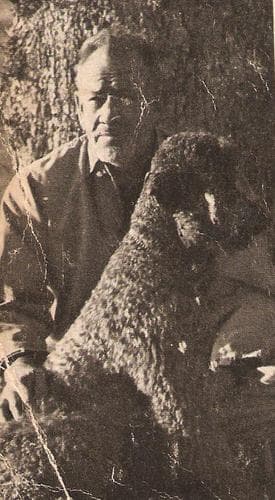
John Ernst Steinbeck was an American writer. He won the 1962 Nobel Prize in Literature "for his realistic and imaginative writings, combining as they do sympathetic humor and keen social perception". He has been called "a giant of American letters."







