“The greatest danger of all is to mistake the present for the future.”
— A recurring theme about humanity's shortsightedness.

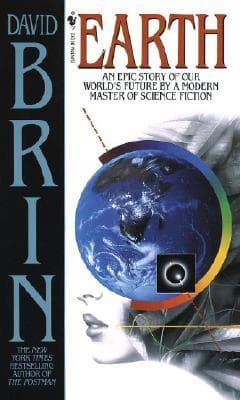
David Brin (1990)
Genre
Fantasy / Science Fiction
Reading Time
1400 min
Key Themes
See below
Sign in to track this book
As a man-made black hole consumes Earth from within, humanity races against time, facing the horrifying idea that its own end might be the planet's only hope.
The story begins with news of a fast-growing crisis: a micro-black hole, accidentally made in a physics experiment decades ago, has fallen into Earth's core and is eating matter at a faster rate. Dr. Alex Lustig, a smart but disgraced physicist, leads the effort to understand this event. He works with a global team, including the ambitious Dr. Cindi Lu, to track its progress and guess when Earth will be destroyed. Early calculations suggest the planet has less than a year before it collapses. This coming disaster causes widespread fear and a desperate search for solutions, showing the arrogance of humanity's unchecked scientific advances.
The WorldNet, a common and advanced global information system, becomes both a tool and a source of confusion during the crisis. It provides real-time updates on the black hole's progress, helps scientists worldwide work together, and allows access to knowledge. However, it also spreads wrong information, conspiracy theories, and radical ideas. Benjamin 'Ben' Bova, a young 'Net-diver' and historian, sorts through this flood of data, looking for truth and patterns. His skill in finding historical records and old data helps the scientific community deal with the unusual threat.
As the destruction date gets closer, two main survival plans become popular. The 'Ark' project, backed by powerful companies and governments, aims to build a large space habitat to save a chosen part of humanity and its genes. At the same time, the 'Seed Ship' plan, a more spread-out and hopeful effort, focuses on launching smaller, self-sufficient ships carrying genes and cultural records to distant stars. Dr. Cindi Lu is involved with the Ark project, seeing it as the most practical choice, while Alex Lustig, tired of political games, sees both as possibly flawed. He focuses instead on directly solving the black hole problem.
Amidst the global fear, a powerful and vocal eco-radical movement, called the 'Greens' or 'Gaia's Avengers,' gains many followers. Led by strong speakers, they argue that humanity itself is the problem, and the black hole, though human-made, offers a chance for Earth to 'reset' its evolutionary clock. They believe that letting humanity die would clean the planet and let nature return to normal. This idea causes strong ethical debates and conflicts with those trying to save human civilization, adding another layer of conflict to the already bad situation. Their actions often involve sabotage, making rescue efforts harder.
A big discovery happens when it becomes clear that humanity has secretly 'uplifted' various animal species, giving them better intelligence and communication skills. These uplifted animals, including chimpanzees, dolphins, and some birds, have formed their own groups and are now, facing doom, asking for their own rights. Fido, an uplifted dog, becomes a key figure, sharing complex ideas and moral questions. This discovery challenges human uniqueness and forces a rethink of what makes 'humanity' and who deserves a place in any survival plan, especially given the limited space on the Ark and Seed Ships.
Dr. Alex Lustig, more and more sure that the original black hole experiment's data holds important clues, teams up with Ben Bova. They go on a dangerous journey through the WorldNet's old layers and forgotten data centers, fighting both digital firewalls and physical barriers. They suspect that important information was hidden or lost because of the sensitive nature of the first experiment and the cover-up after. Their search leads them to powerful groups who want to keep the past hidden, fearing the political and social problems of revealing the full truth about the black hole's creation and its less destructive early phase.
Adding another layer of complexity and possible hope, an ancient alien probe, long inactive in the outer solar system, activates and starts sending signals. Global observatories detect its arrival, and it quickly becomes a focus of scientific and public interest. The probe's transmissions are complex and at first hard to understand, but they suggest a vast interstellar civilization and advanced technologies. Humanity deals with the meaning of this first contact, wondering if these aliens could offer a solution, or if their presence is just another factor in an already impossible situation, or even a threat. Alex Lustig sees it as a possible source of knowledge.
The micro-black hole keeps growing, causing more earthquakes, gravity changes, and widespread environmental damage. Earthquakes become more frequent and strong, and the planet's rotation starts to shift. Governments and science groups work non-stop, trying desperate measures to stabilize the core or remove the singularity. However, these efforts are constantly hindered by human conflicts: the Greens' sabotage, political fights over Ark spots, and the general breakdown of social order in many areas. The coming doom brings out both the best and worst in humanity.
Through his research and the recovered data, Alex Lustig develops a radical and controversial theory: the micro-black hole might not be a simple, inactive singularity. Instead, he thinks it is a 'ghost' black hole, a piece of a much larger, more complex event, possibly even a form of conscious or highly organized information entity. This theory suggests the black hole's behavior isn't just random physical consumption but might be affected by outside factors or even have a basic form of 'awareness' or 'purpose.' This idea is at first met with doubt but gains support as traditional physics cannot explain the anomaly.
Guided by Alex's 'ghost' theory and ideas from the alien probe's signals, humanity tries a desperate, two-part communication plan. Scientists work to understand the alien messages, hoping for advanced tech solutions or advice. At the same time, Alex and a special team try to 'communicate' with the black hole itself, treating it not just as a physical thing but as something that might respond to information or patterns. This means sending complex data streams and math sequences into the core, hoping to affect its behavior or understand its 'intent,' if any. The stakes are incredibly high, with Earth's fate on the line.
As the crisis reaches its peak, the various uplifted animal species, having organized through their own networks, make a powerful, united request to humanity. They demand to be included in any survival plan, arguing that they too are conscious beings with a right to exist and a future. Fido, the uplifted dog, speaks for their shared desires, stressing their unique views and possible help in a post-disaster world. This forces humanity to face its duties to the species it has changed, adding another layer of ethical complexity to the already difficult Ark and Seed Ship selections, and showing the moral cost of their own scientific actions.
In a final, last-ditch effort, Alex Lustig's radical theory is tested. The plan involves not destroying the black hole, but 'guiding' it. Using complex information from the alien probe and insights into the black hole's 'ghost' nature, humanity tries to direct the singularity, or part of it, out of Earth's core. This means a huge, coordinated effort to control gravity fields and energy, effectively 'launching' the black hole into space, or at least away from Earth's core. The success of this move redefines what 'survival' means, not just for humanity, but for Earth itself, and possibly even the black hole.
Earth is saved, but at a huge cost. The planet shows the scars of the near-disaster, with big geological and environmental changes. The black hole, or what is left of it, is either safely sent into space or changed into something less harmful. After this, humanity must rethink its relationship with technology, nature, and other conscious beings. The Ark and Seed Ship projects continue, but with new purpose and inclusion. A new era begins, with closer work with the uplifted animals, a more careful approach to science, and a deeper understanding of humanity's place in the cosmos, possibly guided by the alien probe's wisdom.
The Protagonist
Alex evolves from a disgraced outcast to Earth's reluctant savior, his radical theories ultimately proving essential for survival and redemption.
The Supporting/Antagonist (initially)
Cindi shifts from a rigid, pragmatic scientist to a more open-minded collaborator, recognizing the value of unconventional thinking.
The Supporting
Ben grows from a skilled data-miner to an active participant in saving Earth, his historical insights proving vital.
The Supporting
Fido transitions from a representative of the uplifted to a pivotal voice advocating for multi-species survival and cooperation.
The Antagonist
This character remains steadfast in their radical ideology, serving as a constant moral and physical obstacle to human survival efforts.
The Supporting/Plot Device
The probe activates, becomes a source of vital information, and ultimately aids in humanity's understanding of the black hole, without direct intervention.
The Supporting/Setting
The WorldNet's role evolves from a neutral information medium to a crucial, yet chaotic, battleground for truth and survival.
The Antagonist/Plot Device
The black hole's role evolves from a simple physical threat to a complex, potentially 'communicable' entity that humanity must understand rather than simply destroy.
The novel looks at the ethical issues and unexpected results of uncontrolled scientific progress. The micro-black hole itself is a direct outcome of a past experiment, showing humanity's arrogance in changing basic forces of nature without fully knowing the risks. Creating 'uplifted' animals also fits this theme, as humanity deals with its responsibility to the conscious beings it has made. The story constantly questions if humanity has the wisdom to use the power it creates, as seen in Alex Lustig's guilt and the global rush for solutions.
“We poked the universe, and it poked back, with a vengeance.”
Brin explores the limits of intelligence, going beyond human definitions. The 'uplifted' animals, especially Fido, challenge human uniqueness, showing complex thought, communication, and moral reasoning. The alien probe further expands this, suggesting vast and ancient forms of intelligence. Even Alex Lustig's 'ghost' theory about the black hole hints at a non-biological, information-based form of 'consciousness.' This theme makes characters and readers think again about what makes a 'person' or a being worthy of survival, especially with the Ark's limited space and the Greens' radical views.
“Is it truly wisdom to save only ourselves, when we have sown sentience in others?”
The WorldNet, a main part of the setting, shows the difficulties of living in a time of constant information. While it helps global cooperation, it also creates wrong information, conspiracy theories, and radical ideas. Ben Bova's role as a 'Net-diver' highlights how hard and important it is to sort through vast amounts of data to find true facts. The novel suggests that in a world full of information, critical thinking and good judgment are most important, and finding and understanding historical data is key to understanding current threats and future solutions.
“The Net holds all knowledge, and all lies, in equal measure. The trick is knowing the difference.”
Earth's coming destruction and the alien probe's arrival force humanity to face its smallness and fragility in the universe. The debate over the Ark and Seed Ships shows humanity's desperate attempt to keep itself going, while the Greens' idea suggests giving up to cosmic forces. The alien probe's existence hints at a vast, ancient interstellar civilization, putting humanity in a much bigger context. This theme explores humanity's fears about existence, its ability for both self-preservation and self-destruction, and its potential for growth and understanding beyond its planet.
“We are but a whisper in the cosmic wind, yet we scream for our survival.”
The central existential threat driving the entire narrative.
The micro-black hole serves as the ultimate ticking clock and the primary antagonist. It is a physical manifestation of humanity's scientific hubris, created by past experiments. Its relentless consumption of Earth's core creates an escalating crisis, forcing humanity to unite, innovate, or perish. It acts as a catalyst for all major plot points, from scientific research and survival projects to ethical debates and radical movements. Its mysterious nature also allows for the introduction of Alex Lustig's 'ghost' theory, shifting it from a purely physical threat to a potentially communicable entity.
A ubiquitous global information network that shapes communication, knowledge, and conflict.
The WorldNet functions as both a setting and a crucial plot device. It is the primary means by which characters gather and disseminate information, collaborate scientifically, and experience the global crisis. It allows for rapid communication and data access, but also amplifies misinformation and radical ideologies, reflecting the chaos of the times. Ben Bova's unique skills in navigating the Net are essential for uncovering hidden truths. The Net's pervasive nature underscores the theme of information overload and the challenge of discerning truth amidst a deluge of data.
Sentient animal species created by humans, who challenge human exceptionalism and ethical responsibilities.
The uplifted animals, particularly Fido, serve as a powerful ethical and philosophical plot device. Their existence forces humanity to confront the moral implications of its scientific advancements and its definition of sentience. They are not merely background elements but active participants, advocating for their own rights and contributing unique perspectives to the survival debate. Their presence complicates the 'humanity-first' approach to survival, adding another layer of conflict and forcing a re-evaluation of what constitutes a 'person' and who deserves a future on a saved Earth or in space.
An ancient extraterrestrial artifact that provides cryptic clues and a broader cosmic context.
The alien probe acts as a deus ex machina in a more subtle, informational sense. Its activation and transmission of complex data provide crucial, albeit cryptic, insights that help Alex Lustig develop his 'ghost' theory and ultimately guide humanity's efforts to 'communicate' with the black hole. It expands the narrative's scope beyond Earth, hinting at a vast, ancient interstellar civilization and offering a glimmer of hope or a new understanding of the universe. It challenges human scientific paradigms and forces a re-evaluation of humanity's place in the cosmos.
“The greatest danger of all is to mistake the present for the future.”
— A recurring theme about humanity's shortsightedness.
“Every tool, every advance, every new way of seeing, also brings new ways to make mistakes.”
— Reflecting on the double-edged sword of technological progress.
“We are the sum of our stories, and the stories we tell ourselves about who we are.”
— Exploring the role of narrative and self-perception in human identity.
“The universe doesn't care about your plans. It just is.”
— A humbling reminder of the vast indifference of the cosmos.
“Sometimes the best way to save something is to let it change.”
— Discussing the necessity of evolution and adaptation for survival.
“Ignorance is not bliss when the consequences are global.”
— Highlighting the perils of willful ignorance in an interconnected world.
“Hope is a terrible thing to waste, but it's even worse to not have any.”
— A character grappling with despair and the importance of maintaining optimism.
“The past is not dead. It's not even past. It's just a different layer of the present.”
— Reflecting on the persistent influence of history.
“True freedom isn't the absence of rules, but the ability to choose which rules you live by.”
— Debating the nature of liberty in a complex society.
“We don't inherit the Earth from our ancestors; we borrow it from our children.”
— A powerful statement on environmental responsibility.
“The most dangerous lies are the ones we tell ourselves.”
— Exploring the theme of self-deception and its consequences.
“A civilization is only as strong as its weakest link, and its weakest link is usually its ability to adapt.”
— Analyzing the fragility of complex societies.
“To truly see, you must first be willing to be blind to what you thought you knew.”
— Emphasizing the importance of open-mindedness and shedding preconceptions.
“The greatest irony of all is that the more we try to control nature, the more we become subject to its whims.”
— A commentary on humanity's attempts to dominate the natural world.
Ready to see how well you understood this book? Take our interactive quiz with 10 questions.
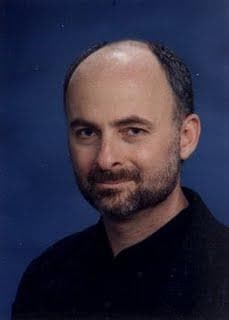
David Brin is a renowned science fiction author, best known for his award-winning novels "Startide Rising" and "The Postman." He holds a Ph.D. in astrophysics from the University of California, San Diego, which informs his scientifically grounded and thought-provoking narratives. Brin's work often explores themes of humanity's future, societal evolution, and the nature of intelligence.







