“No matter how much you know, there's always more to learn.”
— Paul reflects on the vastness of his prescient knowledge and its limitations.

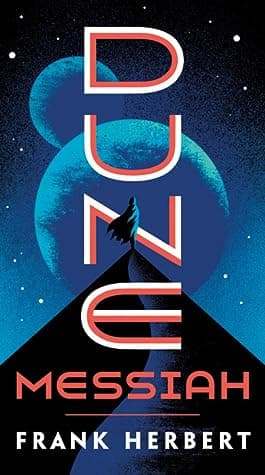
Frank Herbert (1969)
Genre
Fantasy / Science Fiction
Reading Time
300 min
Key Themes
See below
Sign in to track this book
Haunted by visions and caught in the fanaticism he inspired, Emperor Paul Muad'Dib navigates political assassinations and personal betrayals, trying to avoid a future where his power crumbles and his beloved Chani faces a terrible fate.
Twelve years after the Battle of Arrakeen, Emperor Muad'Dib, Paul Atreides, rules the known universe from Arrakis. His holy war has killed billions, and the Fremen worship him, which deeply troubles him. He has visions of his own death and humanity's future. A conspiracy against him forms, led by four figures: Reverend Mother Gaius Helen Mohiam of the Bene Gesserit, Scytale, a Tleilaxu Face Dancer, Edric, a Spacing Guild Navigator who blocks prescience, and Princess Wensicia, daughter of the late Emperor Shaddam IV, who wants to restore House Corrino. Their first meeting on Wallach IX confirms their plan to remove Paul from power.
The conspirators send Paul a gift: a ghola of his deceased swordmaster, Duncan Idaho, named Hayt. This ghola, created by Tleilaxu technology, has Duncan's memories up to his death, though they are initially hidden. Hayt is presented to Paul and Chani, and Paul, despite his unease, accepts him. The ghola is subtly programmed to corrupt Paul or, failing that, to kill him. This 'gift' is a psychological weapon, meant to use Paul's emotions and introduce an unpredictable element into his court, forcing him to face the ghost of a beloved friend.
Chani, Paul's Fremen concubine, becomes pregnant with twins, an event Paul has foreseen with both happiness and dread. The conspirators, especially Reverend Mother Mohiam, see this as a chance to control Paul's lineage. They subtly influence Chani's diet through her servants, giving her a fertility drug that speeds up her pregnancy and makes it more difficult, weakening her and increasing the risk to her and the children. Paul knows about the manipulation but is trapped by his visions, seeing a path where any interference leads to a worse outcome, forcing him to watch his beloved suffer.
During a public ceremony, a Stone Burner device, a powerful weapon, explodes near Paul. The explosion blinds him, but his vision abilities let him 'see' through the eyes of others around him, maintaining his awareness of the physical world. This event is a turning point, forcing Paul to face the limits and burdens of his visions. He must now navigate a world he cannot physically see, relying entirely on his inner vision, further isolating him and increasing the pressure to fulfill his destiny.
The ghola Hayt, under the subtle influence of his Tleilaxu programming, tries to kill Paul. In a moment of vulnerability, Hayt's conditioning forces him to act, but Paul, anticipating the attack through his visions, deflects it. This aggression, however, causes a deep psychological crisis within Hayt. The conflict between his programmed command and the buried memories of Duncan Idaho's loyalty to the Atreides house causes a breaking point, allowing Duncan Idaho's true personality and memories to return, shattering the Tleilaxu control and confirming his loyalty to Paul.
Chani goes into labor, a difficult and dangerous process made worse by the conspirators' drugs. She gives birth to twins: a boy, Leto II, and a girl, Ghanima. However, the strain of childbirth, along with the earlier manipulations, is too much for her, and she dies shortly after. Paul, blind and devastated, holds her. This tragic event fulfills one of Paul's most feared visions, cementing his path toward a painful future and marking a deep personal loss that removes his last human comfort.
Immediately after Chani's death, Scytale, disguised as a Fremen, approaches Paul. He offers Paul the ultimate temptation: a ghola of Chani, promising to bring her back. Scytale believes that Paul, in his grief and blindness, will be desperate enough to accept, thus falling further under Tleilaxu influence. This is Scytale's final, desperate attempt to control Paul, exploiting his deepest emotional wound. Paul, however, sees through the deception and, despite his deep sorrow, refuses the offer, understanding the trap it represents.
Paul, guided by his visions and the unique insight from his newborn son, Leto II, uses a crysknife to kill Scytale, who is still disguised. Having accepted his fate and the burden of his visions, and with Chani gone, Paul makes a profound decision. He chooses to follow the ancient Fremen tradition for the blind: to walk alone into the desert, becoming a legendary figure and freeing his people from his direct rule. This act is both a sacrifice and a liberation, ensuring the survival of his children and the future of humanity.
Lady Jessica, Paul's mother, returns to Arrakis after years on Caladan, summoned by Paul and aware of the unfolding crisis. She arrives to find Paul blind and Chani dead, with her newborn grandchildren, Leto II and Ghanima. Her presence brings stability amidst the chaos. Alia, Paul's younger sister, now grown and a Reverend Mother, takes on a more prominent role, becoming the regent for the infant twins and the ruler of the Imperium in Paul's absence, showing her intelligence and inherited abilities.
Paul's departure into the desert, while seeming like self-sacrifice, is also a calculated move to prevent humanity's stagnation. He understands that his absolute power and the rigid path of his holy war threaten to trap humanity in a sterile future. By removing himself, he forces the universe to adapt and allows his children, Leto II and Ghanima, who share his visions but have their own perspectives, to guide humanity towards the Golden Path he foresaw. His legacy includes both immense destruction and a desperate, hopeful push for survival.
The Protagonist
Paul begins as an all-powerful but tormented ruler, grappling with the moral cost of his jihad. He ends by embracing his fate, sacrificing his sight and life as Emperor to set humanity on a new, uncertain path.
The Supporting
Chani's primary arc revolves around her pregnancy and her tragic death, which serves as a pivotal emotional turning point for Paul.
The Supporting
Alia matures from a powerful child into a capable and decisive leader, stepping up to govern in Paul's absence.
The Supporting
Hayt transforms from a programmed tool of the conspirators into the fully restored Duncan Idaho, reaffirming his loyalty and love for the Atreides.
The Antagonist
Mohiam remains steadfast in her opposition to Paul, ultimately failing in her attempts to control him.
The Antagonist
Scytale acts as a persistent, adaptable threat to Paul, ultimately being defeated by Paul's prescience and resolve.
The Antagonist
Edric serves as a passive but essential component of the conspiracy, using his unique abilities to aid the antagonists.
The Antagonist
Wensicia remains a determined antagonist, representing the lingering threat of the old Imperial order.
The Supporting
Jessica returns to Arrakis to support her family and ensure the survival of the Atreides line, providing wisdom and stability.
Paul Atreides has absolute power as Emperor and the terrible burden of seeing all possible futures. This theme explores the isolation and moral dilemma of knowing the future and the awful results of trying to guide humanity. Paul is always aware of the billions killed in his name and the 'Golden Path' that demands great sacrifice. His blindness, caused by the Stone Burner, ironically frees him from the physical world, forcing him to rely only on his inner visions, increasing his burden. He is a god-like figure who feels trapped, not freed, by his abilities.
“A man's flesh is his prison. He's a prisoner at best.”
The novel examines the dangers of religious fanaticism and the burden of being a messiah. Paul, revered as Muad'Dib, struggles with the Fremen's worship, which he knows is leading humanity down a dangerous, unchanging path. His holy war, born from his rise, has consumed the galaxy, and he understands that his own legend is a cage. The conspirators use this fanaticism, while Paul desperately seeks a way to free humanity from the strict control of his own myth. His final act of walking into the desert is an attempt to break the cycle of blind devotion.
“No man can see his own future or the future of his people. He sees only a path that he must take.”
The ability to see and experience the future, a gift and a curse.
Prescience is the central plot device, possessed by Paul, Alia, and to a lesser extent, Edric. For Paul, it's an overwhelming burden, allowing him to see all possible futures, but showing that any deviation from a specific, painful path leads to humanity's extinction. It traps him, as he must allow terrible events to unfold to ensure a greater good. Edric's limited prescience and ability to 'hide' from Paul's vision make him a crucial element of the conspiracy, as he can shield the other conspirators from Paul's all-seeing eye, creating pockets of unpredictability.
The Tleilaxu ability to resurrect the dead, used for manipulation and psychological warfare.
Ghola technology, specifically the creation of Hayt (Duncan Idaho), is a significant plot device. It serves multiple functions: as a psychological weapon against Paul, designed to exploit his emotional attachment to Duncan; as a means to explore identity and memory, as Hayt struggles between his programmed self and Duncan's original personality; and as a symbol of the Tleilaxu's manipulative power. The offer of a Chani ghola is the ultimate temptation, a test of Paul's resolve and his understanding of the dangers of clinging to the past.
A powerful, exotic weapon that blinds Paul but enhances his prescient sight.
The Stone Burner is a highly destructive, exotic weapon used in the assassination attempt on Paul. Its primary function as a plot device is to physically blind Paul. However, this physical blindness paradoxically intensifies his reliance on and experience of prescience. It forces him to 'see' through his inner vision and the eyes of others, making his connection to the cosmic web of fate even more profound and painful. It's a catalyst for his ultimate decision to embrace the Fremen tradition for the blind.
“No matter how much you know, there's always more to learn.”
— Paul reflects on the vastness of his prescient knowledge and its limitations.
“The greatest peril to the Kwisatz Haderach is the Kwisatz Haderach.”
— Scytale, a Face Dancer, offers a chilling observation about Paul's unique burden.
“A man's flesh is his prison. His loves are his chains.”
— Paul contemplates the constraints of his human existence and his emotional attachments.
“The future is a path drawn on water.”
— Paul describes the elusive and ever-changing nature of his prescient visions.
“When you are a god, you do not have friends. You have worshipers and enemies.”
— Paul understands the isolating reality of his divine status.
“To be truly free, you must be willing to sacrifice everything.”
— Paul grapples with the ultimate costs of his chosen path.
“The highest function of love is that it makes the loved one a unique and irreplaceable being.”
— Paul reflects on the profound nature of love, particularly for Chani.
“Religion, too, has its own special terrors.”
— Paul considers the destructive potential of the jihad he unleashed.
“Hope is a word used by the weak to make themselves feel strong.”
— Scytale expresses a cynical view of hope from the perspective of a Tleilaxu.
“The purpose of a test is not to see if you can pass, but to see how you fail.”
— The Bene Gesserit philosophy on trials and learning from mistakes.
“Power attracts the corruptible. Absolute power attracts the absolutely corruptible.”
— A general observation on the nature of power and its influence.
“There is no escape from destiny, only a choice of how you meet it.”
— Paul accepts the inevitability of his fate while asserting his agency.
“The greatest harm can be done by those who mean to do good.”
— Paul reflects on the unintended and devastating consequences of his actions.
“A leader must be able to see the future, but also to be able to live in the present.”
— Paul struggles with the dichotomy of his prescient visions and his immediate responsibilities.
Ready to see how well you understood this book? Take our interactive quiz with 10 questions.
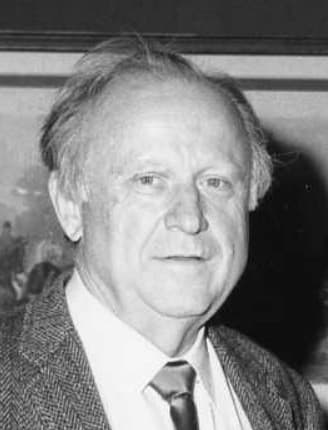
Franklin Patrick Herbert Jr. was an American science fiction author best known for the 1965 novel Dune and its five sequels. Though he became famous for his novels, he also wrote short stories and worked as a newspaper journalist, photographer, book reviewer, ecological consultant, and lecturer.







