“His soul had approached that region where dwell the vast hosts of the dead.”
— The final lines of 'The Dead,' reflecting Gabriel Conroy's epiphany.

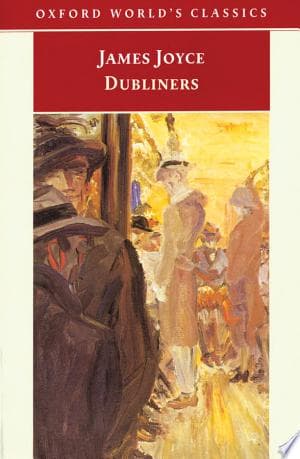
James Joyce (1996)
Genre
Literary Fiction / Historical Fiction
Reading Time
300 min
Key Themes
See below
Sign in to track this book
Fifteen realistic tales by James Joyce examine the stagnant lives of early 20th-century Dubliners, showing their spiritual and emotional traps through moments of sudden, often unsettling, insight.
The story begins with a young boy thinking about the coming death of Father Flynn, a former priest who had a stroke and was mentally ill. The boy had been close to Father Flynn, who taught him subjects and told him disturbing stories. After the priest's death, the boy visits the house where he encounters Father Flynn's two sisters, Eliza and Nannie. They talk about their brother's life and his odd habits, especially breaking a chalice and his later mental decline. The conversation and the lingering idea of the priest's 'simony' disturb the boy, though he does not fully understand its meaning. He feels a mix of interest, fear, and freedom from the priest's influence.
A young boy, tired of school, plans an adventure with his friend Mahony to skip classes and explore the city. They pack food and leave, eventually reaching the Pigeon House, a power station on Dublin Bay. During their trip, they meet a strange, older man who talks to them. The man's talk becomes more disturbing, moving from literature to hitting boys and then to his own fantasies of whipping them. The boys grow increasingly uneasy and scared by his strange talk. Finally, Mahony is distracted by a cat, letting the narrator slip away from the man, leaving the unsettling meeting behind.
A young, unnamed boy on North Richmond Street becomes obsessed with Mangan's sister, who lives across the street. He idealizes her, and his days are filled with thoughts of her. When she finally speaks to him, asking if he plans to go to Araby, a bazaar, he promises to bring her something. His mind focuses entirely on this task, seeing it as an important mission. On the evening of the bazaar, his uncle is late returning home, delaying his departure. When he finally arrives at Araby, it is late, many stalls are closed, and the place feels dull and ordinary. He overhears a common conversation between a young woman and two men. Realizing how unimportant his quest was and how empty his romantic ideas were, he stands in the dark hall, overcome by a feeling of foolishness and pain.
Eveline Hill sits by her window, thinking about her life in Dublin and her upcoming decision. She has a chance to escape her dull life and abusive father by running away with Frank, a kind sailor who promises her a new life in Buenos Ayres. She thinks about her childhood, her dead mother's hard life, and her promise to her mother to keep the family together. While Frank offers freedom and love, her home, despite its difficulties, gives her a familiar, if stifling, safety. At the quay, as Frank urges her to board the ship, Eveline feels a sudden, strong wave of fear and duty. She cannot move, her will frozen, and she stays on the dock, watching Frank leave without her. Her face shows neither love nor goodbye.
Lenehan and Corley, two young men, walk through Dublin's streets, discussing their plans and women. Corley talks about his latest target, a servant girl who works for a rich family, detailing his plans to get money from her. Lenehan, though seemingly more cynical, listens closely, hoping to gain from Corley's success. They walk through the city, watching other people's lives, especially women, whom they see as possible sources of money or entertainment. Corley eventually meets the servant girl, and Lenehan waits nearby, eager for the outcome. When Corley returns, he proudly shows a small gold coin, a half-sovereign, which he successfully got from the girl, showing their parasitic lives and the exploitation of others.
Mrs. Mooney, a sharp and determined former butcher's daughter, runs a successful boarding house in Dublin. Her daughter, Polly, a flirtatious and somewhat innocent young woman, has been having an affair with Mr. Doran, a respectable, older lodger who works for a wine merchant. Mrs. Mooney knows about the affair and purposely lets it continue, seeing a chance to secure a good marriage for Polly and protect her family's name. After several weeks, she arranges a meeting, cornering Mr. Doran and pressuring him to propose marriage. Mr. Doran, filled with guilt and fear of social ruin, reluctantly agrees, feeling trapped and resigned to his fate, while Polly waits for her mother's decision with a mix of worry and hope.
Little Chandler, a shy and unsatisfied clerk, dreams of being a poet but is held back by his home life and lack of ambition. He eagerly awaits his old friend, Ignatius Gallaher, who has found success as a journalist in London. When they meet, Gallaher shows confidence, worldliness, and a cynical charm, telling stories of his adventures and successes abroad. Chandler feels increasingly inferior and resentful, comparing his own stagnant life to Gallaher's lively one. Gallaher, though friendly, offers little true encouragement for Chandler's poetry dreams. After Gallaher leaves, Chandler returns home to his wife and crying baby, feeling stifled by his small, ordinary life and the realization that his dreams will likely never come true. He ends up yelling at his baby, only to be filled with regret.
Farrington, a copy-clerk in a Dublin law office, endures a day of work frustration and shame. He struggles to finish a difficult copying task, faces his demanding boss's anger, and is constantly interrupted by colleagues. His workday is a series of small annoyances and perceived unfairness. After work, he seeks comfort in alcohol, meeting friends at various pubs. He lends money he does not have to a woman, only to have it stolen, further fueling his anger. Drunk and bitter, he returns home late to his young son, Tom. Unable to express his frustrations, he takes out his stored-up rage on the boy, brutally beating him for a small mistake, showing a cycle of violence and helplessness.
Maria, a small, kind, and careful single woman who works as a laundress, will spend Halloween with Joe, one of her former charges from the Dublin by Lamplight laundry, and his family. She travels to their home, bringing cakes and feeling a quiet sense of excitement. At the party, Joe and his wife greet her warmly. During a traditional Halloween game, where blindfolded people choose an object symbolizing their future, Maria accidentally picks a lump of clay (symbolizing death) twice, but a playful participant quickly replaces it with a prayer book (symbolizing a religious life). Later, asked to sing, Maria performs 'I Dreamt That I Dwelt,' but she leaves out a verse, showing her unconscious avoidance of romantic love. Despite the brief warmth, the story highlights her isolation and the quiet sadness of her life.
Mr. James Duffy, a deeply solitary and precise man, lives a life of strict routine and emotional distance in Chapelizod. He avoids closeness and human connection, preferring books and his own thoughts. He forms an unusual friendship with Mrs. Sinico, a married woman who shares his intellectual interests. Their relationship grows into a deep, but proper, emotional bond, but when Mrs. Sinico tries to move towards physical affection, Mr. Duffy pulls back, ending their meetings. Four years later, he reads in the newspaper that Mrs. Sinico has died by suicide, said to be from heart failure and alcohol abuse. The news deeply disturbs him, as he realizes he rejected the one person who truly understood him. He walks alone, overcome by regret and the crushing realization of his own deep isolation.
On Ivy Day (October 6th), the anniversary of Charles Stewart Parnell's death, a group of political canvassers gathers in a dimly lit committee room. They are supposedly working for a local election but mostly chat idly, drink stout, and complain about their money problems. The talk turns to Parnell, the respected but disgraced Irish nationalist leader. Some express admiration and longing for his leadership, while others criticize him or regret the current state of Irish politics, which they see as corrupt and ineffective. The atmosphere is one of stagnation and disappointment. Mr. Hynes, a poet, reads a poem he wrote praising Parnell, briefly sparking a shared feeling, but the moment quickly passes, leaving the men to their small arguments and the widespread sense of political paralysis in Dublin.
Mrs. Kearney, a determined and socially ambitious woman, tries to start her daughter Kathleen's career as a singer in the growing Irish cultural movement. She gets Kathleen a job to perform at a series of concerts organized by the Gaelic League. Mrs. Kearney carefully manages Kathleen's appearances and payment, driven by a wish for her daughter to gain recognition and to raise their family's social standing. When arguments arise over Kathleen's fees and the concert arrangements, Mrs. Kearney becomes increasingly aggressive and demanding, insisting on full payment and proper respect. Her relentless, almost ruthless, pursuit of her goals alienates the concert organizers and ultimately ruins Kathleen's opportunity, showing the commercialism and personal agendas hidden beneath the cultural nationalism.
Tom Kernan, a traveling salesman, falls down the stairs of a pub while drunk and bites his tongue. His friends, Mr. Power, Mr. Cunningham, and Mr. M'Coy, find him and decide this is a chance to reform him. They plan to take him to a Catholic retreat led by a Jesuit priest. They visit Kernan at his home, where his wife, a long-suffering woman, expresses her despair. The friends have a long and somewhat superficial discussion about the history and importance of the Catholic Church, especially the Jesuits, hoping to convince Kernan of the need for spiritual guidance. Kernan, though at first resistant, is eventually persuaded to attend the retreat, but his conversion seems more a passive acceptance of social pressure than a true spiritual awakening.
Gabriel Conroy and his wife Gretta attend the annual Christmas party hosted by his aunts, Kate and Julia Morkan, and their niece Mary Jane. Gabriel, an intellectual and somewhat distant figure, handles the social interactions, giving a polite but self-conscious speech. Throughout the evening, he thinks about his own perceived superiority and Dublin's provincial nature. As the party ends, Gretta is moved by a song, 'The Lass of Aughrim,' and later tells Gabriel that it reminded her of a young man named Michael Furey, who died for love of her when she was a girl. This revelation breaks Gabriel's complacent self-image. He realizes the depth of Gretta's past love and his own shortcomings. Standing at the window, watching the snow fall across Ireland, he considers how the living and the dead are connected, feeling a deep sense of humility and the universal nature of human experience and death.
The Protagonist
Gabriel undergoes a profound epiphany, realizing the superficiality of his own love and the depth of human connection and loss, leading to a humbling self-awareness.
The Supporting
Gretta's revelation about Michael Furey is a catalyst for Gabriel's transformation, though her own emotional landscape remains largely internal and consistent.
The Mentioned
His death and the subsequent discussions about his life introduce themes of spiritual paralysis and moral decay, impacting the young narrator's perception of the world.
The Protagonist
Eveline remains paralyzed by fear and duty, ultimately unable to choose freedom, reinforcing the story's theme of stasis.
The Protagonist
Chandler's brief hope for a more fulfilling life is crushed by the realization of his own mediocrity and the stifling nature of his domestic existence.
The Protagonist
Maria experiences a brief moment of warmth and connection, subtly highlighting her persistent loneliness and the missed opportunities in her life.
The Protagonist
Duffy realizes the devastating consequences of his emotional detachment, leading to a profound and painful understanding of his own isolation and missed opportunities for human connection.
The Supporting
Corley's character remains consistent, embodying the unchanging nature of exploitation and moral stagnation.
The Protagonist
Farrington's day descends into a cycle of frustration and alcohol, culminating in an act of domestic violence, highlighting his unchanging and destructive patterns.
The Supporting
Mrs. Mooney successfully executes her plan, demonstrating her unwavering resolve and cunning in a stagnant social environment.
The Mentioned
Parnell's legacy, though absent, acts as a benchmark against which the present political stagnation is measured.
The main theme of 'Dubliners,' paralysis, refers to a spiritual, emotional, and mental standstill that affects many characters and Dublin itself. Characters often have chances for escape or change but cannot act, trapped by fear, duty, social rules, or a lack of will. This paralysis is clear in Eveline's inability to leave Dublin with Frank, Little Chandler's failure to follow his writing dreams, and Mr. Duffy's emotional distance that isolates him. The city itself is shown as a place where life force is drained, and people are left unable to find true fulfillment or freedom. The stories together show a city and its people caught in a cycle of inaction and despair.
“Her eyes moved to the rain-swept window. It was raining. The rain was running down the pane. She knew that in a few hours she would be in a ship going to Buenos Ayres, away from her home, from her father, from her life. But she could not go. She was afraid.”
Many characters in 'Dubliners' dream of escape—from their dull lives, controlling families, or Dublin's small-town limits. These dreams often involve foreign places (Buenos Ayres in 'Eveline,' London in 'A Little Cloud') or romantic ideals (Araby). However, these hopes always lead to disappointment. The boys in 'An Encounter' find their adventure ending with a disturbing meeting, the narrator of 'Araby' finds the bazaar dull and disappointing, and Eveline cannot take her chance for freedom. The stories suggest that true escape is impossible, or that even if physically achieved, the inner paralysis and disappointment remain, showing how useless it is to seek outside solutions for inner problems.
“Gazing up into the darkness I saw myself as a creature driven and derided by vanity; and my eyes burned with anguish and anger.”
Joyce often explores the moral and spiritual decline in Dublin society and its institutions, especially the Catholic Church. The disgraced Father Flynn in 'The Sisters,' with his 'simony' and mental instability, suggests a corrupt spiritual power. Characters like Corley and Lenehan in 'Two Gallants' embody a parasitic and exploitative morality, while Mrs. Mooney in 'The Boarding House' cleverly manipulates situations for personal gain, ignoring ethical concerns. The political stagnation and corruption in 'Ivy Day in the Committee Room' further show this decay. The collection paints a picture of a city where true virtue and spiritual health are rare, replaced by hypocrisy, self-interest, and a general unease.
“His father had been a well-known auctioneer, and his mother a devout Catholic. But neither of these facts seemed to have had any influence on his moral life.”
Joyce uses the idea of 'epiphany' as a sudden spiritual revelation or a moment of deep understanding for his characters. These moments often happen at a story's peak, revealing a deeper truth about the character's life, relationships, or existence. While often painful, they are important for understanding the character's inner state. Gabriel Conroy's realization about his wife's past love and his own emotional shortcomings in 'The Dead' is the clearest example. Mr. Duffy's crushing regret over Mrs. Sinico's death in 'A Painful Case' is another. These epiphanies, though not always leading to action or change, clarify the characters' inner paralysis and the harsh realities of their lives.
“His soul had approached that region where dwell the vast hosts of the dead. He knew that such a tenderness as he had never felt before was welling up in his heart, an infinite charity. He saw himself as a paltry figure, an inadequate husband, a man who had never truly lived.”
The past, both personal and national, strongly influences the characters in 'Dubliners,' often holding them back. Eveline is trapped by a promise to her dead mother and childhood memories. Gabriel Conroy in 'The Dead' faces the deep impact of Gretta's past love for Michael Furey, which overshadows his current relationship. The political canvassers in 'Ivy Day in the Committee Room' are haunted by Charles Stewart Parnell, whose legacy highlights the current political stagnation. This theme suggests that Dubliners cannot move forward because they constantly look backward, either idealizing a romanticized past or being tied down by its unresolved issues, adding to the widespread sense of paralysis.
“She had hard work to keep the house together and to see that the two young children who had been left to her charge went to school regularly and got their meals. But her father was not so bad then; and besides, her mother was alive. It was her mother's life that had been hard.”
A sudden, profound realization or spiritual manifestation.
Joyce's concept of epiphany is central to 'Dubliners.' It refers to a moment where a character experiences a sudden, often painful, flash of insight into the true nature of their reality, a person, or a situation. These epiphanies are not necessarily transformative in action but are crucial for the reader's understanding of the character's inner life and the story's themes. They often occur at the climax, revealing the paralysis or disillusionment that has been building. For example, Gabriel Conroy's realization at the end of 'The Dead' about his own inadequacy and the power of his wife's past love is a classic Joycean epiphany.
The use of objects, characters, or events to represent abstract ideas or qualities.
Symbolism is pervasive throughout 'Dubliners,' enriching the stories with layers of meaning. Common symbols include the city of Dublin itself, representing paralysis and decay. The rain and snow often symbolize melancholy, stagnation, or the pervasive chill of death. Frank, in 'Eveline,' symbolizes escape, while the lump of clay in 'Clay' symbolizes death. The broken chalice in 'The Sisters' symbolizes a corrupt spiritual authority. These symbols often reinforce the central themes, particularly paralysis, disillusionment, and moral decay, without explicit authorial commentary, allowing the reader to infer deeper meanings.
Narration that blends the narrator's voice with a character's thoughts and feelings.
Joyce frequently employs free indirect discourse, allowing the narrative voice to subtly merge with the thoughts and perceptions of the characters. This technique provides intimate access to the characters' inner lives without using direct quotation or explicit 'he thought' or 'she felt' tags. It blurs the line between narrator and character, immersing the reader directly into the character's subjective experience. This is particularly effective in stories like 'Araby' and 'Eveline,' where the reader experiences the young protagonists' hopes, fears, and eventual disillusionment directly through their filtered consciousness, enhancing the sense of psychological realism and empathy.
Recurring words, phrases, or images that carry symbolic weight.
Joyce utilizes repetition and recurring motifs to create thematic connections across the collection and within individual stories. The motif of paralysis, for instance, is not just a theme but often manifests in repeated imagery of stillness, stagnation, or characters being unable to move. The word 'piteous' or 'pitiful' appears in descriptions of various characters, highlighting a shared sense of pathos. Recurring images like dust, twilight, and gaslight contribute to the melancholic and stifling atmosphere of Dublin. These repetitions subtly reinforce the collection's overarching themes and create a cohesive, if somber, portrait of the city and its inhabitants.
“His soul had approached that region where dwell the vast hosts of the dead.”
— The final lines of 'The Dead,' reflecting Gabriel Conroy's epiphany.
“One felt that one could never get to know him personally.”
— Describing Father Flynn in 'The Sisters,' highlighting his aloofness.
“The box of biscuits had fallen to the floor and the rats had got at it.”
— From 'Eveline,' symbolizing the decay and poverty of her home life.
“He held her hand and she knew that he was falling in love with her.”
— From 'Araby,' depicting the boy's naive romantic idealization.
“Her eyes had called him to go forth and at the same time had denied him what he sought.”
— From 'Araby,' expressing the boy's frustration and the elusive nature of his quest.
“She stood up in a sudden impulse of terror. Escape! She must escape!”
— Eveline's internal struggle and ultimate paralysis as she contemplates leaving Dublin.
“He knew that he was a prisoner for life.”
— From 'A Little Cloud,' Little Chandler's realization about his stagnant life.
“People like that don't change. They never change.”
— From 'Counterparts,' Farrington's cynical view of his colleagues and life.
“His heart was full of a dull pain, and he knew that he had been a fool.”
— From 'A Painful Case,' Mr. Duffy's remorse after breaking off his relationship.
“He was an Irish nationalist and, of course, a Catholic.”
— From 'Ivy Day in the Committee Room,' subtly highlighting the intertwined identities in Dublin.
“They were friends, but they were not intimate friends.”
— From 'Two Gallants,' describing Lenehan and Corley's superficial relationship.
“He watched her as she stood by the window, her head bowed in thought.”
— From 'The Dead,' Gabriel observing Gretta as she listens to 'The Lass of Aughrim.'
“His father had been a good man, but he had been too good.”
— From 'The Dead,' Gabriel's internal thoughts about his deceased father-in-law.
“He felt that he had been cut off from the world.”
— From 'A Painful Case,' Mr. Duffy's self-imposed isolation.
Ready to see how well you understood this book? Take our interactive quiz with 10 questions.
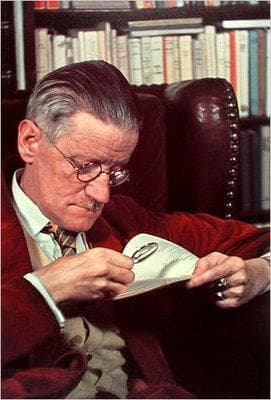
James Augustine Aloysius Joyce was an Irish novelist, poet, and literary critic. He contributed to the modernist avant-garde movement and is regarded as one of the most influential and important writers of the 20th century. Joyce's novel Ulysses (1922) is a landmark in which the episodes of Homer's Odyssey are paralleled in a variety of literary styles, particularly stream of consciousness. Other well-known works are the short-story collection Dubliners (1914), and the novels A Portrait of the Artist as a Young Man (1916) and Finnegans Wake (1939). His other writings include three books of poetry, a play, letters, and occasional journalism.







