“The past is a country we can never truly leave, no matter how far we travel.”
— A recurring theme about the lingering effects of past events on the characters' lives.

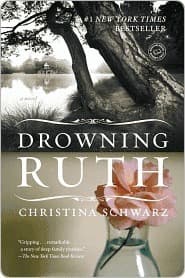
Christina Schwarz (2000)
Genre
Historical Fiction / Mystery
Reading Time
7 hr 30 min
Key Themes
See below
Sign in to track this book
In 1919 Wisconsin, a young mother's drowning beneath a frozen lake reveals dark family secrets, leaving her sister and daughter to face a chilling legacy.
In the winter of 1919, Mathilda Neumann, a young mother, is found drowned beneath the ice of a rural Wisconsin lake. Her husband, Carl, and her sister, Amanda, who had been living with them on the farm, discover her body. The immediate aftermath is chaotic, filled with grief and suspicion. Carl, a German immigrant drafted into the war, is devastated but seems to keep a secret. Amanda, a nurse during the war who returned home suffering from shell shock, is distraught and protective of Mathilda's infant daughter, Ruth. Authorities are called, but the circumstances of Mathilda's death remain unclear, suggesting tensions within the isolated family.
Before Mathilda's death, Amanda returned to the Neumann farm after serving as a nurse in World War I. Haunted by what she saw and suffering from shell shock, she found the quiet, isolated farm life difficult. Mathilda, her younger sister, had married Carl Neumann, a German immigrant, and was raising their daughter, Ruth. Amanda felt protective of Mathilda, whom she saw as naive and vulnerable, especially with the stoic Carl. The sisters' bond, though strong, was strained by Amanda's mental state and unspoken tensions on the farm, particularly regarding Carl and the sisters' differing views on their future.
After Mathilda's drowning, a custody battle for infant Ruth begins. Amanda believes Carl is responsible for Mathilda's death and unfit to raise Ruth, so she fights to keep her niece. Carl, grief-stricken and confused by Amanda's accusations, insists on his right to raise his daughter. The local community and legal system become involved, showing the cultural clash between Carl's German background and the American-born community, as well as societal expectations for single fathers versus a woman perceived as mentally unstable. This conflict forces Amanda and Carl to live together for a time, creating a strained and emotional environment.
Convinced that Carl is dangerous and Ruth is not safe with him, Amanda decides to flee the farm with the child. She changes their names, using 'Neumann' for Ruth and posing as Ruth's mother. They settle in a new town, trying to build a new life away from the past. This abduction, born of love and fear, changes their identities and sets them on a path of deception. Amanda dedicates herself to raising Ruth, giving her a deep, almost suffocating, sense of love and protection, while carrying the burden of her secret.
Ruth grows up believing Amanda is her mother. Their life is isolated, centered almost entirely on each other. Amanda is protective, often keeping Ruth from other children and social interactions. This creates a deep bond but also an unease in Ruth. As Ruth matures, she notices inconsistencies in Amanda's stories and a sadness that hangs over her 'mother.' Ruth's intelligence and independent spirit lead her to question the gaps in her past, especially the absence of a father figure and other relatives. These unspoken questions create a subtle but growing tension between them.
Years later, Carl Neumann, who never stopped searching for his daughter, reappears in Ruth's life. He has tracked them down, following leads over decades. His sudden presence shatters the world Amanda built for herself and Ruth. Carl is older, weathered by grief and time, but his resolve to reclaim his daughter is firm. His return forces Ruth to confront the truth about her parentage and the life she has been living. Amanda panics, her greatest fear realized, and she tries to maintain her deception, but Carl's presence and his version of events begin to chip away at Ruth's beliefs.
Torn between the two people claiming to be her parent, Ruth begins her own investigation into the past. She travels to the old Neumann farm, now abandoned, searching for clues. She speaks to old acquaintances, examines local records, and pieces together information. This journey is not just about facts, but also about understanding her family's emotional history. Ruth grapples with the conflicting stories of Amanda and Carl, trying to tell truth from distortions of memory, grief, and self-preservation. Her quest is driven by a need to understand her identity and the events that shaped her life.
Through her investigation, Ruth uncovers a devastating secret: Mathilda Neumann had given birth to twin girls. One twin, named Ruth, died shortly after birth. The other twin, the one Amanda raised, was named Mathilda, after her mother. Amanda, in her grief and distress, swapped their identities, perhaps to protect the surviving twin from Carl, or to cope with the loss, or both. This revelation redefines Ruth's identity, making her realize she has been living under a false name and that her entire life has been built upon a tragic misunderstanding and a mother's desperate act.
The truth about Mathilda Neumann's drowning is finally revealed. Mathilda, suffering from postpartum depression and the strain of farm life, was struggling deeply. On the night of her death, she had gone onto the frozen lake, possibly to end her life or in distress. Amanda, seeing her sister on the ice, rushed to save her. A desperate struggle ensued. In the chaos, Mathilda fell through the ice. Amanda, weakened by her mental state and the shock, could not save her. Carl, arriving, saw the aftermath but misunderstood, leading to his enduring suspicion of Amanda. The drowning was a tragic accident, a culmination of mental illness, isolation, and a desperate attempt to save a loved one.
Armed with the full truth, Ruth confronts Amanda and Carl. The confrontation is raw and emotional, as decades of unspoken grief, misunderstanding, and love spill out. Amanda, finally free to unburden herself, confesses her full story, explaining her actions as a desperate attempt to protect the only child she had left. Carl, realizing the depth of his misunderstanding and Amanda's sacrifice, is overcome with remorse. The revelation of the twins and the accidental nature of Mathilda's death allows for a painful but necessary reconciliation. While the past cannot be undone, the truth provides a foundation for the characters to begin healing and forging new relationships based on understanding and forgiveness.
The Protagonist
Ruth transforms from a confused young woman living a lie into an individual who confronts her past, reclaims her true identity as Mathilda, and begins to forge her own future based on truth and understanding.
The Protagonist/Antagonist (initially)
Amanda begins as a traumatized, deceptive guardian and evolves into a figure who, through confession, finds a measure of peace and reconciliation, revealing the depths of her love and sacrifice.
The Supporting/Antagonist (initially)
Carl starts as a grieving, suspicious father, perceived as a threat. He transforms into a figure of quiet determination, whose unwavering search ultimately brings the truth to light and allows for reconciliation with his surviving daughter and sister-in-law.
The Supporting/Catalyst
Her arc is primarily revealed posthumously, as her struggles and the circumstances of her death are gradually understood, shifting from a victim of unknown circumstances to a tragic figure overwhelmed by her environment and mental state.
The Mentioned/Catalyst
Her brief life and death serve as the initial catalyst for the story's central mystery and the subsequent identity swap, posthumously impacting all major characters.
The novel explores how secrets, even those born of love, can distort lives and relationships. Amanda's decision to rename the twin and flee, driven by trauma and a desire to protect, creates a decades-long deception that shapes Ruth's identity. This secrecy isolates both Amanda and Ruth, preventing genuine connection. Carl's inability to express his grief and suspicions also contributes to the misunderstanding. The slow unraveling of these secrets is painful but necessary for healing and self-discovery. The isolation of the farm also helps keep these secrets.
““The truth, when it came, was not a single, clean blade, but a tangle of roots, pulling up the whole garden of their lives.””
Ruth's journey is about discovering her true identity. Raised under a false name and a fabricated past, she feels a persistent sense of not belonging. Her quest to uncover the truth about her parentage and birth is a search for self. The revelation that she is actually Mathilda, not Ruth, forces her to re-evaluate everything she knew about herself and her place in the world. The theme also touches on Carl's struggle as a German immigrant, feeling like an outsider in the American community, which complicates his fight for his daughter.
““She had lived her whole life as a borrowed name, a stand-in for a ghost.””
Trauma and grief are central to the novel. Amanda's shell shock from her war nursing experience affects her judgment and actions, leading her to make drastic decisions out of a distorted sense of protection. The deaths of Mathilda and the first Ruth twin leave deep, unaddressed wounds on Carl and Amanda, appearing as suspicion, isolation, and a desperate need to control. The novel shows how unprocessed trauma can warp perceptions, create misunderstandings, and drive individuals to extreme measures, continuing cycles of pain until the truth is confronted. The rural setting's isolation worsens these internal struggles.
““Grief was a mirror, reflecting only the missing piece.””
The novel explores the complex, often sacrificial nature of motherhood. Amanda, though not Ruth's biological mother, makes immense sacrifices to raise her, dedicating her life to protecting her from what she sees as danger. Her actions, while deceptive, come from a profound, though misguided, maternal love. Mathilda's tragic fate, struggling with postpartum depression and the demands of motherhood, highlights the vulnerabilities in this role. The book questions what truly makes a 'mother' and the lengths individuals will go for the children they love, even at great personal cost.
““A mother’s love was a fierce, untamed thing, capable of both creation and destruction.””
The story is told through the shifting viewpoints of key characters.
The narrative employs multiple first-person perspectives, primarily those of Amanda, Carl, and Ruth (the second Mathilda). This device is crucial for building suspense and revealing the mystery gradually. Each character's limited knowledge and biased interpretation of events create layers of ambiguity and misunderstanding, reflecting their individual traumas and motivations. The reader is presented with conflicting accounts, forcing them to actively piece together the truth alongside Ruth. This also allows for deep insight into the internal lives and emotional states of the characters, particularly Amanda's fractured mental state.
The story jumps back and forth in time, slowly revealing past events.
The novel utilizes a non-linear structure, constantly shifting between the present (Ruth's adult investigation) and various points in the past (Mathilda's drowning, Amanda's return from the war, Ruth's childhood). This fragmented timeline mirrors the fragmented memories and hidden truths of the characters. It builds suspense by withholding crucial information until later points, creating a sense of unfolding revelation. The reader experiences the past not as a linear progression, but as a series of crucial moments that gradually illuminate the central mystery and the complex motivations behind the characters' actions.
Characters' accounts are colored by their trauma, biases, and limited knowledge.
Several characters, particularly Amanda, serve as unreliable narrators. Amanda's perspective is heavily influenced by her shell shock, grief, and the burden of her secret, leading her to distort or omit crucial details. Carl's account is shaped by his grief, suspicion, and cultural isolation. Even Ruth, as a child, has a limited understanding of her own reality. This device forces the reader to question every piece of information and consider the psychological states and motivations of the characters, deepening the mystery and highlighting the subjective nature of truth and memory, especially when impacted by trauma.
Water and ice represent death, secrets, and the fragile nature of life.
Water, specifically the frozen lake, is a potent symbol throughout the novel. It is the site of Mathilda's death, representing the cold, unyielding nature of fate and the secrets buried beneath the surface. The ice itself can be seen as a fragile barrier, easily broken, much like the family's carefully constructed deceptions. Water also symbolizes the fluidity of identity and the overwhelming power of emotions – grief, fear, and love – that can both sustain and drown. The imagery of drowning extends beyond the physical act, encompassing characters 'drowning' in their grief, secrets, and mental anguish.
“The past is a country we can never truly leave, no matter how far we travel.”
— A recurring theme about the lingering effects of past events on the characters' lives.
“Sometimes the greatest betrayals are those committed by the people we love the most.”
— Reflecting on the complex relationships and hidden truths within the family.
“Water holds its secrets well, just like some people.”
— A direct reference to the lake where the central mystery unfolds and the secretive nature of the characters.
“Grief is a peculiar thing. It makes you want to hold on to everything, even the pain.”
— A character's internal reflection on the aftermath of loss.
“The truth, when it finally surfaces, can be more devastating than any lie.”
— As the mystery unravels and shocking revelations come to light.
“It’s not the things we do in the dark that define us, but how we live in the light afterward.”
— A moral reflection on accountability and moving forward after difficult events.
“Silence can be a heavier burden than any words.”
— Referring to the unspoken secrets and resentments that weigh on the family.
“Sometimes the only way to save someone is to let them go.”
— A poignant realization about the limits of protection and control in relationships.
“The lake remembered everything, even if the people tried to forget.”
— Personifying the setting as a silent witness to the past events.
“Love can be a cage as much as it can be a comfort.”
— Exploring the darker, more possessive aspects of familial love.
“We build our lives on assumptions, and sometimes those assumptions are the first things to crack.”
— As the characters' understanding of their past and each other is challenged.
“There are some wounds that never truly heal, only scar over.”
— A reflection on enduring trauma and the lasting impact of past events.
“The weight of what was unsaid was heavier than the truth itself.”
— Highlighting the destructive power of unspoken secrets and resentments.
“Every family has its ghost, whether they admit it or not.”
— A general observation about the lingering presence of past events and figures within family dynamics.
Ready to see how well you understood this book? Take our interactive quiz with 10 questions.







