“There are some things you can't undo, no matter how many times you try to get it right.”
— Izzy reflecting on past mistakes and the permanence of certain actions.

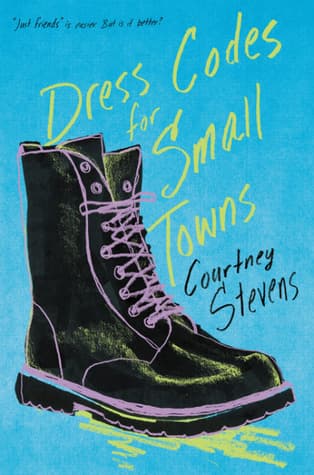
Courtney C. Stevens (2017)
Genre
Young Adult / Romance
Reading Time
360 min
Key Themes
See below
Sign in to track this book
In a town where labels define everything, a tomboy preacher's daughter grapples with an unexpected love for both her best guy friend and her closest girl friend, forcing her to redefine love on her own fluid terms.
Billie McCaffrey, a tomboy and the daughter of the town preacher, spends her days with her close friends: Woods, Mash, Davey, Fifty, and Janie Lee. They are a constant presence in her life, a refuge from the expectations of her conservative small town, Common. Billie often finds peace in the woods, a place of shared memories, especially with Woods. Their bond is deep, built on years of experiences and an unspoken understanding. As summer begins, the group's usual carefree activities change slightly, particularly Janie Lee's behavior, which Billie watches with curiosity and a growing, undefined anxiety about her own feelings.
One night, Janie Lee tells Billie she is deeply in love with Woods. This revelation shocks Billie. While she sees herself as 'one of the guys' and is used to easy friendships with her male friends, Janie Lee's words force Billie to face her own long-held feelings for Woods. At the same time, Billie realizes something new: she also has romantic feelings for Janie Lee. This dual attraction leaves Billie confused and scared, as she grapples with emotions that do not fit the simple understanding of love common in her town.
Overwhelmed by her conflicting attractions, Billie decides to keep her feelings secret. She fears that revealing her love for both Woods and Janie Lee would break their friendship group and expose her to judgment in their small, conservative town. Her internal struggle is made worse by her father, Pastor McCaffrey's, traditional views on gender roles and relationships. Billie feels increasingly alone, burdened by her secret, while trying to act normal within her friend group, especially as Janie Lee's affection for Woods becomes clearer.
To cope with her emotional turmoil, Billie focuses on a demanding physical project: helping her father build a chapel. This project becomes a symbol for her internal struggle—building something meaningful while dealing with her own spiritual and emotional foundations. The act of building, using her hands and strength, offers a temporary escape and a sense of control amid her chaotic feelings. It also brings her closer to her father, who, despite his traditional views, values her skills. This project allows Billie to process her feelings in a tangible way.
As summer continues, Billie sees subtle changes in the group's dynamics. Janie Lee pursues Woods more directly, and Woods, initially unaware, starts to notice Janie Lee's attention. Billie finds herself watching, a silent participant in a love triangle where her own feelings are hidden. She struggles to maintain her usual carefree attitude, often withdrawing or focusing on her woodworking projects. The easy friendship she once shared with her friends now feels strained, filled with unspoken tensions and the pain of her own unacknowledged desires.
A school dance becomes a major turning point, raising the emotional stakes for Billie. During the dance, Billie and Woods share a close moment, almost kissing. This confirms Billie's deep romantic feelings for Woods, further complicating her emotions. Their connection is clear, but the moment is interrupted, leaving Billie with hope and deep confusion. This event forces her to face her attraction to Woods and the difficulty of denying it, even as Janie Lee continues to pursue him.
The truth about Billie's feelings for Woods eventually comes out, implied through growing tensions. This revelation leads to a painful and confusing confrontation with Woods. Woods is surprised, having always seen Billie as 'one of the guys,' and struggles to accept her confession. Their conversation is filled with misunderstanding and unexpressed emotions, leaving Billie feeling vulnerable and rejected, while Woods deals with his changing understanding of their friendship and his own feelings.
After the emotional talk with Woods, Billie finds the courage to tell Janie Lee her feelings. Janie Lee reacts with surprise and some understanding. Despite her feelings for Woods, she has a deep bond with Billie. Their conversation is gentle but complicated, as Janie Lee processes the news while still pursuing Woods. This confession is a significant step for Billie in acknowledging her sexual fluidity, even if it does not lead to an immediate, simple resolution. It adds a new layer of complexity to their friendship.
After her confessions, Billie spends time reflecting. Her relationships with Woods and Janie Lee are changed, and the group dynamic is strained. Billie must face the consequences of her honesty, including the discomfort and confusion it causes, especially in Woods. She spends time alone, processing her emotions, her identity, and what love truly means to her. This period is important for her personal growth, as she begins to understand that love and identity are not always simple or easily categorized, moving beyond her small town's expectations.
As time passes, Billie, Woods, and Janie Lee begin to rebuild their friendships, with new understandings and boundaries. There is no immediate, clear romantic resolution, but a deeper acceptance of their individual complexities emerges. Billie embraces her identity as someone whose love does not fit into neat boxes. She finds strength in her authenticity and the support of her closest friends, who, despite the initial turmoil, remain by her side. The ending suggests a hopeful future where Billie continues to define love and herself on her own terms, free from societal constraints.
The Protagonist
Billie moves from suppressing her true feelings and identity to bravely acknowledging her sexual fluidity and defining love on her own terms.
The Supporting
Woods moves from a comfortable, platonic view of his relationships to a more nuanced understanding of love and friendship's complexities.
The Supporting
Janie Lee navigates her own romantic pursuit while learning to understand and accept the complexities of Billie's heart.
The Supporting
Pastor McCaffrey remains largely consistent in his beliefs but shows an underlying capacity for love and acceptance for his daughter.
The Supporting
Mash remains a steadfast and supportive friend, adapting to the changing dynamics within the group.
The Supporting
Davey maintains his role as a loyal friend throughout the group's evolving relationships.
The Supporting
Fifty remains a consistent and supportive friend, part of the unchanging core of Billie's social circle.
The main theme is Billie's realization that her attractions are not limited to one gender. She loves Woods, a boy, but also Janie Lee, a girl, challenging traditional views of sexuality. Her conservative small town, Common, expects clear labels and traditional relationships, which makes this internal conflict worse. Billie's journey is about accepting her true feelings, despite outside pressure, and defining her own identity and capacity for love. This is seen when she finally tells both Woods and Janie Lee how she feels, regardless of the outcome.
““Love wasn’t a dress code. It didn’t fit into a box or a label. It was a feeling, a choice, a wild thing.””
Billie constantly struggles with the expectations placed on her by her small town and her preacher father. She is expected to be a 'good girl,' perhaps more feminine, and to eventually fall in love with a boy. Her tomboy nature and non-conforming attractions directly challenge these societal norms. The theme explores the internal battle to live authentically when faced with strong pressure to conform. Billie's long-held secret, and her eventual courage to reveal it, highlight this tension. Her woodworking projects, like building the chapel, symbolize her desire to create her own path and identity.
““Common was a town of labels. Good girl. Bad boy. Christian. Sinner. I just wanted to be Billie.””
The novel explores the complex lines between platonic friendship and romantic love within a close group. Billie's initial fear is that her romantic feelings will 'ruin' the group dynamic, showing how love can complicate existing friendships. The book questions whether deep friendships can become or exist with romantic feelings, and how these relationships can survive big changes. The lasting bond between Billie and her friends, despite the romantic entanglements and confessions, suggests that true connection can adapt and grow, even if it means redefining boundaries and expectations, as seen in the slow rebuilding of trust after the truth comes out.
““Friendship was the foundation, but what if the foundation started to crack under the weight of something else?””
The setting of 'Common' is important to the story. It represents both a safe, familiar world and a restrictive environment. Small towns often have strong community ties but also strict social norms and gossip. Billie's self-discovery is heightened by the feeling of being constantly watched and the fear of judgment. The limited exposure to diverse perspectives makes her internal struggle with sexual fluidity feel particularly isolating. Her growth involves learning to navigate these constraints and find her voice and identity within, or despite, her upbringing, realizing that her worth is not defined by her town's expectations.
““In a town like Common, everyone knew your business, and everyone had an opinion about it.””
A physical project symbolizing Billie's internal struggle and growth.
Billie's commitment to helping her father build a chapel serves as a powerful extended metaphor. The physical labor and the act of construction mirror her internal process of building and understanding her own identity and feelings. It's a tangible outlet for her emotional turmoil, allowing her to channel her frustrations and confusion into something productive. The chapel, as a place of worship, also represents the spiritual and moral framework she is both part of and rebelling against, symbolizing her search for a personal faith and truth amidst her father's traditional beliefs.
Symbolic representation of societal expectations and labels.
The title itself, 'Dress Codes for Small Towns,' acts as a central metaphor for the unspoken rules and expectations that govern behavior, identity, and relationships in Billie's conservative town. These 'dress codes' are not just about clothing but about how one should act, love, and exist within the community. Billie's tomboy nature and her fluid sexuality directly challenge these metaphorical dress codes. The device highlights the pressure to conform and the struggle to break free from restrictive labels, emphasizing the theme of authenticity versus societal conformity.
A recurring setting providing solace and a space for self-reflection.
The woods and natural settings, particularly the creek, serve as a recurring motif and a significant plot device. For Billie and her friends, these natural spaces are a sanctuary, a place where they can escape the watchful eyes of the town and simply be themselves. For Billie especially, the woods are a place of quiet contemplation, where she can process her complex emotions and find moments of peace. It symbolizes freedom, wildness, and a connection to her authentic self, contrasting sharply with the structured, judgmental environment of the town.
Provides intimate access to Billie's internal world and emotional turmoil.
The story is told entirely from Billie McCaffrey's first-person point of view, which is crucial for immersing the reader in her complex emotional journey. This narrative choice allows for an intimate exploration of her internal struggles, her confusion, her fears, and her eventual self-acceptance. We experience her conflicting attractions, her anxieties about disappointing her father, and her deep loyalty to her friends directly through her thoughts and feelings, making her journey of sexual fluidity and identity particularly poignant and relatable.
“There are some things you can't undo, no matter how many times you try to get it right.”
— Izzy reflecting on past mistakes and the permanence of certain actions.
“Maybe the bravest thing you can do is admit you're scared.”
— Izzy contemplating her fears about the future and her identity.
“Small towns are like that. Everyone knows your business, and everyone has an opinion on it.”
— Izzy's observation about living in a close-knit, gossipy community.
“Love isn't a straight line. It's a messy, winding road with unexpected detours.”
— Izzy's evolving understanding of her feelings for different people.
“Sometimes the hardest person to forgive is yourself.”
— Izzy struggling with self-blame over past events.
“Being different isn't a curse; it's a superpower if you know how to wield it.”
— A character encouraging Izzy to embrace her unique identity.
“The truth has a way of coming out, no matter how deep you bury it.”
— Izzy's realization as secrets begin to surface in her life.
“You can't choose who you love, but you can choose how you love them.”
— A reflection on the nature of love and the choices within relationships.
“Grief is a tricky thing. It doesn't follow rules, and it doesn't care about your timeline.”
— Izzy dealing with the loss of a loved one and the unpredictable nature of mourning.
“Maybe home isn't a place, but a feeling you carry inside you.”
— Izzy's changing perspective on what 'home' truly means as she navigates her future.
“Sometimes the things you run from are the very things that make you who you are.”
— Izzy confronting aspects of her past she had tried to leave behind.
“Friendship isn't about being perfect; it's about being present.”
— Izzy appreciating the loyalty and support of her friends despite their flaws.
“The greatest stories are often found in the spaces between the lines, in the unspoken.”
— Izzy's artistic perspective on life and the hidden narratives within people.
“It's never too late to start over, even if 'starting over' just means starting to be honest with yourself.”
— Izzy considering a fresh start and the importance of self-truth.
Ready to see how well you understood this book? Take our interactive quiz with 10 questions.