“When you have nothing, you are free to choose a new path.”
— Joy's reflection on her dire circumstances in China, realizing it offers a strange kind of liberation.

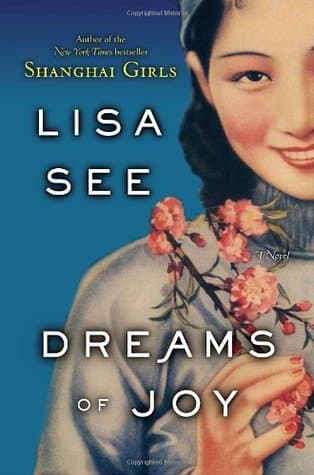
Lisa See (2011)
Genre
Historical Fiction
Reading Time
6-8 hours
Key Themes
See below
Sign in to track this book
In 1957 China, a headstrong daughter's embrace of Communism forces her mother to navigate the political landscape to save her from the tragedy of the Great Leap Forward.
Nineteen-year-old Joy, living in Los Angeles in 1957, overhears a conversation between her mother, Pearl, and her aunt, May. She learns her father, Sam, is not her biological father; Z.G. Li, a Chinese artist, is. This discovery shatters Joy's sense of identity. She feels like an outsider in her American life. Joy, wanting to connect with her heritage and Z.G. Li, decides to run away to Communist China. She believes she will find acceptance and purpose in the new society.
Devastated by Joy's disappearance and terrified for her safety, Pearl makes the decision to leave her life in America. She sells her Chinese restaurant, entrusts her younger daughter, May, with Sam, and travels to Shanghai. Pearl is driven by a mother's love and guilt over the secrets she kept from Joy. Her mission is clear: find Joy, explain the past, and bring her home, no matter the personal cost or the dangers of Communist rule.
Joy arrives in Shanghai and is quickly swept up in the revolutionary fervor. She meets her biological father, Z.G. Li, who seems to adapt to the new regime despite his past as a 'bourgeois' artist. Joy, idealistic and eager, volunteers for Communist Party initiatives, including propaganda and farm labor. Meanwhile, Pearl's arrival in Shanghai meets suspicion and bureaucratic obstacles. She struggles to navigate the complex environment, facing language barriers and constant Party surveillance, while searching for Joy.
Joy is assigned to a collective farm. She initially embraces the communal spirit and hard labor, believing she contributes to a better China. However, idealism gives way to the harsh realities of farm life. She endures grueling work, meager rations, and pressure to meet impossible quotas. The collective's initial enthusiasm fades as food shortages increase and Party demands grow. Joy witnesses the loss of individual freedoms and growing fear among villagers, but remains committed to the cause, though with doubts.
Pearl, after difficulty and using old connections, gets permission to travel inland, following rumors of foreign students. Her journey is dangerous, with poor travel conditions, food scarcity, and constant suspicion from officials. She meets people, some sympathetic, others hostile, who show the impact of Communist policies. Pearl's determination is unwavering, fueled by her love for Joy and a growing understanding of the suffering in the Chinese countryside.
As the Great Leap Forward intensifies, the collective farm where Joy resides reaches its breaking point. Farmers melt down tools for steel, use unscientific agricultural practices, and provide inflated harvest reports. Food becomes scarce, leading to widespread famine. Joy and other villagers suffer from malnutrition and disease. The initial revolutionary fervor is replaced by desperation. She witnesses many deaths, including children, and begins to understand the catastrophic consequences of the Party's policies.
Pearl finds Joy on the collective farm, but their reunion is bittersweet. Joy is emaciated and disillusioned. Pearl, seeing the devastating conditions, tries to convince Joy to return home, but Joy, despite her suffering, feels loyalty to the people she has endured with. During this time, Pearl learns more about Z.G. Li's true nature and his opportunistic adaptation to the Communist regime. This further complicates Joy's understanding of her parentage and her mothers' choices.
Pearl and Joy, with a few trusted friends from the collective, try to escape the famine-stricken area and reach the coast. Their journey is dangerous, with desperate villagers, zealous Party officials, and starvation. They make agonizing decisions, sacrificing some for others' survival. Betrayals occur, showing the extreme pressures people are under. Pearl's resourcefulness and determination are tested as she tries to protect Joy.
As their escape becomes desperate, Pearl realizes only one of them might make it to safety. In an act of maternal sacrifice, Pearl helps Joy escape China, knowing she likely will not survive or will face severe punishment. She uses her remaining resources, past connections, and courage to give Joy a chance at a future. This selfless act shows the depth of Pearl's love and her redemption for the secrets she kept.
Joy, bearing the scars of her experiences in China and the loss of her mother, Pearl, eventually returns to America. She is no longer the idealistic girl who ran away. Her time in China, witnessing the horrors of the Great Leap Forward and human strength, has transformed her. She carries memories of the famine, sacrifices, and her mother's love. Joy's return marks the beginning of her healing and her acceptance of her complex identity, honoring both her Chinese heritage and her American upbringing.
The Protagonist
Joy transforms from a naive, idealistic youth seeking identity into a hardened but compassionate survivor who understands the profound cost of political ideology and the depth of maternal love.
The Protagonist
Pearl's arc is one of redemption and profound sacrifice, moving from a mother burdened by secrets to one who fully embraces her love for her daughter, even at the cost of her own life.
The Supporting
Z.G. Li remains largely unchanged, a survivor adapting to circumstances, highlighting the moral compromises made under totalitarian rule.
The Supporting
May's arc is one of enduring loyalty and quiet strength, maintaining stability at home while her sister embarks on a perilous journey.
The Supporting
Sam remains a constant, unwavering source of unconditional love and stability, representing the home Joy longs for.
The Supporting
Mei's arc is tragically cut short, serving as a poignant symbol of the innocent lives lost during the famine.
The Supporting
Old Man Wei's arc is one of quiet endurance and a steadfast commitment to his people and traditions amidst political upheaval.
Joy's main struggle is to understand who she is and where she belongs. Raised in America but with Chinese roots and hidden parentage, she feels torn between two worlds. Her journey to China is an attempt to find a new identity connected to her biological father and the 'New Society.' However, the realities she faces force her to reconcile her American upbringing with her Chinese heritage, shaping a more nuanced sense of self. This theme is clear when Joy learns about Z.G. Li and feels compelled to find him, believing he holds the key to her true self, and later, as she faces disillusionment on the collective farm.
“I had always felt like a girl divided, Chinese in America, American in China. Now I knew why.”
A cornerstone of the novel is the enduring love of a mother, especially through Pearl. Her decision to leave her safe life in America and embark on a dangerous journey into famine-stricken China to save Joy shows unconditional love. Pearl's past actions, though deceitful, were driven by a desire to protect Joy. Her ultimate sacrifice highlights her devotion. This theme is powerfully shown in the climax where Pearl ensures Joy's escape at the cost of her own life.
“A mother's love is a powerful thing, Pearl thought. It could cross oceans, break through walls, survive famine and war.”
The novel shows how unchecked idealism can lead to catastrophic consequences, especially with totalitarian control. Joy arrives in China full of revolutionary fervor, eager to contribute to the 'New Society.' She initially believes the Communist Party's propaganda. But her experiences on the collective farm, witnessing famine, forced labor, and loss of life during the Great Leap Forward, strip away her illusions. The story exposes the human cost of a regime that prioritizes ideology over individual well-being and truth. The widespread starvation and suffering on the collective farm directly show this theme.
“Hope was a dangerous thing in China. It could make you do things, say things, believe things that weren't true.”
The story is deeply tied to the impact of past secrets and their shadow on the present. Pearl's decision to conceal Joy's true paternity drives much of the initial conflict, leading to Joy's flight. The journey to China forces both Pearl and Joy to confront these secrets, understand the motivations behind them, and work towards forgiveness. The historical memories of Pearl's past in Shanghai and the collective trauma of the Great Leap Forward are central to the characters' development and their eventual reconciliation. The initial revelation of Joy's true father starts the entire story, setting this theme in motion.
“A secret was like a seed. Once planted, it grew, twisting and turning, until it choked everything else.”
Physical travel mirrors internal transformation.
Both Joy's and Pearl's physical journeys across continents and into the heart of rural China serve as powerful metaphors for their internal transformations. Joy's journey from naive idealism to disillusioned maturity reflects the harsh realities she encounters. Pearl's arduous trek to find Joy symbolizes her own emotional journey of atonement, sacrifice, and the deepening of her maternal love. The dangerous and difficult nature of their travels mirrors the internal obstacles they must overcome and the profound changes they undergo.
The reader knows more than the characters, especially about China's future.
Dramatic irony is frequently used, particularly concerning the historical context. The reader is aware of the devastating consequences of the Great Leap Forward, which began in 1958, while Joy initially arrives in 1957 full of hope. This creates a sense of foreboding and tragedy as Joy's idealism is slowly eroded by the unfolding disaster. The reader also understands the full weight of Pearl's family secrets and the motivations behind them, often before Joy does, which amplifies the emotional impact of their eventual confrontations and reconciliations.
Food represents survival, prosperity, and cultural connection.
Food serves as a powerful symbol throughout the novel. In America, Pearl's successful Chinese restaurant symbolizes prosperity, cultural preservation, and a connection to her heritage. In China, the increasing scarcity of food during the Great Leap Forward directly symbolizes the failure of the Communist policies, the suffering of the people, and the struggle for bare survival. The presence or absence of food marks the changing fortunes of the characters and the nation, highlighting the stark contrast between abundance and famine.
Characters' limited perspectives shape initial understanding.
While the narration is generally third-person, the story often presents events through the limited perspectives of Joy and Pearl, making them partially unreliable in their initial interpretations. Joy, with her youthful idealism, initially misinterprets the true nature of the 'New Society' and her father, Z.G. Li. Pearl, burdened by guilt and secrets, initially struggles to communicate her full truth to Joy. This device allows for gradual revelations and a deeper understanding of characters' motivations and the complex historical context as their perspectives evolve.
“When you have nothing, you are free to choose a new path.”
— Joy's reflection on her dire circumstances in China, realizing it offers a strange kind of liberation.
“In China, everything is political. Even love.”
— Luisa's cynical observation about the pervasive influence of politics on personal lives during the Cultural Revolution.
“The past is like a string. You can cut it, but it's still there, just in smaller pieces.”
— Mei's metaphorical explanation to Joy about the enduring impact of history and family secrets.
“A mother’s heart is a deep well, at the bottom of which you will always find forgiveness.”
— A traditional Chinese saying quoted by a character, reflecting on the bond between mother and child.
“To be truly free, you must first be free in your mind.”
— Luisa's internal thought as she struggles with the ideological constraints of her society.
“Sometimes, the strongest love is the one that lets go.”
— A character's painful realization about making difficult choices for the well-being of a loved one.
“Hope is a small, fragile bird, but it can fly through the darkest storms.”
— Joy's internal monologue during a particularly challenging period, clinging to optimism.
“A secret is a heavy burden, even if it's meant to protect someone.”
— Mei's reflection on the long-term consequences of keeping her past hidden from Joy.
“The greatest journey is the one you take to find yourself.”
— Joy's understanding of her personal growth and self-discovery during her time in China.
“To truly understand someone, you must walk in their shoes, even if those shoes are worn and dusty.”
— A character's advice on empathy and understanding cultural differences.
“The rice bowl is never truly empty as long as there is family.”
— A traditional saying emphasizing the importance of family support and sustenance.
“Silence can speak louder than words, especially when it hides the truth.”
— Joy's realization about the unspoken tensions and hidden histories within her family.
“Sometimes, the hardest thing to do is to forgive yourself.”
— A character grappling with past mistakes and the difficulty of self-absolution.
“Home is not always a place, but a feeling of belonging.”
— Joy's evolving understanding of where she truly belongs, transcending geographical locations.
Ready to see how well you understood this book? Take our interactive quiz with 10 questions.

Lisa See is an American writer and novelist. Her books include On Gold Mountain: The One-Hundred-Year Odyssey of My Chinese-American Family (1995), a detailed account of See's family history, and the novels Flower Net (1997), The Interior (1999), Dragon Bones (2003), Snow Flower and the Secret Fan (2005), Peony in Love (2007) and Shanghai Girls (2009), which made it to the 2010 New York Times bestseller list. Both Shanghai Girls and Snow Flower and the Secret Fan received honorable mentions from the Asian/Pacific American Awards for Literature.







