“The past isn't just the past. It's still with us.”
— Rowan reflecting on the interconnectedness of past and present events.

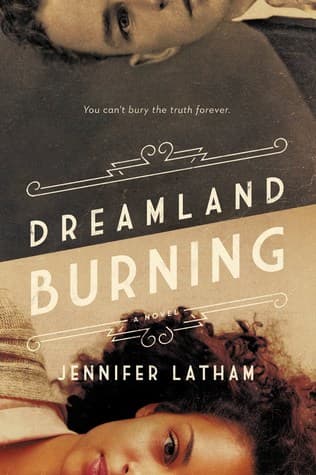
Jennifer Latham (2017)
Genre
Historical Fiction / Mystery / Young Adult
Reading Time
450 min
Key Themes
See below
Sign in to track this book
A modern teen finds a skeleton, uncovering a century-old murder. Her journey connects with a 1921 Tulsa boy's fight for justice during racial violence, making both face their past and present.
Seventeen-year-old Rowan Chase, living in present-day Tulsa, Oklahoma, finds a human skeleton buried on her family's property during a house renovation. The skeleton is clearly old, with a bullet wound to the skull and a unique locket. This find immediately makes Rowan curious, and despite her mother's hesitation, Rowan feels she must learn the story behind the remains. She gets help from her best friend, James, and her family's groundskeeper, Bill. The police start an investigation, but Rowan's personal search for answers continues, driven by the unsettling nature of the find and a growing connection to the past.
In 1921 Tulsa, Will Tillman, a seventeen-year-old white boy, works at his father's medical practice. His father is a respected, though strict, doctor who often treats Black patients, which is rare in segregated Tulsa. Will struggles with his identity and place in his community, often feeling stuck between his father's more open views and the widespread racism of the time. He often visits the Greenwood district, known as 'Black Wall Street,' to see his friend, Joseph, a Black jazz musician, and to experience the culture. Will is also secretly in love with his best friend, Sarah, who is white, making his life more complicated amid the growing racial problems.
Rowan's investigation grows when she recognizes the locket found with the skeleton. While looking at old photographs and historical papers from the 1921 Tulsa Race Massacre, she finds a picture of a young Black woman wearing an identical locket. This discovery confirms her belief that the skeleton is connected to the massacre, changing her focus from a general murder mystery to a specific, painful historical event. She starts looking into archives, old newspapers, and spoken histories, trying to identify the woman and understand how she died, feeling a growing need to give the unknown victim a name and a story.
In 1921, Will is at the Drexel Building when Dick Rowland, a young Black man, is accused of assaulting Sarah Page, a white elevator operator. Will, who saw the event, knows it was probably an accident, not an assault. However, under pressure from the racist talk and fear of social backlash, he does not speak up right away. His inaction helps the tensions grow quickly. Later, driven by fear and a wish to protect Sarah, Will lies to his racist friend, Milt, about the incident, saying he saw Dick attack Sarah. This lie, meant to simplify things, instead increases the anger that will soon cover Tulsa.
As Rowan continues her research, she finds upsetting truths about her own family's history in Tulsa. She learns that her great-grandfather, a white man named James Chase, lived during the 1921 massacre and owned property in both the white and Black districts. More troubling, she finds evidence suggesting he may have been involved in some way with the events of that night. Rowan deals with this information, realizing that her family's past is connected to the tragedy she is trying to solve. This personal connection makes her search for justice even more urgent and emotional, forcing her to face uncomfortable truths about her family.
After the accusation against Dick Rowland, tensions in Tulsa become very high. Will sees the white community's growing anger, fueled by exaggerated newspaper reports and racist talk. He sees white men, including some he knows, arming themselves and gathering near the courthouse where Rowland is held. Joseph, his Black friend, worries deeply for the safety of the Greenwood residents. Will feels a growing sense of dread and helplessness, understanding how serious the situation is but unsure how to stop the coming disaster. His personal worries are overshadowed by the immediate threat of widespread racial violence.
The night of May 31, 1921, becomes terrible. Will, at home at first, is pulled into the chaos as the white mob attacks Greenwood. He sees firsthand the burning of homes and businesses, the violence against Black residents, and the fear of the massacre. Amid the disorder, he tries to find Joseph and other friends, but the streets are dangerous. Will sees the terrible result of the hatred he had only seen from a distance before. The events of that night change his sense of right and wrong, making him face the results of his earlier inaction and the deep racism of his society.
Through careful research and help from a descendant of a massacre survivor, Rowan finally identifies the skeleton as Addie, a young Black woman who worked for Will Tillman's family in 1921. She learns that Addie was not only a servant but also Joseph's sister, and she was pregnant when she died. Rowan understands that Addie was probably killed by a white man during the massacre, and the locket was a gift from Joseph. This discovery adds more sadness to the story, connecting the modern-day find directly to the personal lives of those caught in the historical violence.
During the massacre, Will, feeling guilty and needing to make things right, tries to help Addie escape the burning Greenwood district. He finds her hiding, scared and pregnant. As they try to run, they are confronted by Milt, Will's racist friend, who is part of the mob. Milt, full of hatred and the chaos of the night, attacks Addie. Trying to defend her, Will struggles with Milt. During the struggle, Milt's gun fires, accidentally shooting Addie. Will is crushed, realizing his attempt to help led to her death. He quickly buries her on his family's property to prevent further harm.
Rowan, with the full story, works with authorities to ensure Addie's remains are identified and given a proper burial. She faces the uncomfortable truth about her great-grandfather, James Chase, who, while not directly involved in Addie's death, was part of the system that allowed such violence. Rowan considers the lasting impact of racism and the need to remember painful history. The mystery of the skeleton is solved, but Rowan's deeper lesson is about understanding her place in a complex racial history and the duty to speak truth, both then and now.
The Protagonist
Rowan transforms from a relatively unburdened teenager to one deeply connected to her city's painful history, finding her voice and purpose in seeking historical truth and reconciliation.
The Protagonist
Will evolves from a passively complicit teenager to one who confronts the horrific consequences of racism and his own moral failings, attempting a desperate act of redemption.
The Supporting/Victim
Addie's arc is tragic, as she is a victim of the massacre, but her story is ultimately brought to light and honored through Rowan's efforts.
The Supporting
Joseph's arc is one of survival and loss amidst the massacre, embodying the strength and tragedy of Greenwood.
The Supporting
James supports Rowan's journey, developing his own understanding of historical injustice through her findings.
The Supporting
Bill provides a steady, guiding presence for Rowan, embodying the quiet endurance of history's witnesses.
The Antagonist
Milt remains unrepentantly hateful, symbolizing the unyielding racism that fueled the massacre.
The Supporting
Maia moves from cautious reluctance to supportive engagement, recognizing the importance of historical truth.
The Supporting
Dr. Tillman remains a figure of authority, representing the complex moral landscape of the pre-massacre era.
Rowan and Will both deal with their identities based on their racial background and what society expects. Rowan, as a biracial teenager, learns what it means to be Black and white in America, especially as she uncovers her family's connection to the Tulsa Race Massacre. Will, a white teenager in 1921, struggles with his own morals, caught between his father's more open views and the racism of his friends. Their journeys are about understanding who they are in relation to their history and the choices they make.
““History isn’t a weight to be carried. It’s a guide to be followed.””
The novel shows the lasting effects of systemic racism and historical injustice, especially through the Tulsa Race Massacre. It shows how the violence and prejudice of 1921 still affect people and communities in present-day Tulsa. Rowan's discovery of Addie's skeleton forces a confrontation with this painful past, showing how unaddressed wrongs can last and need to be faced across generations. The story stresses the importance of acknowledging and learning from these injustices instead of hiding them.
““Some bodies won’t stay buried. Some stories need to be told.””
A main theme is the fight between finding difficult truths and society's tendency to hide or forget uncomfortable historical events. The Tulsa Race Massacre was mostly left out of history books for decades, representing a collective silence. Rowan's investigation actively challenges this denial, bringing forgotten stories to light. Will's inner struggle about telling the truth in 1921, and his later efforts to hide Addie's body, show the personal and societal pressures that lead to silence, and the serious results of such actions.
““The truth has a way of finding its way out, no matter how hard you try to bury it.””
The book looks at different levels of bravery and involvement in the face of injustice. Will Tillman's initial failure to speak up about Dick Rowland's innocence, and his later lie, show how not acting and fear can cause more harm. Later, his desperate attempt to save Addie shows a delayed act of bravery, though with sad results. Rowan, now, shows bravery by actively seeking and sharing a painful truth, even when it involves her own family and community.
““Sometimes the hardest thing to do is to look the truth in the eye.””
The story itself shows the power of storytelling, using two timelines to bring a forgotten historical event to life and connect it to the present. Rowan's search is about finding and telling Addie's story, giving a voice to a victim of history. The book suggests that understanding history is not just for academics but is important for healing and preventing future injustices. By weaving together past and present stories, the novel shows how stories can connect people and build understanding.
““It’s like the past isn’t really past at all. It’s just waiting for someone to find it.””
Alternating chapters between present-day and 1921 Tulsa.
The novel masterfully employs a dual timeline, alternating between Rowan's present-day investigation into the skeleton and Will Tillman's experiences leading up to and during the 1921 Tulsa Race Massacre. This structure allows the reader to experience the historical events as they unfold, while simultaneously seeing their direct impact on the present. The parallel narratives create suspense as clues from the past illuminate Rowan's discoveries, and vice versa, emphasizing the enduring legacy of history and the interconnectedness of time and events.
A physical object connecting the past murder to Rowan's present.
The locket discovered with Addie's skeleton serves as a crucial symbolic and literal link between the two timelines. Its unique design allows Rowan to identify the victim in historical photographs, directly connecting the unknown skeleton to the Tulsa Race Massacre. The locket represents Addie's identity and story, and its discovery acts as the catalyst for Rowan's entire investigation, providing a tangible piece of the past that demands to be understood and honored.
The story is told through the eyes of Rowan and Will.
The novel uses an alternating first-person perspective, giving readers direct access to the thoughts, feelings, and experiences of both Rowan in the present and Will in 1921. This narrative choice fosters deep empathy for both protagonists as they navigate complex moral dilemmas and historical trauma. It allows the author to explore the internal struggles of each character, highlighting their growth and evolving understanding of race, justice, and their own roles in history, making their individual journeys more immediate and impactful.
The catalyst for the entire plot, representing buried history.
The discovery of the skeleton on Rowan's property is the inciting incident that drives the entire plot. It literally represents 'buried history' – a past injustice that has been hidden but now demands to be unearthed. The skeleton is not just a plot device for a mystery; it symbolizes all the untold stories and unacknowledged victims of the Tulsa Race Massacre, serving as a powerful reminder that history, especially painful history, cannot remain buried indefinitely.
“The past isn't just the past. It's still with us.”
— Rowan reflecting on the interconnectedness of past and present events.
“Sometimes you have to break a few rules to do the right thing.”
— Rowan contemplating her actions as she investigates the cold case.
“Ignorance is not an excuse for injustice.”
— A powerful statement about accountability for historical wrongs.
“The truth is rarely simple, and often painful.”
— Rowan grappling with the complex and disturbing revelations of her investigation.
“History isn't just dates and names. It's people's lives.”
— Rowan realizing the human impact behind historical events.
“Fear can make people do terrible things.”
— Reflecting on the motivations behind the violence in the past.
“Some wounds never truly heal, they just scar over.”
— A poignant observation about lasting trauma from historical events.
“It's easy to look back and judge, but harder to understand what it was like to live through it.”
— Rowan considering the challenges of historical empathy.
“Silence can be just as deadly as a scream.”
— Highlighting the danger of complicity and unaddressed injustice.
“You can't change the past, but you can change how you remember it, and what you do about it now.”
— A call to action regarding the legacy of historical events.
“The only way to move forward is to look back, honestly.”
— Emphasizing the necessity of confronting history to progress.
“Sometimes the biggest mysteries are the ones hidden in plain sight.”
— Rowan realizing that the truth was always there, just ignored.
“Justice isn't always about punishment; sometimes it's about recognition.”
— A nuanced view of what constitutes justice, especially for historical wrongs.
“The stories we tell about ourselves, and about our past, shape who we are.”
— Reflecting on the power of narrative and historical accounts.
Ready to see how well you understood this book? Take our interactive quiz with 10 questions.







