“The past isn't dead. It isn't even past.”
— A recurring theme about how historical events impact the present, often felt by the protagonist, Molly.

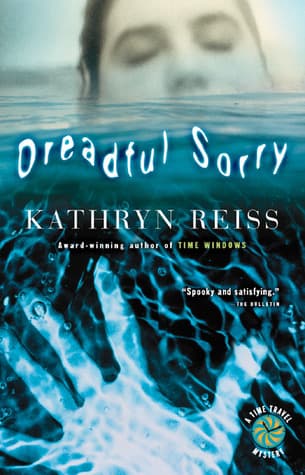
Kathryn Reiss (1993)
Genre
Thriller / Fantasy / Mystery / Young Adult / Romance
Reading Time
440 min
Key Themes
See below
Sign in to track this book
After a near-drowning, seventeen-year-old Molly finds her nightmares manifesting as vivid visions, pulling her into the century-old mystery of a girl who once inhabited her own house.
Seventeen-year-old Molly nearly drowns at a party thrown by her friend, Jessica, at the local lake. While underwater, she experiences a terrifying vision of a girl in a white dress struggling in the same water, calling out a name. After being rescued by a mysterious boy, Ben, Molly is shaken but initially dismisses the experience. However, the visions persist, becoming more frequent and intense, often triggered by being near water or by specific objects. She sees glimpses of a life from the early 1900s, through the eyes of a girl named Abbie, who seems to have lived in Molly's own historic house, which her father, a history professor, has recently inherited and moved them into. The blurring lines between her reality and Abbie's past begin to unnerve Molly, making her question her sanity.
As Molly spends more time in her father's old house, the visions intensify, offering a clearer picture of Abbie's life. She learns that Abbie, a spirited girl from an impoverished family, worked as a maid in the house for the wealthy Thorne family. Molly experiences Abbie's struggles with her strict mother, her longing for a better life, and her secret, passionate romance with Ethan, the charming and intelligent son of the Thorne family. These visions are so real that Molly feels Abbie's emotions, her joy, and her fear. She begins to see specific objects in the house, like a hidden locket or a particular window, that trigger insights into Abbie's existence, drawing her deeper into the past.
Molly encounters Ben, the boy who saved her from drowning, again at school. He seems to possess an unusual understanding of her experiences, hinting that he knows more than he lets on. Ben reveals that he is an orphan living with his aunt and uncle, and he has a deep connection to the local history, particularly the Thorne family. He's also fascinated by the supernatural. As Molly confides in him about her visions, Ben encourages her to explore them further, believing they hold a significant truth. Their shared interest in the past and the strange occurrences draws them closer, and Molly finds herself developing feelings for him, while also sensing a lingering sadness or mystery about Ben that he's unwilling to fully share.
Molly and Ben research local archives, old newspapers, and cemetery records to find information about Abbie and Ethan. They discover that Abbie Thorne, the maid, and Ethan Thorne, the son, both mysteriously disappeared around the same time in 1918, leaving no trace. Molly's father, a pragmatic history professor, is initially dismissive of her claims, attributing her visions to stress or a concussion from her near-drowning. He encourages her to focus on her schoolwork. Despite his skepticism, Molly is determined to uncover the truth, fueled by the increasingly vivid and insistent nature of Abbie's memories, which suggest a tragic end for the young couple, not just a disappearance.
Through a series of intense visions, Molly witnesses the escalating conflict surrounding Abbie and Ethan's forbidden love. Ethan's parents, particularly his domineering father, are opposed to their relationship, seeing Abbie as beneath their social standing. Abbie's mother, though initially more sympathetic, becomes increasingly fearful for Abbie's safety and reputation. The pressure on the young lovers builds, leading to secret meetings and desperate plans. Molly experiences the emotional turmoil of Abbie and Ethan, their hopes for a future together constantly threatened by the societal expectations and familial disapproval of their respective worlds. The visions hint at a specific, terrible event that ultimately seals their fate.
Molly's visions show Abbie and Ethan making a desperate plan to elope. They intend to meet by the lake, where they will escape together and start a new life. However, a tense confrontation occurs between Ethan and his father, Mr. Thorne, who discovers their intentions. Mr. Thorne is furious, threatening to disown Ethan and ruin Abbie's family. Abbie, meanwhile, faces her own mother's pleas to abandon the plan, fearing the repercussions. Despite the immense pressure and threats, their love remains strong, and they are determined to go through with their plan. Molly feels their fear and their unwavering commitment, understanding that this elopement is their only hope for happiness, but also sensing impending doom.
Molly experiences the night of Abbie and Ethan's disappearance. She sees Abbie, dressed in her white dress, hurrying to the lake to meet Ethan. The atmosphere is charged with both hope and dread. As they meet, they are discovered by Mr. Thorne and his men. A struggle ensues by the water's edge. Molly witnesses the horrifying moment when Ethan, trying to protect Abbie, is struck and falls into the lake. Abbie, distraught, tries to save him, but she too is forced into the water, possibly by Mr. Thorne or his henchmen, and drowns alongside Ethan. The visions are incredibly vivid and traumatic, confirming Molly's worst fears: Abbie and Ethan did not simply disappear; they were murdered.
After experiencing the full horror of Abbie and Ethan's death, Molly confronts Ben. The details of the visions, combined with Ben's subtle hints and his deep, inexplicable understanding of the past, coalesce into a shocking realization: Ben is the reincarnation of Ethan. He has been drawn to Molly and the house, subconsciously seeking to understand and resolve the past. Ben slowly acknowledges the truth, explaining that he has always felt a strong pull to the area and a sense of loss he couldn't explain. He reveals that his near-drowning experience, much like Molly's, triggered his own dormant memories, making him realize his connection to Ethan and Abbie. He has been guiding Molly to remember their shared past, hoping to bring peace to their troubled spirits.
Armed with this devastating knowledge, Molly and Ben are determined to find physical evidence to prove Abbie and Ethan's murder. They revisit the lake, the house, and the surrounding areas, guided by Molly's remaining visions and Ben's intuitive connection to the past. They search the old property, now Molly's home, for clues. Their search leads them to a hidden compartment in the house, perhaps a secret passage or a forgotten crawl space, where they hope to uncover something that confirms the details of their visions and provides irrefutable proof of Mr. Thorne's involvement in the deaths. They believe that only by bringing the truth to light can Abbie and Ethan truly rest.
Molly and Ben finally discover a hidden box containing old letters, a locket that belonged to Abbie, and a journal detailing the events leading up to and including the night of the murders, written by a terrified accomplice or witness. The journal explicitly implicates Mr. Thorne. With this irrefutable proof, Molly and Ben decide to expose the truth. They confront a direct descendant of the Thorne family, who is still influential in the town, hoping to bring justice to Abbie and Ethan. The descendant, initially defensive and dismissive, is forced to confront the dark history of their family legacy when presented with the undeniable evidence. The confrontation is tense, but the truth finally comes to light.
The revelation of Abbie and Ethan's murder, backed by the historical evidence, brings a sense of closure to the lingering mystery. The town is shaken by the unearthed truth, and the Thorne family's legacy is forever tarnished. For Molly, the constant, haunting visions finally cease, replaced by a sense of peace. She feels Abbie's spirit finally at rest. Ben, too, finds a sense of completion, his lifelong feeling of incompleteness resolved. Their shared journey through the past has forged an unbreakable bond between them. They acknowledge their unique connection, not just as modern-day teenagers, but as souls intertwined by a century-old love story. They look forward to a future together, free from the shadows of the past.
The Protagonist
Molly transforms from a typical teenager into a determined investigator, embracing her unique connection to the past and finding love in the process.
The Love Interest / Supporting Character
Ben moves from a state of subconscious longing and confusion to understanding his true identity and finding peace through Molly.
The Past Protagonist / Visionary Figure
Abbie's story, though tragic, is eventually brought to light and given closure through Molly and Ben's efforts.
The Past Love Interest / Visionary Figure
Ethan's tragic past is resolved through the actions of his reincarnated self, Ben, and Abbie's reincarnated spirit, Molly.
The Supporting Character
Molly's father moves from skepticism to reluctant acceptance of the supernatural elements, supporting his daughter's findings.
The Antagonist
Mr. Thorne's actions lead to the central tragedy of the past, which is eventually exposed and brought to justice.
The Supporting Character
Jessica remains a steadfast friend, offering emotional support to Molly throughout her extraordinary journey.
The central theme is the enduring power of love that defies both societal barriers and the passage of time. Abbie and Ethan's forbidden romance in the early 1900s echoes through a century, drawing their reincarnated souls, Molly and Ben, together. Their modern-day connection is driven by the unresolved tragedy of their past selves, suggesting that true love can persist beyond death and lifetimes, seeking resolution and reunion. This is evident in Molly's immediate, inexplicable pull towards Ben and the intensity of her visions of Abbie and Ethan's romance.
““Some loves are too strong to be contained by a single lifetime.””
The novel explores how historical injustices and unresolved tragedies can continue to impact the present. The murder of Abbie and Ethan in 1918 casts a long shadow over the house and the town, manifesting as Molly's haunting visions and Ben's subconscious longing. The past is not merely history but an active force, demanding recognition and resolution. Molly's journey is driven by the need to right a century-old wrong, highlighting how secrets and unpunished crimes can linger, affecting generations and preventing peace for the deceased.
““The past isn't just history, Molly. Sometimes, it's still happening.””
A core fantasy element, the theme of reincarnation explains the deep, immediate connection between Molly and Ben, and their understanding of Abbie and Ethan's story. It suggests that souls can be reborn, carrying echoes of past lives and relationships. Molly's visions are not just psychic abilities but a reawakening of Abbie's memories, while Ben's presence is a manifestation of Ethan's spirit seeking his lost love and justice. This theme posits that certain connections are destined, recurring across different lives until a karmic balance or resolution is achieved.
““It's like we were always meant to find each other again, even if we didn't know why.””
The historical plotline features the destructive power of social class divisions and prejudice. Abbie, as a poor maid, and Ethan, as the son of a wealthy family, face insurmountable opposition to their love. Mr. Thorne's violent actions are driven by his disdain for Abbie's lower status and his obsession with maintaining his family's social standing. This theme exposes how societal norms and class prejudice can lead to tragedy and injustice, highlighting the devastating consequences of judging individuals based on their background rather than their character.
““His father would never allow it. A Thorne and a maid? Unthinkable.””
Molly's ability to see and experience events from the past.
This is the primary plot device, triggered by Molly's near-drowning. Her visions allow her to witness Abbie's life, emotions, and tragic death as if she were there. This device serves as the main source of information for the mystery, gradually revealing the details of the past. It also blurs the line between past and present, creating a sense of urgency and immersion for Molly (and the reader), making the historical events feel immediate and real rather than simply historical research.
The concept that souls are reborn into new bodies.
Reincarnation is the underlying mechanism that explains Molly and Ben's profound connection to the past. Molly is the reincarnation of Abbie, and Ben is the reincarnation of Ethan. This device not only provides a fantastical explanation for their abilities and attraction but also adds a layer of destiny and romantic fate to their story. It transforms a simple historical mystery into a deeper narrative about enduring love and unresolved karmic ties, making the present-day characters direct participants in the resolution of a past tragedy.
The historic house acts as a conduit for the past's lingering presence.
Molly's father's inherited house is not just a setting; it's a character in itself. Its age and history, particularly its connection to the Thorne family and Abbie, make it a focal point for the visions. Objects within the house, specific rooms, and even the atmosphere trigger Molly's experiences, suggesting that the house itself holds the memories and echoes of the past. It acts as a physical anchor for the spiritual and historical events, making the haunting more potent and personal for Molly, as she lives directly within the scene of the past tragedy.
The catalyst event that unlocks Molly's psychic abilities.
Molly's near-drowning at the beginning of the story is the inciting incident that unlocks her retrocognitive abilities. The trauma of the event, combined with the sensation of being underwater, seems to open a psychic channel to Abbie's past. This device provides a dramatic and memorable start to the narrative, establishing the supernatural premise and immediately linking Molly to the watery fate of Abbie, foreshadowing the tragic end she will eventually witness and resolve. It's the 'origin story' for Molly's unique gift.
“The past isn't dead. It isn't even past.”
— A recurring theme about how historical events impact the present, often felt by the protagonist, Molly.
“Sometimes the things you're most afraid of are the very things that can set you free.”
— Molly grappling with her fears about the supernatural and her own connection to the past.
“Every secret has a way of coming out, eventually.”
— As Molly uncovers layers of a historical mystery and the hidden truths of the characters involved.
“You can't outrun your destiny, no matter how fast you try to go.”
— Molly's inescapable connection to the events of 1864 and her role in resolving them.
“Love, even across time, can be a powerful and dangerous thing.”
— Molly's burgeoning feelings for a character from the past, and the complications it brings.
“The line between what's real and what's imagined can blur so easily when you're caught between worlds.”
— Molly's experiences with visions and apparitions, making her question her sanity.
“Some stories aren't meant to stay buried.”
— Referring to the forgotten or suppressed history that Molly is compelled to uncover.
“It's not just about finding answers; it's about giving peace.”
— Molly's realization that her quest is about bringing closure to the spirits and people involved.
“The dead have their own way of speaking, if you're willing to listen.”
— Molly's growing ability to perceive and understand the messages from the past.
“Sometimes, the most ordinary places hold the most extraordinary secrets.”
— The old house and its surroundings, which appear normal but hide a deep, dark history.
“Dreadful sorry, indeed. Some apologies come far too late.”
— A direct reference to the title and the theme of regret and unredressed wrongs.
“You can't save everyone, but you can try to right the wrongs you find.”
— Molly's struggle with the scope of the tragedy and her personal mission to correct it.
“The past can reach out and touch you, even across centuries, if you let it.”
— Molly's personal experience of being deeply affected by events from the Civil War era.
“Trust your instincts, even when everyone else tells you you're wrong.”
— Molly often feels isolated in her beliefs about the supernatural events happening around her.
Ready to see how well you understood this book? Take our interactive quiz with 10 questions.
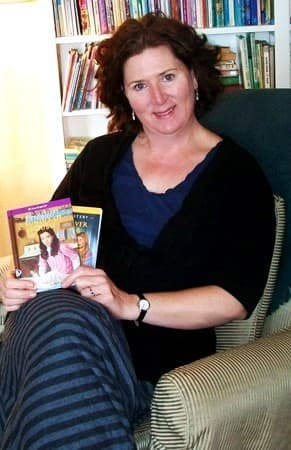
Biography coming soon.







