BookBrief
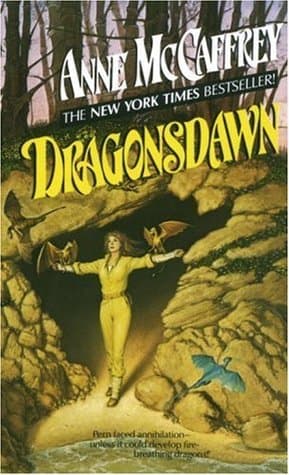
Dragonsdawn cover
Archivist's Choice

Dragonsdawn

Anne McCaffrey (1988)

Genre

Fantasy / Science Fiction / Young Adult

Reading Time

12 Minutes

Key Themes

See below

Track Your Reading

Sign in to track this book

On a new world plagued by deadly airborne spores, colonists genetically engineer intelligent, fire-breathing dragons to save their civilization from annihilation.

Synopsis

On the newly colonized planet Pern, a seemingly idyllic world turns into a nightmare when deadly, all-consuming 'Thread' spores begin falling from the sky. Facing annihilation and cut off from Earth, the colonists discover that Pern's indigenous, small, fire-breathing dragonets possess unique abilities to combat the Thread. Recognizing their only hope, the colony's geneticist is tasked with a desperate project: to genetically engineer these dragonets into larger, intelligent creatures capable of being ridden and working in tandem with humans, thus creating the majestic Dragons of Pern to save their civilization from extinction.
Difficulty
Medium
Pacing
Moderate
Mood
Hopeful, desperate, adventurous, innovative, world-building

Plot Summary

The Arrival at Pern

The ship 'Bahrain' lands on Pern, carrying over 6,000 colonists from Earth-allied planets. Admiral Paul Benden and Governor Emily Boll lead a diverse group of scientists, engineers, and farmers, all eager to build a self-sufficient colony. Early surveys show a beautiful world with two suns, Rukbat and its companion, and many plants and animals, including small, telepathic, fire-lizard-like creatures. The colonists start their main settlement, Landing, setting up farms and research posts. Everyone is excited, admiring Pern's beauty and apparent safety, unaware of the coming disaster that will soon threaten them.

The First Threads

Years into the colonization, the Red Star, a new celestial body, moves close to Pern. At first, its appearance is just a scientific curiosity, but then strange, silvery strands begin to fall from the sky. These 'Threads' are quickly identified as destructive, extraterrestrial spores that consume all organic matter—plants, animals, and even humans—leaving only sterile ash. The colonists are completely surprised. Their advanced technology does not work against the rapidly multiplying menace. Panic spreads as they realize the Red Star is on a cycle, bringing a devastating rain of Thread every 200 years, threatening to destroy all life on Pern.

Desperate Measures and the Fire-Lizards

As Thread destroys crops and buildings, the colonists' morale drops. They try various defenses, from flamethrowers to chemicals, but nothing offers a lasting solution against the constant attack. During this time, scientist Kitti Ping observes the native fire-lizards, small, winged reptiles. She notices their unusual abilities: they can breathe a phosphine-based flame to burn Thread, and they can also teleport short distances, 'blinking' out of danger. This discovery gives the scientific community, especially F'nor and his team, a new idea: these creatures might be the key to their survival.

The Genetic Project: Creating Dragons

Seeing the fire-lizards' potential, Kitti Ping suggests a radical genetic engineering project: to breed and enhance fire-lizards, making them larger, smarter, and more telepathic, so humans can ride them. This controversial plan faces ethical and practical problems, but the severe threat of Thread outweighs most objections. Kitti, with support from Paul Benden and Emily Boll, begins her careful work, selecting fire-lizard eggs and embryos, manipulating their genetic code to speed up growth and increase desired traits. The goal is to create a partner for humans, a creature large enough to carry a rider, smart enough to communicate, and able to fight Thread from the sky.

The First Dragonets

After much research, the first modified fire-lizard eggs hatch. These 'dragonets' are larger than their wild ancestors but still too small for human riders. However, they show increased intelligence, stronger telepathic bonds with their handlers, and a more powerful flame. These early successes confirm Kitti Ping's theories and boost the colonists' hopes. The dragonets are trained to hunt Thread, proving effective even at their smaller size. The experience gained from working with these first generations provides important data for Kitti's ongoing genetic work, guiding her toward creating full-sized, rideable dragons.

The Birth of the First Dragon

Years of genetic work result in the hatching of the first truly large, rideable dragon. This important event happens inside the Weyr, a cavern system built to house the growing dragon population. A young colonist named F'lar, who has been involved in the dragon project, is present at the hatching. As the golden dragonet comes out of its shell, it 'impresses' upon F'lar, forming a telepathic bond that will last their lifetimes. This impression shows that Kitti Ping's vision has been achieved and that humans and dragons can form the partnership needed to fight Thread.

Training the Dragonriders

With the successful hatching and impression of the first dragons, the focus moves to training the dragonriders. A strict program is set up, covering not only the physical demands of riding and fighting Thread in the air but also the telepathic communication and understanding between rider and dragon. Paul Benden, now a key figure in the dragon project, oversees the military aspects, while Kitti Ping continues to monitor the dragons' health and genetic stability. The training is intense and dangerous, as riders learn to coordinate attacks, using their dragons' flame and teleportation to destroy Thread before it reaches the ground. This is the start of the Dragonriders of Pern.

The First Pass of the Red Star

The Red Star makes its closest approach, unleashing a massive, sustained Threadfall across Pern. This is the ultimate test for the new Dragonriders. Led by F'lar and his golden dragon, Fanth, the dragons fly into the sky, fighting Thread in aerial combat. The battle is brutal and costly, with dragons and riders getting hurt and some dying. However, their combined efforts are effective. The dragons' flame and their ability to 'blink' through space allow them to intercept and burn large amounts of Thread, protecting the settlements and farms that would have been destroyed. The first major Threadfall is successfully repelled, though with significant loss, confirming the dragons' role as Pern's saviors.

Establishing the Weyrs

After the first major Threadfall, the colonists realize they need dedicated, secure bases for the growing dragon population and their riders. The natural cavern systems, first used for dragon hatching, are expanded and strengthened, becoming the first Weyrs. These Weyrs are designed to be self-sufficient communities, providing living quarters, training facilities, and secure areas for dragon eggs. They become the main centers for dragonrider culture and defense. Establishing the Weyrs organizes Pern's defense, ensuring that future generations of dragons and riders will have the resources needed to continue their fight against Thread.

The Legacy of the First Pass

The first Pass of the Red Star changes Pernese society. The dragons, once a desperate scientific experiment, are now essential for survival. The colonists, now 'Pernese,' begin to adapt their lives around the cyclical threat of Thread and the Dragonriders. Farming shifts to more resistant crops, settlements are fortified, and the importance of the Weyrs and their riders is supreme. The initial, technologically advanced society gradually relies more on the symbiotic relationship with their dragons, setting the stage for the future feudal-like society seen in later Pern books, where the Weyrs hold ultimate authority in the planet's defense.

Principal Figures

Kitti Ping Yung

The Protagonist

Kitti evolves from a respected scientist to the visionary architect of Pern's defense, forever changing the course of humanity on the planet.

Paul Benden

The Protagonist

Paul transforms from a traditional military leader into the architect of a new, dragon-centric defense strategy for Pern.

Emily Boll

The Supporting

Emily evolves from a civilian governor to a steadfast leader who adapts to the unique challenges of Pern's survival, supporting the drastic measures needed.

F'lar (K'vin)

The Protagonist

F'lar transforms from a curious colonist into the legendary first Weyrleader, establishing the traditions and leadership that define the Dragonriders.

Fanth

The Supporting

Fanth's birth and impression establish the viability of the dragon project, solidifying the human-dragon bond as Pern's primary defense.

Sorka

The Supporting

Sorka adapts from a colonist focused on agriculture to a vital member of the new Pernese society, demonstrating resilience and resourcefulness.

The Red Star

The Antagonist

The Red Star remains an unchanging, existential threat, forcing the colonists to evolve and create the dragons for survival.

The Fire-Lizards

The Supporting

The fire-lizards serve as the evolutionary precursor and genetic source material for the larger, more intelligent dragons, fulfilling their destiny through human intervention.

Themes & Insights

Adaptation and Survival

The main theme of 'Dragonsdawn' is humanity's ability to adapt and survive when facing an existential threat. The colonists arrive on Pern with advanced technology, but it proves useless against Thread. They must abandon old ideas and accept radical solutions, changing their society and even their biology (by creating dragons). This theme shows how humanity, when pushed, can innovate and evolve, forming new relationships with their environment and other species to continue existing. It highlights resilience and cleverness.

They had come to a new world, expecting paradise, but found instead a relentless, unthinking enemy that demanded a new kind of warrior, a new kind of life.

Narrator

The Ethics of Genetic Engineering

The novel explores the ethical questions of genetic engineering, especially when survival is at stake. Kitti Ping's project to create dragons from fire-lizards is a radical change to Pern's natural order. While ultimately necessary, the story looks at the initial doubts, the scientific responsibility, and the implications of creating a new sentient species. It asks about humanity's right to manipulate life for its own gain and the unforeseen results, even as it supports the desperate need for such actions. The book suggests that extreme situations can justify extreme scientific measures.

To play God was a terrifying prospect, but to do nothing was to play the devil, consigning them all to oblivion.

Kitti Ping's internal monologue

Symbiosis and Interdependence

A central theme is the strong symbiosis that develops between humans and dragons. At first, the colonists are self-reliant, but the threat of Thread forces them to see their limits and embrace interdependence. The dragons, genetically engineered by humans, become essential for survival, while humans provide the intelligence, organization, and care for their dragon partners. This theme explores how two different species can form a strong bond, each contributing unique strengths to a shared goal, creating a relationship that goes beyond mere use and becomes deeply emotional and telepathic. It highlights the power of cooperation between species.

One could not exist without the other; their fates were inextricably intertwined, bound by fire and thought.

Narrator

The Loss of Technology and Return to Basics

'Dragonsdawn' shows the gradual decline of an advanced technological society when faced with an overwhelming environmental threat. The colonists arrive with starships and high-tech equipment, but these prove ineffective against Thread. Over generations, the focus shifts from advanced science to basic survival, agriculture, and the breeding and training of dragons. This theme explores the fragility of technological progress and how desperate circumstances can force a society to simplify and return to more fundamental, often 'primitive,' solutions. It sets the stage for the more feudal, less technologically advanced society seen in later Pern novels.

Their gleaming technology became obsolete, replaced by scaled hide and fiery breath, a testament to what truly mattered for survival.

Narrator

Plot Devices & Literary Techniques

The Red Star as a ticking clock

The cyclical return of the Red Star creates constant urgency.

The Red Star's predictable, yet devastating, 200-year elliptical orbit around Pern acts as a powerful ticking clock plot device. It establishes a clear, recurring antagonist and a finite deadline for the colonists to develop a defense. This cyclical threat not only drives the initial genetic engineering project but also dictates the long-term societal structure of Pern, ensuring that the fight against Thread is a continuous generational struggle. It instills a pervasive sense of urgency and forces rapid innovation, shaping the entire history and culture of the planet.

Deus ex Machina (subverted)

The fire-lizards offer a solution, but require immense human effort.

While the fire-lizards initially appear to be a 'deus ex machina' – a convenient, pre-existing solution to an impossible problem – the device is subverted. The fire-lizards themselves are not the direct solution; they are merely the raw genetic material. It requires immense human ingenuity, scientific dedication (Kitti Ping's work), and a radical shift in societal priorities to genetically engineer them into dragons. This makes the solution earned rather than magically provided, highlighting human agency and the collaborative effort required, rather than a simple miraculous intervention.

The Impression Bond

The telepathic, lifelong bond between human and dragon.

The unique 'Impression' bond between a newly hatched dragon and its human rider is a crucial plot device. This telepathic, emotional, and lifelong connection is not merely a convenience but the very foundation of the human-dragon partnership. It ensures loyalty, immediate communication, and a shared purpose, allowing for the complex aerial maneuvers and coordinated attacks against Thread. The Impression creates a powerful emotional core for the story and establishes the unique social hierarchy and cultural norms of the Weyrs, where the bond is paramount and sacred.

Critical analysis

Notable Quotes

Quiz

Test Your Knowledge

Ready to see how well you understood this book? Take our interactive quiz with 10 questions.

10
Questions
~5
Minutes
?
Best Score

Key Questions (FAQ)

Dragonsdawn tells the origin story of Pern and its dragons. It details how the colonists of Pern faced a deadly threat called Thread and genetically engineered dragons to combat it, forging a unique bond between humans and these magnificent creatures.

About the author

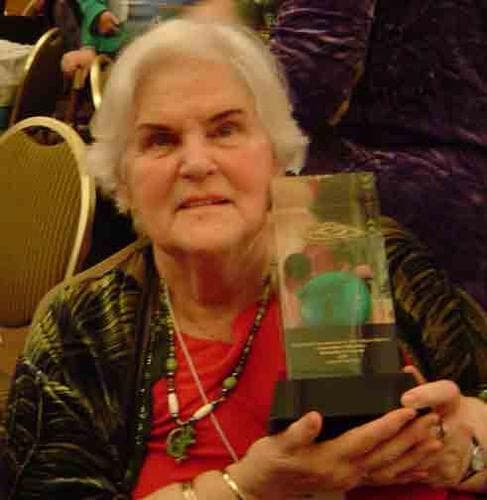
Anne McCaffrey

Anne McCaffrey was a Hugo and Nebula Award-winning author celebrated for her groundbreaking science fiction. She is best known for the Dragonriders of Pern series, which masterfully blends science fiction and fantasy elements. Her works often explore themes of genetics, telepathy, and complex relationships, with "The Ship Who Sang" and "Dragonflight" being highly influential titles.