“For where all love is, there is no question of inferiority or superiority.”
— Jamie reflecting on his relationship with Claire, emphasizing equality.

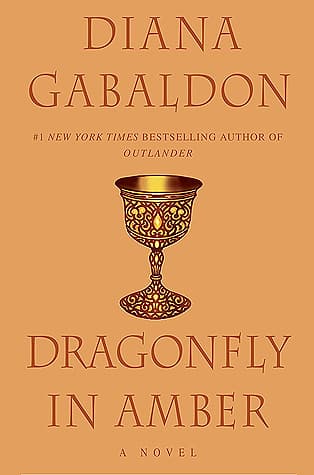
Diana Gabaldon (1992)
Genre
Fantasy / Historical Fiction / Romance
Reading Time
20-25 hours
Key Themes
See below
Sign in to track this book
Twenty years after leaving him, a time-traveling doctor must reveal her impossible past and the true identity of her daughter's father, a dashing 18th-century Highlander, while battling Jacobite intrigue and a looming rebellion to save them all.
In 1968, Claire Randall Fraser returns to Scotland with her twenty-year-old daughter, Brianna, and Roger Wakefield, a historian and the adopted son of the late Reverend Wakefield. Claire has come to reveal the truth about Brianna's biological father, James Fraser, and her own journey through time. She takes Brianna to Lallybroch, the Fraser ancestral home, now a ruin. At a graveyard, Claire points out a headstone for James Fraser, dated 1746, and tells Brianna that Jamie was an 18th-century man, and that Claire herself is a time-traveler. Brianna, initially disbelieving, struggles to process this revelation, while Roger, intrigued by the historical implications, begins to investigate Jamie Fraser's life.
Brianna reacts with anger and disbelief to Claire's story, accusing her mother of fabricating a fantasy to cope with her father Frank Randall's death. She refuses to accept time travel or that Jamie Fraser is her real father. Roger, however, is captivated by Claire's account and begins to research James Fraser, looking for any historical records that might support Claire's tale. He looks into old parish records, military documents, and historical accounts of the Jacobite Rising, hoping to find evidence of Jamie's existence beyond the gravestone Claire showed them, and perhaps details of his life after 1746.
The narrative shifts back to 1744, immediately following the events of 'Outlander.' Claire and Jamie arrive in Paris, France, after Claire's harrowing return to the 20th century and subsequent decision to go back to Jamie. They are pregnant with their first child. Their main mission in Paris, orchestrated by Jamie's cousin Jared Fraser, a successful wine merchant, is to infiltrate the Jacobite court of Charles Stuart ('Bonnie Prince Charlie') and prevent the Battle of Culloden, which Claire knows will lead to the annihilation of the Highland clans. They hope that by sabotaging Stuart's funding and support, they can avert the uprising and save countless lives, including Jamie's.
In Paris, Claire and Jamie are introduced to the lavish and dangerous world of the French aristocracy. Jamie uses his connections to gain access to Charles Stuart, while Claire, with her medical knowledge, becomes a valued figure among the ladies of the court, particularly Louise de Rohan. They encounter figures like Master Raymond, an apothecary with an interest in Claire's unique qualities, and the manipulative Comte St. Germain, who quickly becomes their adversary. Their efforts to undermine Stuart's cause are fraught with peril, as they must maintain appearances while subtly working against the Prince, all while navigating the jealousies and power struggles of the French court.
Amidst their political schemes, Claire experiences a personal tragedy. After a violent confrontation with the Comte St. Germain and his men, she suffers a severe hemorrhage and loses her baby, a daughter they name Faith. This devastating loss deeply impacts Claire, leading to a period of grief and depression. Jamie, consumed by guilt over his role in the events leading to the miscarriage and his perceived failure to protect Claire, withdraws emotionally. The shared trauma strains their relationship, creating a rift between them that proves difficult to bridge, even as their mission to thwart the Jacobite rebellion continues.
Despite their efforts in Paris, including poisoning the wine intended for Stuart's investors and attempting to expose his financial impropriety, Jamie and Claire realize they have failed to prevent the Jacobite Rising. Charles Stuart secures funding and departs for Scotland. With no other recourse, Jamie and Claire return to Scotland, knowing that war is inevitable. They find the Highlands active as clans gather to support Stuart's cause. Jamie, bound by oath and clan loyalty, feels compelled to join the fight, even though both he and Claire know it is doomed to fail. They must now decide how to best lessen the disaster.
Jamie, despite his misgivings, joins the Jacobite army, hoping to influence strategy and minimize casualties. Claire, using her medical skills, serves as a healer on the battlefield. The war progresses, marked by early Jacobite successes but ultimately leading towards the inevitable defeat Claire foresees. During this period, Jonathan 'Black Jack' Randall, who Jamie believed to be dead, reappears, having survived their previous encounter. His return reignites Jamie's hatred and desire for revenge, while complicating Claire's emotional state, as Randall is also the ancestor of her first husband, Frank. Jamie is forced to duel Randall, leading to a severe injury.
As the Battle of Culloden approaches, Claire, knowing the date and the devastating outcome, becomes desperate to save Jamie. They realize that even if Jamie survives the battle, he will likely be hunted and executed by the British. In a desperate attempt, Jamie plans to kill Charles Stuart, believing that by removing the leader, he might avert the battle entirely. However, this plan fails. With no other option, Jamie makes the heartbreaking decision to send Claire, pregnant again, back through the standing stones at Craigh na Dun, believing it is the only way to ensure her and their unborn child's survival. He extracts a promise from her to live a full life.
On the eve of the Battle of Culloden, Jamie escorts a heavily pregnant Claire to Craigh na Dun. With tears and a deep sense of loss, he explains that she must go back to her own time, to the safety of the 20th century, and raise their child there. He believes he is marching to his death and wants to spare her and their unborn child the horrors that will follow. Despite Claire's desperate pleas to stay with him, Jamie forces her through the stones, promising her he will find her again in another life. Claire, heartbroken and distraught, is pulled back through time, leaving Jamie to face his fate alone.
Back in 1968, Brianna, after much internal struggle and witnessing Claire's grief at the memory of Jamie, finally begins to accept her mother's story. She sees the depth of Claire's love and loss and realizes the truth of her parentage. Simultaneously, Roger's research into the Battle of Culloden yields a stunning discovery: a historical record suggesting that James Fraser, though severely wounded, did not die at Culloden. He finds evidence of Jamie being imprisoned and later released, implying he survived the battle and its aftermath. This revelation ignites a new hope for Claire and Brianna.
The discovery that Jamie Fraser may have survived Culloden profoundly impacts Claire. After two decades of believing him dead, the possibility of his continued existence is overwhelming. Brianna, now fully believing Claire's story and understanding the love between her parents, supports Claire wholeheartedly. Roger, having uncovered the crucial historical detail, is also invested in finding out what happened to Jamie. The three of them, united by a common purpose, decide to embark on a new quest: to find out what became of James Fraser after the Battle of Culloden, and if, against all odds, he might still be alive in the 18th century. The book ends with them poised to begin this search.
The Protagonist
Claire evolves from a woman grappling with an impossible choice between two lives to a fiercely determined mother and lover, driven by a desperate hope to reunite with Jamie and protect her family.
The Protagonist
Jamie transforms from a hopeful leader in Paris to a man burdened by grief and the impending doom of his culture, ultimately making the ultimate sacrifice for Claire and their child.
The Supporting
Brianna evolves from a disbelieving and angry daughter to a supportive and understanding young woman who accepts her extraordinary heritage and joins the quest for her biological father.
The Supporting
Roger transforms from a curious historian into a dedicated investigator and loyal friend, becoming instrumental in reigniting Claire's hope and joining the quest for Jamie.
The Antagonist
Randall remains a consistently cruel and destructive force, his reappearance serving as a catalyst for renewed conflict and trauma, culminating in a final confrontation with Jamie.
The Antagonist
Stuart remains a static character, consistently demonstrating the same flaws that ultimately lead to the tragic downfall of the Jacobite cause.
The Antagonist
The Comte St. Germain serves as a primary antagonist in the Paris section, his animosity towards Claire and Jamie escalating until his eventual demise.
The Supporting
Master Raymond acts as a benevolent, if mysterious, guide and protector for Claire in Paris, his role primarily to aid her and hint at deeper magical elements.
The Supporting
Louise serves as a confidante and friend to Claire in Paris, her personal struggles adding a layer of human drama to the courtly intrigue.
The central theme of 'Dragonfly in Amber' is the unbreakable bond between Claire and Jamie, a love that transcends time, war, and personal tragedy. Claire's decision to return to the 18th century, her desperate efforts to save Jamie, and her twenty years of grief after believing him dead all speak to this connection. Jamie's ultimate sacrifice, forcing Claire back through the stones to save her and their unborn child, underscores the selfless nature of their love. The discovery of Jamie's survival, even decades later, reignites Claire's hope, demonstrating that their love remains a potent, driving force.
““For twenty years, I had held you in my heart. Now I had you in my arms, and I would not let you go.””
The novel grapples with the concept of fixed historical events versus the possibility of altering the past. Claire, armed with knowledge of the future, tries to prevent the Battle of Culloden, a tragic event for the Scottish Highlands. Despite her efforts and Jamie's strategic brilliance, they ultimately fail, suggesting that some historical events are immutable. This theme explores the futility of fighting against a known future, even when motivated by love and a desire to save lives, highlighting the powerful, often unchangeable, currents of history. Jamie's despair at the impending doom of his culture is a poignant reflection of this theme.
““I have lived through this once. I will not live through it again. Not with you.””
Sacrifice is a recurring motif, from Jamie's willingness to infiltrate Charles Stuart's court to Claire's miscarriage in Paris, and ultimately, Jamie's decision to send Claire back through the stones. The characters repeatedly face situations where they must give up something precious for a greater good or for the survival of their loved ones. The loss of their first child, Faith, is a profound and deeply felt tragedy that affects both Claire and Jamie, straining their relationship and highlighting the personal cost of their extraordinary lives. The entire Jacobite cause itself is a narrative of sacrifice and ultimate loss for the Scottish clans.
““I can bear the pain, but I cannot bear the thought of you enduring it.””
Claire's identity is constantly in flux, caught between her 20th-century origins and her life in the 18th century. She struggles with belonging in both worlds, particularly upon her return to 1968, where she must keep her true history a secret. Brianna's journey in the 1968 timeline is also one of discovering her true identity, reconciling her understanding of her father and family with the fantastical truth Claire presents. Jamie, too, grapples with his identity as Laird of Lallybroch and a leader of his clan, even as he knows their way of life is doomed. The search for a sense of home and self in extraordinary circumstances is central to the narrative.
““I was a woman of the twentieth century, and I had been a woman of the eighteenth. And now, I was a woman of nowhere.””
The story is primarily told through Claire's extended flashback to her daughter and Roger.
The novel begins in 1968, with Claire recounting her 18th-century experiences to Brianna and Roger. This structure allows for immediate dramatic tension as the audience knows Claire's grief and the stakes involved. It also creates a sense of foreboding for the 18th-century events, as readers are aware of the tragic outcome of Culloden. The flashback frame provides context for Claire's emotional state in the 'present' and builds anticipation for Brianna's reaction and Roger's discoveries, ultimately leading to the rekindling of hope for Jamie's survival.
Claire's knowledge of future historical events creates dramatic irony and drives the plot.
Claire's unique ability to know the outcome of the Jacobite Rising, particularly the Battle of Culloden, serves as a powerful source of dramatic irony and plot motivation. Her constant efforts to change history, knowing the devastating consequences, create a persistent sense of urgency and despair. This device highlights the theme of destiny versus free will, as her attempts to alter the past are largely futile. It also builds tension for the audience, who know what's coming, making every small victory or setback for Claire and Jamie more poignant.
The mystical time-travel portal that connects the past and present.
Craigh na Dun functions as the essential magical realism element, the portal through which time travel is possible. It is both a source of wonder and immense pain for Claire, representing her connection to Jamie but also the point of their heartbreaking separation. The stones are not merely a plot device for travel but also symbolize the boundary between worlds, the impossible choice Claire faces, and the mystical, unexplained forces at play in the narrative. Their significance is heightened at the end when Jamie forces Claire through them, marking a pivotal moment of sacrifice.
The audience and Claire are aware of future events, while other characters are not.
Dramatic irony is heavily employed, particularly in the 18th-century sections. Claire's knowledge of the disastrous outcome of the Jacobite Rising creates a constant tension. We, the readers, are privy to her internal struggle as she interacts with characters like Charles Stuart, knowing his ultimate failure. This device heightens the emotional impact of their efforts to prevent Culloden, making their eventual failure all the more tragic. It also underscores the theme of the futility of fighting against a fixed historical destiny, even with foreknowledge.
“For where all love is, there is no question of inferiority or superiority.”
— Jamie reflecting on his relationship with Claire, emphasizing equality.
“It was a truth, I found, that in life, when one is too careful, one can miss the very thing they are trying to protect.”
— Claire's internal thoughts on the dangers of over-caution.
“I had left my heart in Scotland, but I had left my soul with him.”
— Claire's feelings about leaving Jamie and Scotland behind.
“There are things that happen, things that are true, that you can't explain. You don't have to explain them, you just have to believe them.”
— Jamie discussing the inexplicable aspects of life and faith.
“When the day shall come that we are not together, I will still be with you, for you are my heart.”
— Jamie's heartfelt declaration to Claire about their enduring bond.
“Knowledge is a good thing, and ignorance is a bad thing. But there's a world of difference between ignorance and innocence.”
— Claire pondering the nuances of understanding and naivety.
“Sometimes, the best way to help someone is to just listen.”
— Claire's simple realization about offering support.
“There are times when a man has to choose between what is easy and what is right.”
— Jamie facing a moral dilemma, highlighting his principles.
“The past is not a story to be told, but a living thing, changing shape and significance with every telling.”
— Claire's reflection on the nature of history and memory.
“Love is not a dream; it is a living, breathing thing that can be bruised or broken, but never truly lost if it is real.”
— Claire's mature understanding of the resilience of true love.
“It’s not a matter of whether you love someone. It’s a matter of whether you can live without them.”
— Jamie expressing the depth of his need for Claire.
“Courage is not the absence of fear, but rather the judgment that something else is more important than fear.”
— Claire's internal definition of courage in challenging circumstances.
“I learned that life, however long it may be, is a series of partings.”
— Claire contemplating the inevitability of goodbyes in life.
“To be loved for who you are, not for who you could be, or who you should be, but for who you are now.”
— Claire's realization about unconditional love.
Ready to see how well you understood this book? Take our interactive quiz with 10 questions.

Diana J. Gabaldon is an American author, known for the Outlander series of novels. Her books merge multiple genres, featuring elements of historical fiction, romance, mystery, adventure and science fiction/fantasy. A television adaptation of the Outlander novels premiered on Starz in 2014.







