“When you've ridden a dragon, you've seen the world.”
— F'lar reflecting on the unique perspective of dragonriders.

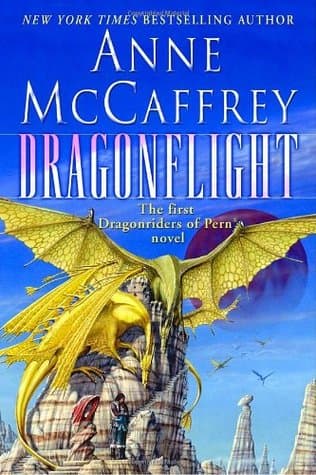
Anne McCaffrey (1968)
Genre
Fantasy / Science Fiction / Young Adult / Romance
Reading Time
360 min
Key Themes
See below
Sign in to track this book
A telepathically linked dragon queen and her young, underestimated rider must awaken old powers and unite a broken world against a deadly, world-devouring alien threat.
Lessa, the last member of the noble Ruathan Hold, lives a hard life as a scullery girl in her ancestral home, now ruled by Lord Fax. Her family was murdered when she was a child, and she has spent years developing a fierce, cold demeanor to survive and hide her true identity. She has a latent telepathic ability, which she uses to subtly influence those around her. Her days are filled with chores, but her nights are consumed by thoughts of vengeance and a desire to reclaim her place. She carefully watches the Hold, waiting for a chance to strike against Fax, who does not know her true lineage or intelligence.
One day, Dragonriders from Benden Weyr arrive at Ruath Hold. This is a rare event, as the Weyrs have been in decline for centuries, and their presence usually means a need for new candidates to Impress dragons. Lessa, along with other young people, is brought before the riders for 'Candidacy,' a telepathic screening. Despite her sullen attitude, Lessa's strong mental presence is noticed by F'lar, the young Wingsecond, though she initially resists his probes. She is intrigued by the dragons and their riders, sensing a power that resonates with her own potential.
Lessa, despite her initial resistance, is brought to Benden Weyr, a large volcanic crater that serves as the home of the dragons and their riders. The Weyr is busy as the Hatching approaches, an event where new dragonets emerge from their eggs and choose riders. Lessa is overwhelmed by the scale of the Weyr and the constant mental chatter of dragons and riders. During the Hatching, to everyone's surprise, Lessa is chosen by Ramoth, the largest queen dragonet, who emerges from the last queen egg. This Impression instantly makes Lessa the new Weyrwoman of Benden, a position of great power despite her youth and inexperience, much to the dismay of the current Weyrwoman, F'lar's mother. Her bond with Ramoth is immediate, a deep telepathic connection that changes her life.
Becoming Weyrwoman changes Lessa drastically. She is put into a world of great responsibility, expected to lead the Weyr and oversee Ramoth's growth. Her fiery temperament often clashes with traditions and the authority of F'lar, who expects her to conform. She feels isolated, as many older riders and even Pern herself resent her sudden rise to power. Lessa, still affected by her past, struggles with the social dynamics and politics of the Weyr. She wants to prove her worth, not just for herself and Ramoth, but also to honor her family and the potential she now has. Her bond with Ramoth provides support and understanding, helping her navigate her new life.
A prophecy hangs over Pern: the return of the Red Star, a planet that periodically brings 'Thread,' a devastating alien life form that consumes all organic matter. For centuries, the Dragonriders have protected Pern from Thread, but their numbers have dwindled, and the memory of the last Pass is fading. The signs of the Red Star's return become clear, and the Dragonriders realize they are unprepared for the coming attack. F'lar recognizes the urgency and the inadequacy of their defenses. The Weyr's resources are limited, and knowledge of how to combat Thread has been lost. The impending threat casts a shadow over the Weyr, forcing everyone to prepare for a war unlike any they have faced.
As the threat of Thread becomes more immediate, F'lar acts as a decisive leader. He challenges the complacency of older riders and pushes for rigorous training. Lessa, with her bond to Ramoth, proves to be valuable. Her ability to communicate with Ramoth and her determination make her a formidable force. Together, F'lar and Lessa begin to revitalize the Weyr, pushing for new strategies and higher standards from the riders. Their partnership, though often tense, solidifies as they recognize each other's strengths and shared commitment to protecting Pern. Lessa's past experiences give her an edge, enabling her to adapt quickly.
The first Threadfall in over 400 years descends upon Pern, surprising many. The Dragonriders, despite F'lar's efforts, are largely unprepared. The battle is chaotic and costly, with many dragons and riders injured or killed. Lessa and Ramoth fight bravely, showing their strength and coordination. The experience is a brutal awakening for the Weyr, revealing the power of Thread and the challenge they face. The losses remind them of the long peace that led to complacency and the urgent need for better strategies. The Dragonriders realize their traditional methods are not enough, and they must innovate to survive.
F'lar, realizing Benden Weyr alone cannot withstand the Threadfall, plans to find the legendary five lost Weyrs, hoping to discover more dragons and riders. Lessa, with Ramoth, volunteers to go with him, recognizing the importance of their mission. Using their telepathic abilities and Ramoth's flight capabilities, they search across Pern, facing unknown territories and the skepticism of the Holds. Their journey tests their resolve and their growing bond. They know that Pern's fate rests on their success, and failure is not an option. Their search is driven by hope that ancient knowledge and forgotten allies still exist.
After a long search, F'lar and Lessa discover Fort Weyr, not as a ruin, but as a thriving Weyr from the past. Through the dragons' ability to 'go between' time and space, they realize that the Weyrs did not disappear but traveled back in time to escape devastating Threadfalls. This discovery is monumental. It means the current generation of Dragonriders is not facing a new threat, but a cyclical one their ancestors tried to avoid. The revelation of time travel opens possibilities but also poses ethical challenges for F'lar and Lessa as they deal with the implications of this power. They must decide how to use this knowledge to save their own present.
Lessa, using her telepathic connection with Ramoth and her understanding of dragons, takes on the task of convincing the dragons and riders of Fort Weyr to return to their own time, or rather, to join present-day Benden Weyr in fighting the Threadfall. This is a delicate mission, as manipulating time and persuading an entire Weyr to abandon their lives is risky. Lessa's determination and her ability to communicate the direness of the current situation, combined with Ramoth's influence, are key to her success. She must overcome skepticism and fear, appealing to their sense of duty and the ancient bond of dragonriders. Her efforts show her growth as Weyrwoman and her strategic skill.
Lessa successfully convinces many Fort Weyr dragons and riders to join them. In a coordinated display of time travel, the combined forces of past and present Weyrs return to present-day Pern. This influx of experienced dragons and riders dramatically shifts the balance in the fight against Thread. A large, coordinated assault is launched, far exceeding what Benden Weyr could have done alone. The sky becomes a maelstrom of dragons, fire, and falling Thread, as the Dragonriders fight with renewed hope and strength. The battle is fierce, but with combined might, they begin to turn the tide, proving that unity and extraordinary measures are essential for survival.
After a grueling battle, the combined Dragonriders win against the Thread. The immediate threat is gone, though the long struggle against the Red Star's Passes continues. The Weyrs, now united and revitalized, begin rebuilding and preparing for future Threadfalls. Lessa, now Weyrwoman, and F'lar, as Weyrleader, lead this new era. Their partnership is solidified, not just as leaders, but as a couple. The discovery of time travel and the recruitment of past Weyrs have changed Pern, offering new hope for its survival and renewed purpose for the Dragonriders. The future remains challenging, but they face it together, stronger than ever.
The Protagonist
Lessa transforms from a vengeful scullery girl into a powerful and respected Weyrwoman, embracing her destiny and finding love and purpose beyond her initial desire for retribution.
The Protagonist/Supporting
F'lar rises from a respected Wingsecond to the decisive Weyrleader, effectively guiding Benden Weyr through the crisis of Threadfall and forming a powerful partnership with Lessa.
The Supporting
Ramoth grows from a hatchling queen into a formidable leader among dragons, a key figure in the fight against Thread, and the catalyst for discovering time travel.
The Supporting
Mnementh remains a steadfast and powerful partner to F'lar, growing in experience and effectiveness as the Weyr faces increasing threats.
The Antagonist
Lord Fax remains a symbol of injustice and the past that Lessa must overcome, eventually being killed as Lessa reclaims her birthright.
The Supporting
Pern gradually accepts Lessa's role and the need for new leadership, eventually supporting the efforts to save Pern.
The Supporting
F'nor remains a loyal and supportive Dragonrider, contributing significantly to the fight against Thread.
The Supporting
Canth serves as a consistent and reliable partner to F'nor throughout the struggles of the Weyr.
The novel explores whether characters, especially Lessa, are bound by destiny or if their choices shape their future. Lessa is 'destined' to be Weyrwoman, and her Impression of Ramoth seems fated. However, her actions, her decision to seek revenge, and her unique leadership methods show her agency. The discovery of the Red Star's cyclical return and the ancestral Weyrs' attempts to escape it through time travel complicates this, suggesting a recurring fate that can only be altered by strong will and intervention, as Lessa and F'lar provide.
“What is, will be. What has been, was.”
Lessa's journey from a scullery girl to Weyrwoman shows the weight of leadership. She is thrust into a position of power and responsibility, not only for her dragon but for the entire Weyr and Pern. F'lar also carries this burden as Weyrleader, making difficult decisions and facing skepticism. The decline of the Weyrs before their intervention shows the failure of past leadership to prepare for Thread. Leaders must make sacrifices, innovate, and inspire others, showing that true leadership requires both authority and a willingness to challenge tradition.
“A Weyrwoman is not just a rider. She is the Weyr.”
Lessa's early life is consumed by a desire for revenge against Lord Fax for her family's murder. This need for retribution fuels her survival and her initial defiance. However, as she becomes Weyrwoman and faces the threat of Thread, her focus shifts from personal vengeance to the greater good. While Fax meets his end, Lessa's triumph is not just his demise, but her embracing a future where she protects others, moving past her grievances. The theme suggests that while revenge can be a powerful motivator, true purpose lies in moving beyond it.
“Her vengeance was a cold, hard stone within her, polished by years of waiting.”
The central theme of *Dragonflight* is the telepathic and emotional bond between dragons and their riders. This connection is not just a plot device but a deep aspect of their existence, allowing for understanding, shared emotions, and coordinated action. Beyond the dragon-rider bond, the novel explores the developing relationship between Lessa and F'lar, a partnership built on mutual respect, shared purpose, and eventually, love. The importance of community and the collective strength of the Weyr are also emphasized, showing how strong bonds, both individual and collective, are essential for survival against overwhelming odds, especially during Threadfall.
“Between was nothing. Not time. Not space. Just the bond.”
The Dragonriders of Benden Weyr initially stick to tradition, using methods that are centuries old and no longer effective against Thread. F'lar and Lessa often clash with older, more conservative riders who resist change. The decline of the Weyr and their unpreparedness for Threadfall are direct results of their adherence to outdated practices. The discovery of the lost Weyrs and their time-traveling abilities forces a re-evaluation of what is possible, showing that innovation and a willingness to break from tradition are crucial for survival and progress. The novel argues that while tradition has value, it must not hinder necessary adaptation.
“We cannot fight the Red Star with the methods of four centuries ago!”
The direct mental connection between dragons and their riders.
The telepathic bond is the foundational plot device, enabling dragons and riders to communicate instantly and share thoughts, emotions, and even sensations. This bond is central to the Dragonriders' ability to coordinate during Threadfall and is crucial for Lessa's unique connection with Ramoth, allowing her to influence other dragons and sense distant events. It facilitates the discovery of time travel and the manipulation of other Weyrs, extending beyond simple communication to a deep, empathic link that drives much of the narrative and character development.
The dragons' ability to instantaneously travel through space and time.
Initially presented as instantaneous spatial travel, the dragons' 'going between' is revealed to encompass time travel. This pivotal plot device allows F'lar and Lessa to discover the ancient Weyrs in the past, leading to the recruitment of additional dragons and riders to fight the current Threadfall. It introduces a complex layer of temporal mechanics, raising stakes and creating unique narrative challenges. This ability is ultimately what saves Pern, demonstrating the extraordinary power of the dragons beyond simple flight and fire-breathing.
The cyclical threat of an alien life form that consumes organic matter.
The Red Star and the Thread it carries serve as the primary external antagonist and catalyst for the entire plot. Thread is a devastating alien life form that falls from the sky, consuming all organic material and threatening the very existence of Pern. Its cyclical return forces the Dragonriders into action and underscores the urgency of their mission. This device provides a clear, existential threat that drives the characters' motivations, forces innovation, and highlights the crucial role of the dragons in protecting the planet. It also explains the Dragonriders' raison d'être.
Ancient prophecies and legends about the Red Star's return and the role of the Dragonriders.
The ancient prophecies and legends surrounding the Red Star's return, the decline of the Weyrs, and the need for a strong Weyrwoman provide a framework for the narrative. These legends, often dismissed or misinterpreted by the current generation, guide F'lar and Lessa's actions and lend a sense of destiny to their quest. They create a backdrop of foreboding and anticipation, justifying the drastic measures taken and reinforcing the cyclical nature of the threat. The reliance on these prophecies gives the story a mythic quality, elevating the Dragonriders' struggle.
“When you've ridden a dragon, you've seen the world.”
— F'lar reflecting on the unique perspective of dragonriders.
“It takes more than a pretty face and a good family to make a Weyrwoman.”
— Lessa's internal thought about the true requirements for leadership.
“The past is not a cage, but a foundation.”
— F'lar encouraging Lessa to learn from history without being trapped by it.
“You can't save the world by yourself, but you can certainly try.”
— A general sentiment about the immense task of protecting Pern.
“A dragon's mind is not a human's, but it's just as keen.”
— Lessa understanding the intelligence and unique thought processes of Ramoth.
“Sometimes, the biggest changes come from the most unexpected places.”
— Reflecting on Lessa's rise from obscurity to Weyrwoman.
“Fear is a poor master, but a good servant.”
— F'lar teaching Lessa about controlling her emotions.
“The bond between a rider and a dragon is stronger than any other.”
— A core theme of the book, emphasizing the unique connection.
“To forget history is to be doomed to repeat it.”
— A warning about the dangers of neglecting the past and the Thread.
“There's always a solution, if you're brave enough to look for it.”
— Lessa's determination in facing challenges.
“A leader must sometimes make unpopular decisions for the greater good.”
— F'lar's philosophy on leadership and sacrifice.
“The future is not set in stone; it's written in the choices we make.”
— Emphasizing agency and the power of individual decisions.
“Even the smallest spark can ignite the greatest fire.”
— Referring to Lessa's latent power and its eventual impact.
Ready to see how well you understood this book? Take our interactive quiz with 10 questions.
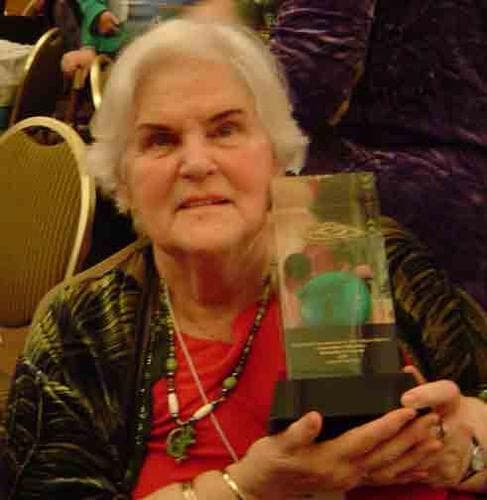
Anne McCaffrey was a Hugo and Nebula Award-winning author celebrated for her groundbreaking science fiction. She is best known for the Dragonriders of Pern series, which masterfully blends science fiction and fantasy elements. Her works often explore themes of genetics, telepathy, and complex relationships, with "The Ship Who Sang" and "Dragonflight" being highly influential titles.







