“The sea, once it casts its spell, holds one in its net of wonder forever.”
— A general observation on the allure of the ocean, a recurring theme in Cussler's works.

Clive Cussler (1990)
Genre
Thriller / Historical Fiction / Mystery
Reading Time
10-12 hours
Key Themes
See below
Sign in to track this book
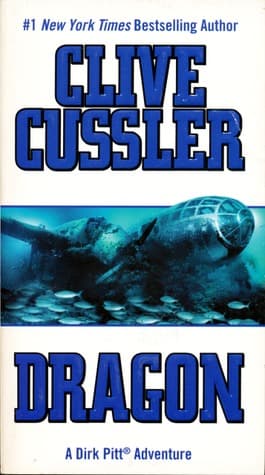
Dirk Pitt races to stop a Japanese industrialist from using atomic-era secrets and a tidal wave to attack the West.
In August 1945, during the final days of World War II, a second American B-29 bomber, the 'Golden Fleece,' carrying an atomic bomb called 'Little David,' is shot down over the Pacific. The bomb, similar to the one dropped on Nagasaki, is lost at sea. Its existence and fate become a top-secret historical detail known to only a few. This event sets the stage for a future plot, as the weapon lies hidden, waiting to be found and used. The Japanese pilot who shot down the bomber, Takeo Miyamoto, survives and later becomes a key figure in the scheme.
In 1993, a Japanese cargo ship, the 'Ryoma,' carrying high-tech parts to the United States, is instantly vaporized in the Pacific Ocean. Minutes later, a nearby Norwegian tanker, the 'Oslofjord,' is also destroyed, leaving no survivors and puzzling investigators. The immense and sudden destruction suggests an extraordinary, unknown weapon. Dirk Pitt, from the National Underwater and Marine Agency (NUMA), is called to investigate these strange events. He initially suspects a natural event or a military test, but soon realizes something far more sinister is happening.
Dirk Pitt and Al Giordino, aboard the NUMA research vessel 'Sea Hawk,' go to the site where the 'Ryoma' and 'Oslofjord' sank. Their first dives show no typical wreckage, only vitrified seabed and no debris, indicating a huge energy release. They find strange, advanced robot fragments on the ocean floor, unlike anything known. These findings lead Pitt to believe that the ships were destroyed by an experimental, possibly laser-based, weapon, and that these events are not accidents but part of a deliberate plan.
Pitt's investigation quickly points to the powerful Japanese industrialist Hideki Sumi. Sumi is a man of vast wealth and influence with strong ties to ultranationalist groups in Japan. A descendant of ancient samurai, Sumi hates Western powers and dreams of restoring Japan to global dominance. He operates from a secret, technologically advanced island fortress, using his resources to develop a terrifying new weapon and carry out a plan to destabilize the global economy and get revenge for Japan's WWII defeat.
While following leads related to Sumi, Pitt and Giordino find a long-lost cache of Nazi gold and valuable artifacts hidden in a sunken German U-boat. This discovery, though seemingly unrelated, provides a key financial link to Sumi's operations, showing how he funds his destructive projects. The gold also connects to historical figures and events, further linking the past with the current plot and highlighting the deep, generational roots of Sumi's extreme agenda. The U-boat's log also contains vague references to advanced Japanese wartime projects.
Pitt learns that Sumi's plan is called the 'Dragon Project.' It involves using a restored and modified 'Little David' atomic bomb, along with a network of advanced, sea-based laser weapons, to cause a series of devastating, artificial tidal waves and earthquakes along the Pacific Rim. The goal is to cripple Western economies and infrastructure, forcing them to submit and allowing Japan to become the leading global power. Sumi plans to detonate the atomic bomb in a deep ocean trench, creating a massive tsunami, while his lasers target critical fault lines.
As Pitt and his team near Sumi's secret island base, they face the industrialist's strong defenses, including advanced combat robots. These autonomous machines, armed with lasers and programmed for lethal force, engage Pitt in intense skirmishes. The robots show Sumi's technological edge and his willingness to use any means to protect his operations and eliminate threats. Pitt's ingenuity and fighting skills are tested as he navigates these futuristic adversaries.
Adding to the danger, Pitt also confronts Takeo Miyamoto, Sumi's chief enforcer and a direct descendant of ancient samurai. Miyamoto is a master of martial arts and a ruthless killer, with an almost supernatural ability to track and eliminate targets. His personal vendetta against Westerners, from his WWII experiences, fuels his loyalty to Sumi. The encounters with Miyamoto are personal and brutal, showing the cultural and historical animosity driving the conflict. Miyamoto sees Pitt as a worthy opponent in a modern-day samurai duel.
Through careful deduction and daring underwater exploration, Pitt finally finds the 'Golden Fleece' and the 'Little David' atomic bomb, which Sumi's forces have salvaged and repurposed. The bomb is now part of Sumi's plan, ready to be used to create the ultimate global disaster. This discovery confirms the full scope of Sumi's ambition and the immediate danger facing the world. Pitt realizes that stopping Sumi means not just disabling his laser network but preventing the detonation of this historical, yet still powerful, weapon.
With the 'Dragon Project' about to start, Pitt leads a desperate counterattack. He discovers that the West's secret advantage is a pre-existing, dormant seismic trigger on the ocean floor, designed by the U.S. government for defense. Pitt realizes that if he can detonate this trigger precisely, he might be able to counteract Sumi's tidal waves or even turn them against his own island base. It is a high-stakes gamble, requiring perfect timing and immense courage to prevent a global catastrophe.
The climax happens on Sumi's heavily fortified island, a technological marvel with many defenses. Pitt and his NUMA team, with a small group of U.S. special forces, launch a daring assault. They fight through Sumi's robots and Miyamoto's elite guards in a desperate race to disable the 'Dragon Project's' control center and prevent the 'Little David' detonation. The island becomes a battlefield of advanced technology versus human ingenuity, with millions of lives at stake. Pitt finally confronts Sumi in a thrilling, high-stakes showdown.
In Sumi's control center, Dirk Pitt faces a brutal final confrontation with both Hideki Sumi and Takeo Miyamoto. Pitt uses his intelligence, strength, and surprise to overcome Sumi's technological advantages and Miyamoto's fighting skills. The battle shows Pitt's resilience and resourcefulness. He manages to disable Sumi's main weapons system and prevent the catastrophic detonation of 'Little David,' though not without significant personal risk and damage to Sumi's operations. The 'Dragon Project' is stopped, saving the world from devastation.
With Sumi's plan foiled and the 'Little David' bomb secured, the immediate threat ends. The world breathes a sigh of relief, largely unaware of the danger it faced. Pitt and NUMA begin the long process of cleaning up Sumi's operations and ensuring such a threat cannot return. The events show how fragile global peace is and how historical grievances can fuel modern extremism. Pitt considers the thin line between technological advancement and disaster, and the constant watchfulness needed to keep balance.
The Protagonist
Pitt begins as an investigator of mysterious ship sinkings and evolves into the world's primary defender against a catastrophic global conspiracy.
The Supporting
Al remains a steadfast and crucial ally, providing consistent support and ingenuity throughout the escalating crisis.
The Antagonist
Sumi escalates from a shadowy figure behind mysterious attacks to the mastermind of a global catastrophe, ultimately being thwarted by Pitt.
The Antagonist
Miyamoto serves as Sumi's unwavering instrument of destruction, culminating in a personal duel with Pitt.
The Supporting
Sandecker consistently provides crucial institutional support and strategic guidance to Pitt, enabling the investigation and counterattack.
The Supporting
Gunn consistently provides crucial logistical and intelligence support, ensuring Pitt has the resources to combat the growing threat.
The Mentioned
Not applicable, as she is only mentioned.
The Mentioned
Not applicable, as the character is only mentioned.
The novel explores how historical grievances, especially from WWII, can fuel dangerous ultranationalist ideas today. Hideki Sumi's 'Dragon Project' is motivated by revenge and a desire to restore Japan's perceived glory, stemming from his view of past wrongs. Takeo Miyamoto's character further shows this, as his wartime experiences shape his loyalty and brutality. This theme highlights the destructive power of unresolved historical issues and how they can be used to justify extreme actions, such as Sumi's plan to devastate Western economies.
“History is not merely a record of the past; it is a weapon to forge the future, or to destroy it.”
The book shows advanced technologies, from Sumi's laser weapons and combat robots to the historical atomic bomb, and questions the ethics of their development and use. Sumi's misuse of advanced science for destruction contrasts sharply with NUMA's use of technology for research and preservation. The 'Little David' bomb, a relic of past destructive power, becomes a modern threat, emphasizing that technology itself is neutral; its impact depends on who uses it. The story constantly asks if humanity can responsibly manage the power it creates.
“The greater the power, the greater the potential for both salvation and damnation.”
Despite facing huge odds and futuristic weapons, Dirk Pitt shows the classic spirit of adventure and heroism. He consistently puts himself in danger, driven by a moral duty to protect the innocent and uphold justice. His resourcefulness, courage, and determination in impossible situations are central to the story. The novel celebrates the individual's ability to make a significant difference against vast, evil forces, reminding readers of the timeless appeal of a hero who fights tyranny, as seen in Pitt's daring infiltrations and confrontations.
“Some battles are fought not for glory, but simply because someone has to fight them.”
The 'Dragon Project' clearly illustrates how easily global stability can be broken by the actions of one determined person or group. Sumi's plan to trigger massive tidal waves and economic collapse shows how interconnected nations are and the ripple effect of catastrophic events. The international effort to understand and react to the mysterious ship sinkings, and the eventual realization of the global threat, highlights how vulnerable modern society is to a coordinated, high-tech attack. The book serves as a warning about the constant vigilance needed to maintain global peace and order.
“Peace is a thin veneer, easily cracked by the hammer of ambition and hate.”
A historical atomic bomb serves as the ultimate destructive goal.
The 'Little David' atomic bomb, lost during WWII, functions as a powerful MacGuffin. Its historical significance and immense destructive potential drive much of the plot. Initially, it's a mystery, a relic from the past. Later, its rediscovery and repurposing by Sumi elevate the stakes, providing a tangible, terrifying weapon for his 'Dragon Project.' The bomb itself isn't fully explored in its technical details but serves as the ultimate prize and the symbol of global annihilation that Pitt must prevent, propelling the narrative forward and giving Sumi's plan its terrifying gravitas.
An isolated, technologically advanced base for the antagonist's operations.
Sumi's secret island fortress serves as a classic antagonist's lair, providing an isolated, impenetrable base of operations for the 'Dragon Project.' It symbolizes Sumi's wealth, technological prowess, and his desire to operate beyond the reach of conventional authority. The fortress is bristling with advanced defenses, including robots and laser systems, creating a formidable final challenge for Pitt. Its remoteness and high-tech nature allow Sumi to develop his catastrophic plans in secret, adding to the mystery and danger of the unfolding conspiracy.
A past event foreshadows and sets up the central conflict.
The novel opens with a historical prologue detailing the loss of the second atomic bomb during WWII. This device immediately establishes a crucial piece of backstory that will become central to the modern-day plot. It creates a sense of foreboding and historical continuity, linking past events to present dangers. By revealing the bomb's existence and its mysterious disappearance, the prologue sets up the core mystery and the ultimate threat, allowing the reader to understand the full gravity of Sumi's plan when the bomb is later rediscovered.
An intelligent and resourceful villain who matches the hero's capabilities.
Hideki Sumi is crafted as a brilliant antagonist, possessing intelligence, resources, and strategic acumen that rival Dirk Pitt's. This device ensures a compelling cat-and-mouse game, as Sumi's elaborate plans and advanced technology constantly challenge Pitt. A brilliant antagonist elevates the stakes, making the hero's eventual triumph more satisfying. Sumi's intellect and ruthlessness force Pitt to be at his very best, pushing his ingenuity and courage to their limits, creating a truly formidable and memorable foe.
“The sea, once it casts its spell, holds one in its net of wonder forever.”
— A general observation on the allure of the ocean, a recurring theme in Cussler's works.
“History is not a burden on the memory but an illumination of the soul.”
— Reflecting on the importance of understanding the past, particularly ancient artifacts and events.
“There are some things in life you don't question, you just do.”
— Dirk Pitt's pragmatic approach to dangerous missions and unexpected challenges.
“The greatest treasures are often hidden in plain sight, if only you know where to look.”
— Referring to the search for the Japanese submarine and its valuable cargo.
“Sometimes the most improbable explanation is the one that turns out to be true.”
— When faced with seemingly impossible scenarios during the investigation.
“A man's worth is not measured by what he has, but by what he does.”
— A reflection on the character and actions of the protagonists and antagonists.
“The past has a way of catching up with the present, often with devastating consequences.”
— The central premise of the plot, where historical events directly impact current dangers.
“Never underestimate the power of a determined man with nothing left to lose.”
— Describing the motivations of a key antagonist driven by revenge.
“Luck is what happens when preparation meets opportunity.”
— Dirk Pitt often attributes his successes to a combination of meticulous planning and seizing chances.
“Even in the darkest depths, there can be a glimmer of hope.”
— During perilous underwater explorations or seemingly hopeless situations.
“The ocean keeps its secrets well, but not forever.”
— Regarding the long-lost Japanese submarine and its hidden cargo.
“Some men are born to trouble, and some trouble is born to men.”
— A wry observation on the constant perils Dirk Pitt finds himself in.
“The most dangerous weapon is often the one you least expect.”
— Referring to the unexpected capabilities or hidden threats encountered.
“Courage is not the absence of fear, but the triumph over it.”
— A general reflection on the bravery displayed by the characters in life-threatening situations.
Ready to see how well you understood this book? Take our interactive quiz with 10 questions.
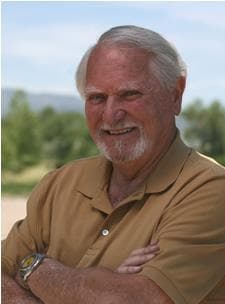
Clive Cussler was a "New York Times" bestselling author, renowned for his " Dirk Pitt" adventure novels. His "Isaac Bell" and "Juan Cabrillo" series also captivated readers. Cussler's "Valhalla Rising," "Dragon," and "Plague Ship" exemplify his signature blend of high-stakes action and historical intrigue.







