“The thing about the future is that it's not going to be like the past. It's not even going to be like the present.”
— Manning's reflection on the nature of progress and change.

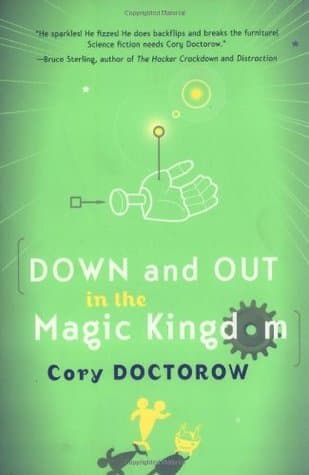
Cory Doctorow (2001)
Genre
Fantasy / Science Fiction
Reading Time
180 min
Key Themes
See below
Sign in to track this book
In a future where death is a minor inconvenience, a young man fights to preserve the analog purity of Disney World against a new wave of immersive digital experiences, even if it kills him (again).
Jules, a 'young' man in a future where death is curable and scarcity eliminated, enjoys his life working as an 'ad-hoc' in Disney World. He is part of a community that preserves the park's classic attractions as they were first conceived, with only minor technology. His current project is restoring the Carousel of Progress. Life is comfortable, measured in 'Whuffie' (reputation currency), and focused on a shared love for the park. One day, while working, Jules is suddenly and violently killed, shot in the head. This is not his first death, but it is unexpected and leaves him disoriented after his immediate revival, unable to figure out why or who did it.
After his revival, Jules learns about a new group, the 'Citizens of the World' (COTW), led by Hakim. They are taking over attractions to 'improve' them. Their first big target is the Hall of Presidents, which they are turning into an immersive, direct-to-brain experience, replacing the traditional audio-animatronics. This upsets Jules and the other ad-hocs, who see it as an attack on Disney World's art and history. Jules suspects a link between the COTW's aggressive modernization and his recent murder, which makes him determined to investigate and fight their changes.
Jules contacts his long-time friend and mentor, Dan, a veteran ad-hoc and respected community member, hoping to get support against the COTW. However, Dan, while understanding, seems hesitant to act directly, preferring diplomacy. Meanwhile, the COTW's influence quickly grows. They start gaining Whuffie and public support by appealing to a desire for newness and 'progress.' Jules and his girlfriend, Lil, watch more attractions fall under COTW control, replaced by their high-tech, immersive experiences. This further erodes the traditional Disney experience Jules values.
Jules experiences a second, equally sudden and unexplained death, this time while working on another attraction. This repeated targeting confirms his belief that his murders are directly linked to the conflict over Disney World's future. The mysterious nature of his deaths—no clear motive, no obvious perpetrator, and the ease with which his 're-sleeving' is delayed—suggests a deeper plot. This personal vendetta combines with his fight for the park, pushing him to take more direct and risky actions to expose the COTW and understand who is trying to remove him permanently.
The conflict over Disney World is fought not just with actions but also by manipulating 'Whuffie,' the reputation-based currency that runs society. Jules sees how Hakim and the COTW are good at generating positive Whuffie for their 'innovations,' portraying the ad-hocs as people against progress. This makes it hard for Jules and his allies to gain support, as public opinion leans toward the flashier, more 'modern' experiences from the COTW. Jules struggles to find a way to counter this story and show the value of preserving the original attractions.
Jules directly confronts Hakim, the COTW leader, accusing him of causing his deaths and trying to erase the park's history. Hakim, however, presents himself as a visionary simply offering a new, better experience. During his investigations, Jules starts to notice odd behavior in some of his own ad-hoc colleagues. He suspects that not everyone is as dedicated to the old ways as they claim, or that some might even be secretly helping the COTW. This realization adds distrust to his already difficult situation, making it harder to tell friends from enemies.
The transformation of the Hall of Presidents is a central battleground in the ideological war. The COTW replaces the animatronics with their direct-to-brain interfaces, letting guests 'become' the presidents. For Jules, this is a profound disrespect, a loss of tangible, historical art. He tries to disrupt their operations, but the COTW's technology and popularity make it hard. The Hall of Presidents becomes a clear symbol of the conflict: the clash between preserving tangible history and embracing immersive, temporary experiences.
Even though immortality is common, Jules's repeated deaths are uniquely unsettling. He grapples with what true loss means in a world where physical death is temporary. The fact that someone is intentionally trying to 'kill' him, and possibly delay his re-sleeving, shows a deeper malicious intent than just vandalism. This makes Jules consider the psychological impact of being targeted, even when physical permanence is assured. He realizes that while his body can be remade, the experience of being murdered, and the fear of a permanent 'delete,' still carries significant weight.
Through careful investigation and putting together small clues, Jules starts to suspect that his long-time friend and mentor, Dan, is not just a bystander but is actively involved with the COTW and responsible for his deaths. He discovers that Dan has been manipulating the Whuffie system and using his influence to help the COTW take over. The realization that someone he trusted completely has betrayed him for ideological or personal gain is a deep shock, shaking Jules's understanding of loyalty and community within Disney World.
Jules confronts Dan, who admits his involvement. Dan reveals he caused Jules's deaths, not out of malice, but as a twisted attempt to 'save' Jules from stagnation and force him to accept change. Dan believes the ad-hocs have become too comfortable and that the park needs to change to stay relevant in a world of constant technological progress. His actions were a radical, misguided effort to shake up the system and push for a new vision of Disney World, even if it meant sacrificing the traditional values Jules held dear.
Afterward, Dan is shunned, his Whuffie drops, and the COTW's progress is somewhat slowed by their methods being exposed. Jules, though hurt by the betrayal, finds a new sense of purpose. He realizes that while preserving the past is important, standing still can be a form of death itself. He starts to explore ways to combine thoughtful innovation with tradition, aiming to create a Disney World that honors its past while embracing a dynamic future. He and Lil work to find a balance, ensuring the park's legacy continues in an ever-changing world.
The Protagonist
Jules transforms from a complacent preserver of the past into a more nuanced advocate for thoughtful evolution, understanding that tradition needs to adapt to survive.
The Supporting
Lil remains a steadfast supporter of Jules, subtly influencing his perspective towards a more balanced view of tradition and progress.
The Antagonist/Supporting
Dan's character arc reveals him as a tragic figure whose noble intentions are corrupted by extreme methods, leading to his downfall and ostracization.
The Antagonist
Hakim remains consistent in his vision for modernization, serving as a catalyst for conflict and forcing the traditionalists to confront the need for change.
The Supporting
Brother Frank moves from a position of detached observation to one of quiet support, embodying the enduring spirit of the ad-hoc community.
The Supporting/Collective
The ad-hoc community is forced to confront its own complacency and re-evaluate its approach to tradition in a rapidly changing world.
The Antagonistic/Collective
The COTW acts as the primary external force of change, pushing the established order to adapt or be left behind.
The Mentioned
The Guests' collective preferences shift, prompting a re-evaluation of what constitutes a valuable experience in Disney World.
In a future where physical death is curable and 're-sleeving' is common, the novel explores what true loss means. Jules's repeated murders, though temporary, are unsettling because they are intentional acts of harm, not accidents. This makes him face the psychological impact of being targeted and the fear of a permanent 'delete,' even in a world without typical death. It shows that even with biological immortality, emotional and social loss, or the threat of being erased from memory, remains deeply impactful, as seen in the plummeting Whuffie of those who commit social wrongs.
“Death was a hassle, but it wasn't the end of the world. Unless someone decided to make it the end of the world for you.”
This is the novel's main conflict, shown by the struggle between the ad-hocs and the Citizens of the World. Jules and the ad-hocs represent preserving tradition, valuing Disney World's original art and history. In contrast, Hakim and the COTW support radical innovation, believing that technology and immersive experiences are needed for relevance. The novel questions if holding onto the past leads to stagnation, or if constant innovation erases valuable history. It suggests a need for thoughtful integration, as Jules himself starts to understand after Dan's betrayal.
“We were the memory of the place, the living, breathing, remembering memory.”
The novel introduces 'Whuffie' as a social currency based on reputation, influence, and public approval. This system controls status, access, and even political power in the future society. The conflict over Disney World is greatly affected by the manipulation of Whuffie; the COTW gain power by appealing to public desires for newness, while the ad-hocs struggle to keep their Whuffie when seen as resistant to progress. Dan's downfall, marked by his Whuffie collapsing, shows the harsh results of social disapproval in this system, highlighting how reputation can be stronger than traditional money or even physical survival.
“Whuffie was the only real currency, after all. It bought you friends, favors, and a place in the sun.”
The book explores what 'art' and 'authenticity' mean in a technologically advanced world. Jules sees the original animatronics and ride mechanics as tangible art, their flaws and historical context part of their appeal. The COTW, however, views immersive, direct-to-brain experiences as a better, more engaging form of art. This raises questions about whether art must be static and physical, or if it can be temporary and entirely experiential. The debate over the Hall of Presidents shows this: is the art in the original mechanical figures, or in the illusion of 'being' a president?
“It was art, damn it. And they were destroying it, piece by piece, to replace it with... what? A brain massage?”
Betrayal is central to Jules's personal journey, especially through Dan's actions. Dan, a respected mentor, betrays Jules not out of malice, but from a misguided, extreme idealism – believing his actions are for Disney World's greater good. This makes Jules grapple with the idea that even those with good intentions can cause deep harm and that unchecked idealism can lead to ruthless and destructive behavior. It highlights the complexity of human motivation in a world where physical consequences are lessened, making ideological battles even more intense.
“He said he was doing it for me, for us, for Disney. That's what made it hurt the most.”
A reputation-based social currency and influence system.
Whuffie is the central economic and social plot device. It's a quantifiable measure of a person's reputation, influence, and goodwill within the community. It determines access to resources, opportunities, and even social standing. Characters gain Whuffie through positive contributions and lose it through negative actions or social missteps. This system drives much of the conflict, as both the ad-hocs and the COTW vie for public approval and high Whuffie scores to legitimize their vision for Disney World. Dan's manipulation of Whuffie and his eventual dramatic loss of it underscore its power.
The ability to transfer consciousness to a new body after death.
Re-sleeving is the technological process that grants immortality by allowing consciousness to be uploaded and downloaded into new bodies. While it removes the finality of death, it introduces new forms of vulnerability and conflict. Jules's repeated murders, though temporary, are acts of aggression meant to cause distress and disrupt his life, rather than end it. The threat of a delayed re-sleeving or permanent deletion creates tension, demonstrating that even in a post-death world, harm and control over one's existence remain powerful plot points, enabling personal vendettas to take on new dimensions.
The theme park serves as a symbolic battleground for broader societal debates.
Disney World functions as a microcosm for larger societal debates about tradition, progress, art, and the value of history in a technologically advanced, post-scarcity future. The conflict over its attractions—whether to preserve classic animatronics or embrace immersive digital experiences—mirrors broader philosophical questions facing humanity. By setting the story within this familiar, yet subtly altered, iconic location, Doctorow grounds complex themes in a tangible and relatable setting, making the ideological struggle feel personal and immediate, while also highlighting the enduring human desire for meaning and connection to the past.
A specific attraction that symbolizes the ideological clash.
The Hall of Presidents serves as a potent symbolic plot device. Its transformation from an attraction featuring traditional audio-animatronics to one using immersive, direct-to-brain interfaces becomes the focal point of the conflict between tradition and innovation. For Jules, its desecration represents the ultimate betrayal of artistic integrity. For the COTW, its modernization signifies progress. The attraction's fate directly reflects the fluctuating power dynamics and the ideological shifts occurring within Disney World, making it a tangible representation of the abstract battle for the park's soul.
“The thing about the future is that it's not going to be like the past. It's not even going to be like the present.”
— Manning's reflection on the nature of progress and change.
“Fame isn't a zero-sum game. You can have as much fame as you want, and so can everyone else.”
— Manning explaining the concept of 'whuffie' and distributed reputation.
“Anything that can be copied, will be copied.”
— A foundational principle in the book's world regarding information and replication.
“The whole point of being immortal is that you get to do things forever.”
— Manning discussing the implications of post-scarcity immortality.
“Every time you die, you lose a little bit of yourself.”
— Manning reflecting on the psychological toll of frequent 're-syncing' after death.
“Happiness is not a state to arrive at, but a manner of traveling.”
— A philosophical musing on the nature of contentment in a world of endless possibilities.
“The past is another country, they do things differently there.”
— Manning observing the vast cultural and technological shifts from earlier eras.
“Whuffie is the currency of cool, of respect, of attention.”
— A direct explanation of the social credit system central to the novel.
“You don't own your body, you just borrow it from the universe.”
— A reflection on the transient nature of physical existence, even with immortality.
“The magic of the Magic Kingdom wasn't in its rides, but in its ability to transport you.”
— Manning's deep understanding of the park's true essence and purpose.
“The greatest trick the Devil ever pulled was convincing the world he didn't exist. The greatest trick the twenty-first century pulled was convincing everyone that scarcity still mattered.”
— A pointed critique of lingering economic models in a post-scarcity society.
“We're all just trying to make our mark, leave something behind.”
— A universal human desire, amplified in a world where physical death is not the end.
“The future doesn't wait for anyone, not even the dead.”
— Manning's realization that progress continues relentlessly, even for those who are 're-syncing'.
“It's not about what you have, it's about what you do.”
— Highlighting the shift from material wealth to contributions and actions in a post-scarcity world.
Ready to see how well you understood this book? Take our interactive quiz with 10 questions.
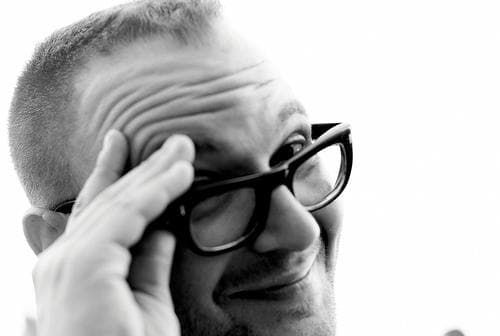
Cory Doctorow is a Canadian blogger, journalist, and science fiction author. He is best known for his novels 'Down and Out in the Magic Kingdom,' 'Little Brother,' and 'Walkaway,' which explore themes of technology, copyright, and social issues. Doctorow is also a co-founder of the technology website Boing Boing and a prominent advocate for digital rights.







