“Be kind. It is the one thing you can carry with you, everywhere.”
— Eleanor's philosophy, often repeated, especially when dealing with difficult situations.

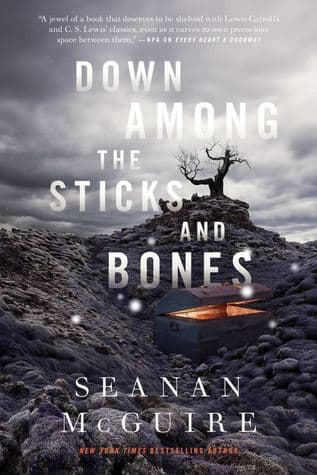
Seanan McGuire (2017)
Genre
Fantasy / Young Adult
Reading Time
90 min
Key Themes
See below
Sign in to track this book
Trapped in a twisted parental experiment, twin sisters Jacqueline and Jillian escape to a macabre fairytale world of mad scientists and dangerous choices, only to discover some cages are of their own making.
Jacqueline and Jillian Wolcott are identical twin sisters, but their parents force them into rigid, opposing gender roles. Their mother, a former ballerina, dresses Jacqueline exclusively in frilly, feminine clothes, demanding politeness and quiet obedience, molding her into a 'perfect princess.' Their father, a disappointed former adventurer who wanted a son, encourages Jillian's adventurous spirit, dressing her in practical, boyish clothes and fostering her daring, tomboyish nature. The girls are constantly critiqued and compared, never allowed to be themselves, only reflections of their parents' desires. Their home is a battleground of passive-aggressive judgment, creating a suffocating environment where their true personalities are suppressed, and their bond is strained by the parental pressure to be distinct.
One day, while playing in their parents' meticulously organized, yet unsettling, basement, Jacqueline and Jillian stumble upon a hidden, impossible staircase. It appears suddenly, spiraling down into darkness, beckoning them away from their suffocating home life. Driven by a desperate need for escape and a shared sense of wonder, they descend the stairs together, leaving behind the world of their demanding parents. This act of shared rebellion and curiosity marks their entry into a new, unknown realm, a world that promises freedom from the restrictive roles they've been forced to inhabit, but also carries an inherent danger that they are not yet aware of.
The staircase deposits Jacqueline and Jillian onto a vast, desolate moor under a perpetually twilight sky. This new world is bleak and gothic, a stark contrast to their pastel-colored home. They soon encounter a mysterious, unsettling figure known only as the Master, a powerful necromancer who rules over the Moors. The Master immediately recognizes their distinct personalities, or rather, the roles their parents have imposed. He chooses Jillian, the adventurous one, to be his apprentice, while dismissing Jacqueline, the 'perfect princess,' as useless. This separation is a crucial moment, forcing the twins onto divergent paths within this strange land.
Jillian, now known as Jill, enthusiastically embraces her new life as the Master's apprentice. She revels in the freedom and the practical, hands-on lessons of necromancy, learning to raise the dead and manipulate bones. The Master, a creature of logic and the natural order of death, finds her a willing and capable student. Jill feels a sense of belonging and purpose she never experienced at home, finding a dark joy in the macabre. Her training hardens her, stripping away the last vestiges of her childhood innocence, and she becomes increasingly comfortable with the morbid realities of her new world, viewing death as a natural, albeit powerful, force.
Jacqueline, abandoned by the Master and feeling utterly lost, wanders the Moors. She struggles to find her place, her 'princess' persona ill-suited to the harsh landscape. Eventually, she stumbles upon the House of the Wayward Children, a peculiar orphanage run by Dr. Bleak, a reclusive, benevolent mad scientist who specializes in automata and mechanical beings. Here, Jacqueline, now known as Jack, finds a different kind of purpose. She learns to be useful, helping Dr. Bleak with his experiments and finding comfort in the quiet, mechanical world, far removed from the expectations of beauty and social grace. She begins to shed her old identity and discover a burgeoning scientific curiosity.
Under Dr. Bleak's tutelage, Jack discovers a talent for tinkering and a fascination with the inner workings of things. She learns about the Labyrinth, a vast, dangerous puzzle that encircles the House of the Wayward Children, designed to keep its inhabitants safe from the dangers of the Moors. Dr. Bleak tasks her with creating a 'Skeleton Key' – a master key that can unlock any door within the Labyrinth, a seemingly impossible feat that combines her nascent scientific skills with the precision she once applied to her mother's demands. This apprenticeship allows Jack to develop a new sense of self, one based on intellect and capability rather than superficial appearance.
The Master, ever calculating, sees the House of the Wayward Children as a threat or a resource. He begins to manipulate Jill, using her growing loyalty and her desire for his approval to his advantage. He hints at dangers, at the 'unnatural' creations within the House, and subtly encourages her to investigate, knowing that her adventurous spirit will lead her there. He wants the Skeleton Key, believing it will give him control over the Labyrinth and, by extension, the secrets of Dr. Bleak. Jill, blinded by her devotion and the thrill of the chase, unwittingly becomes a pawn in the Master's larger scheme, setting her on a collision course with her sister.
Jack completes the Skeleton Key, a testament to her ingenuity. Soon after, Jill arrives at the House of the Wayward Children, drawn by the Master's hints and her own curiosity. The sisters are reunited, but their time apart has changed them. Jack is now a precise, scientifically-minded girl, comfortable with death as a natural end, while Jill is a creature of the Moors, attuned to necromancy and the manipulation of bones. They are no longer the 'perfect daughters' but distinct individuals forged by their chosen paths. However, their new identities clash, leading to immediate tension and a profound misunderstanding of each other's worlds and values. Their bond, once a shared refuge, is now a source of conflict.
The Master appears, revealing his true intentions: he wants to use the Skeleton Key to unlock the Labyrinth and gain control over the House and Dr. Bleak's creations. He pits the sisters against each other, exploiting their differing worldviews. Jill, loyal to the Master, believes Dr. Bleak's automata are an abomination against the natural order of death, while Jack sees them as a beautiful form of life. The confrontation escalates into a desperate struggle, with the fate of the House and its inhabitants hanging in the balance. The sisters are forced to choose sides, their divergent paths now leading to an unavoidable, violent conflict.
In the climactic confrontation, Jill attempts to use her necromancy to destroy Dr. Bleak's creations and retrieve the Skeleton Key for the Master. Jack, fiercely protective of her new home and her chosen family, realizes the only way to stop Jill and the Master is to make an unthinkable sacrifice. She uses the Skeleton Key, not to unlock, but to lock away Jill forever within the Labyrinth, a prison of endless, shifting passages. This act, while saving the House, shatters their sisterly bond irrevocably. Jack, now a protector, bears the heavy burden of her choice, forever marked by the horrific act of self-preservation and the loss of her twin.
After the battle, the Master retreats, defeated but not destroyed. Jack remains in the House of the Wayward Children, becoming its new protector and Dr. Bleak's true successor. She dedicates herself to maintaining the Labyrinth and ensuring the safety of its inhabitants, forever haunted by the memory of her sister. Years later, a door back to their original world appears, offering a chance to escape the Moors. Jack, having made her choice and found her purpose, sends Jill, now a broken and changed woman, through the door, knowing that her sister's journey will lead her to Eleanor West’s Home for Wayward Children, while Jack herself remains behind, a guardian of the world she chose to save.
The Protagonist
From a repressed 'princess' seeking escape, Jack evolves into a strong, independent scientist and protector who makes a devastating choice for the greater good.
The Protagonist/Antagonist
Starting as a thrill-seeking tomboy, Jill transforms into a powerful, single-minded necromancer, ultimately becoming a tragic antagonist due to her unwavering loyalty and warped sense of purpose.
The Antagonist
Remains a static, powerful force, serving as the catalyst for the twins' separation and ultimate conflict.
The Supporting
Remains a static, benevolent figure, providing a safe haven and mentorship for Jack.
The Mentioned
Her influence sets the initial trajectory for Jacqueline, but she is left behind when the girls enter the portal.
The Mentioned
His influence sets the initial trajectory for Jillian, but he is left behind when the girls enter the portal.
The Supporting
Provides a consistent, supportive presence for Jack, representing the found family within the House.
The novel shows how parental expectations can warp a child's identity. Jacqueline and Jillian are forced into rigid, opposing roles by their parents, who prioritize their own desires over their daughters' true selves. This pressure creates a suffocating home environment where the girls are never truly seen or loved for who they are. Their escape to the Moors is a direct consequence of this unbearable burden, but the roles imprinted on them continue to influence their choices and paths in the new world, ultimately leading to their tragic divergence. The initial scenes of the 'perfect daughters' portray this oppressive upbringing.
“They were five when they learned that grown-ups can’t be trusted. They were twelve when they walked down the impossible staircase and discovered that the pretense of love can never be enough to prepare you for a life filled with magic in a land filled with mad scientists and death and choices.”
Once freed from their parents' influence, both Jack and Jill embark on journeys of self-discovery, but their chosen paths lead them to fundamentally different identities. Jack, initially the 'princess,' finds her true calling in science and precision under Dr. Bleak, embracing a practical, logical approach to the world. Jill, the 'tomboy,' finds power and purpose in necromancy with the Master, embracing a more visceral, death-centric view. Their new identities, while authentic, are so divergent that they become incompatible, highlighting how finding oneself can sometimes mean growing apart from those you once shared everything with. Their separate apprenticeships are central to this theme.
“Some doors are for going through. Some doors are for staying behind. Some doors are for finding your way home, and some are for finding your way out.”
The Moors present a philosophical contrast between the Master's world of death and the natural order, and Dr. Bleak's world of creation and artificial life. The Master teaches Jill that death is an inevitable, powerful force to be understood and controlled, while Dr. Bleak teaches Jack that life, even mechanical life, is precious and worth protecting. This fundamental conflict shapes the sisters' worldviews and ultimately fuels their confrontation. The automata are seen as 'unnatural' by Jill, while Jack views them as a beautiful form of existence, embodying the core philosophical divide of the story.
“Death is a process, not an event. It goes on, and on, and on, until you stop remembering how to be alive.”
The narrative explores the idea that the family you choose can be more significant and supportive than the family you are born into. The Wolcott parents are neglectful and damaging, driving their daughters away. In the Moors, both Jack and Jill find new, different families. Jack finds belonging and purpose with Dr. Bleak and the other 'wayward children,' who offer acceptance and mentorship. Jill finds a twisted sense of family and loyalty with the Master, who provides her with validation and power. The conflict arises when these chosen families clash, forcing the sisters to prioritize their new allegiances over their strained blood bond.
“Home is not a place, it’s a feeling. It’s the way you feel when you’re with the people who love you, and who you love in return.”
The sisters seek freedom from their parents' control, and they find it in the Moors, but at a profound cost. For Jack, freedom means making the agonizing choice to imprison her sister to protect her chosen family. For Jill, the freedom to pursue power and necromancy leads her down a path of ruthlessness and ultimately, isolation. The narrative suggests that true freedom often comes with difficult decisions and sacrifices, and that the escape from one form of bondage can lead to another, or to a tragic loss. The final confrontation and Jack's choice exemplify this theme.
“Freedom is a frightening thing. It means you are responsible for yourself, and for the choices you make.”
A magical portal that transports the twins to another world.
The impossible staircase serves as the primary portal device, appearing mysteriously in the twins' basement. It represents their desperate longing for escape from their suffocating home life and acts as the catalyst for their journey into the Moors. Its 'impossibility' immediately signals their departure from the mundane and their entry into a world of magic and wonder. It is not just a physical transition but a symbolic one, leading them to a place where they can shed their old identities.
A complex, shifting maze protecting the House of the Wayward Children.
The Labyrinth functions as both a protective barrier and a symbolic representation of Jack's intellectual growth. It is a shifting, complex maze designed by Dr. Bleak to keep his House and its inhabitants safe from the dangers of the Moors and the Master. Jack's task to create the Skeleton Key for the Labyrinth allows her to hone her scientific skills and precision, symbolizing her dedication to her new home and her embrace of logic and order. It becomes the ultimate battleground for the sisters' ideological clash.
A master key that can unlock (or lock) any door in the Labyrinth.
The Skeleton Key is a macguffin that drives the latter half of the plot, representing the power over the Labyrinth and, by extension, the House of the Wayward Children. For Jack, it is a triumph of her scientific ingenuity and a tool for protection. For the Master and Jill, it is a tool for dominion and destruction. Its ultimate use by Jack to imprison Jill highlights its symbolic power as a key not just to doors, but to fate and consequences.
A gothic, twilight world where death and science collide.
The Moors serve as the primary setting and a powerful atmospheric device. Its perpetually twilight, desolate landscape immediately establishes the dark, gothic tone of the story. It is a world where the laws of nature are different, allowing for necromancy and mad science to coexist. The harshness of the Moors forces the twins to adapt and choose their paths, directly influencing their transformations. It embodies the freedom and danger inherent in their escape from their original world.
“Be kind. It is the one thing you can carry with you, everywhere.”
— Eleanor's philosophy, often repeated, especially when dealing with difficult situations.
“Some doors are not meant to be opened. Some worlds are not meant to be found.”
— A warning about the dangers of curiosity and the unknown, particularly relevant to the children's journey.
“Every hero has a monster. Every monster has a hero. And the line between them is often a matter of who tells the story.”
— A central theme of the novella, exploring the duality of characters and perception.
“We are all of us, at some point, the monster in someone else's story.”
— Reflecting on the subjective nature of good and evil, and how actions can be perceived differently.
“The world was full of sharp edges and things that could hurt you, and it was better to know where they were.”
— Eleanor's pragmatic approach to understanding the world and its dangers.
“There are wolves in the woods, and not all of them wear fur.”
— A metaphorical warning about human predators and hidden threats.
“You don't get to choose your parents, and you don't get to choose your world. But you do get to choose what you do with them.”
— Emphasizing agency and personal responsibility despite external circumstances.
“Some things, once broken, can never be truly mended. Only patched, and hoped they hold.”
— Reflecting on the lasting impact of trauma and the fragility of relationships.
“The greatest kindness you can show a thing is to let it be what it is.”
— Eleanor's understanding of acceptance and non-interference.
“It's not about being brave; it's about being smart enough to know when to run.”
— Eleanor's practical advice on survival, prioritizing safety over perceived courage.
“There are places in the world where the rules are different, and you have to learn them quickly if you want to survive.”
— Highlighting the adaptability required when entering new, dangerous worlds.
“Sometimes, the only way to save someone is to let them go.”
— A painful realization about the limits of help and the necessity of allowing others their own paths.
“The world was a cruel place, and it didn't care if you were a child or an adult. It just was.”
— A stark reminder of the harsh realities of the world the twins find themselves in.
“We are all searching for something, whether we know it or not. And sometimes, what we find is not what we were looking for at all.”
— Reflecting on the journey of self-discovery and unexpected outcomes.
Ready to see how well you understood this book? Take our interactive quiz with 10 questions.
Biography coming soon.







